Banff National Park is Canada’s oldest national park — established in 1885, and still one of the most remarkable mountain destinations anywhere in the world. Turquoise glacier-fed lakes, soaring limestone peaks, accessible hiking trails, abundant wildlife, and a working town inside the park boundaries combine into an experience that few mountain regions can match. Banff became a UNESCO World Heritage Site in 1984 as part of the Canadian Rocky Mountain Parks — a designation that covers Banff, Jasper, Kootenay, and Yoho national parks, along with the Robson, Hamber, and Mount Assiniboine provincial parks. Here’s everything you need to plan an exceptional visit.
The Lakes: Moraine and Louise
Lake Louise is one of the most photographed spots in Canada — a glacier-fed lake of an almost impossibly intense turquoise, backed by the Victoria Glacier and steep Victoria walls and flanked by the stately Fairmont Château Lake Louise. The colour comes from glacial flour (finely ground rock held in suspension by the grinding ice), which reflects blue and green wavelengths more than the rest of the spectrum. The lakeshore view is lovely, but the hikes above it pay off more handsomely: the Plain of Six Glaciers Trail climbs to a teahouse (open June–October) facing the glaciers and surrounding peaks; the Lake Agnes Trail reaches a hanging mountain lake with another historic teahouse; and above that, the Big Beehive delivers the finest bird’s-eye view of Lake Louise. The tea houses have been run by the same families since the early 1900s and rank among Banff’s most beloved institutions — book online ahead for summer visits.
Moraine Lake, 12km from Lake Louise village, is arguably the more striking of the two — a deeper, more saturated turquoise ringed by the Valley of the Ten Peaks. Since 2023, the access road has been closed to private vehicles year-round; a Parks Canada shuttle from the Lake Louise Park and Ride is the only public way in, booked through the Parks Canada Reservation Service well in advance. The view from the Rockpile (a mound of glacial rockslide debris at the lake’s northern end) is the image that appeared on the Canadian $20 bill for decades.
Best Hikes in Banff National Park
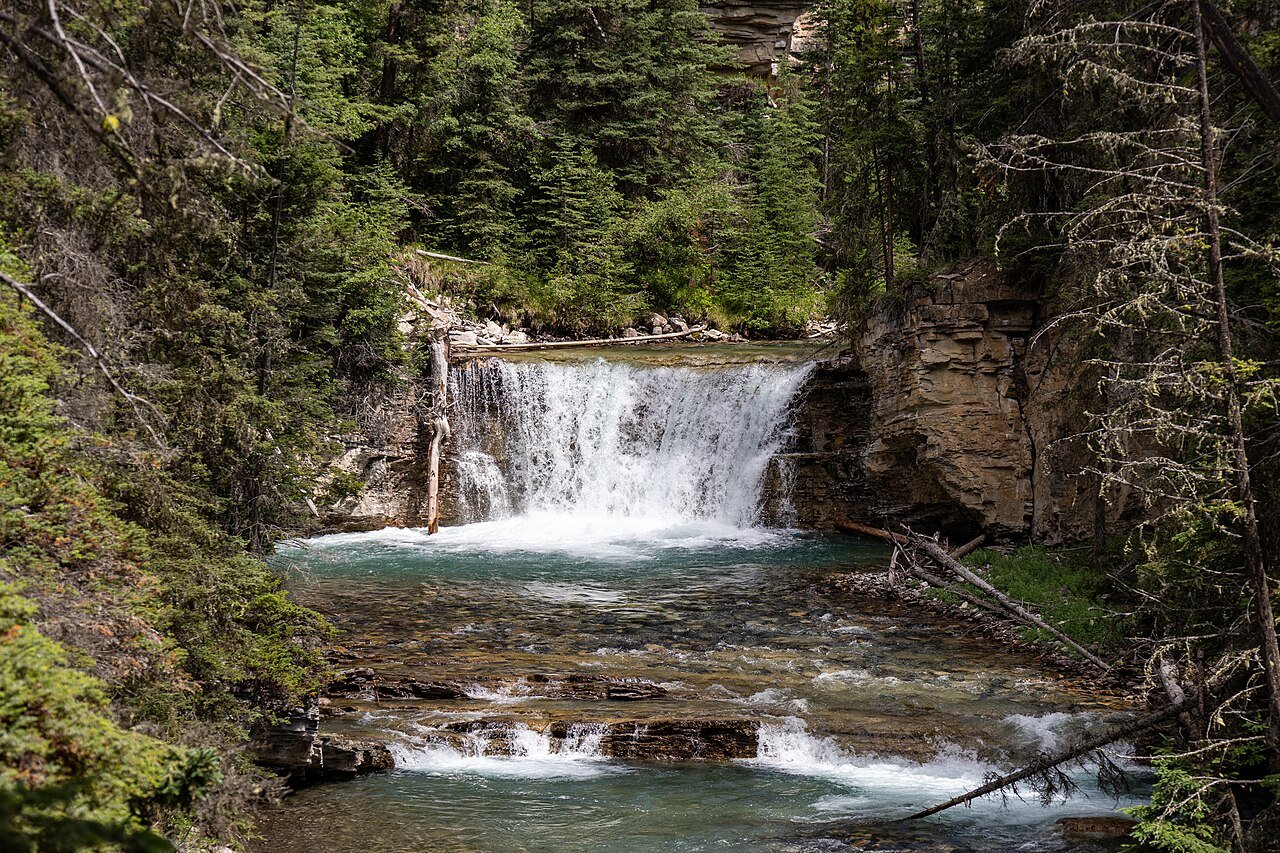
- Johnston Canyon (easy, 5.1km return to the Upper Falls): A canyon walk on suspended metal catwalks bolted into the cliff face, past the thundering Lower Falls (1.1km) and Upper Falls (2.5km). Walkers with more time can carry on beyond the falls to the Inkpots — six cold mineral springs whose vivid blue-green colour comes from clay particles held in the water — about 5.8km one way, 11.6km return. Hugely popular — arrive before 8am or after 5pm to dodge the crowds.
- Plain of Six Glaciers (moderate, 14km return): From the Lake Louise lakeshore, the trail climbs steadily through subalpine meadows to the historic Plain of Six Glaciers Teahouse (1924), facing the Crowfoot, Aberdeen, Upper Lefroy, Lower Lefroy, Upper Victoria, and Lower Victoria glaciers. The extension to the viewpoint above the teahouse adds another 2km and earns its keep.
- Sentinel Pass via Larch Valley (strenuous, 11.6km from Moraine Lake): The finest hike in Banff — it climbs from Moraine Lake through the larch-filled Larch Valley (ancient alpine larches turn bright gold in late September) to the highest non-technical pass in the Canadian Rockies at 2,611m. The descent on the far side into Paradise Valley and back makes a full-day loop for experienced hikers.
- Tunnel Mountain Summit (easy, 4.8km return): The most accessible peak hike in the park, leaving from Banff townsite with first-rate views of the Bow Valley and Cascade Mountain from the top.
- C-Level Cirque (moderate, 8.4km return): From Lake Minnewanka, this route climbs through subalpine forest to a dramatic cirque below Cascade Mountain, often with bighorn sheep grazing the slopes above.
Banff Townsite: Base Camp in the Mountains
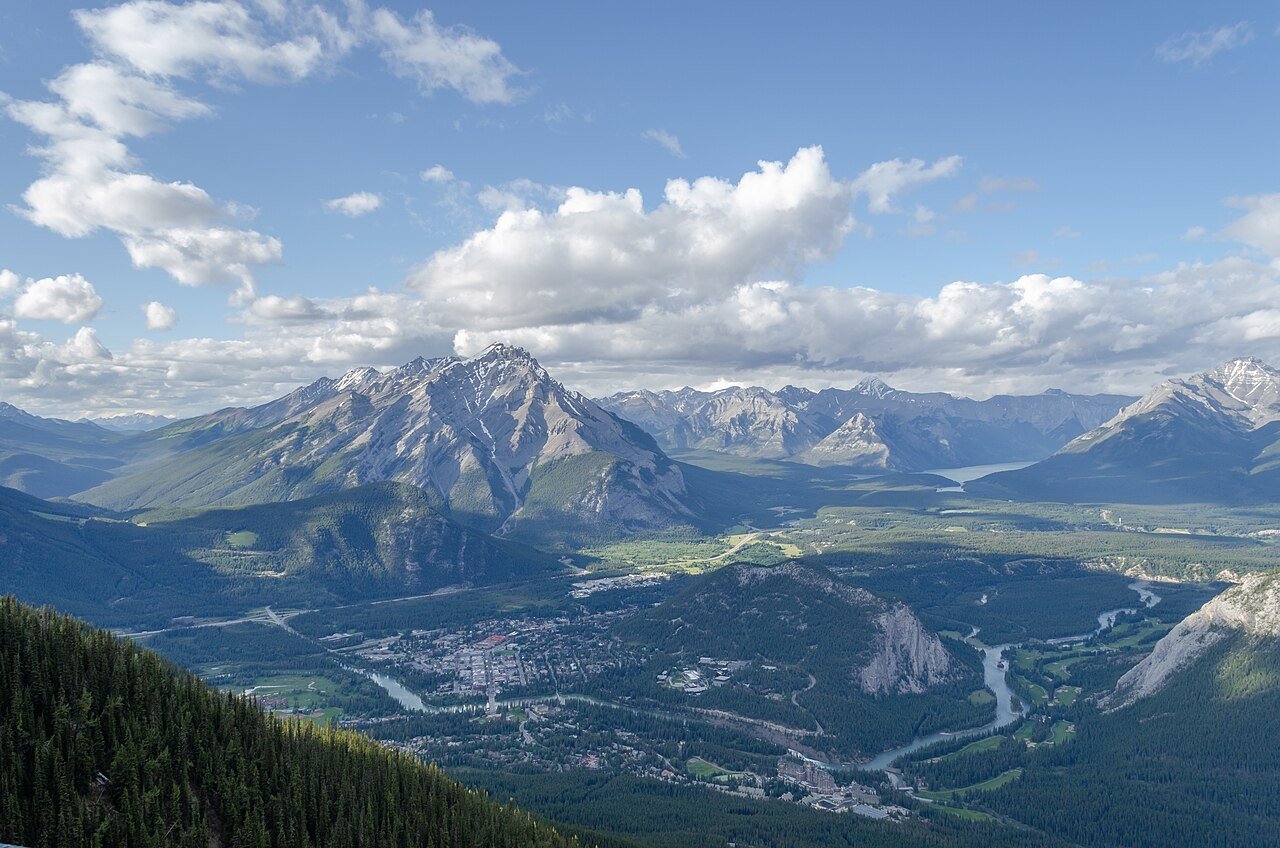
Banff townsite — the only true town inside the national park — is a genuine mountain-resort community with the full spread of accommodation, restaurants, shops, and services. The Fairmont Banff Springs Hotel (1888, built as a Scottish Baronial castle in the Bow Valley) ranks among the great resort hotels in the world — worth visiting for a drink or a meal even if you’re not staying (the Sunday brunch is a well-known indulgence). The Banff Upper Hot Springs at the base of Sulphur Mountain are natural mineral springs cooled to bathing temperature — a fine post-hike reward (adult $19.75). The Banff Gondola on Sulphur Mountain carries you to a summit observatory at 2,281m for panoramic Bow Valley views (now dynamically priced, $55–95 adult depending on date — book online ahead for summer, and choose a clear day, since there are no weather refunds). The Cave and Basin National Historic Site preserves the hot-spring cave that prompted the park’s creation in 1885 and traces the history of the national parks movement in Canada. In town, Banff Ave Brewing Co. and the Bear Street Tavern pour excellent local craft beer alongside dependable food.
Wildlife Watching
Banff has superb wildlife viewing, and encounters are common even without much effort. Elk turn up within Banff townsite itself — especially in autumn, when bulls bugle and herd their harems through the middle of town (large and potentially aggressive during the rut, so keep a 30-metre distance). Bighorn sheep gather at mineral licks along the Minnewanka Loop and appear regularly on the slopes of Mount Norquay. Grizzly bears take more effort to find: the forested slopes above the valley floor at the Lake Louise ski resort and the meadows around the Columbia Icefield are the best bets. Black bears are more common and more visible, particularly along the Icefields Parkway in early summer, when they drop to the valley bottoms to feed on fresh vegetation. Wolves occasionally cross the valley — a genuinely rare encounter if it happens. Always carry bear spray, make noise in dense bush, and never approach any animal.
When to Visit and Practical Information
- Best seasons: July–August for wildflowers and full trail access; late September for golden larches and the elk rut with far fewer crowds; December–March for skiing at Banff’s three resorts (Lake Louise, Sunshine Village, Mt. Norquay); May–June and October for shoulder-season deals.
- Park pass: CAD $12.25 per adult per day (family/group up to seven, $24.50). The Parks Canada Discovery Pass (CAD $83.50 per adult, $167.50 family/year) covers admission to more than 80 Parks Canada places for 12 months — worthwhile for multi-park trips. During the Canada Strong Pass window (19 June–7 September 2026), park admission is free for everyone, so no day pass is needed inside that period.
- Moraine Lake shuttle: Booked through the Parks Canada Reservation Service (online or 1-877-RESERVE); reservations for the 2026 season open 15 April 2026 and sell out fast, with a further batch of seats released two days before departure. Shuttles run from about 1 June to mid-October out of the Lake Louise Park and Ride ($8 adult return, free parking with a reservation).
- Accommodation: Book 6–12 months ahead for summer. The limited hotel stock in Banff townsite and around Lake Louise fills up quickly. Camping inside the park needs advance reservations through Parks Canada from spring onwards.
- Getting there: Calgary International Airport sits about 1.5 hours by car from Banff — the usual entry point. Brewster Express buses run from the airport to Banff (from about $70 one-way, around 1.5 hours). A rental car gives the most flexibility for the park and the Icefields Parkway.
Frequently Asked Questions
What makes Lake Louise and Moraine Lake so special?
Both belong to the small set of glacier-fed lakes in the Canadian Rockies whose colour holds that surreal turquoise range through most of the summer — the result of rock dust pouring in from the Victoria and Wenkchemna glaciers. Lake Louise sits at the foot of the Victoria Glacier with the Fairmont château on its eastern shore, and the lakeshore itself is essentially a paved promenade; the real experience starts once you walk past the canoe dock and gain elevation toward Lake Agnes or the Plain of Six Glaciers. Moraine Lake, 12km away in the Valley of the Ten Peaks, is the one that appeared on the Canadian $20 bill. Since 2023, Parks Canada has closed its access road to private cars year-round — the only options are the official shuttle (book through the Parks Canada Reservation Service when seats open in April, and again two days before departure), an organized hike-in from Paradise Valley, or a pre-booked taxi. One frequently-overlooked detail: both lakes stay frozen and white-ish until early-to-mid June, so May visitors expecting the postcard colour often leave disappointed.
What are the best hiking trails in Banff National Park?
Johnston Canyon is the park’s most-walked trail, and the catwalks bolted to the limestone above the creek are the reason — 1.1km to the Lower Falls, 2.5km to the Upper Falls (5.1km return), and 5.8km one way to the Inkpots beyond (11.6km return). The narrow walkways slow to a queue between about 9am and 4pm in July, so locals start at first light or after dinner. The Plain of Six Glaciers Trail (14km, moderate) earns its reputation on the final approach above the 1924 teahouse, where it crosses an exposed lateral moraine — bring a windshell even on warm days. Sentinel Pass via Larch Valley (11.6km, strenuous, 2,611m) is the trophy hike; in the last week of September the larches glow so dramatically that Parks Canada now runs a Larch Valley quota on peak weekends to manage numbers. Tunnel Mountain (4.8km, easy) leaves directly from town and makes an honest 90-minute summit. C-Level Cirque (8.4km, moderate, from Lake Minnewanka) passes abandoned coal-mine ventilation shafts before opening into the cirque under Cascade Mountain, where bighorns are regulars.
What is the Banff townsite and what should visitors do there?
Banff is a working town of around 8,400 residents inside a national park — a legal oddity that requires anyone moving there permanently to show they work locally. For visitors, that means a compact grid centred on Banff Avenue with everything within walking distance. The Fairmont Banff Springs (1888) is the obvious set piece, and even non-guests can wander the lower lobbies; the Rundle Bar and the Sunday brunch are how most travellers experience the interior without booking a room. The Banff Upper Hot Springs ($19.75 adult) sit higher on Sulphur Mountain than the gondola base and are best in shoulder season — in July and August the pool is crowded and surprisingly warm given the air outside. The Banff Gondola (dynamically priced, $55–95 adult; summit observatory at 2,281m) is well worth it on a clear morning but pointless in cloud, and there are no refunds for weather. The Cave and Basin National Historic Site, where the discovery of a sulphur cave in 1883 led directly to the 1885 reserve, is the most overlooked stop in town. For craft beer, locals favour Banff Ave Brewing Co. on Banff Avenue and the Bear Street Tavern off it.
What wildlife can visitors see in Banff National Park?
Banff has exceptional wildlife and encounters are common. Elk turn up within Banff townsite itself — especially in autumn, when bulls bugle and herd their harems through the middle of town during the rut (large and potentially aggressive, so keep a 30-metre distance). Bighorn sheep gather at mineral licks along the Minnewanka Loop and on the slopes of Mount Norquay. Grizzly bears are best seen on the forested slopes above the valley floor at the Lake Louise ski resort and in the meadows around the Columbia Icefield. Black bears are more common and visible, particularly along the Icefields Parkway in early summer, when they drop to valley bottoms to feed on vegetation. Wolves occasionally cross the valley. Always carry bear spray, make noise in dense bush, and never approach any wildlife regardless of how docile it looks.
What practical information do visitors need for Banff National Park?
A Parks Canada pass is required: CAD $12.25 per adult per day (family/group up to seven, $24.50), or the Discovery Pass (CAD $83.50 per adult, $167.50 per family per year) covering more than 80 Parks Canada places — worth buying for multi-park trips. During the Canada Strong Pass window (19 June–7 September 2026), admission is free for all visitors, so no day pass is needed inside those dates. The Moraine Lake shuttle is booked through the Parks Canada Reservation Service (online or 1-877-RESERVE); 2026 reservations open 15 April and sell out almost immediately, with more seats released two days before departure. Lake Louise parking fills by 8am in summer; Johnston Canyon is busy by 9am. July–August gives full trail access and the best lake colours; late September is golden-larch season with far fewer crowds and the elk rut; December–March offers skiing at three resort areas (Lake Louise, Sunshine Village, Mt. Norquay). Book accommodation 6–12 months ahead for summer. Calgary International Airport is about 1.5 hours by car; Brewster Express buses run from the airport to Banff (from about $70 one-way, around 1.5 hours).