

Pennsylvania’s outdoor recreation is defined by the depth and variety of its wild lands — 2.2 million acres of State Forest (one of the largest state forest systems in the eastern United States), 125 state parks, a 229-mile stretch of the Appalachian Trail, the Pocono Mountains’ lakeside resorts and waterfalls, the Pine Creek Gorge (“Pennsylvania’s Grand Canyon”) in the Northern Tier, and the Delaware Water Gap National Recreation Area on the New Jersey border. For the tens of millions of residents of the Philadelphia and Pittsburgh metros, this outdoor access is a primary quality-of-life asset: the Wissahickon Creek gorge is reachable on foot from Philadelphia’s Chestnut Hill neighborhood, Point State Park and the North Shore Trail put river access minutes from downtown Pittsburgh, and the Poconos sit two hours from Philadelphia.
Pine Creek Gorge: Pennsylvania’s Grand Canyon
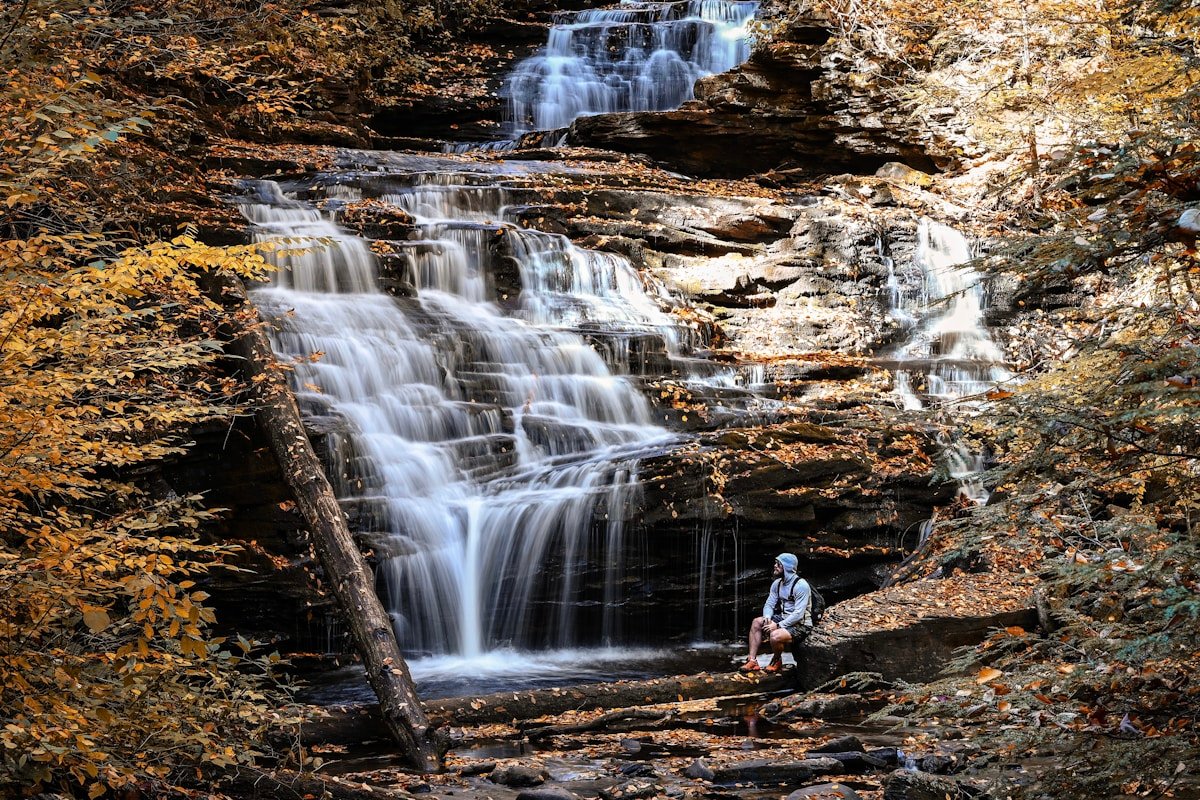
Pine Creek Gorge, in the Northern Tier’s Tioga State Forest, is Pennsylvania‘s most dramatic natural landscape — a 47-mile canyon cut roughly 1,000 feet deep through the Allegheny Plateau by Pine Creek, with views of forested ridges and the water below that genuinely earn the “Grand Canyon of Pennsylvania” billing. Leonard Harrison State Park sits on the east rim and Colton Point State Park on the west, each with overlooks, hiking trails, and campgrounds. Down at creek level, the 62-mile Pine Creek Rail Trail runs the length of the old Jersey Shore, Pine Creek and Buffalo Railway corridor — a ride that USA Today once ranked among the world’s best bike tours. For backpackers, the 85-mile Susquehannock Trail System loops through the surrounding State Forest in a wilderness setting rare for the densely populated Mid-Atlantic.
Pocono Mountains: Waterfalls and Winter Recreation
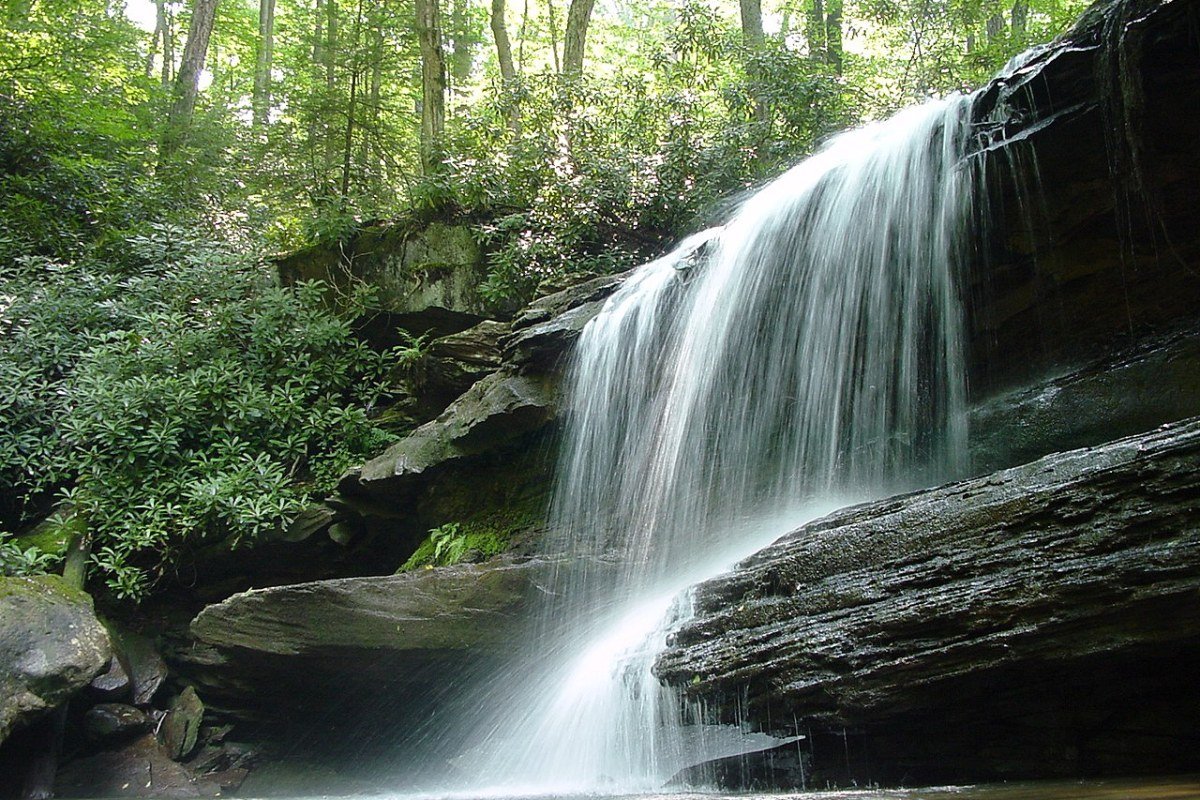
The Pocono Mountains, in northeastern Pennsylvania, hold the most accessible resort recreation for the Philadelphia, New York City, and New Jersey markets — a landscape of glacially carved lakes, waterfalls, ski areas, and the resort towns that have drawn crowds since the 19th century. Bushkill Falls, the “Niagara of Pennsylvania,” and Dingmans Falls are the headliners; Camelback, Jack Frost, and Big Boulder cover the winter trade. At the Poconos’ southern edge, the Delaware Water Gap National Recreation Area opens 70,000 acres of hiking, paddling, and wildlife habitat within two hours of the New York City metro. The Appalachian Trail enters the Gap from New Jersey and climbs the Kittatinny Ridge through the recreation area — one of the easiest stretches of the trail to reach from a major population center anywhere on its 2,198-mile route.
Laurel Highlands: Pittsburgh’s Outdoor Backyard
Two hours southeast of Pittsburgh along the Turnpike, the Laurel Highlands serve as the metro’s primary outdoor corridor. Ohiopyle State Park anchors it — one of the most visited parks in Pennsylvania, where the Lower Youghiogheny’s Class III–IV whitewater draws paddlers from across the Mid-Atlantic to the technical rapids of its popular loop section, one of the most reliable runnable stretches in the Northeast. Nearby sits Fallingwater, Frank Lloyd Wright’s masterpiece cantilevered over Bear Run in a setting of forested ridges, about four miles north on Route 381. Forbes State Forest spreads nearly 59,000 acres of hiking and backpacking terrain across the surrounding highlands, and the Seven Springs and Hidden Valley ski areas handle the cold months.
Appalachian Trail in Pennsylvania
Pennsylvania’s 229-mile section of the Appalachian Trail is one of the best-known stretches of the 2,198-mile route — and, for foot conditions, one of the most punishing. The trail enters from Maryland at the Mason-Dixon Line and works through the state’s Ridge and Valley province, crossing one quartzite ridge after another, the rocky tread that earns Pennsylvania the semi-affectionate “Rocksylvania” tag among thru-hikers. The payoff views are excellent: the Pinnacle near Hamburg looks out over the Lebanon Valley in one of the best panoramas on any trail section in the state, and the route’s passage through Delaware Water Gap, Caledonia State Park, and Pine Grove Furnace State Park (the traditional AT “half-way point”) makes for strong section hiking within reach of both Philadelphia and Pittsburgh. Pine Grove Furnace’s “Half Gallon Club” — eat a half gallon of ice cream at the halfway store — has been an AT tradition since 1980.
Philadelphia’s Urban Outdoors
Philadelphia’s outdoor recreation deserves attention beyond the day-trip destinations. The city’s Fairmount Park system, one of the largest urban park systems in the United States at 9,200 acres, takes in the Wissahickon Creek gorge — 10 miles of hiking trails through a forested ravine reachable on foot from Northwest Philadelphia neighborhoods — along with Forbidden Drive, a 5.5-mile unpaved path along the creek closed to motor vehicles, and the Schuylkill River Trail, 30-plus miles of paved trail linking the city to Valley Forge National Historical Park. Then there is Boathouse Row: the cluster of Schuylkill Navy rowing clubs strung along the Schuylkill River, lit at night in a famous Philadelphia tableau, carry the city’s oldest continuous athletic tradition, and the spring regatta season is one of the best free spectator events in town.
The state park system — 125 parks managed by the Pennsylvania Department of Conservation and Natural Resources — spreads outdoor infrastructure across the state so that few major population centers face a long drive to a trailhead. Ricketts Glen State Park, in the northern tier, protects a waterfall canyon with 21 named cascades along the Falls Trail, routinely called the finest waterfall hike east of the Mississippi. Presque Isle State Park, a sand-spit peninsula reaching into Lake Erie near Erie, brings swimming beaches, paddling in the protected inner bay, and warbler watching — the peninsula ranks among the top migration hotspots in the northeast during May. The hunting and fishing infrastructure runs just as deep: more than 300 state game lands covering over 1.5 million acres and stocked trout streams across most counties reflect a recreation culture that has shaped Pennsylvania since the early 20th century.
Frequently Asked Questions
What is Pine Creek Gorge (“Pennsylvania’s Grand Canyon”) and what can you do there?
Pine Creek Gorge in Tioga State Forest is Pennsylvania’s most dramatic natural landscape — a 47-mile canyon cut roughly 1,000 feet deep through the Allegheny Plateau by Pine Creek. Leonard Harrison State Park (east rim) and Colton Point State Park (west rim) hold the overlooks, hiking trails, and campgrounds. The Pine Creek Rail Trail (62 miles along the former Jersey Shore, Pine Creek and Buffalo Railway corridor) runs creek-level cycling and hiking through the gorge — a ride USA Today once ranked among the world’s best bike tours. The 85-mile Susquehannock Trail System loops the surrounding State Forest for multi-day backpacking in a wilderness setting rare in the densely populated Mid-Atlantic. October fall foliage turns the gorge into one of the most spectacular landscapes in the state.
What outdoor recreation does the Pocono Mountains and Delaware Water Gap offer?
The Pocono Mountains in northeastern Pennsylvania hold the most accessible resort recreation for the Philadelphia, New York City, and New Jersey markets — glacially carved lakes, Bushkill Falls (the “Niagara of Pennsylvania”) and Dingmans Falls among the headline waterfalls, and ski areas including Camelback, Jack Frost, and Big Boulder. At the Poconos’ southern edge, the Delaware Water Gap National Recreation Area opens 70,000 acres of hiking, paddling, and wildlife habitat within two hours of New York City. The Appalachian Trail enters the Gap from New Jersey and climbs the Kittatinny Ridge through the recreation area — one of the easiest AT stretches to reach from a major population center on the entire 2,198-mile route.
What is Ohiopyle State Park and the Laurel Highlands?
Ohiopyle State Park, in the Laurel Highlands two hours southeast of Pittsburgh, is one of the most visited parks in Pennsylvania. The Lower Youghiogheny’s Class III–IV whitewater through the park is one of the most reliable runnable stretches in the Northeast, drawing paddlers from across the Mid-Atlantic to the technical rapids of its popular loop section. Forbes State Forest (nearly 59,000 acres) spreads extensive hiking and backpacking terrain across the surrounding highlands. Fallingwater, Frank Lloyd Wright’s masterpiece cantilevered over Bear Run about four miles north of Ohiopyle on Route 381, is one of the most famous buildings in the country and a natural companion to a Laurel Highlands day. Seven Springs and Hidden Valley ski areas cover winter recreation.
What does Pennsylvania’s Appalachian Trail section offer?
Pennsylvania’s 229-mile Appalachian Trail section is among the most distinctive — and for thru-hikers, the most demanding for foot conditions — of the 2,198-mile route. The quartzite tread of the Ridge and Valley province earns Pennsylvania the “Rocksylvania” tag among AT thru-hikers. The Pinnacle near Hamburg looks out over the Lebanon Valley in one of the best panoramas on any AT section in the state. Pine Grove Furnace State Park marks the traditional halfway point, home to the “Half Gallon Club” ice cream challenge — eat a half gallon at the general store, an AT tradition since 1980. Beyond the halfway point, the trail passes Delaware Water Gap, Caledonia State Park, and multiple shelters, making for strong section hiking within reach of Philadelphia and Pittsburgh.
What are the best state parks for outdoor recreation in Pennsylvania?
Pennsylvania’s 125 state parks spread outdoor infrastructure across the entire state. Ricketts Glen State Park (northern tier) protects 21 named waterfalls along the Falls Trail — often called the most celebrated waterfall hike east of the Mississippi, particularly in fall foliage season and when the falls freeze in winter. Presque Isle State Park (a sand-spit peninsula reaching into Lake Erie near Erie) brings swimming beaches, one of the top warbler migration hotspots in the northeast during May, and paddling in the protected inner bay. The Wissahickon Creek gorge in Philadelphia’s Fairmount Park (10 miles of hiking trails reachable on foot from Northwest Philadelphia neighborhoods) and the Schuylkill River Trail (30-plus miles connecting the city to Valley Forge National Historical Park) give Philadelphia residents remarkable urban outdoor access.