Arkansas ranks among the most affordable states in the country, and the gap between its everyday costs and the national average is wide enough to count as a real lifestyle advantage — especially for remote workers, retirees, and anyone employed in the state’s stable local industries. Taken together, housing, food, utilities, healthcare, and transportation run roughly 11% below the national average here, a margin that quietly compounds year after year and lets a household budget stretch much further than it would across most of the United States.
The trade-off is honest enough. Arkansas has a smaller economy, a less dynamic job market, and thinner urban infrastructure than the pricier states people tend to leave. Yet for the right person — someone working from home, a retiree, a nurse or a teacher — that affordability translates into purchasing power you can actually feel in daily life.
Housing: Among the Most Affordable in the Nation
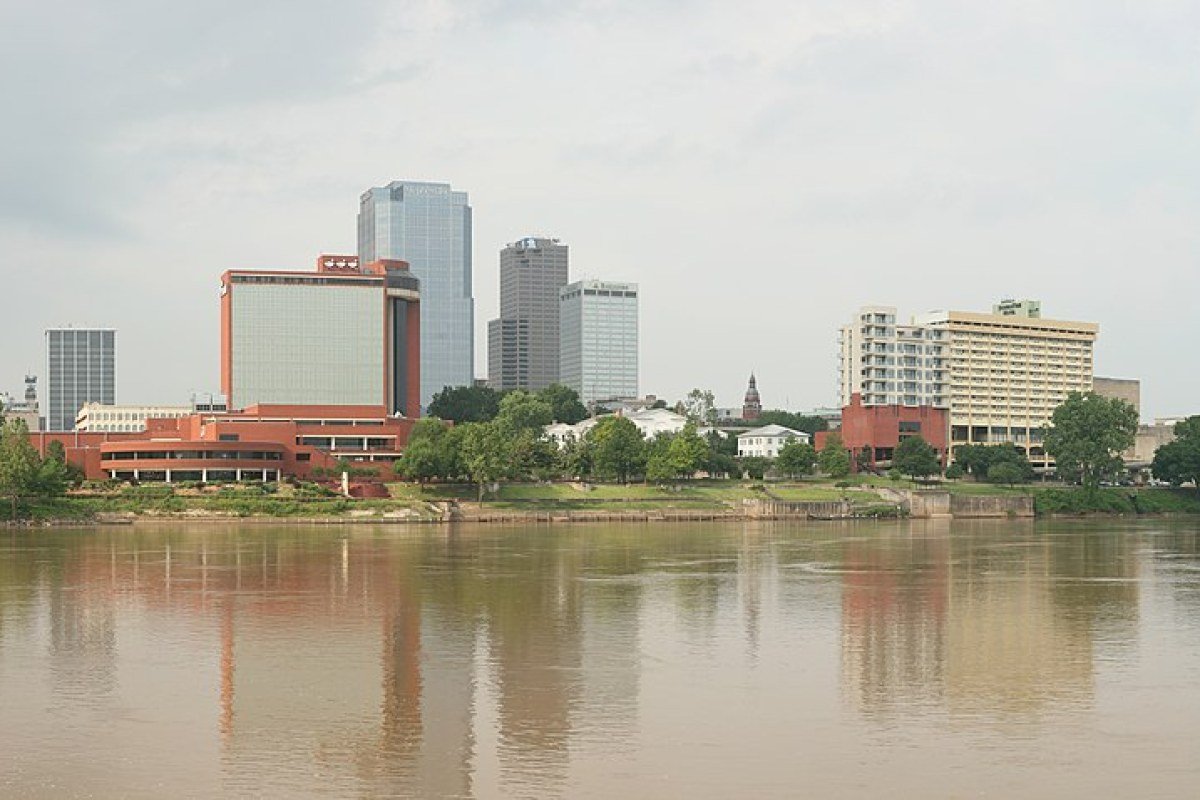
To anyone arriving from a high-cost coastal market, Arkansas home prices look almost like a typo. As of early 2026 the statewide median sits around $220,000–$250,000, roughly half the national figure and a fraction of what the same money buys in California, New York, or Washington State. Little Rock, the capital and largest city, runs higher in its more sought-after neighborhoods — figure $230,000 to $300,000 there — with plenty of entry-level options below that in quieter parts of town.
Northwest Arkansas is the exception that proves the rule. The Fayetteville-Springdale-Rogers-Bentonville metro is the state’s fastest-growing corner, and the gravitational pull of Walmart and its supplier ecosystem has pushed median prices into the $350,000–$450,000 range. That is a clear premium over the rest of Arkansas, yet it still undercuts comparable job-market cities in Texas, Tennessee, or Colorado by a wide margin.
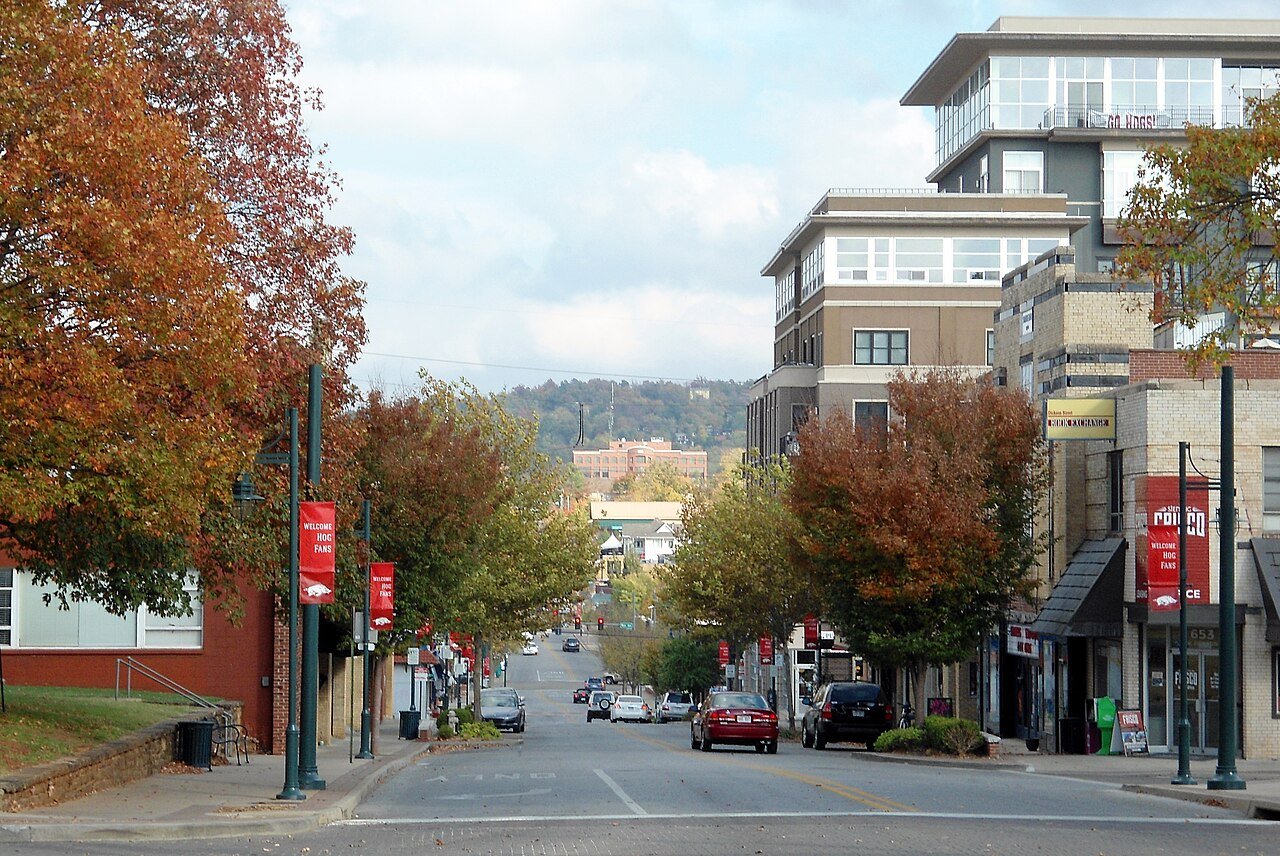
Rents follow the same logic. A two-bedroom apartment in Little Rock averages $900 to $1,200 a month depending on the building and the block. Fayetteville sits a notch higher, at $1,100 to $1,500, lifted by university and employer demand. In smaller cities — Fort Smith, Jonesboro, Conway — a two-bedroom lands in the $750 to $950 range, a number that is nearly impossible to come by anywhere along the coasts.
Taxes: A Mixed Picture
Arkansas keeps its tax structure competitive without making it a headline. The state runs a graduated income tax topping out at 3.7% after the rate cut that took effect for the 2026 tax year, which lands it squarely in the middle tier among income-taxing states. Sales tax is where the math turns less friendly: the statewide rate is 6.5%, and once cities and counties pile on their local add-ons, the total reaches 9–10% in some places, Little Rock among them.
Property taxes, on the other hand, are genuinely low — an effective rate near 0.6% of assessed value, or roughly $1,200 a year on a $200,000 home. For a retiree on a fixed income, or anyone arriving from a high-tax state with painful memories of the annual bill, that is a meaningful relief. Owner-occupants of a primary residence can also claim the homestead property tax credit, which the legislature raised to as much as $600 a year beginning with 2026 bills.
Overall, the tax burden here runs below the U.S. norm, though not as dramatically as in no-income-tax states like Texas, Florida, or Nevada. For most households, the income tax gets swallowed by far cheaper housing, which makes any head-to-head with a no-income-tax state more complicated than a single rate suggests.
Groceries, Utilities, and Daily Costs
Grocery prices in Arkansas land about 5–8% under the national average, and the state sweetened the deal further by ending its sales tax on groceries on January 1, 2026 (local grocery taxes still apply in some jurisdictions). The state’s rural character and lower labor costs feed straight into food prices that consistently undercut larger metros. Walmart’s Bentonville headquarters is no small part of the story: the company’s logistics muscle and supplier relationships have shaped a retail food environment built on the same economies of scale that made it rural America’s dominant grocer.
Utilities sit comfortably in the moderate range. Hot summers and mild winters mean cooling bills climb from June through September, but the state escapes the brutal heating costs that drain northern budgets all winter. A typical household spends somewhere between $1,800 and $2,400 a year — close to the national norm, and notably easier than states wrestling with extreme summer heat like Arizona or extreme winter cold like Minnesota.
Healthcare: Access Is the Real Challenge
On paper, healthcare in Arkansas costs less than the national benchmark. The catch is getting to it. Rural areas — which make up most of the state’s map — face real physician shortages, and residents there routinely drive 30 to 60 minutes, sometimes more, to reach a specialist. The University of Arkansas for Medical Sciences (UAMS) in Little Rock anchors the system as the state’s main academic medical center, offering care on par with regional hospitals in larger states.
Insurance premiums are moderate against national benchmarks, and the state’s Medicaid expansion under the ACA — built around a distinctive “private option” model — has pushed uninsured rates well below their pre-2014 levels. If you carry employer coverage or Medicare and live in the Little Rock metro or Northwest Arkansas, access is adequate. Out in the rural counties, that access gap is a genuine quality-of-life question worth weighing before you move.
The Financial Case for Arkansas
Who actually comes out ahead here? Remote workers who keep a coastal salary while shedding a coastal mortgage. Retirees on Social Security or a pension stretching every dollar. People anchored in healthcare, education, or government work, where the paycheck is steady and the cost base is low. And families who would rather own a house with a yard and a trailhead nearby than rent a small place near big-city amenities.
Run the numbers and a striking gap appears: a household earning $80,000 in Arkansas tends to live better — more space, more housing quality, more financial breathing room — than the same household pulling $120,000 to $150,000 in most coastal metros. It reads as counterintuitive right up until you do the arithmetic, and that arithmetic is the whole of Arkansas’s appeal to the specific people for whom it adds up.
Budgeting Practically for Arkansas
Knowing the cost of living in Arkansas is the foundation; the next step is sorting which costs are fixed and which you can shape around your own life. Housing is the biggest lever in almost any budget, and the neighborhood you choose within the state can swing your monthly outlay dramatically while still keeping you near the places that matter to you. Utilities, transport, and food add up quietly, so even small monthly differences turn into real money over a year. The advantage Arkansas holds over high-cost cities like New York or San Francisco is concrete and measurable, and plenty of people who relocate report both a stronger financial footing and a better day-to-day quality of life. Treat these figures as a starting framework, and confirm current rents and home prices for your specific target area, since local markets can move faster than the annual cost-of-living studies that track them.
Frequently Asked Questions
Is Arkansas one of the cheapest states to live in?
Yes. Arkansas consistently ranks among the most affordable states in the US — roughly tenth nationally in recent MERIC data — with a cost of living about 11% below the national average. The statewide median home price runs around $220,000–$250,000, property taxes average just 0.6% of assessed value, and grocery costs run 5–8% below average. For remote workers, retirees, and households with stable income, the advantage is substantial and compounds over time.
What is the average rent in Arkansas?
A two-bedroom apartment in Little Rock averages $900–$1,200 per month. Fayetteville runs $1,100–$1,500, lifted by university and employer demand from the Walmart-centered economy. Smaller cities like Fort Smith, Jonesboro, and Conway offer two-bedroom apartments for $750–$950 per month — figures that are nearly impossible to find in most coastal US cities.
How does Northwest Arkansas differ for cost of living?
Northwest Arkansas (Fayetteville, Bentonville, Rogers, Springdale) commands a premium over the rest of the state, driven by Walmart’s headquarters and its supplier ecosystem. Median home prices of roughly $350,000–$450,000 run higher than the Arkansas average but still come in well below comparable job-market cities in Texas, Tennessee, or Colorado — a rare pairing of employment opportunity and relative affordability.
What are the income and property tax rates in Arkansas?
Arkansas levies a graduated income tax topping out at 3.7% following the rate cut effective for the 2026 tax year. The statewide sales tax is 6.5%, with local additions bringing totals to 9–10% in some cities. Property taxes are low, at an effective rate near 0.6% — about $1,200 per year on a $200,000 home. Owners of a primary residence can also claim a homestead property tax credit of up to $600 a year.
Who benefits most financially from living in Arkansas?
Remote workers, retirees, and people in stable sectors like healthcare, education, or government benefit most. A household earning $80,000 in Arkansas typically achieves better housing quality and financial security than the same household earning $120,000–$150,000 in most coastal metros, once housing costs, property taxes, and overall cost differences are calculated. That gap is the core of Arkansas’s financial appeal.