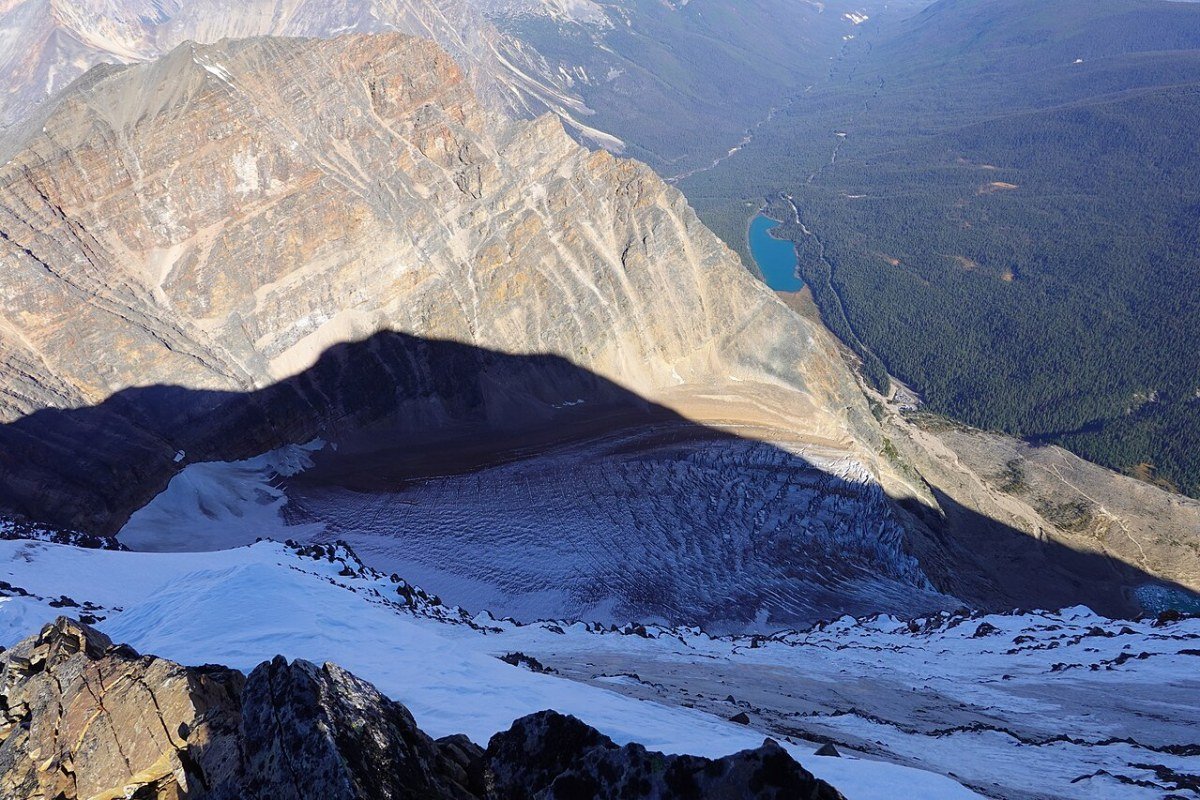
Alberta’s outdoor recreation is defined by the Canadian Rockies — the UNESCO World Heritage mountain parks system (Banff, Jasper, Kootenay, Yoho, and the adjacent Waterton Lakes) that begins at Calgary’s western doorstep and runs to the British Columbia border in a sequence of glaciated peaks, turquoise lakes, and wilderness ranking among the world’s great outdoor landscapes. For Calgary and Edmonton residents, the Rockies are not a once-in-a-lifetime destination but a weekend habit — the Banff townsite sits 90 minutes from Calgary, the Icefields Parkway is a Sunday drive, and Jasper’s dark-sky preserve is a three-hour winter overnight. That proximity hands Albertans an outdoor dividend no other major Canadian city enjoys at the doorstep: reliable powder skiing at world-class resorts, summer hiking and cycling through some of the most dramatic mountain scenery in North America, and wildlife encounters — grizzly bears, wolves, elk, bighorn sheep, mountain goats — that play out on day hikes from the trailhead parking lot.
Skiing and Winter Recreation
Alberta‘s ski resorts rank among the finest in Canada. The Rocky Mountain snowpack, the dry continental powder (lower humidity than coastal BC produces a lighter, less consolidated snow), and the resort infrastructure combine into a skiing product that rivals anything in British Columbia:
- Lake Louise Ski Resort: 4,200 acres across four mountain faces and the largest ski area in the Canadian Rockies; the back bowls hold some of the most extensive above-treeline terrain in the country; the Chateau Lake Louise frames a base-lodge view few resorts on Earth can match; 90 minutes from Calgary
- Banff Sunshine Village: 3,358 acres straddling the Continental Divide, with a top elevation near 2,730 metres that makes it Canada’s highest skiable terrain; the altitude draws the driest powder in the Banff area and stretches the season from November into late May; reached from the Banff townsite by gondola from the valley parking lot; the expert-only Delirium Dive (route-finding and avalanche gear required) is Alberta’s most demanding in-bounds run
- Mount Norquay: the Banff townsite’s local hill at 190 acres; in the warmer months its via ferrata — fixed cables strung across the cliff face above the resort — becomes the mountain’s shoulder-season draw
- Marmot Basin (Jasper): 91 trails over 1,720 acres and the province’s most remote lift-served skiing, 19 km from the Jasper townsite, pairing strong terrain with a fraction of Banff’s crowds
- Nakiska (Kananaskis Country): the 1988 Winter Olympics alpine venue, 90 minutes from Calgary; a family-friendly mountain and Calgary’s closest ski option, priced below the Banff resorts
Summer Hiking: Banff and Jasper
The Banff and Jasper trail networks rank among the most extensive and scenically concentrated in North America — thousands of kilometres of maintained paths threading glaciers, alpine meadows, and turquoise lakes:
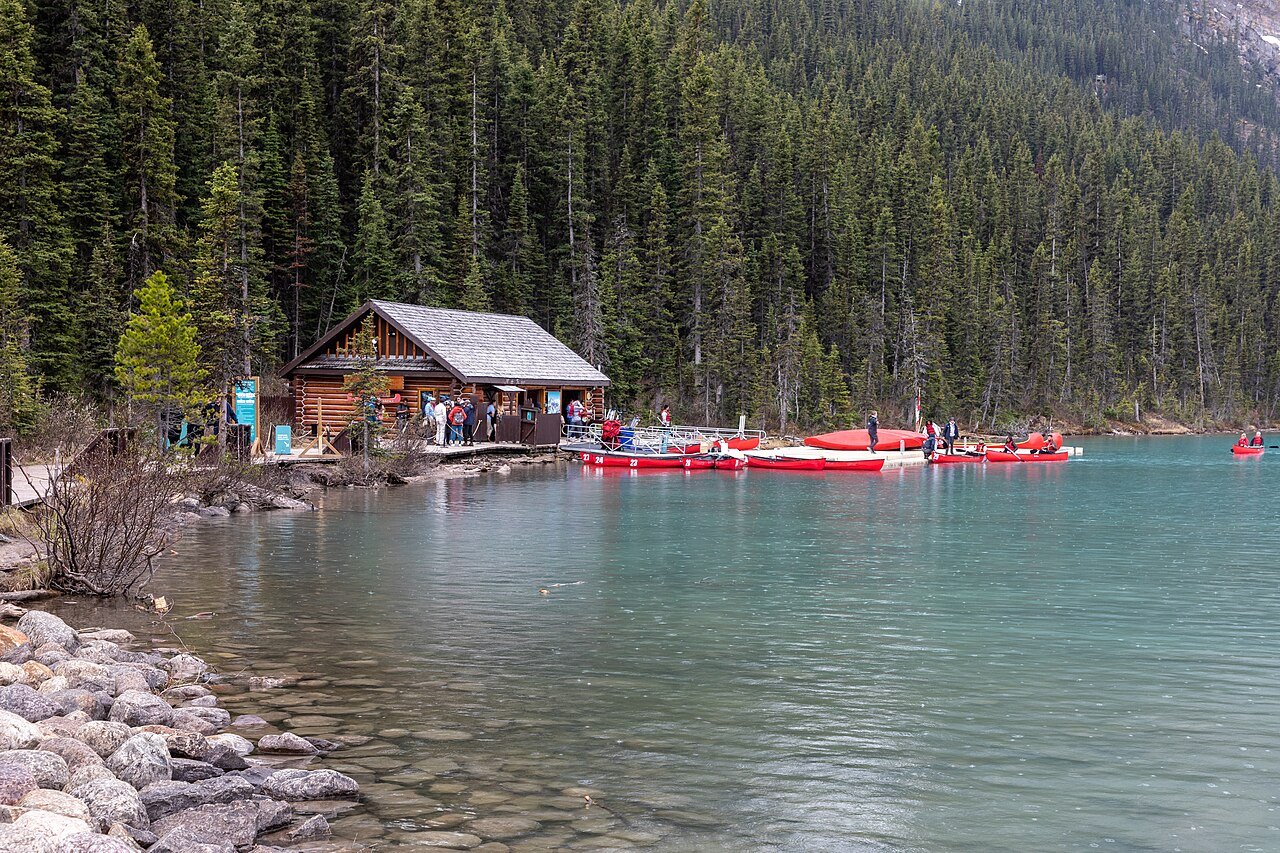
- Plain of Six Glaciers (Banff): 14 km return from Lake Louise; the route climbs a lateral moraine above the lakeshore to a tea house below the Victoria Glacier, with views across the six glaciers strung along the Continental Divide; one of the most rewarding day hikes in the Canadian Rockies
- Larch Valley and Sentinel Pass (Banff): 11.7 km return from Moraine Lake; the September larch season — three golden weeks when the alpine larches turn — makes this the most photographed and most sought-after hike in Alberta; advance parking or shuttle reservations are essential
- Skyline Trail (Jasper): 44 km over two to three days; the best-known multi-day route in the Canadian Rockies, with 27 km above the treeline and panoramic sightlines toward the Columbia Icefield massif; a Parks Canada backcountry reservation is required
- Berg Lake Trail (Mount Robson Provincial Park, BC border): roughly 21 km one way to Berg Lake; Mount Robson (3,954 m, the highest peak in the Canadian Rockies) towers over the calving iceberg lake, the most dramatic single destination reachable on a multi-day hike from the Rockies road system
Wildlife Viewing in the Mountain Parks
Wildlife viewing in Banff and Jasper offers some of the most reliable large-mammal encounters in North America — the parks’ protected status and the animals’ habituation to vehicles deliver sightings that photographers travel across continents to capture:
- Elk (wapiti): the Banff townsite herd is the best known, with large bulls bugling through residential streets during the September rut; the Cave and Basin meadows and the Bow Valley Parkway (Highway 1A) turn up elk year-round
- Grizzly and black bears: the Bow Valley Parkway and the Icefields Parkway see dependable grizzly viewing in spring (May–June) and fall (September–October), especially on the roadside slopes where bears dig for ground squirrels and graze avalanche-deposited greenery; black bears appear at lower elevations all summer
- Mountain goats and bighorn sheep: the Highwood Pass in Kananaskis Country (the highest paved road in Canada at 2,206 metres) is a dependable spot for mountain goats on the cliffs above the road; the bighorn colony at the Disaster Point Wildlife Viewing Area on the Icefields Parkway has stopped traffic for decades
- Wolves: the Bow Valley packs are tracked by Parks Canada researchers; winter snow-tracking and the Bow Valley Parkway’s lighter traffic give the best odds, though a sighting is never guaranteed and rewards patience
Cycling and Kananaskis Country
Alberta’s cycling reaches from resort singletrack to the provincial park systems flanking the national parks:
- Kananaskis Country: the provincial parks and recreation area west of Calgary (Highway 40 south of Canmore) opens up mountain hiking, mountain biking, and road cycling without a national-park entry fee — a release valve from the busier parks; the Highwood Pass, closed to vehicles each year from 1 December to 15 June, opens a brief snow-free, car-free window for road cyclists in early to mid-June, while the Ribbon Creek trail network handles the rest of the season
- Bow Valley Parkway cycling: in spring and early autumn, Parks Canada restricts vehicles on the eastern 17 km of Highway 1A (between the Fireside day-use area and Johnston Canyon) from 8 a.m. to 8 p.m., opening a quiet cycling corridor through the Bow Valley’s wildlife habitat; an overnight travel ban supports the same wildlife
- Canmore Nordic Centre trail network: 65 km of maintained trails — shared by mountain bikes in summer and cross-country skiers in winter — laid out on the slopes above the Canmore townsite and reachable straight from the residential streets
Frequently Asked Questions
What does Banff National Park offer as Canada’s most iconic outdoor destination?
Banff National Park — Canada’s first national park (established 1885), 6,641 square kilometres in the front ranges of the Rocky Mountains, 90 minutes west of Calgary — packs in a density of world-class mountain scenery unmatched by any protected area in North America. Lake Louise (the turquoise glacially fed lake below Victoria Glacier, with the Fairmont Chateau Lake Louise on its shore) is the most photographed landscape in Canada, and the Plain of Six Glaciers trail (14 km return) from the lakeshore ranks among the easiest glacier approaches in the Canadian Rockies. Moraine Lake in the Valley of the Ten Peaks (15 km from the Lake Louise junction) — the scene printed on the 1969–1979 Canadian twenty-dollar bill — sits behind a competitive vehicle reservation system in peak season. The Icefields Parkway (Highway 93, 232 km from Lake Louise to Jasper) ranks among the world’s great scenic drives, passing the Columbia Icefield (the largest icefield in the Rockies south of Alaska, 325 square kilometres) and the Athabasca Glacier. The Banff townsite anchors it all with the most complete mountain resort services in Canada, the Banff Springs Hotel (1888, National Historic Site) presiding as the landmark property.
What does skiing in the Canadian Rockies offer compared to other North American resorts?
The Canadian Rockies ski cluster — Lake Louise Ski Resort, Banff Sunshine Village, Mt. Norquay near Banff, and Marmot Basin in Jasper — delivers the continent’s most geographically dramatic lift-served skiing. Lake Louise Ski Resort (4,200 acres, roughly 990 metres of vertical, the largest ski area in the Canadian Rockies) spreads runs across four mountain faces, and the sightlines over the lake from the upper lifts rank among the prettiest in Canadian skiing. Banff Sunshine Village (3,358 acres, reached by gondola from the valley, with annual natural snowfall of nine metres or more) sits almost entirely above 2,159 metres, giving it the steadiest natural snow of any Rockies resort and the title of Canada’s highest skiable terrain. The SkiBig3 pass (Lake Louise, Sunshine, and Norquay) bundles the fullest Rocky Mountain ski experience available on a single Canadian ticket. Marmot Basin in Jasper (1,720 acres, the least commercialized of the group, with a local character all its own) reaches some of the most pristine powder in the region. The Rockies’ cold, dry continental snowpack is a fundamentally different animal from the wet coastal snow at Whistler.
What does Jasper National Park offer beyond Banff?
Jasper National Park — 10,878 square kilometres, the largest national park in the Canadian Rockies, adjoining Banff to the north — trades Banff’s polish for a wilder, less crowded version of the same geological drama, with markedly less visitor pressure outside peak summer. The Maligne Valley (45 km east of the Jasper townsite) holds the park’s signature outing: Maligne Lake (22 km long, the largest natural lake in the Canadian Rockies, with the boat cruise to Spirit Island running again for the 2026 season). Athabasca Falls, where the Athabasca River squeezes through a narrow quartzite gorge, and the nearby Sunwapta Falls are easy Icefields Parkway stops within Jasper. The Columbia Icefield Adventure (the Athabasca Glacier, reached by Ice Explorer snowcoach from the Icefields Centre) ranks among the most approachable glacier experiences in North America. Jasper’s status as the world’s largest accessible dark-sky preserve (designated 2011) makes it a premier North American stargazing destination through the dark season (October–March). One important update: the Maligne Canyon and Cavell Road remain closed for 2026 while Parks Canada rebuilds infrastructure and stabilizes slopes after the July 2024 wildfire — check the park’s open-and-closed page before you plan around them.
How has Jasper recovered from the 2024 wildfire, and what is open in 2026?
The July 2024 Jasper wildfire burned more than 32,000 hectares and damaged a third of the townsite’s structures, but recovery is well advanced by 2026. The town is rebuilding — officials expect most homes and businesses back within three to five years, with full ecological recovery measured in decades — and visitor services have largely returned. Marmot Basin ran a full 2025–26 ski season, the Icefields Parkway and its glacier attractions are open, Maligne Lake and its Spirit Island cruise are operating, and most front-country and many backcountry trails are accessible. The notable exceptions are Maligne Canyon and Cavell Road, both still closed in 2026 for post-fire slope stabilization and infrastructure rebuilding, with no firm reopening date. Jasper is firmly worth visiting in 2026; just confirm specific trails and roads on the Parks Canada “what’s open” page before you go.
What does Kananaskis Country offer as an alternative to the national parks?
Kananaskis Country — 4,200 square kilometres of provincial parks, recreation areas, and wildland parks immediately west of Calgary, abutting Banff National Park — is the closest big-mountain wilderness for Calgary residents and the best-value alternative to the Banff and Jasper experience for visitors. Unlike the national parks, Kananaskis charges no general park entrance fee (a Conservation Pass is required for vehicles in some areas), and its backcountry permit and camping system runs less congested. The Kananaskis Valley (Highway 40) forms the main corridor, reaching Barrier Lake, the Galatea Lakes (a superb day hike), Rawson Lake, and the Ptarmigan Cirque alpine-meadow loop. Nakiska Ski Resort (built for the 1988 Calgary Winter Olympics alpine events) and Fortress Mountain supply the downhill terrain. Spray Lakes and the Upper Kananaskis Lakes hold the area’s most striking lakescapes, all reachable by vehicle, and the mountain-biking network — particularly in Peter Lougheed Provincial Park — keeps gaining ground as a looser alternative to the tightly regulated national-park trails. Canmore makes the handiest base, with the Bow Valley forming a complete recreation corridor between Calgary and Banff.