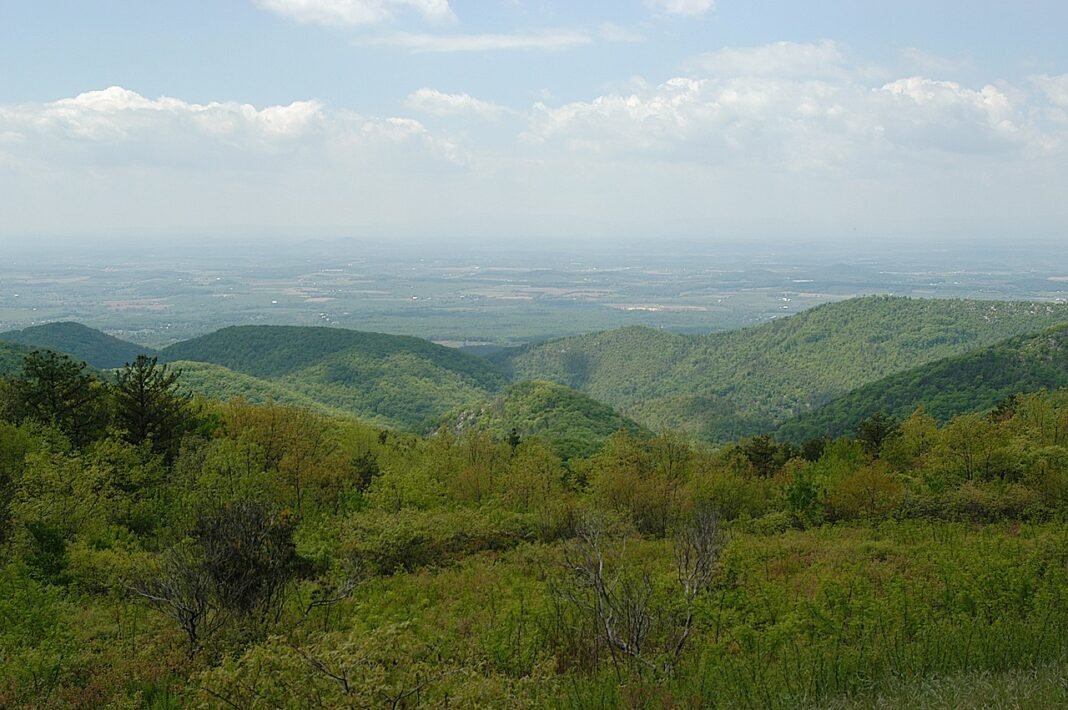


Few European destinations have changed as completely as Northern Ireland. In the decades since the Good Friday Agreement of 1998, the region has gone from a place international travellers avoided to one of the UK’s most compelling and fastest-growing destinations. The political settlement that ended the Troubles let Northern Ireland turn its attention to what it always had: a spectacular coastline (the Causeway Coastal Route stands with the world’s great scenic drives), a confident cultural capital (Belfast’s reinvention from industrial port to creative hub has produced a restaurant culture, a pub scene, and an arts infrastructure remarkable for a city its size), and a surprising variety of terrain packed into a small area (14,130km², home to 1.9 million people): the Mourne Mountains, the Antrim Plateau, Lough Neagh (the largest freshwater lake in the British Isles), and the ancient oak forests of the Sperrins. The Game of Thrones effect — much of the HBO series was filmed here — brought millions of viewers face to face with countryside that became some of the most photographed on screen. What visitors find beyond the filming locations is a country with far more to it than scenery: a history complex and contested, a people warm and direct, and a landscape of coast and upland few visitors forget.
Belfast: The Transformed City
Belfast (350,000 residents) is Northern Ireland’s capital and one of the UK’s most striking urban turnarounds. A Victorian industrial city that built the Titanic, then endured Europe’s longest sustained urban conflict, it has since remade itself as a cosmopolitan, outward-looking place whose bar and dining scene routinely surprises visitors expecting something less polished. The Titanic Quarter — the revitalised shipyard area on Belfast Lough, home to the Titanic Belfast museum, the SS Nomadic, and the Titanic Slipways — is Northern Ireland’s most visited attraction. The Cathedral Quarter, the Victorian warehouse district north of the city centre, is its cultural heart, packed with live-music venues, restaurants, and the Oh Yeah Music Centre, which celebrates a popular-music legacy that runs from Van Morrison and Stiff Little Fingers to Gary Moore and Snow Patrol.

- Titanic Belfast: The world’s largest Titanic visitor experience sits inside a building shaped like a ship’s prow, on the exact site where the RMS Titanic was built. Its six floors of interactive galleries trace the ship’s construction, launch, voyage, and sinking, and count among the finest museum experiences in the UK. The Thompson Graving Dock beside the museum — where Titanic was fitted out — offers the most direct physical link to the ship itself
- Belfast City Hall: The Edwardian baroque civic building in Donegall Square, a statement of Victorian Belfast’s confidence, runs free guided tours of the Council Chamber, the Great Hall, and the story of the city and the peace process
- The Crown Liquor Saloon: Belfast’s most famous pub is the only one owned by the National Trust, preserved in its Victorian tile, brass, and snug splendour — a contender for the finest Victorian pub interior in the UK
- Murals and the Peace Walls: The Falls Road (republican/nationalist) and Shankill Road (loyalist/unionist) mural traditions — the political street art that documented the Troubles and keeps evolving in the years since — form an open-air gallery of cultural history unique to Belfast. The Peace Walls, the physical barriers between the two communities still standing on many streets, remain a frank reminder of the recent past
The Causeway Coastal Route: Northern Ireland’s Scenic Drive
The Causeway Coastal Route runs 120 miles from Belfast to Derry/Londonderry along the Antrim coast, a cliff-top road above the Irish Sea that few coastal drives in Europe can match. It threads through the Glens of Antrim and the coastal villages of Carnlough, Cushendun, and Ballycastle, past the ruins of Kinbane Castle and Dunluce Castle (the most dramatically sited medieval castle in Ireland, perched on a stack above the Atlantic), the Giant’s Causeway (a UNESCO World Heritage Site), the Carrick-a-Rede Rope Bridge, and the Old Bushmills Distillery (the world’s oldest licensed whiskey distillery, dating to 1608). The sequence of scenery and heritage rewards the full day it takes to drive properly.
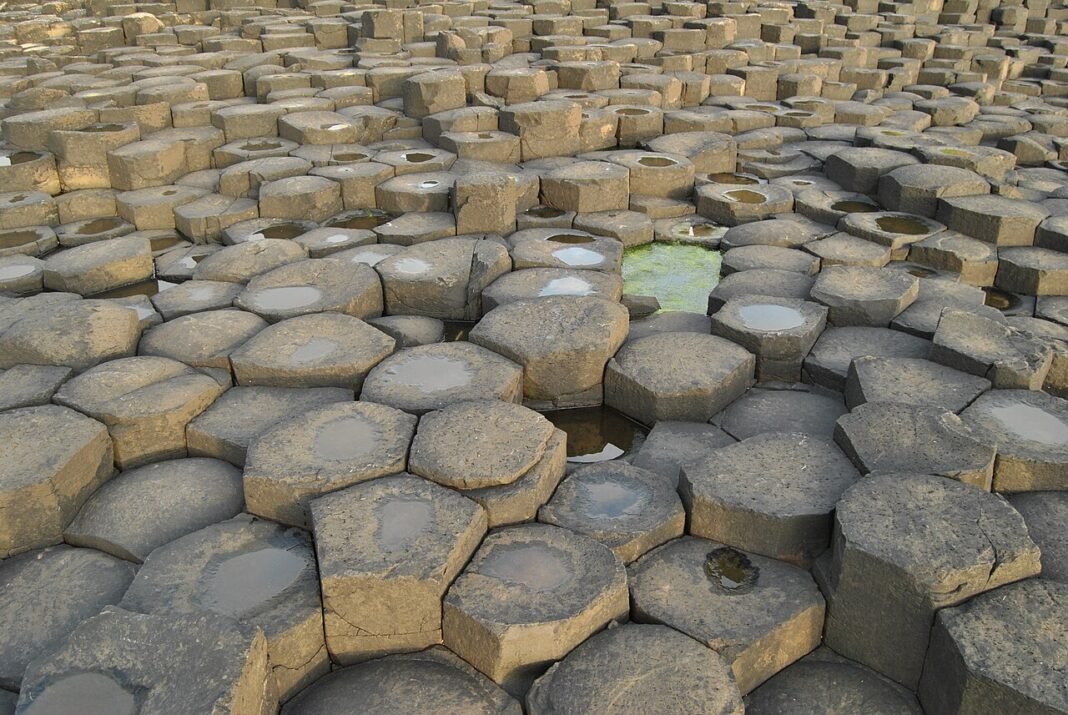
- Giant’s Causeway: Some 40,000 interlocking hexagonal basalt columns, formed by volcanic cooling 60 million years ago, step down from the cliff base into the Irish Sea. Northern Ireland’s most visited natural attraction and only UNESCO World Heritage Site, it has a geometric regularity that seems impossible until you understand how lava cools and contracts. The National Trust visitor centre supplies the geological and mythological background
- Carrick-a-Rede Rope Bridge: This suspension bridge links the mainland to the tiny island of Carrick-a-Rede, 30m above the sea. Salmon fishermen erected the first version centuries ago; today the National Trust runs it, and the crossing puts you right among the Antrim coast’s sheer cliff scenery
- Dark Hedges: The avenue of ageing beech trees on Bregagh Road in County Antrim — photographed millions of times as the Kingsroad in Game of Thrones — remains a fixture on every Northern Ireland itinerary, its intertwining branches forming an eerie green tunnel
The Mourne Mountains: Northern Ireland’s Peaks
The Mourne Mountains in County Down, 50km south of Belfast, are Northern Ireland’s most dramatic upland country: a compact granite range that rises sharply from the Irish Sea. Slieve Donard (850m, the highest peak in Northern Ireland) is reachable from Newcastle on a 5–6 hour return hike, while the Mourne Wall — a dry stone wall that encloses the catchment of the Silent Valley reservoirs, running across fifteen summits in a 31km circuit built between 1904 and 1922 — gives the range some of the most remarkable walking infrastructure in Ireland. Sitting just an hour by car from Belfast, the Mournes are the closest mountain country to any city on the island, and with the sea in view from most summits, the drama matches anything in the Lake District.
Derry/Londonderry: The Walled City
Derry (the nationalist name) or Londonderry (the unionist name) — locals still use both, depending on community identity — is Northern Ireland’s second city (roughly 85,000 in the city, 105,000 across the wider urban area) and the only complete walled city in Ireland. The 17th-century walls (a 1.5km circuit, fully intact and walkable) enclose the original plantation city of 1613. The Bogside murals, including the celebrated “You are now entering Free Derry” gable end, together with the Museum of Free Derry, document the civil rights movement and the events of Bloody Sunday on 30 January 1972 in a way that feels at once raw and reconciled.
Frequently Asked Questions
What makes Belfast one of the UK’s most remarkable urban transformations?
Belfast — 350,000 residents, Northern Ireland’s capital — has few rivals among Britain’s regenerated industrial cities. The Victorian shipbuilding city that built the Titanic went on to endure Europe’s longest sustained urban conflict (the Troubles, 1968–1998), and now makes a rewarding short break, with a dining and nightlife scene that has outgrown its post-industrial reputation. The Titanic Quarter, the revitalised shipyard area on Belfast Lough, is anchored by Titanic Belfast (opened 2012, the world’s largest Titanic visitor attraction, with more than 12,000 square metres of floor space on the slipways where the Titanic and Olympic were built), now among Ireland’s busiest visitor draws. The Cathedral Quarter, the regenerated Victorian commercial district around St Anne’s Cathedral, has become the city’s arts and nightlife hub, with a pub and restaurant culture richer than its size would suggest. Black Taxi tours — community-led guided trips around the Falls Road and Shankill Road murals, the political art of the Troubles on both sides of the divide — give visitors the most personal and thoughtful introduction to Northern Ireland’s recent history.
What does the Giant’s Causeway offer and why is it Northern Ireland’s most iconic site?
The Giant’s Causeway — roughly 40,000 interlocking hexagonal basalt columns formed 60 million years ago by volcanic activity, stepping from the Antrim coast into the sea near Bushmills — is Northern Ireland’s only UNESCO World Heritage Site and the most visited natural attraction in Ireland. The columns are typically six-sided, created as lava cooled and contracted, with the most regular columns typically 30-50cm across. The mythology of the giant Fionn mac Cumhaill (said to have built the causeway to cross to Scotland and confront a rival) made the site famous long before geology explained it. A visit splits between the National Trust visitor centre, with its exhibition, audio guides, and main causeway path, and the cliff-top Shepherd’s Steps route, which gives the best views of the columns and surrounding basalt from above. The Causeway Coast Way, a walking route of about 52km from Ballycastle to Portstewart, passes the site on its most dramatic stretch and threads it into a longer walk along the Antrim coast.
What is the Game of Thrones tourism legacy in Northern Ireland?
Northern Ireland was the primary filming location for HBO’s Game of Thrones (2011–2019), with the production spending roughly £206 million in the region across 8 seasons and reshaping its international tourism profile. The locations are spread across the country: the Dark Hedges beech avenue on Bregagh Road in County Antrim (the Kingsroad), Tollymore Forest Park (the haunted forest beyond the Wall), Dunluce Castle (an inspiration for the Red Keep exterior), Ballintoy Harbour (the Iron Islands), Cushendun Caves (where Melisandre gave birth), the Mourne Mountains (the approach to Vaes Dothrak), and Castle Ward (the Winterfell exterior, now a themed visitor attraction with archery and costumed tours). Tourism Northern Ireland has produced dedicated Game of Thrones trail maps and the Winterfell Trek walking route at Castle Ward. The Dark Hedges, for decades among the most photographed spots in Ireland, has lost trees to a string of storms since 2016 — Storm Gertrude, Storm Isha, and Storm Éowyn among them — and now has around 80 of its original 150 beech trees, many of them ageing and in decline. Its impact is routinely cited as one of Britain’s clearest examples of film-driven tourism.
What does Northern Ireland offer beyond the Causeway Coast?
Northern Ireland’s countryside reaches well beyond the famous Causeway Coast. Lough Neagh is the largest freshwater lake in the British Isles, covering 392 square kilometres — bigger than the Isle of Wight. The Mourne Mountains, a granite range in County Down, rise to Slieve Donard at 850m straight from the Irish Sea. The Sperrin Mountains, rounded heather moorland across County Tyrone and County Derry/Londonderry, hold the Curraghinalt deposit, the UK’s largest known gold reserve. The Fermanagh Lakelands centre on Lough Erne, with 154 islands including Devenish Island’s Early Christian monastery. For more depth, the Cuilcagh Lakelands UNESCO Global Geopark (the Marble Arch Caves) in County Fermanagh is one of the most accessible cave systems in Europe, and the Giant’s Ring near Belfast is a Neolithic henge 180m across, a major prehistoric ceremonial site. The Glens of Antrim — nine glacially carved valleys dropping from the Antrim Plateau to the North Channel — are perhaps the most rewarding and least crowded corner of all, with Glenariff Forest Park, the Queen of the Glens, the easiest to reach.
What is Northern Ireland’s food and cultural scene in 2026?
Northern Ireland’s food has changed in step with the wider transformation since the Good Friday Agreement, moving from a conflict zone where the conditions for ambitious dining were thin to a place whose chefs, producers, and restaurants now win international praise. Ox (Belfast, Stephen Toman’s tasting-menu restaurant) draws consistent national acclaim, while the Deanes group (Michael Deane’s venues across Belfast, including EIPIC and Deane’s Meat Locker) shows the city’s cooking at its most ambitious. The Causeway Coast’s whiskey heritage runs through it all: the Old Bushmills Distillery, founded in 1608 and the world’s oldest licensed whiskey distillery, sits 3km from the Giant’s Causeway and produces single malts of real character. On the cultural side, the BBC’s Derry Girls — set in Derry/Londonderry during the Troubles and among the UK’s most watched comedies in years — and the Derry murals (the Free Derry Corner and the People’s Gallery on the Bogside walls) give the cities a depth that the countryside alone cannot convey.