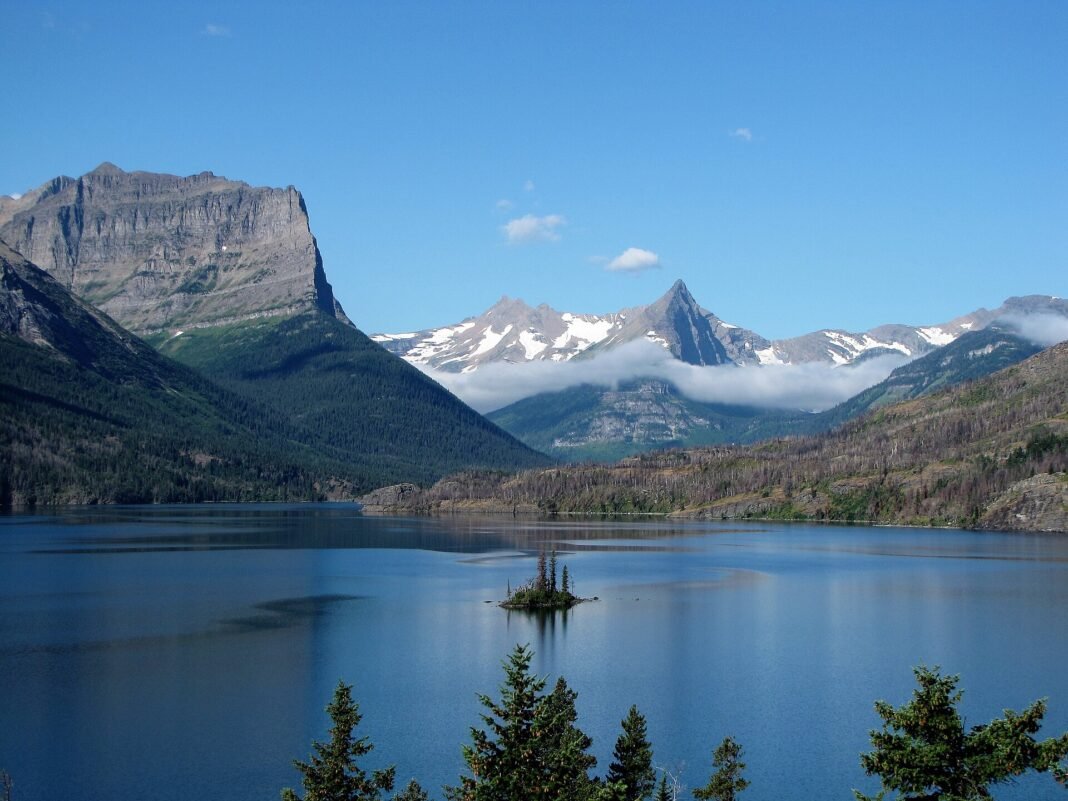
Montana‘s outdoor recreation is defined by scale — a state of 147,000 square miles where the distances between trailheads, river put-ins, and mountain peaks are measured in hours rather than minutes, and where the wilderness encounters that make a trip meaningful happen not at the edge of the backcountry but deep inside it. Roughly 30 million acres of public land, more than 450 wildlife species, 10,000-plus lakes, and the Rocky Mountain Front — where the peaks rise abruptly from the Great Plains — add up to terrain of extraordinary diversity. Alpine basins, prairie grasslands, river breaks, and forested valleys each reward a specific pursuit, and each delivers the density of wildlife, the quality of solitude, and the sweep of landscape that the American West promises at its best.
Hiking: Glacier’s High Routes and the Bob Marshall Wilderness

Glacier National Park holds more than 700 miles of trail, and for hikers who want alpine scenery without a wilderness expedition it is the most rewarding mountain terrain in the lower 48. The Highline Trail from Logan Pass runs 11.8 miles point-to-point — out along the Garden Wall, past Granite Park Chalet at the 7.6-mile mark, then down to the Loop trailhead — and traces the Garden Wall just below the Continental Divide, climbing from about 6,600 feet at Logan Pass to roughly 7,300 feet at its high point, where mountain goats graze the ledges above and grizzly bears work the berry patches below. The Grinnell Glacier Trail from Many Glacier (10.6 miles round trip with 1,600 feet of gain, or 7.2 miles if you take the Many Glacier boat shuttle) climbs through hanging valleys and above Upper Grinnell Lake to the most photographed glacier in the park. The Iceberg Lake Trail, also from Many Glacier (9.6 miles round trip), ends at a cirque lake that holds floating ice into late August — a different but equally dramatic payoff for the extra miles beyond Grinnell.
South of Glacier, the Bob Marshall Wilderness Complex stitches together the Bob Marshall, Great Bear, and Scapegoat Wilderness areas — about 1.5 million acres across the Flathead and Lewis and Clark National Forests, making it one of the largest contiguous wilderness areas in the lower 48. At roughly 2,300 square miles, the “Bob” is larger than Delaware, and that scale is the point: multi-day trips into the interior genuinely leave the sound of roads and aircraft behind. Grizzly bear, mountain lion, wolf, elk, and bighorn sheep range through it at densities matched by few accessible wildlands south of Canada. Its signature feature is the Chinese Wall, a limestone escarpment that rises 1,000 feet along the Continental Divide for roughly 12 miles, reached on a four-day trek from the Benchmark or Gibson Reservoir trailheads.
Fly Fishing: Trout Capital of America
Montana earns its billing as the premier fly-fishing state in the lower 48 on density alone — the Missouri, the Madison, the Gallatin, the Yellowstone, the Big Hole, the Bitterroot, and the Clark Fork pack more high-quality trout water into one state than anywhere else in the country. The Missouri below Holter Dam, known to anglers as “the Mo” below Craig, is widely regarded as Montana’s finest wild trout fishery: a tailwater where steady flows and cold water drive prolific Trico and PMD hatches and rainbow and brown trout densities that keep a full-time guide industry busy out of Craig and Cascade. Average fish size on the Mo impresses even anglers raised on western rivers, and a summer morning’s surface feeding rivals the best dry-fly water in the country.
The Madison, flowing north out of Yellowstone through Ennis toward Hebgen Lake, may be the most famous trout river on earth. Montana wrote its first catch-and-release regulations here in the 1970s, and that history, the river’s exceptional rainbows and browns, and its proximity to Yellowstone’s own storied water make it a pilgrimage for fly fishers from every continent. The Gallatin, running through Gallatin Canyon south of Bozeman, offers easy public access right off US Highway 191, with put-ins recurring along the national forest. And the Blackfoot, east of Missoula — Norman Maclean’s river in A River Runs Through It — has clawed its way back from early-20th-century mining damage to deliver some of western Montana’s finest wild trout fishing.
Skiing: Big Sky and Beyond

Big Sky Resort, 45 miles south of Bozeman on US Highway 191, ranks among the largest ski areas in North America by skiable acreage: 5,850 acres draped across Lone Peak (11,166 feet) and neighboring Andesite Mountain, with a 4,350-foot vertical drop — one of the biggest in the country — and notably thin crowds compared with the marquee Colorado resorts. The Lone Peak Tram lifts skiers to the 11,166-foot summit and the mountain’s most serious terrain: the Big Couloir, a 50-degree avalanche chute; the Marx and Lenin couloirs; and bowl skiing that takes a short hike from the tram. The base village has matured into a year-round community of lodging, restaurants, and conference space — a genuine mountain town rather than a parking lot with a lift.
Whitefish Mountain Resort, above the town of Whitefish in the Flathead Valley, is the northwest Montana counterweight: 3,000 acres, a 2,353-foot vertical, and the deep, reliable snowpack of the Northern Rockies that keeps Whitefish skiing well in lean years elsewhere. Its proximity to Glacier makes for an easy combination — ski Whitefish in January, snowshoe in Glacier in February, hike Glacier in July, all from the same Flathead Valley base. Closer to Bozeman, Bridger Bowl sits 16 miles north of town: a non-profit hill with moderate prices that serves the MSU crowd and locals on reliable snow, with genuine backcountry pitches in the Ridge terrain above the lifts.
Wildlife Watching: Grizzlies, Wolves, and Bison
For large animals seen in the wild, nothing in the lower 48 beats Montana. Grizzlies turn up regularly in Glacier’s Many Glacier, Two Medicine, and North Fork areas. Wolves descended from the Yellowstone reintroduction have spread into the southwest of the state and show up now and then in the Madison and Gallatin Valleys. Yellowstone’s herd of roughly 5,000 bison ranges into the park’s northern Lamar Valley, where large groups gather in Montana’s southern corner, and in September and October the elk of the Bob Marshall and Beartooth Wilderness areas bugle through a rut as dramatic as any accessible backcountry in the country. Up in the Mission Valley south of Flathead Lake, the Ninepipe National Wildlife Refuge and its surrounding glacial-pothole wetlands draw sandhill cranes, tundra swans, and a steady rotation of diving ducks through spring and fall migration, with waves of waterfowl moving through the valley between the Pacific and Central flyways.
Frequently Asked Questions
What are the best hikes in Glacier National Park?
Glacier National Park’s 700-plus miles of trail offer the most rewarding accessible alpine hiking in the lower 48. The Highline Trail from Logan Pass runs 11.8 miles point-to-point along the Garden Wall, just below the Continental Divide (roughly 6,600 to 7,300 feet), passing Granite Park Chalet at 7.6 miles before descending to the Loop trailhead, with mountain goats on the ledges above and grizzly bears in the berry patches below. The Grinnell Glacier Trail from Many Glacier is 10.6 miles round trip with 1,600 feet of gain — or 7.2 miles using the Many Glacier boat shuttle — and ends at the park’s most photographed glacier. The Iceberg Lake Trail from Many Glacier (9.6 miles round trip) reaches a cirque lake that holds floating ice into late August. In summer 2026 Glacier is piloting a ticketed shuttle to Logan Pass with tickets on Recreation.gov; advance booking is essential, and private parking at Logan Pass is capped at three hours from July 1.
What is the Bob Marshall Wilderness and what makes it significant?
The Bob Marshall Wilderness Complex — the Bob Marshall, Great Bear, and Scapegoat Wilderness areas combined, about 1.5 million acres in the Flathead and Lewis and Clark National Forests south of Glacier — is one of the largest contiguous wilderness areas in the lower 48, roughly 2,300 square miles and larger than Delaware. Its scale means multi-day trips into the interior genuinely leave roads and aircraft sounds behind; grizzly bear, mountain lion, wolf, elk, and bighorn sheep range through it at densities matched by few accessible wildlands south of Canada. The Chinese Wall — a limestone escarpment rising 1,000 feet along the Continental Divide for roughly 12 miles — is its signature feature, reached on a four-day trek from the Benchmark or Gibson Reservoir trailheads.
What makes Montana the premier fly fishing state in the lower 48?
Montana packs more high-quality trout water into one state than anywhere else in the country — the Missouri, Madison, Gallatin, Yellowstone, Big Hole, Bitterroot, and Clark Fork. The Missouri below Holter Dam (below Craig) is widely regarded as Montana’s finest wild trout fishery: a tailwater with steady flows, prolific Trico and PMD hatches, and exceptional rainbow and brown trout densities. The Madison may be the most famous trout river on earth, with a storied history — the state’s first catch-and-release rules were written here in the 1970s — and Yellowstone next door. The Gallatin, through Gallatin Canyon, offers easy public access along US Highway 191, and the Blackfoot east of Missoula — Norman Maclean’s river from A River Runs Through It — has recovered from old mining damage to fish superbly for wild trout.
What ski resorts does Montana have and what makes them distinctive?
Big Sky Resort, 45 miles south of Bozeman, ranks among the largest ski areas in North America by skiable acreage: 5,850 acres across Lone Peak (11,166 feet) and Andesite Mountain, with a 4,350-foot vertical drop — one of the biggest in the country — and notably thin crowds versus comparable Colorado resorts. The Lone Peak Tram reaches the toughest terrain, including the Big Couloir (a 50-degree chute) and short-hike bowl skiing. Whitefish Mountain Resort in the Flathead Valley offers 3,000 acres and a 2,353-foot vertical on the deep Northern Rockies snowpack, with Glacier next door for a winter-spring combination trip. Bridger Bowl, 16 miles north of Bozeman, is a non-profit hill with moderate prices serving the MSU and Bozeman community, plus genuine backcountry terrain in the Ridge above the lifts.
What wildlife watching does Montana offer?
Montana has the best large-animal viewing in the lower 48. Grizzlies appear regularly in Glacier’s Many Glacier, Two Medicine, and North Fork areas. Wolves from the Yellowstone reintroduction have spread into southwestern Montana and turn up in the Madison and Gallatin Valleys. Yellowstone’s herd of roughly 5,000 bison ranges into the Lamar Valley in Montana’s southern corner. The Bob Marshall and Beartooth Wilderness areas host the country’s most dramatic accessible elk rut in September and October. And the Ninepipe National Wildlife Refuge, in the Mission Valley south of Flathead Lake, draws sandhill cranes, tundra swans, and a rotation of diving ducks through spring and fall migration.