Oklahoma‘s outdoor recreation is one of the genuine surprises of the American interior. A state often dismissed as flat, featureless, or merely a corridor between more celebrated destinations actually holds the largest remaining tallgrass prairie in North America (the Nature Conservancy’s Tallgrass Prairie Preserve in Osage County, with its free-roaming bison herd), the ancient granite peaks and wildlife of the Wichita Mountains Wildlife Refuge, the red rock canyons near Hinton, and the Ouachita National Forest’s wooded mountains in the southeast, where the hiking and fishing rival neighboring Arkansas. Add Oklahoma’s 50 state parks, the Arkansas River corridor, and the vast lake system built by Army Corps of Engineers dams, and you have a four-season outdoor portfolio that rewards anyone willing to look past the windshield view.
Wichita Mountains Wildlife Refuge: Ancient Plains Wilderness
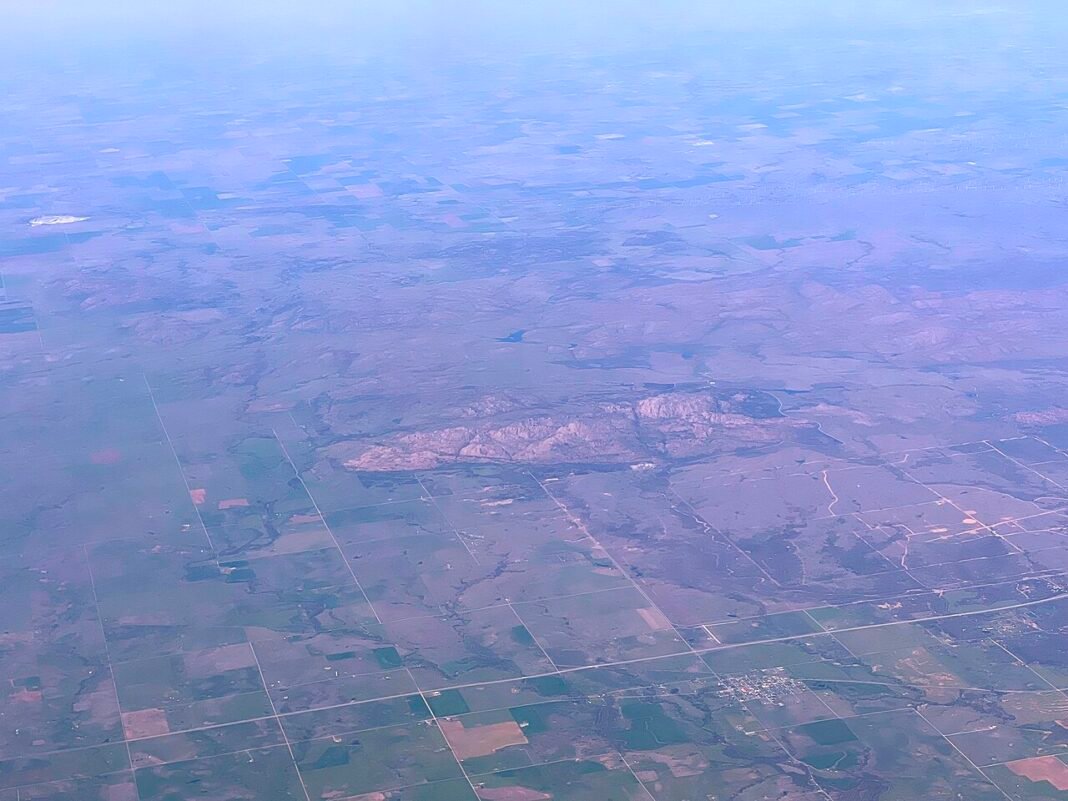
The Wichita Mountains Wildlife Refuge ranks as Oklahoma’s most spectacular outdoor destination: 59,020 acres of granite mountains, prairie grassland, and clear-water lakes sheltering a free-roaming herd of 650-plus bison alongside longhorn cattle, Rocky Mountain elk, white-tailed deer, and the prairie dog towns that make for some of the most accessible wildlife viewing in the Southern Plains. These are among the oldest exposed rock formations on the continent. Granite outcrops weathered over 500 million years into massive rounded boulders, a surreal landscape of sculpted stone rising straight from the prairie floor.

Key experiences at the refuge include:
- Mount Scott summit drive: A paved road climbs to the 2,464-foot summit — the highest accessible point in the refuge — where 360-degree views over the plains make the scale of the Southern Plains viscerally clear
- Elk Mountain Trail (3 miles RT): The refuge’s most popular hike, climbing through boulders and oak-juniper woodland to a granite summit overlooking the surrounding grassland
- Bison viewing loop: The herd is typically visible from the paved roads in the northern sections; early morning visits maximize wildlife activity
- Rock climbing: The granite boulders draw traditional and sport climbers from across the region; Crab Eyes, Forty Foot Hole, and the main face of Lost Dome rank among the busiest areas
- Prairie dog towns: Colonies near the refuge entrance reward visitors with reliable wildlife observation year-round, with burrowing owls and ferruginous hawks often visible in the same areas
Tallgrass Prairie Preserve: The Last Great Grassland
The Nature Conservancy’s Tallgrass Prairie Preserve in Osage County — 39,000 acres of native tallgrass prairie in the Flint Hills — is the largest protected tallgrass prairie remaining in North America, and the bison that graze it, a free-roaming herd managed at roughly 2,000 to 2,500 animals, have been restored to numbers not seen since the 19th century. The preserve stays open year-round without a fee, and a bison viewing loop runs through it by vehicle. Come fall, when the big bluestem and indiangrass turn gold and the bison stand dark against the rolling hills, the prairie delivers a landscape experience with few rivals in the American interior — a glimpse of the grassland ecosystem that once covered some 170 million acres of the continent.
The preserve sits near Pawhuska, the Osage Nation capital, and the pairing of prairie landscape with Osage cultural heritage makes this corner of Osage County one of the more distinctive travel destinations in the Great Plains. The Blue Stem Bakery in Pawhuska and the broader Osage Hills round out a half-day to full-day itinerary that goes well beyond the preserve itself.
Chickasaw National Recreation Area
Chickasaw National Recreation Area, near Sulphur in south-central Oklahoma, protects freshwater and mineral springs, travertine streams, and forested hills in a landscape shaped by the Arbuckle Mountains’ ancient geology. Its Travertine Creek — cold, clear, spring-fed, and flowing year-round — holds swimming holes that rank among the most popular natural swimming spots in the state during the summer heat. The Veterans Lake area adds fishing, camping, and hiking. The mineral springs, once promoted as curative, still flow in the Platt Historic District and make for a historical curiosity within the wider recreation area.
The Arbuckle Wilderness area next door contains Turner Falls — a 77-foot waterfall on Honey Creek that spills into a natural swimming pool ringed by rock formations, and among the state’s best-known natural attractions. Together, Turner Falls, the Chickasaw NRA swimming holes, and the Arbuckle Mountains’ limestone caves and fishing lakes turn the Sulphur-Ardmore corridor into a dense cluster of outdoor recreation.
Black Mesa: Oklahoma’s High Point
Black Mesa, in the far western panhandle, is the state’s highest point at 4,973 feet — a flat-topped mesa of volcanic basalt that rises above the High Plains, with views into four states (Oklahoma, New Mexico, Colorado, and Texas) from its summit. The 8.4-mile round-trip trail to the summit marker is the most physically demanding hike in Oklahoma, crossing shortgrass prairie and juniper-covered slopes before reaching the black basalt cap. Thanks to the panhandle’s remoteness, Black Mesa draws far fewer visitors than it deserves — a solitude-focused outing in country that feels more like New Mexico than Oklahoma.
Red Rock Canyon Adventure Park
Red Rock Canyon Adventure Park, near Hinton in western Oklahoma, is the state’s most underrated outdoor destination. A former state park now privately operated, the 310-acre site is built around a dramatic canyon of Permian red sandstone, with hiking trails, rock climbing routes, spring-fed swimming holes, and rappelling that together make for some of the most varied adventure recreation in Oklahoma. The walls rise 40 to 70 feet above the canyon floor, and the mix of red rock, cedar, and clear water surprises visitors who came expecting flat plains. Sitting 60 miles west of Oklahoma City, the park works well as a half-day or full-day outing from the metro.
Oklahoma’s Lakes and Water Recreation
Oklahoma has more man-made lakes than any other state — over 200 reservoirs created by Army Corps of Engineers and Bureau of Reclamation dams, with boating, fishing, and water sports spread across the entire state. Grand Lake o’ the Cherokees, in the northeast, is the premier resort lake, its shoreline lined with marinas, resorts, and private homes. Lake Eufaula, the largest lake entirely within the state at 102,000 acres, draws bass anglers from across the region. Lake Texoma, on the Oklahoma-Texas border, earns national recognition for striped bass. In the southeastern Ouachita Mountains, the Illinois and Mountain Fork Rivers run cold enough for trout fishing — a genuine surprise in a state better known for warm-water bass. And the Arkansas River’s whitewater sections open up kayaking and canoeing in the eastern part of the state.
Frequently Asked Questions
What is the Wichita Mountains Wildlife Refuge and what can you see there?
The Wichita Mountains Wildlife Refuge (59,020 acres, southwestern Oklahoma) is the state’s most spectacular outdoor destination — ancient granite outcrops weathered over 500 million years into massive rounded boulders rising from the Southern Plains, sheltering a free-roaming herd of 650-plus bison alongside longhorn cattle, Rocky Mountain elk, white-tailed deer, and accessible prairie dog towns. Key activities: the paved Mount Scott summit drive to 2,464 feet for 360-degree plains views; the Elk Mountain Trail (3 miles round trip, granite summit with grassland views); traditional and sport rock climbing on the granite boulders (Crab Eyes, Forty Foot Hole, Lost Dome); and early-morning bison viewing from the paved roads in the northern sections. Burrowing owls and ferruginous hawks turn up regularly in the prairie dog town areas near the entrance.
What is the Tallgrass Prairie Preserve and why is it significant?
The Nature Conservancy’s Tallgrass Prairie Preserve in Osage County — 39,000 acres of native tallgrass prairie in the Flint Hills — is the largest protected tallgrass prairie remaining in North America. Its free-roaming bison herd, managed at roughly 2,000 to 2,500 animals, has been restored to numbers not seen since the 19th century. The preserve stays open year-round without a fee, with a vehicle-accessible bison viewing loop. Come fall, when big bluestem and indiangrass turn gold against the rolling hills, the prairie delivers one of the most moving landscapes in the American interior — a glimpse of the grassland ecosystem that once covered some 170 million acres. The preserve sits near Pawhuska, the Osage Nation capital, pairing prairie landscape with Osage cultural heritage.
What does the Chickasaw National Recreation Area and Turner Falls offer?
Chickasaw National Recreation Area, near Sulphur in south-central Oklahoma, protects freshwater and mineral springs, travertine streams, and forested hills shaped by the Arbuckle Mountains’ ancient geology. Travertine Creek — cold, clear, spring-fed, and year-round — holds swimming holes among the most popular natural swimming spots in Oklahoma. The Veterans Lake area adds fishing, camping, and hiking. Just next door, Turner Falls — a 77-foot waterfall on Honey Creek spilling into a natural swimming pool — is one of the most popular natural attractions in the state. Together with the NRA swimming holes and the Arbuckle Mountains’ limestone caves, it makes the Sulphur-Ardmore corridor one of Oklahoma’s densest clusters of outdoor recreation.
What is Red Rock Canyon Adventure Park?
Red Rock Canyon Adventure Park, near Hinton in western Oklahoma (60 miles west of Oklahoma City), is a 310-acre former state park, now privately operated, built around a dramatic canyon of Permian red sandstone, with 40-to-70-foot canyon walls, hiking trails, rock climbing routes, spring-fed swimming holes, and rappelling. The mix of red rock, cedar, and clear water surprises visitors who came expecting flat plains — some of the most varied adventure recreation in Oklahoma and the most accessible canyon experience from the Oklahoma City metro. The park fills up on summer weekends; weekday visits give the best access to the swimming holes and climbing routes.
What is Black Mesa and what outdoor activities does the Oklahoma Panhandle offer?
Black Mesa, in the far western Oklahoma panhandle, is the state’s highest point at 4,973 feet — a flat-topped volcanic basalt mesa with views into four states (Oklahoma, New Mexico, Colorado, and Texas) from its summit. The 8.4-mile round-trip trail is the most physically demanding hike in Oklahoma, crossing shortgrass prairie and juniper-covered slopes before reaching the black basalt cap. The panhandle’s remoteness means Black Mesa draws far fewer visitors than it deserves, with genuine solitude in country that resembles northeastern New Mexico more than the Oklahoma most visitors know. Black-tailed prairie dogs, pronghorn antelope, and the occasional mountain lion roam the surrounding shortgrass prairie, and the area’s dark skies make for excellent stargazing far from city light pollution.