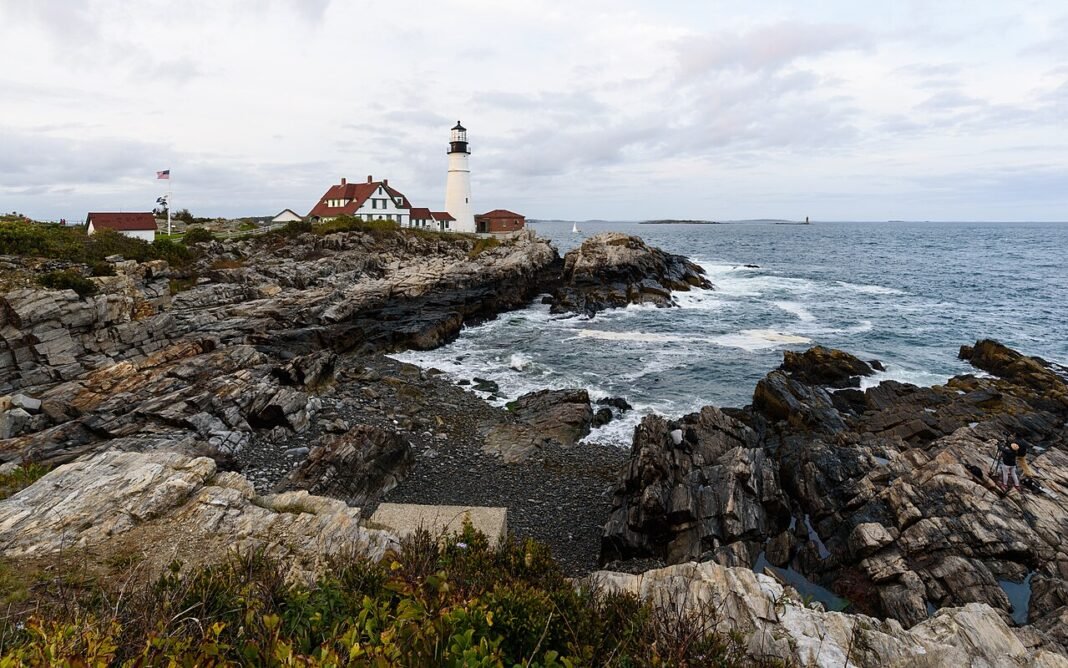
There is no better way to understand America than to drive across it. The scale of the country — the way the landscape shifts from the flat plains of Kansas to the red canyons of Utah to the Pacific cliffs of Big Sur — is something you simply cannot experience from an airplane. A road trip in the USA is one of the great travel experiences available to anyone, anywhere in the world. But it requires preparation, and done wrong, it can turn into an expensive exercise in frustration. This guide covers everything you need to know to do it right.
Renting a Car: What You Need to Know
The major car rental companies in the USA — Enterprise, Hertz, Avis, Budget, National, and Alamo — have locations at all major airports and in most city centers. Book online at least 2–4 weeks in advance for the best rates; last-minute airport pickups can be 2–3 times more expensive. For most trips, a mid-size sedan handles everything you’ll encounter on paved roads. For national park road trips in the Southwest, upgrading to a small SUV is worthwhile for higher clearance on unpaved forest roads and the general comfort of additional space for gear. For two or more people doing a week or longer trip, a compact SUV is almost always the right call. Minimum rental age is 21 at most US companies (18 in Michigan and New York), with a young-driver surcharge of roughly $25–$50/day applying until age 25; some specialty vehicle classes require age 25. International visitors should carry an International Driving Permit alongside their home driver’s license.
One-way rentals (pick up in one city, drop off in another) are available from all major companies but usually carry a surcharge of $100–$300. For a transcontinental trip, that fee beats backtracking hundreds of miles. Compare rates across multiple companies — the differences can be significant on the same dates and vehicle class.
Insurance: Don’t Pay for What You Already Have
Car rental insurance is one of the most aggressively upsold products in American travel. The rental desk will offer Collision Damage Waiver (CDW), Supplemental Liability Protection (SLP), and Personal Accident Insurance — which can add $30–$60 per day to your rental cost. Before buying any of it:
- Check your travel credit card benefits — most premium Visa, Mastercard, and American Express travel cards include rental car insurance as a standard benefit, covering the CDW entirely when you pay with the card.
- Check your home auto insurance policy — US residents’ personal auto insurance typically covers rental cars in the US.
- International visitors should check their travel insurance policy — many comprehensive travel insurance plans include rental car excess coverage.
The third-party Supplemental Liability Protection (which covers you if you injure someone) is worth buying if your existing coverage doesn’t include it — a serious accident without liability coverage in the US can be financially devastating.
Driving in the USA: Essential Tips for International Visitors
- Drive on the right. Most intersections use four-way stop signs rather than roundabouts; treat these as FIFO (first in, first out) — whoever arrives first goes first.
- Right turn on red. After a full stop, you can turn right at a red light, yielding to traffic and pedestrians (unless a sign says “No Turn on Red”). It is legal statewide in all 50 states, though a handful of cities restrict it — Washington, D.C. banned it outright in 2025, and large parts of New York City prohibit it.
- Speed limits are strictly enforced. Highway limits run 65–80 mph (105–130 km/h); Utah, Wyoming, Montana, and several other western states top out at 80 mph on rural interstates. The single highest posted limit in the country — 85 mph — is found only on one Texas toll road, State Highway 130 near Austin. City streets are 25–35 mph (40–55 km/h). Speed cameras are uncommon, but state troopers are not.
- Gas is sold in gallons (1 US gallon = 3.785 liters). Pay at the pump by credit card; you’ll need to enter a zip code — use 00000 if your card doesn’t have one, or pay inside. Gas prices vary significantly by state — California is usually the most expensive; Southeast states are cheapest.
- Tolls: Many East Coast and Midwest highways have tolls, increasingly collected electronically. Without an E-ZPass transponder (transponders can be rented from some car rental companies), you may need to pay by cash or mail in a payment later. Western states have almost no tolls.
Classic Road Trip Routes
Route 66: Chicago to Santa Monica (2,448 miles)
The “Mother Road” runs through eight states and is the quintessential American road trip. The route was decommissioned in 1985 after the Interstate system bypassed it, but significant stretches in Oklahoma, New Mexico (Tucumcari, Santa Rosa, Albuquerque), and Arizona (Seligman, Williams, Oatman) remain driveable, lined with the vintage motels, diners, and roadside Americana that made the road famous. Budget 10–14 days for the full route, or pull the highlights of New Mexico and Arizona in 5–7 days.

Pacific Coast Highway: Seattle to San Diego
Highway 1/US 101 along the California coast is one of the most spectacular drives in the world. The Big Sur section alone — 90 miles of two-lane highway carved into Pacific cliffs, with views of the blue ocean below and condors occasionally soaring above — is worth the entire trip. The full California Coast can be driven in 4–5 days if you push, but 7–10 days is ideal for exploring the beaches, wineries of Sonoma, and towns like Carmel-by-the-Sea and Santa Barbara. Check road conditions before going — sections of Highway 1 through Big Sur are occasionally closed by landslides.

The Utah National Parks Loop (800–1,000 miles)
Utah’s “Mighty Five” national parks — Zion, Bryce Canyon, Capitol Reef, Canyonlands, and Arches — can be connected in a roughly circular route of 800–1,000 miles, typically starting and ending in Las Vegas or Salt Lake City. This is arguably the single best road trip in the country for sheer landscape variety: red rock arches, slot canyons, hoodoo formations, and views of geological time that make you feel very small and very fortunate. Budget 10–14 days to give each park its due.
Blue Ridge Parkway (469 miles, Virginia to North Carolina)
The Blue Ridge Parkway is a ridge-top highway through the Appalachian Mountains, built in the 1930s specifically as a scenic road — no commercial vehicles, no billboards, no development on either side. The views hold up in any season, but October turns the entire corridor into a palette of crimson, gold, and amber. Speed limits are low (45 mph maximum) and the road rewards slowness. The Parkway passes through Shenandoah National Park in Virginia and connects to the Great Smoky Mountains in North Carolina — doing the full length in 4–5 days is achievable and deeply satisfying.
Essential Apps and Tools
- Recreation.gov: Book national park campgrounds and permits — essential for summer visits to popular parks.
- GasBuddy: Find the cheapest gas station near your current location, filterable by grade.
- Google Maps offline mode: Download offline maps for regions you’ll be driving through — cell coverage is spotty across much of the rural Southwest, Great Plains, and mountain regions.
- iOverlander / FreeCampsites.net: Find free and low-cost dispersed camping on BLM and National Forest land — a revelation for road trippers on a budget.
- Roadtrippers Plus: Plan routes with points of interest, restaurant stops, fuel, and lodging layered in; the subscription pays off on a major trip.
Budgeting Your US Road Trip
A realistic daily budget for a US road trip (per vehicle, not per person) breaks down roughly as follows: car rental $50–$100/day, gas $30–$60/day depending on distance driven, accommodation $80–$150/night (motel), food $40–$80/day for two people eating at diners and casual restaurants. The America the Beautiful Annual Pass ($80 total) eliminates national park entrance fees for the year. Total cost for a 10-day road trip for two people runs $1,500–$2,500 in a budget-conscious approach, or $3,000–$5,000 at mid-range comfort. Travel insurance for a US road trip is essential — medical costs, trip cancellation coverage, and rental car excess insurance combined are worth far more than their cost if anything goes wrong.
Frequently Asked Questions
What is the best way to rent a car for an American road trip?
The major car rental companies (Enterprise, Hertz, Avis, Budget, National, Alamo) have locations at all major airports and city centers — book online at least 2–4 weeks in advance for the best rates, as last-minute airport pickups can be 2–3 times more expensive. For most trips, a mid-size sedan handles all paved road situations; for Southwest national park road trips, upgrading to a small SUV provides higher clearance for unpaved forest roads and additional gear space. One-way rentals (pick up in one city, drop off in another) carry a surcharge of $100–$300, but this is usually worth paying for a transcontinental trip rather than backtracking. Compare rates across multiple companies — differences can be significant on the same dates and vehicle class.
Do you need rental car insurance and what options exist?
Rental car insurance is one of the most aggressively upsold products in American travel — the collision damage waiver (CDW) and supplemental liability protection can add $30–$60 per day. Before buying any of it, check your travel credit card benefits: most premium Visa, Mastercard, and American Express travel cards include CDW as a standard benefit when you pay with the card. US residents should also check their personal auto insurance policy, which typically covers domestic rental cars. International visitors should check their comprehensive travel insurance. The Supplemental Liability Protection (covering injury to others) is worth buying if your existing coverage doesn’t include it — a serious accident without liability coverage in the US can be financially devastating.
What are the best long-distance road trip routes in the USA?
Route 66 (Chicago to Santa Monica, 2,448 miles through 8 states) is the quintessential American road trip — vintage motels, diners, and roadside Americana through New Mexico and Arizona are the highlights; budget 10–14 days for the full route. The Pacific Coast Highway (US-101/CA-1, Seattle to San Diego) is one of the world’s most spectacular coastal drives — the Big Sur section alone (90 miles of two-lane highway carved into Pacific cliffs) is worth the trip; check road conditions as sections occasionally close after landslides. The Blue Ridge Parkway (469 miles from Virginia to North Carolina, no commercial traffic permitted) provides the finest fall foliage drive in the eastern US. The American Southwest circuit (Las Vegas → Zion → Bryce Canyon → Monument Valley → Grand Canyon → Sedona → Santa Fe) covers the most concentrated extraordinary landscapes in approximately 1,800 miles.
What driving rules do international visitors to the USA need to know?
Americans drive on the right. At most intersections, four-way stop signs operate on first-in-first-out: whoever arrives first goes first, with ties broken by the driver on the right. Right turn on red is permitted after a full stop (yielding to pedestrians and traffic) statewide in all 50 states — look for “No Turn on Red” signs, and note that a few cities restrict it (Washington, D.C. banned it in 2025; much of New York City prohibits it). Highway speed limits run 65–80 mph (105–130 km/h), with Utah and several western states topping out at 80 mph; the only 85 mph limit in the country is on one Texas toll road near Austin. Gas is sold in US gallons (1 gallon = 3.785 liters); pay at the pump by credit card (enter zip code 00000 if your card lacks one, or pay inside). East Coast and Midwest highways have tolls increasingly collected electronically — without an E-ZPass, you may need to pay by mail. Western states have almost no tolls.
What should road trippers know about driving in national park areas?
National park access has changed dramatically since 2020 — several high-demand parks require advance reservations or permits via recreation.gov — Rocky Mountain (timed entry, late May through October), Acadia (Cadillac Summit Road), Zion (Angels Landing permit lottery), and Haleakalā (sunrise reservation) among them. Note that Yosemite, Glacier, Arches, and Mount Rainier dropped their timed-entry systems for 2026 in favor of real-time traffic management. The America the Beautiful Annual Pass ($80) covers entrance fees at all national parks, national forests, and BLM sites for one year — essential for any road trip hitting multiple parks. Campground reservations at popular park campgrounds book out 6 months ahead; reserve through recreation.gov as soon as the window opens. Free dispersed camping on Bureau of Land Management (BLM) and National Forest land in the West is the great underused resource for road trippers — the FreeCampsites app shows locations. Cell coverage is limited or absent throughout much of the national park backcountry — download offline maps before leaving town.