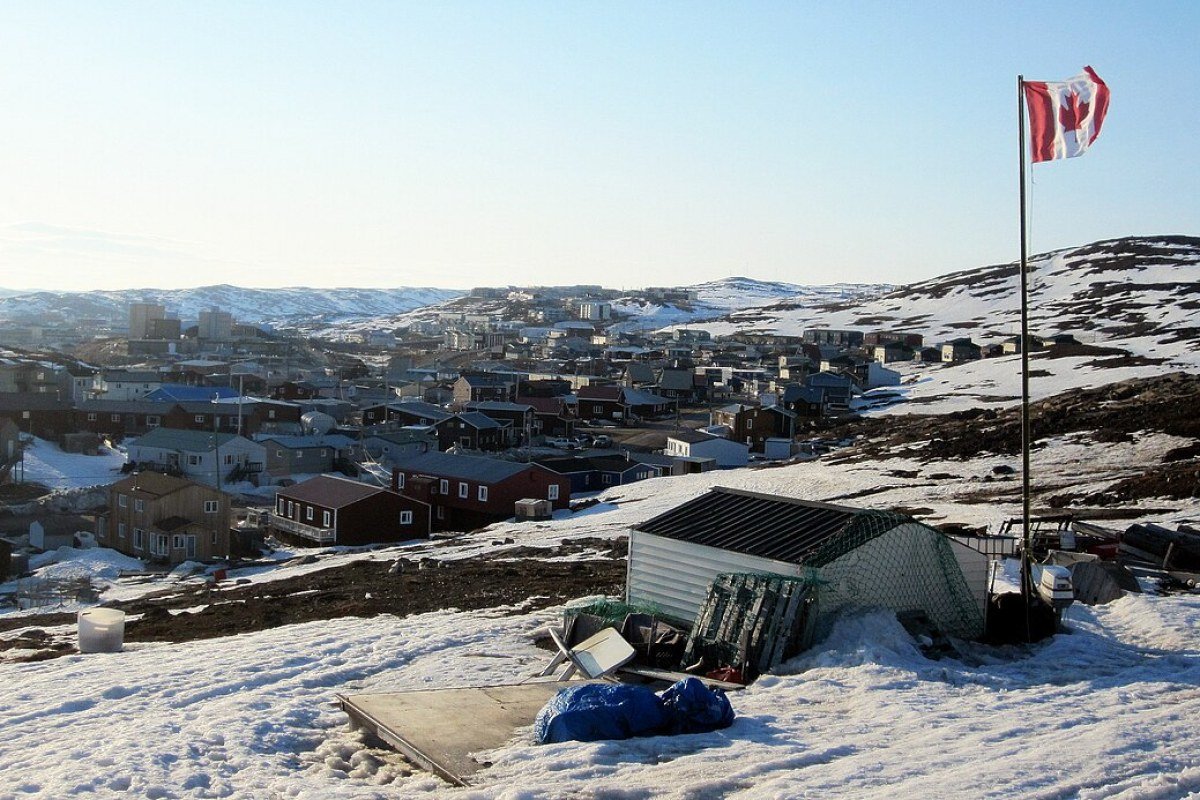
Nunavut has the highest cost of living in Canada — by a significant margin. The territory’s 25 communities are all accessible only by air or summer sealift; there are no roads connecting any Nunavut community to the southern highway network or even to each other. Every kilogram of food, every litre of fuel, every building material, and every piece of consumer goods must be flown in year-round or shipped in by sealift barge during the brief summer open-water season. That supply chain is baked into every price tag in the territory, producing a cost structure that genuinely jolts southern Canadians on first contact. A bag of oranges runs $14 in Iqaluit; a carton of milk, around $8; a bag of flour, $15; gasoline sits near $1.80/litre in Iqaluit, while the Government of Nunavut sets a single regulated retail price of about $1.74/litre in all other communities. Set against those numbers, Nunavut also pays some of the highest public-sector wages in the country, hands out generous northern allowances, and runs a housing system that — for government employees — shrinks one of the territory’s largest potential expenses to a subsidized fraction of market value.
Grocery and Food Costs
Groceries are the most immediately visible piece of the territory’s high cost of living — the prices that make headlines when journalists fly in and stop newcomers cold on their first trip to the store.
- Basic grocery items in Iqaluit (2026 prices): A 4L jug of milk costs $7–$9; a dozen eggs cost $7–$9; a loaf of bread costs $6–$8; 1kg of ground beef costs $18–$25; a bag of apples (1.5kg) costs $12–$16; a bag of potatoes (2.3kg) costs $10–$14; 500g pasta costs $5–$7
- Weekly grocery budget: A single person eating a balanced diet in Iqaluit can expect to spend $200–$300/week on groceries. The 2025 Nunavut Food Price Survey put the territory’s standard grocery basket at $198.75 versus $132.44 in Ottawa — about 1.5 times southern prices, down from 2.2 times in 2018. A family of four typically spends $700–$1,000/week on food
- Nutrition North Canada: The federal subsidy program reduces costs for perishable nutritious foods in eligible communities. In Nunavut, the subsidy reduces the cost of fresh produce, dairy, meat, and infant formula, but does not eliminate the northern premium. The subsidy amount varies by community distance and food category; without it, costs would be even higher
- Country food: Traditional Inuit country food — narwhal, walrus, ringed seal, Arctic char, caribou, ptarmigan — is central to the Inuit diet and a cornerstone of food security in Nunavut communities. Country food is shared through community networks and is not commercially available; access to country food requires connection to the community’s Inuit harvesting networks. For Inuit residents, country food meaningfully reduces the grocery budget while providing nutrition that imported processed food cannot match
- Restaurant options: Iqaluit has a limited restaurant scene (the Frob Kitchen & Eatery and the Storehouse Bar & Grill at the Frobisher Inn, the Gallery fine-dining room, plus a handful of takeout and fast-food options). Dining out costs $25–$50 per person for a sit-down meal; fast food runs $15–$25 per meal. The limited options and high prices make home cooking the default for most residents
Housing Costs
Housing in Nunavut is the most tangled part of the budget — and, for government employees, the single biggest financial perk of working in the territory, because an employer-provided unit turns one of the largest potential expenses into a manageable subsidized line item.
- Government of Nunavut (GN) housing: The GN provides housing to all GN employees as part of the employment package. Teachers, nurses, and government workers are typically accommodated in employer-owned units at subsidized rents of $400–$800/month — a fraction of true market value, where a modest 3-bedroom house in Iqaluit would rent for $4,000–$6,000/month if enough private stock existed
- Nunavut Housing Corporation: The NHC manages social and public housing for eligible Nunavut residents. The NHC portfolio is under severe strain — Nunavut faces one of Canada’s worst housing crises, with chronic overcrowding affecting roughly 40 per cent of Inuit residents; federal and territorial investments such as the Nunavut 3000 build-out are ongoing but still fall short of demand
- Private market: Private rental and purchase transactions are rare in most communities (the housing stock is almost entirely government or NHC-owned). In Iqaluit, a limited private market exists: 3-bedroom condominiums trade in the $400,000–$600,000 range, and private rentals (very rare) command $3,000–$5,000/month. The scarcity of private housing means that non-government employees face extreme difficulty finding accommodation in Nunavut

Salaries and Northern Allowances
Public-sector wages in Nunavut rank among the highest in Canada, a reflection of both the local price level and the chronic difficulty of drawing qualified professionals north:
- Teachers: Nunavut Arctic College and the Nunavut Department of Education recruit teachers annually. A first-year teacher in Nunavut earns a base salary of $80,000–$95,000 plus the Nunavut Northern Allowance, which runs from about $16,000/year in Iqaluit to roughly $34,000/year in the most remote communities, housing provided at subsidized rates, and return airfare to the south once per year — a total compensation package of $110,000–$145,000+ for a first-year teacher
- Nurses: Nunavut Health faces chronic nursing shortages across all 25 communities. Registered nurses earn $100,000–$135,000 base + northern allowance + housing; nurse practitioners earn $120,000–$160,000+. The nursing role in a Nunavut community health centre is considerably more independent and broadly scoped than in a southern hospital — nurses perform functions that would require physician involvement in the south
- Government of Nunavut professional positions: Territorial government positions in law, engineering, finance, and senior administration earn $100,000–$180,000+ base, with northern allowances and housing benefits bringing total compensation well above these figures
- Nunavut Agreement benefits: Inuit beneficiaries of the Nunavut Agreement (the 1993 Nunavut Land Claims Agreement) have access to employment preferences in the Nunavut public service, Inuit Owned Lands resource royalties, and the programs of Inuit regional organizations — Nunavut Tunngavik Incorporated and the Qikiqtani, Kivalliq, and Kitikmeot Inuit Associations — that provide community development funding
Transportation and Getting Around
- Flights: Travel between Iqaluit and Ottawa (the primary southern hub) costs $800–$1,500 return; flights between Nunavut communities cost $500–$2,000+ depending on distance. Most employment packages include one return flight to the south per year; teachers typically receive two. The cost of visiting family in southern Canada is a significant ongoing expense for non-Inuit residents
- Fuel: Gasoline in Iqaluit runs roughly $1.75–$2.00/litre (2026); the capital is supplied by a private vendor, while the Government of Nunavut regulates a single retail price of about $1.74/litre across all other communities. No roads link the communities; snowmobile travel over sea ice connects neighbouring settlements within range during winter, but most travel is by air
- Snowmobile (Ski-Doo): Personal snowmobiles are the primary land/sea-ice transportation for most Nunavut residents. A quality Arctic-capable snowmobile (Ski-Doo Expedition or Tundra) costs $12,000–$20,000+; fuel, parts, and maintenance add $3,000–$5,000/year for active use
Net Financial Assessment
For professionals who secure government employment with housing included, Nunavut offers an unusual financial opportunity — high gross income, subsidized housing, and the forced savings effect of living in a community with minimal consumer spending options. A nurse or teacher with housing provided, saving aggressively over 3–5 years of Nunavut employment, can accumulate $100,000–$200,000 in savings that would be impossible to replicate in a southern city with equivalent gross income. The financial case for Nunavut is strong for those who can secure government employment; it is genuinely harsh for those without employer-provided housing and benefits.
Frequently Asked Questions
How expensive are groceries in Nunavut?
Nunavut has the highest food costs of any Canadian jurisdiction — all 25 communities are accessible only by air or summer sealift, and the supply chain cost is embedded in every price. In Iqaluit (2026): a 4L jug of milk costs CAD $7–$9; a dozen eggs CAD $7–$9; 1kg of ground beef CAD $18–$25; a bag of apples CAD $12–$16; a loaf of bread CAD $6–$8. A single person on a balanced diet should budget CAD $200–$300/week on groceries. The 2025 Nunavut Food Price Survey priced the standard basket at $198.75 in Nunavut against $132.44 in Ottawa — about 1.5 times southern prices, down from 2.2 times in 2018. The federal Nutrition North Canada subsidy lowers the cost of perishables but does not erase the northern premium.
How does housing work for government employees in Nunavut?
Government of Nunavut (GN) employees receive employer-provided housing as part of their employment package — one of the most significant financial benefits of Nunavut employment. Teachers, nurses, and GN workers are accommodated in employer-owned units at subsidized rents of approximately CAD $400–$800/month. The true market rental value of a 3-bedroom house in Iqaluit would be CAD $4,000–$6,000/month if sufficient private stock existed. Private market housing is extremely scarce: 3-bedroom condos trade at CAD $400,000–$600,000 in the limited Iqaluit private market. Non-government employees face extreme difficulty finding accommodation in any Nunavut community.
What are total compensation packages for Nunavut teachers and nurses?
Among the highest for comparable roles in Canada. A first-year teacher earns CAD $80,000–$95,000 base salary, plus the Nunavut Northern Allowance — about CAD $16,000/year in Iqaluit, rising to roughly CAD $34,000/year in the most remote communities — housing provided at subsidized rates of CAD $400–$800/month, and one return flight to southern Canada annually — a total compensation package of CAD $110,000–$145,000+ for a first-year teacher. Registered nurses earn CAD $100,000–$135,000 base plus allowance and housing; nurse practitioners earn CAD $120,000–$160,000+. Nunavut nursing roles are significantly more independently scoped than equivalent southern positions — nurses perform functions requiring physician involvement in the south.
What does transportation cost in Nunavut?
Extremely high — there are no roads connecting any Nunavut community to the southern highway network or to each other. Flights between Iqaluit and Ottawa (the primary southern hub) cost CAD $800–$1,500 return; inter-community flights within Nunavut cost CAD $500–$2,000+ depending on distance. Most employment packages include one return southern flight per year; teachers typically receive two. Gasoline in Iqaluit runs roughly CAD $1.75–$2.00/litre (2026), set by a private vendor; the Government of Nunavut regulates a single retail price of about CAD $1.74/litre across all other communities. Personal snowmobiles, the main local transport, cost CAD $12,000–$20,000+ for an Arctic-capable model, with CAD $3,000–$5,000/year in fuel and upkeep for active use.
Is Nunavut financially worthwhile for non-Inuit professionals?
For government-employed professionals with housing included, Nunavut offers an unusual and powerful financial opportunity. The combination of high gross income, subsidized housing, and the forced savings effect of living somewhere with minimal consumer spending options means a nurse or teacher can accumulate CAD $100,000–$200,000 in savings over 3–5 Nunavut years — impossible to replicate in any southern Canadian city at equivalent gross income. This financial case requires securing government employment with housing benefits. Without employer-provided housing and benefits, the cost structure of Nunavut is genuinely extreme and the financial case is very different.