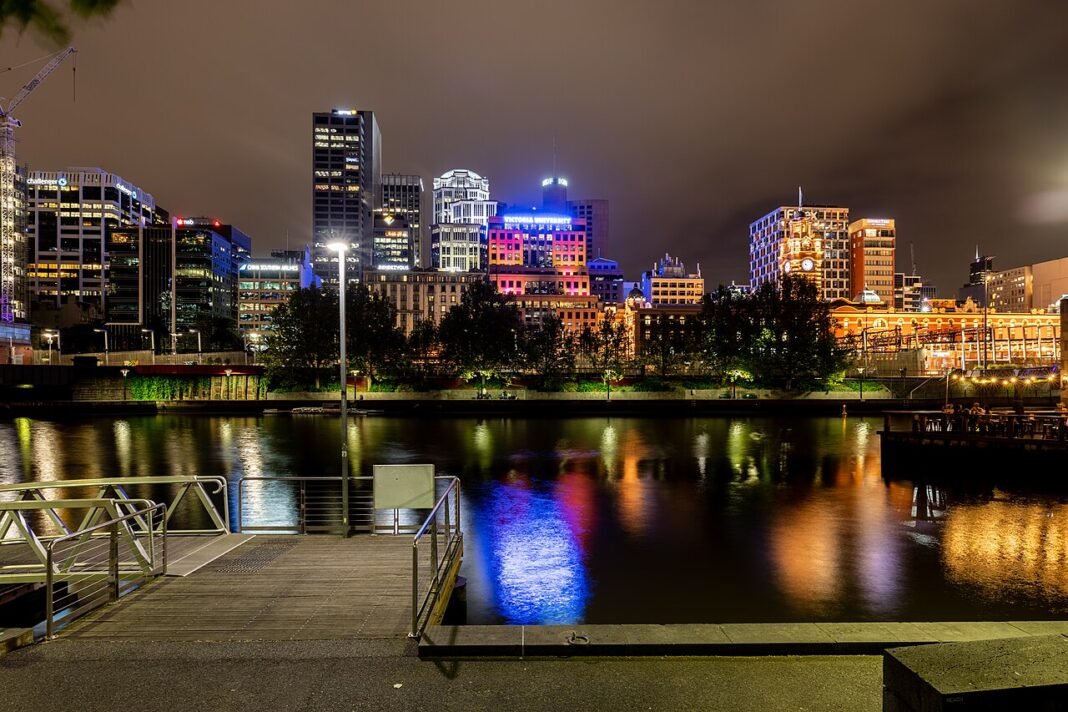
Victoria’s cost of living is dominated by Melbourne‘s property market, where the median dwelling sits near AUD $820,000 and the median house above AUD $950,000 in 2026 — figures that have steadied after a post-pandemic correction trimmed values from their 2022 peaks. The surprise of the past few years is how far Melbourne has slipped down the affordability table: its median dwelling now trails Sydney, Brisbane, Adelaide, and Perth, leaving it the most affordable of the mainland state capitals on a typical-home basis. The trade-off shows up in utilities (Victoria’s electricity market has long been among the country’s priciest) and transport (a congestion-prone freeway network and premium CBD parking). Regional Victoria offers real affordability: Ballarat, Bendigo, Geelong, and the centres along the Hume and Calder corridors put housing in the AUD $490,000–$760,000 band, with rail links to Melbourne that make part-time commuting workable.

Victoria Cost at a Glance 2026
- Melbourne metro median dwelling: around AUD $820,000 (houses above AUD $950,000)
- Inner Melbourne (3–8km from CBD) median: AUD $1.2M–$2.5M+ (houses)
- Geelong median: AUD $680,000–$760,000
- Ballarat median: AUD $490,000–$560,000
- Bendigo median: AUD $530,000–$600,000
- Alpine resorts (Mt Buller, Falls Creek): AUD $400,000–$800,000 (resort properties)
- Stamp duty: Victoria charges land transfer duty; substantial first home buyer concessions apply
Melbourne’s Inner Suburbs: The Premium
Melbourne’s most sought-after residential precincts carry premiums that reflect a particular blend of period character, a strong cafe scene, independent retail, and proximity to CBD and inner-city jobs. The inner east covers Fitzroy, Collingwood, Richmond, and Hawthorn; the inner north takes in Brunswick, Northcote, and Preston; the bayside runs through St Kilda, Elwood, and Brighton; and the inner west centres on Footscray and Yarraville. Fitzroy’s Victorian terraces (AUD $1.5M–$2.5M), Richmond’s worker’s cottages (AUD $1.2M–$2M), and Brighton’s bathing boxes — freestanding beach huts that change hands for AUD $300,000-plus despite having no residential use — are among the property market’s most distinctive features.
Geelong: Melbourne’s Affordable Bay Side
Geelong sits 75km southwest of Melbourne on Corio Bay and is Victoria’s second-largest city, with around 290,000 residents across the wider Greater Geelong area. For households set on a bay lifestyle, it is the most convincing Melbourne alternative: the waterfront promenade strings together Cunningham Pier, the Steampacket Gardens, and the Baywalk Bollards public art, while Eastern Park and the You Yangs granite hills cover the outdoor side and the surf-coast beaches of Torquay and Bells Beach lie within 30 minutes. A Geelong median of AUD $680,000–$760,000 runs roughly 20% under Melbourne’s house median, and direct V/Line trains reach the Melbourne CBD in about 1 hour 10 minutes. Deakin University’s two Geelong campuses anchor the economy alongside health and advanced manufacturing, and the Little Malop Street precinct has grown into one of regional Victoria’s better dining strips.
Ballarat and Bendigo: Victorian Goldfields Value
The goldfields cities of Ballarat (about 115,000 residents, 1.5 hours from Melbourne) and Bendigo (about 120,000 residents, 2 hours from Melbourne) make Victoria‘s strongest regional case — large enough to support full services (hospitals, universities, cultural institutions) at house prices roughly 35–45% below Melbourne’s median:
- Ballarat: The Eureka Centre and Sovereign Hill (a celebrated living goldfields museum) anchor tourism; the Art Gallery of Ballarat (the oldest regional gallery in Australia) and the Ballarat Botanical Gardens add cultural depth; AUD $490,000–$560,000 median
- Bendigo: The Bendigo Art Gallery (renowned for its blockbuster fashion and design exhibitions), the Bendigo Pottery, and the Tramways Museum supply the cultural infrastructure; La Trobe University campus; AUD $530,000–$600,000 median
- Commuter reality: Both have V/Line connections to Melbourne’s Southern Cross Station (about 1.5 hours from Ballarat, around 2 hours from Bendigo), so a two-day-a-week hybrid arrangement keeps Ballarat and Bendigo viable for Melbourne-employed households
.jpg?width=1200)
Melbourne Rental Market and Daily Costs
Melbourne’s rental market tightened sharply across 2024–2026, with vacancy rates near record lows as the post-pandemic population rebound and the return of international students soaked up available stock. Inner-city one-bedroom apartments average AUD $1,800–$2,400 a month; two-bedroom units in desirable inner suburbs run AUD $2,600–$3,600. Geelong and the regional cities are far gentler, with two-bedroom rentals around AUD $1,400–$1,900. Electricity is a sore point: Victorian household bills typically land at AUD $1,800–$2,800 a year, depending on usage and whether a home runs solar. The Victorian Default Offer (VDO) sets a reference price, but market retailers often beat it, so an annual check through Victorian Energy Compare usually pays off. Grocery costs track national averages at the major chains, and Melbourne’s market culture — Queen Victoria Market, South Melbourne Market, the Prahran Market — adds a strong fresh-food option on top.
Who Victoria Makes Financial Sense For
Victoria works best financially for households tied to Melbourne by work or lifestyle — a city whose food scene, arts calendar, and sporting culture earn the premium for the people who use them. Remote workers and retirees, meanwhile, can take the regional route through Geelong, Ballarat, or Bendigo and get the same landscape and cultural reach for far less. Either way, the numbers reward buyers who match the location to how they actually live.
Victoria’s first home buyer concessions sharpen that maths: full stamp duty exemption on homes valued at AUD $600,000 or less, a sliding-scale concession between AUD $600,001 and AUD $750,000, and a $10,000 First Home Owner Grant for a new home worth up to AUD $750,000 — meaningful savings on the cost of entering the market for eligible buyers.
Budgeting Practically for Victoria
The figures above are the starting point; the next step is sorting the fixed costs from the ones you can shape. Housing is the biggest lever in almost any budget, and the neighbourhood you pick within Victoria can swing monthly costs hard while still keeping you near the places you care about. Utilities, transport, and food add up quietly, so small monthly gaps become real money over a year. The savings against high-cost cities such as Sydney are genuine and measurable — relocating households routinely report a stronger financial position alongside a better day-to-day quality of life. Treat these numbers as a framework, and check current rents and prices for your specific target area, since local markets move faster than annual cost-of-living studies.
Frequently Asked Questions
What is the current state of Melbourne’s property market in 2026?
Melbourne’s median dwelling sits near AUD $820,000 in 2026, with the median house above AUD $950,000 — values that have steadied after the post-pandemic correction trimmed them from their 2022 peaks. The bigger story is relative: Melbourne’s median dwelling now sits below Sydney, Brisbane, Adelaide, and Perth, making it the most affordable mainland state capital on a typical-home basis. The inner suburbs tell the sharpest story: Fitzroy’s Victorian terraces command AUD $1.5M–$2.5M; Richmond’s worker’s cottages fetch AUD $1.2M–$2M; and Brighton’s iconic bathing boxes — small, colourful changing sheds on the beachfront — sell as standalone assets for AUD $300,000-plus with no residential use. Melbourne’s edge over Sydney is substantial: comparable housing runs well over a third cheaper, offset by Victoria’s higher electricity costs and a congestion-prone freeway network. The city has been named among the world’s most liveable by the Economist Intelligence Unit’s Global Liveability Index over multiple years, reflecting its cultural infrastructure, healthcare, education, and stable governance.
Which Melbourne inner suburbs offer the best balance of character and price?
Melbourne’s inner precincts each carry a distinct identity and price profile. The inner east — Fitzroy, Collingwood, Richmond, and Hawthorn — pairs heritage architecture and a lively cafe scene with employment proximity and sustained-demand premiums. The inner north — Brunswick, Northcote, and Preston — offers the inner-Melbourne experience at slightly lower entry points, though Brunswick and Northcote’s cafe and music scenes command their own premiums. The bayside — St Kilda, Elwood, and Brighton — ranges from the relatively affordable (Elwood’s Art Deco flats) to the very expensive (Brighton family homes above AUD $2.5M). The inner west — Footscray and Yarraville — has transformed over the past decade and now offers inner-Melbourne access roughly 30–40% below comparable inner-east suburbs. First-home buyers and young families increasingly target the middle ring (8–15km from the CBD), where detached housing starts at AUD $700,000–$850,000.
What do Victoria’s regional cities cost compared to Melbourne?
Regional Victoria delivers significant savings on housing. Geelong — 75km southwest on Corio Bay and the state’s second-largest city, with around 290,000 residents across Greater Geelong — has a median of roughly AUD $680,000–$760,000, about 20% under Melbourne’s house median, with V/Line trains reaching Southern Cross Station in 60–75 minutes for part-time commuters. Ballarat, 1.5 hours northwest, sits at AUD $490,000–$560,000 and carries Victoria’s most significant goldfields heritage and a strong arts scene. Bendigo, another major goldfields city about 2 hours north, runs AUD $530,000–$600,000. The Mornington Peninsula and Surf Coast — lifestyle destinations with active holiday-rental markets — sit at AUD $700,000–$1.2M, between Melbourne metro prices and true regional value. Towns along the Hume and Calder corridors are cheaper still for households happy to commute occasionally or work remotely.
How do Victoria’s electricity and utility costs compare to other states?
Victoria’s electricity market has long been among Australia’s priciest — a legacy of heavy reliance on brown coal (the Latrobe Valley’s Hazelwood station, once among the world’s most polluting, closed in 2017) and the ongoing cost of the shift to renewables. Current retail prices are broadly in line with the national average but above Queensland and Western Australia. Victoria’s gas network is more extensive than most states’ — most Melbourne homes use gas for heating and hot water — and gas-price volatility has pushed household energy costs up in recent years. The state’s Solar Homes program offers rebates for solar panels, battery storage, and solar hot water, which can meaningfully cut bills for owner-occupiers. Budget around AUD $1,800–$2,800 a year for electricity in a medium-sized Melbourne home, depending on usage and solar.
What are Victoria’s stamp duty costs and first home buyer schemes?
Victoria charges land transfer duty at rates that make it one of Australia’s highest stamp-duty states. At AUD $800,000 the duty is about AUD $43,070; at AUD $1.0M it reaches roughly AUD $55,000 — a sizeable addition to the purchase price and a frequent point of interstate comparison. The First Home Buyer Duty Exemption gives full relief on homes valued at AUD $600,000 or less and a sliding-scale concession up to AUD $750,000. The First Home Owner Grant adds AUD $10,000 for a new home (metro or regional) worth up to AUD $750,000. The Victorian Homebuyer Fund runs a shared-equity scheme that lets eligible buyers purchase with a 5% deposit while the state takes a matching equity stake. High prices plus substantial duty form a real barrier for first home buyers — one reason interest keeps shifting toward regional Victorian options that fall within the exemption thresholds.