,_Port_Campbell_National_Park,_Twelve_Apostles_--_2019_--_0969.jpg?width=1200)
Victoria packs a remarkable amount into a compact footprint — at 227,444 square kilometres it is the smallest of the mainland states, yet it holds Australia’s second-largest city in Melbourne, the Great Ocean Road, alpine high country where ski resorts sit alongside the headwaters of the Murray–Darling system, the goldfields heritage towns of Ballarat and Bendigo, and the Yarra Valley’s wine country barely an hour from the city. Melbourne anchors the appeal. A metropolis of roughly five million, regularly placed among the world’s most liveable cities, it runs on a deep coffee culture, a famously diverse restaurant scene, and a sport-and-arts calendar — the Australian Open, the AFL Grand Final at the MCG, the Melbourne Food and Wine Festival, the Melbourne International Comedy Festival — that has earned it a reputation as the country’s cultural capital. The state’s defining travel quality is the swing between the two: city culture in the morning, wine country or coastline by afternoon.
Melbourne: The Culture Capital
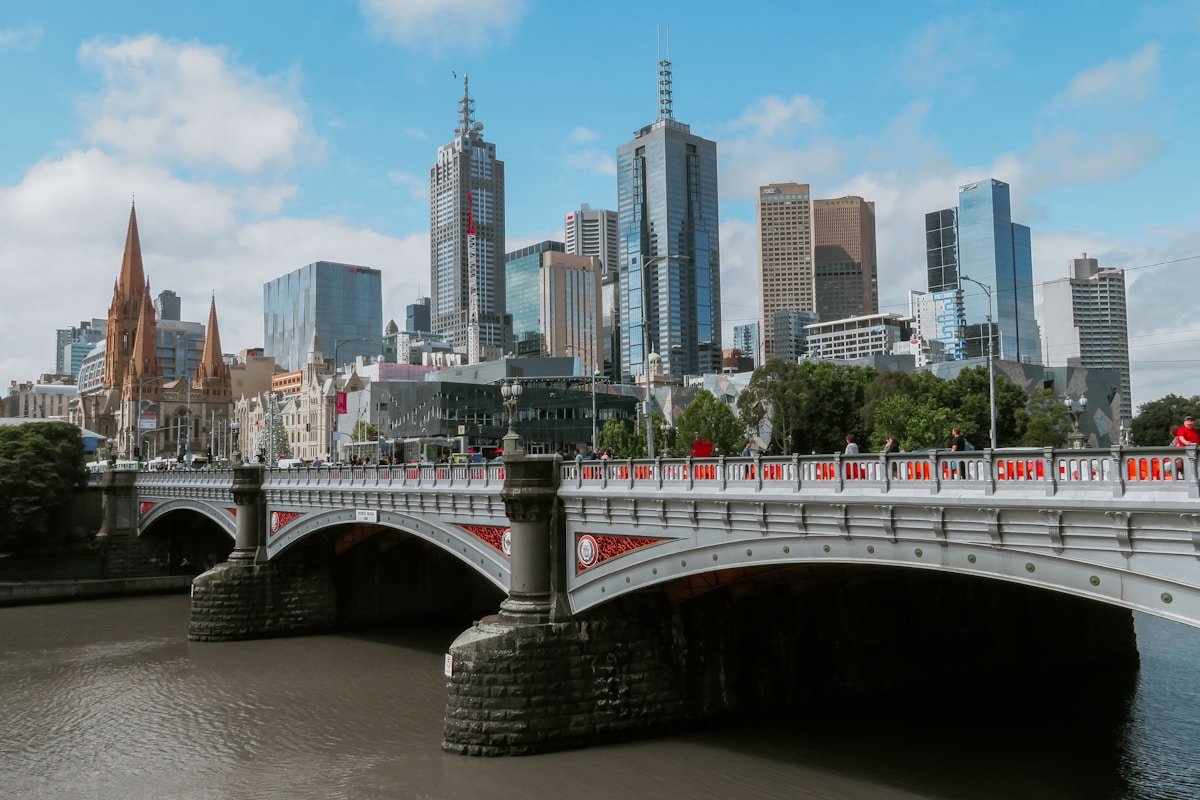
Melbourne’s reputation rests on three pillars: coffee, football and food. Its espresso culture is taken as seriously as anywhere in Italy, and the city’s café scene has helped shape the specialty coffee movement well beyond Australia. The AFL Grand Final at the Melbourne Cricket Ground each September draws one of the largest domestic-sport crowds in the world. And the city’s dining — built on long-established Chinese, Vietnamese, Greek, Italian and Lebanese communities settled across particular neighbourhoods — rivals any city in Asia or Europe for both value and range.
Melbourne Must-Experiences
- Federation Square: The cultural hub of the city centre — home to ACMI (the Australian Centre for the Moving Image), the NGV International (a major collection of international art), and a steady programme of free events that keeps the square busy year-round
- Laneways: Hosier Lane’s street art, Degraves Street’s café culture, the Victorian-era Block Arcade — the laneways are where Melbourne feels most itself
- Melbourne Cricket Ground (MCG): 100,024 seats and the largest stadium in the Southern Hemisphere, hosting the AFL Grand Final in September, the Boxing Day Test and Melbourne Stars BBL matches — well worth a tour even on a quiet day
- Queen Victoria Market: The largest open-air market in the Southern Hemisphere, trading since 1878 — fresh produce, deli halls, clothing stalls and a winter night market
Great Ocean Road: Australia’s Iconic Coastal Drive
The Great Ocean Road runs 243km along Victoria’s southwest coast from Torquay to Allansford. Built by returned soldiers between 1919 and 1932, it is recognised as the world’s largest war memorial, and it remains the country’s best-known road trip. The drive starts in the surf town of Torquay — birthplace of Rip Curl and Quiksilver — then threads through the Great Otway National Park, where temperate rainforest grows within sight of the Southern Ocean, an unlikely pairing few coastlines can match. It builds to Port Campbell National Park, where the Twelve Apostles rise up to 50 metres straight out of the surf. Loch Ard Gorge, named for an 1878 shipwreck, and the freestanding London Arch round out a stretch of coastal geology that ranks among the most striking anywhere.
Yarra Valley Wine Country
The Yarra Valley, 45 to 90 minutes east of Melbourne, is Victoria‘s flagship wine region and one of Australia’s leading cool-climate areas — more than 80 wineries turning out Pinot Noir, Chardonnay and sparkling wine across green slopes below the Warburton Ranges. Beyond the cellar doors, Healesville Sanctuary offers a close look at native wildlife in a bush setting, Yering Gorge Cottages make a quiet base, and Domaine Chandon draws the eye with its striking winery architecture. With dairy farms, artisan food producers and spa retreats close at hand, the valley is the city’s go-to choice for a day trip or weekend.
Victoria’s Alpine High Country
Victoria’s High Country takes in the alpine region around Mount Buller, Falls Creek and Mount Hotham — the state’s three major ski resorts and the heart of its winter snow scene. Each is a self-contained resort with alpine villages, on-mountain lodging and terrain from beginner runs to expert lines, and all three sit within roughly three to four-and-a-half hours of Melbourne; Mount Buller is the closest at about three hours. The mountains are worth a visit out of season too: summer brings mountain biking on the High Country Rail Trail, bushwalking along the Alpine Walking Track, and the King Valley’s Italian-heritage prosecco trail just down the slope.
Mornington Peninsula and Phillip Island
The Mornington Peninsula sits 80km south of Melbourne, a slim wedge of land between Port Phillip Bay and Bass Strait that rewards a day trip or an easy weekend within 90 minutes of the city. The draws are Peninsula Hot Springs, the largest natural hot-spring bathing complex in Australia; a wine region built on Pinot Gris and Pinot Noir from cool south-facing slopes; calm bay beaches from Frankston to Portsea; and the surf at Rye and Sorrento on the strait side. Phillip Island, 140km out, is known for the Little Penguin Parade — little penguins streaming ashore at dusk, the state’s signature wildlife spectacle — along with the Australian Motorcycle Grand Prix circuit and the Nobbies boardwalk above the seal colonies. Between them, the two make for one of the richest stretches of day-trip country anywhere near an Australian capital.
Getting the Most Out of Your Visit
A few practical notes to sharpen any Victoria itinerary. Book accommodation and headline attractions — national parks, popular walking trails, sought-after restaurants — as far ahead as you can; the better options fill weeks or months in advance, especially in peak season. A car buys the freedom to range beyond the main centres, and plenty of the state’s finest corners lie where public transport simply does not go. For local knowledge, lean on regional visitor centres, independent bookshops and conversations with residents — the moments that stay with you are rarely the ones in the guidebooks. Above all, allow more time than you think you need: Victoria rewards travellers who slow down and dig in over those racing to tick off the map.
Frequently Asked Questions
What makes Melbourne Australia’s cultural capital?
Melbourne’s international reputation rests on three pillars. Coffee: the city’s espresso culture is as serious as any in Italy, and the specialty coffee movement globally has been influenced by Melbourne’s café scene. AFL football: the Australian Football League Grand Final at the Melbourne Cricket Ground (MCG) in September is the most attended domestic sporting event in the world outside of American football; the MCG seats 100,024 and is the largest stadium in the Southern Hemisphere. Food: extraordinary ethnic diversity — particularly Chinese, Vietnamese, Greek, Italian, and Lebanese communities in specific neighbourhoods — has produced a dining landscape rivalling any city in Asia or Europe for value and diversity. Federation Square anchors the cultural hub, with the Australian Centre for the Moving Image (ACMI), the NGV International (one of the most significant collections of international art in the Southern Hemisphere), and constant free programming.
What is the Great Ocean Road and what can you see on it?
The Great Ocean Road stretches 243km along Victoria’s southwest coast from Torquay to Allansford — the world’s largest war memorial (built by returned soldiers after World War I, 1919–1932) and Australia’s most famous road trip. The drive passes through Torquay (where Rip Curl and Quiksilver surf brands were founded), the Great Otway National Park’s temperate rainforest (one of the most incongruous ecological experiences in Australia — rainforest within sight of the Southern Ocean), and culminates at the Port Campbell National Park with the Twelve Apostles — seven surviving limestone stacks rising up to 50 metres from the Southern Ocean surf. The Loch Ard Gorge (site of an 1878 shipwreck), the London Arch (a freestanding stone arch), and the Bay of Islands round out a stretch of coastal geology that ranks among the most dramatic anywhere.
What is the Yarra Valley wine region near Melbourne?
The Yarra Valley, 45–90 minutes east of Melbourne, is Victoria’s most important wine region and one of the finest cool-climate wine areas in Australia — 80+ wineries producing Pinot Noir, Chardonnay, and sparkling wine in a green valley setting below the Warburton Ranges. Its proximity to Melbourne, along with the surrounding dairy farms, artisan food producers and spa retreats, makes it a favourite day trip from the city. Healesville Sanctuary showcases native Australian wildlife in a bush setting, and Domaine Chandon is worth a stop for its striking architecture alone. The Yering Station complex, with its 19th-century heritage buildings, anchors the area’s winemaking history, which dates back to the 1830s.
What is Phillip Island known for?
Phillip Island, 140km from Melbourne, is best known for the Little Penguin Parade — little penguins (the world’s smallest penguin species, also called fairy penguins) returning to shore at dusk to their burrows in the dunes, one of Victoria’s most popular wildlife spectacles. The Summerlands Beach viewing complex manages access to keep disruption to the colony low; numbers vary but climb to several thousand penguins a night in summer. The island also hosts the Australian Motorcycle Grand Prix MotoGP circuit, a long-standing fixture on the MotoGP calendar, and the Nobbies coastal boardwalk above Australian fur seal colonies at its western tip. The 8km Cape Woolamai circuit offers some of the finest coastal walking on the island.
What other destinations does Victoria offer beyond Melbourne?
Victoria offers three exceptional regional destinations. The Mornington Peninsula (80km south of Melbourne): Peninsula Hot Springs (largest natural hot spring bathing destination in Australia), Mornington Peninsula wine region (Pinot Gris and Pinot Noir), bay beaches from Frankston to Portsea, and surf beaches at Rye and Sorrento. The Goldfields heritage towns: Ballarat (Sovereign Hill open-air museum re-creating the 1850s gold-rush town; the Eureka Centre, which tells the story of the 1854 Eureka Stockade, a landmark moment in Australian democracy) and Bendigo (a fine spread of Victorian-era gold-boom architecture; the Bendigo Art Gallery, among the leading regional art collections in Australia). The Victorian Alps: Mount Buller, Falls Creek, and Mount Hotham ski resorts (Mount Buller about three hours from Melbourne, Falls Creek and Mount Hotham four to four-and-a-half), plus the King Valley’s Italian-heritage prosecco wine trail year-round.