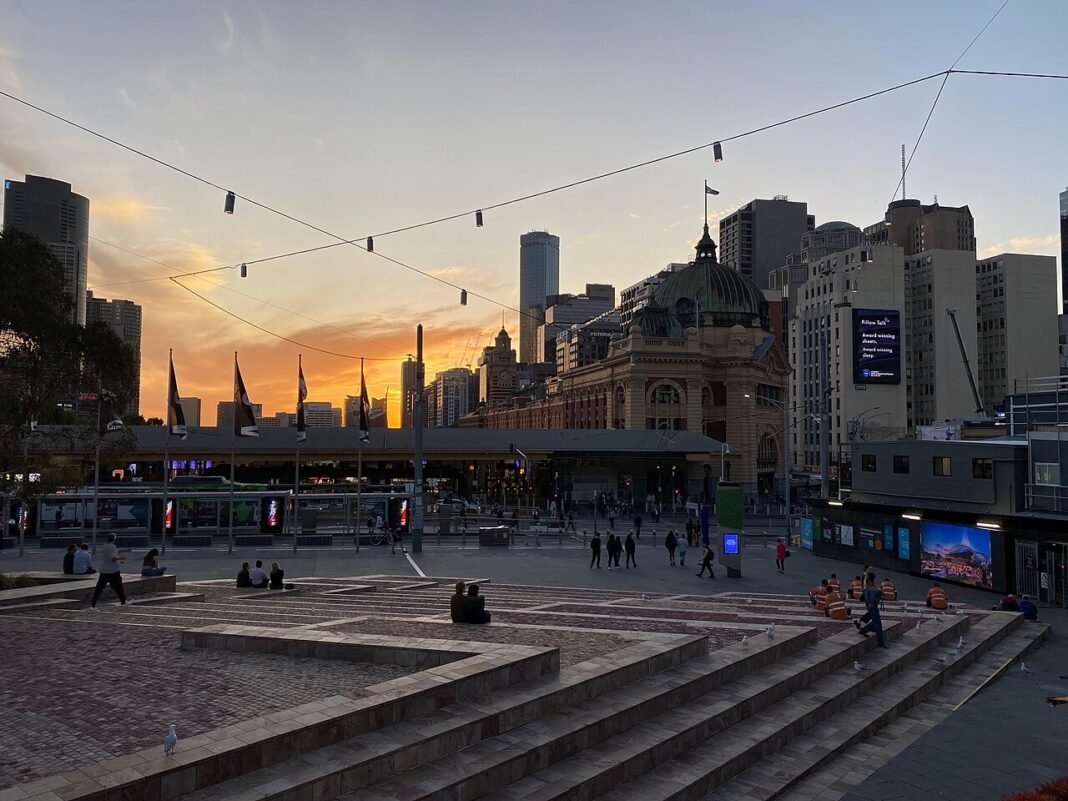

Moving to Victoria – and to Melbourne in particular – gives you access to Australia’s most complete urban lifestyle: the country’s densest concentration of arts and cultural infrastructure, and a food and cafe scene with few rivals in the southern hemisphere. The administrative side follows the national template, with Medicare, superannuation, and continuity of your Australian driving entitlements, layered over Victoria-specific rules for vehicle registration and the VicRoads licensing system. The bigger adjustment for arrivals from warmer states tends to be the sky. Melbourne’s “four seasons in one day” reputation is earned: the city sits in the path of Southern Ocean fronts, and the resulting variability calls for a wardrobe closer to London’s than Sydney’s. The grey of winter, from May through August, can take some getting used to for households coming from Queensland or Western Australia.

Driver Licence and Vehicle Registration
- Interstate transfers: you may drive on a valid interstate licence for up to six months after taking up residence in Victoria, after which you must convert it to a Victorian licence at a VicRoads Customer Service Centre; bring your interstate licence and proof of Victorian address
- VicRoads: the state road authority handles licences and registration, with most transactions available online; the Service Victoria app provides a digital licence option
- Knowledge test: not required for Australian interstate licence holders; overseas holders from non-recognised countries may need to sit the Driver Knowledge Test as part of conversion
- Vehicle registration transfer: if you keep a vehicle garaged in Victoria, transfer the registration within 30 days of arrival; a roadworthy certificate (RWC) is required when selling or re-registering a vehicle, but not when transferring a currently registered vehicle into your own name for personal use
- Melbourne toll roads: CityLink, EastLink, and the West Gate Tunnel are electronically tolled; you’ll need a Linkt account with a transponder, and regular commuters from the outer suburbs should budget AUD $100 to $400 a month
Melbourne’s Public Transport: The Myki System
Trains, trams, and buses across greater Melbourne are run by Public Transport Victoria (PTV) and ticketed through the Myki smartcard:
- Myki card: an adult card costs AUD $6 from 7-Eleven stores, train stations, and PTV Hubs; top it up through the Myki website, the app, or station machines; touch on and off at the readers on trains and trams, and touch on for buses
- Daily cap: fares are capped each day – once two two-hour journeys have been charged, the rest of that day’s travel is free, which adds up quickly for anyone commuting both ways
- Free Tram Zone: tram travel within the CBD and Docklands costs nothing for everyone; the tram network is the city’s signature feature and threads almost every corner of the inner city
- Regional V/Line: country Victoria is served by V/Line rail and coach; Myki covers Melbourne’s suburban trains, while V/Line journeys need separate tickets or Myki money rather than the zone fares

Weather: Setting Realistic Expectations
For interstate arrivals, especially from Queensland and Western Australia, the climate is worth planning around rather than reacting to:
- The “four seasons in one day” reality: as the first major city in the path of Southern Ocean fronts, Melbourne can swing fast – a sunny 25°C morning can give way to 12°C and heavy rain by mid-afternoon, so a layer and a compact umbrella are worth carrying year-round
- Winter (May to August): temperatures of 8 to 14°C, frequent grey days, and thin sunshine make this the season newcomers from the north find hardest; the upside is a cafe, arts, and indoor hospitality culture built precisely for it
- Summer (December to February): heatwaves push past 40°C (Melbourne has recorded 46°C), and the Roaring Forties wind changes give the season its sharp edges; ducted evaporative cooling, common in older homes, struggles against extreme heat compared with refrigerated air conditioning
- Bushfire smoke: haze from regional fires can drift over the city in summer and autumn, and air-quality alerts occasionally make an indoor day the sensible choice
Schools and Education in Victoria
Victoria’s school system runs through the Department of Education for government schools, alongside large Catholic and independent sectors. The main points for relocating families:
- Enrolment: government enrolment goes through the school directly, with proof of a Victorian address inside the school’s designated zone and a birth certificate required; neighbourhood schools must take every student living in their zone, and out-of-zone places open up where capacity allows
- VCE (Victorian Certificate of Education): the Year 11 and 12 qualification, combining School Assessed Coursework with external exams; the ATAR derived from VCE results is used for university entry nationally
- Selective entry schools: Victoria runs four selective government high schools – Melbourne High School (boys), the Mac.Robertson Girls’ High School, Nossal High School in Berwick, and Suzanne Cory High School in Werribee; entry is by competitive examination sat in Year 8 for a Year 9 place, and Mac.Rob ranks among the most academically competitive schools in the country
- Specialist schools: the state also operates specialist government schools in visual arts (the Victorian College of the Arts Secondary School) and performing arts, with entry by audition or selection
- Independent and Catholic schools: Melbourne’s established private schools – Melbourne Grammar, Scotch College, Methodist Ladies’ College, Xavier College – carry long waiting lists and senior-year fees of AUD $25,000 to $40,000 and up; the large Catholic sector across the metro area and the regions charges considerably less while keeping its non-government character
Preparing for Your Move
The logistics of a Victorian move follow a familiar order, wherever you’re coming from: line up housing before or soon after you arrive, transfer any professional licences your occupation requires, convert your driver licence within the six-month window, register your vehicle, and update your enrolment to vote at the new address. Plugging into community groups, sports clubs, neighbourhood associations, or professional networks early does more for the sense of belonging than almost anything else. Across the parts of Victoria that have grown fastest over the past decade, a large share of residents arrived from somewhere else, so being new is unremarkable – and the machinery for meeting people and building a life from scratch is already in place.
Frequently Asked Questions
What are the driver licence and vehicle registration requirements when moving to Victoria?
You can drive on a valid interstate licence for up to six months after taking up residence in Victoria; after that, you must convert it to a Victorian licence at a VicRoads Customer Service Centre, bringing your interstate licence and proof of Victorian address. No knowledge test applies to Australian interstate holders; overseas holders from non-recognised countries may need to sit the Driver Knowledge Test. For vehicles, transfer the registration to Victoria within 30 days of garaging the car in the state – a roadworthy certificate (RWC) is required when selling or re-registering a vehicle, but not when transferring a currently registered vehicle into your own name for personal use. Melbourne’s major toll roads – CityLink, EastLink, and the West Gate Tunnel – need a Linkt account with a transponder; budget AUD $100 to $400 a month if you commute regularly from the outer suburbs. The Service Victoria app provides a digital licence option.
How does Melbourne’s Myki public transport system work?
Trains, trams, and buses across greater Melbourne use the Myki smartcard, managed by Public Transport Victoria (PTV). An adult card costs AUD $6 from 7-Eleven stores, train stations, and PTV Hubs, topped up through the Myki website, the app, or station machines. Fares are capped daily: once two two-hour journeys have been charged, the rest of the day’s travel is free, which suits anyone commuting both ways. The Free Tram Zone covers the CBD and Docklands, where all tram travel is free for everyone, and Melbourne runs the largest tram network in the world. Country Victoria is served by V/Line rail and coach; those journeys need separate tickets or Myki money rather than the zone fares that apply to metropolitan trains.
What Melbourne weather preparation do new residents need?
Melbourne’s “four seasons in one day” reputation is genuinely earned – the city sits in the direct path of Southern Ocean fronts that can produce rapid changes. A sunny 25°C morning can drop to 12°C with heavy rain by afternoon and little warning, so carry a layer and a compact umbrella regardless of the forecast. Winter (May through August) brings 8 to 14°C and frequent grey overcast; the thin winter light is the main adjustment for arrivals from Queensland and Western Australia. Summer (December through February) brings the other extreme, with heatwaves above 40°C (Melbourne has recorded 46°C); during those spells, the ducted evaporative cooling common in older homes is far less effective than refrigerated air conditioning. Smoke from regional bushfires can affect Melbourne’s air quality in summer and autumn, occasionally making an indoor day the sensible choice.
How do Victoria’s selective schools and private school system work?
Victoria runs four selective entry government high schools: Melbourne High School (boys), the Mac.Robertson Girls’ High School, Nossal High School in Berwick, and Suzanne Cory High School in Werribee. Entry is by competitive examination sat in Year 8 for a Year 9 place. Mac.Rob is consistently among the most academically competitive schools in the country. The state also runs specialist government schools in visual arts (the Victorian College of the Arts Secondary School) and performing arts, with entry by audition or selection. Melbourne’s established independent schools – Melbourne Grammar, Scotch College, Methodist Ladies’ College, Xavier College – carry long waiting lists and senior-year fees of AUD $25,000 to $40,000 and up. The VCE (Victorian Certificate of Education) is the Year 11 and 12 qualification, and the ATAR derived from VCE results is used for university entry nationally.
What are Melbourne’s major employment sectors and lifestyle features?
Melbourne’s economy leans on financial and professional services, healthcare and research, education, and a substantial creative and cultural sector. The ANZ and NAB banking groups are both headquartered in the city; the Walter and Eliza Hall Institute and the Doherty Institute anchor biomedical research alongside the Royal Melbourne, Alfred, and Peter MacCallum Cancer Centre hospitals. The University of Melbourne and Monash University rank among Australia’s leading research universities and employ at scale. The inner suburbs – Carlton, Fitzroy, Collingwood, Richmond – carry the cafe culture and laneway dining the city is known for, and the Yarra Valley and Mornington Peninsula wine regions sit within 90 minutes of the CBD for households who weight their week toward the outdoors.