Best Places to Live in Texas 2026: The Lone Star State’s Top Cities and Neighborhoods
No single description captures where Texans actually live. Five metros top one million residents apiece, and each pulls in a different direction: Austin runs on tech and easy access to the outdoors, Houston on a globally connected energy economy, Dallas-Fort Worth on corporate headquarters and family-minded suburbs, San Antonio on its military bases and deep history. Past the big four, the Hill Country town of Fredericksburg, the college towns of College Station and Lubbock, and McAllen down in the Rio Grande Valley each suit a particular kind of household. The right answer depends entirely on what you want from daily life.
1. Austin’s Central Neighborhoods: Hyde Park and South Congress
Three close-in areas deliver the walkable Austin the city is famous for. Hyde Park, platted in 1891 as the city’s first planned suburb, shades its streets with Austin’s oldest, tallest trees and sits within walking distance of UT. South Congress (SoCo) packs vintage shops, food trucks, and restaurants into a creative strip just south of the river. Mueller, built on the old airport site, was master-planned around a working Main Street. Hyde Park reads bookish and self-contained — the tree canopy, the university edge, and an independent business row along Duval Street, where you’ll find coffee shops and the Texas French Bread bakery. Mueller leans the most family-friendly of the three, anchored by its Saturday farmers market, the Thinkery children’s museum, and generous parkland. Single-family homes here run $550,000 to $850,000, and Hyde Park has lately pushed toward the top of that band.
2. Plano/Frisco: Dallas’s Premier Family Suburbs
North of Dallas, Plano and Frisco rank year after year among the state’s most coveted family addresses. Three things explain the demand. The schools come first: Plano ISD and Frisco ISD trade places near the top of Texas rankings. Jobs come next — Plano’s Legacy West district holds Toyota’s North American headquarters, a JPMorgan Chase operations campus, and dozens more major employers within a short drive, and AT&T is relocating its global headquarters to a new Plano campus by 2028. And the everyday infrastructure, from parks to trails to rec centers, is first-rate. The catch is the usual suburban bargain: you’ll depend on a car, and you’re a fair way from the energy of downtown Dallas. Plano’s median sits around $500,000, while Frisco has climbed closer to $700,000; premium enclaves in West Plano and Legacy West run well past that.
3. Houston’s Heights and Montrose: Urban Inner-Loop
Inside the 610 Loop, Houston shrugs off its sprawling reputation. The Heights, northwest of downtown, is a leafy stretch of Victorian-era cottages and bungalows; Montrose has long been the city’s cultural and LGBTQ+ heart, packed with galleries, restaurants, and independent shops; Midtown rises in new mixed-use construction right beside the central business district. The Heights earns its devotees through the 19th Street shopping row, a Saturday farmers market, and mature oaks that the master-planned outer ring simply can’t match. Montrose pairs a serious dining scene — Underbelly Hospitality’s Goodnight properties, the original Uchi — with the Menil Collection, a free art museum whose holdings few cities can rival. Renovated homes across these areas land between $400,000 and $700,000, depending on block and finish.
4. San Antonio’s King William and Alamo Heights
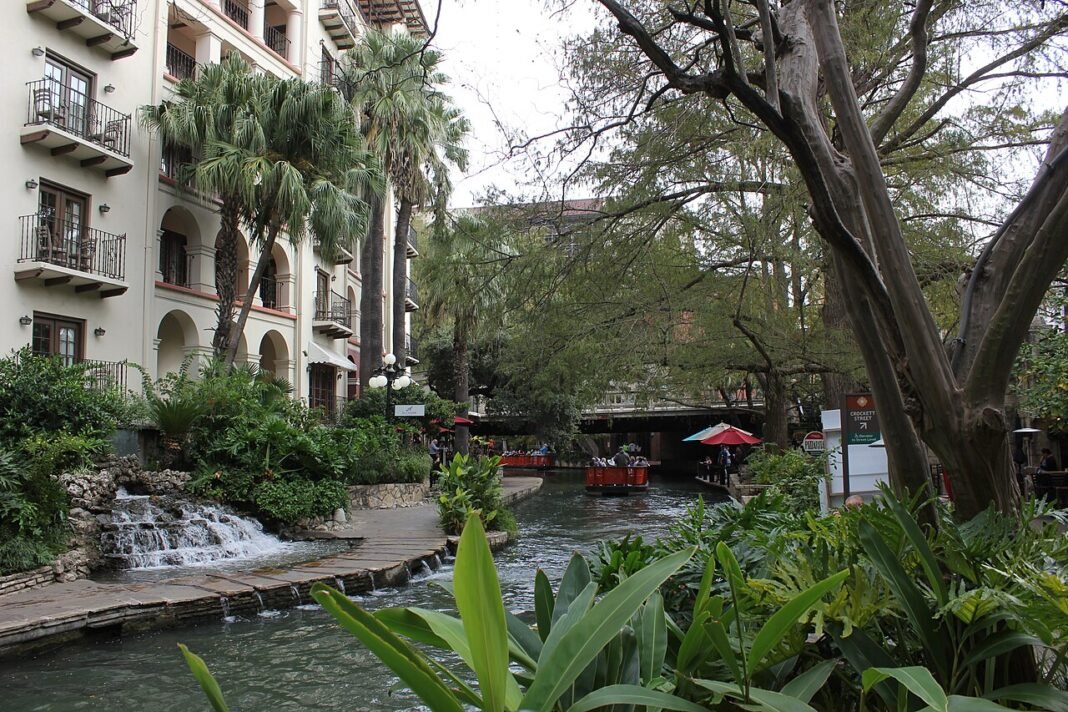
King William, the historic district directly south of downtown, holds grand Victorian homes built by German merchant families between the 1870s and 1890s — arguably the most distinctive architecture of any close-in Texas address outside of New Orleans‘ Garden District. You can walk straight to the River Walk, HemisFair Park, and the Blue Star Arts Complex, and strict preservation rules have kept the whole stretch intact. Restored homes here command $500,000 to $800,000. A few miles north, Alamo Heights is an independent city tucked inside San Antonio proper and the area’s top pick for families — its school district sits among the best in Texas, and the Broadway shopping strip puts cafes and boutiques within strolling distance of tree-lined streets. Expect $450,000 to $700,000, with estates climbing well above that.
5. Fredericksburg: Hill Country Small Town Living
Eighty miles west of Austin, deep in the Hill Country, Fredericksburg has grown from a German farming settlement into one of the most appealing small towns in Texas. Its limestone Main Street now houses tasting rooms, chef-driven restaurants, galleries, and the National Museum of the Pacific War, widely held to be the finest World War II museum in the country. The surrounding wine region — Tempranillo, Sangiovese, Muscat Blanc, and more from over 100 wineries — is the largest in the state. Remote workers, retirees, and second-home buyers have all found their way here for the slower Hill Country pace, though that interest has pushed in-town prices to roughly $450,000 to $595,000; budgets stretch further out in greater Gillespie County, around Stonewall and Harper.
6. The Austin-San Antonio Corridor: Emerging Value
The stretch of I-35 between Austin and San Antonio — San Marcos, New Braunfels, Seguin, Schertz — has become one of the fastest-growing housing markets in the country, fed by buyers priced out of both cities who still want a workable commute to either one. San Marcos, home to Texas State University and its more than 40,000 students, and New Braunfels, built around the Comal River and the Schlitterbahn water parks, feel the most like real towns rather than bedroom suburbs. Median prices of $280,000 to $360,000 are the best value-per-mile in the state. A decade ago much of this was farmland and sleepy main streets; today it carries genuine retail, dining, and services of its own. New Braunfels tells the story plainly — fewer than 58,000 people in the 2010 census, more than 115,000 today — and as road and utility investment chases that growth, prices are likely to keep climbing.
Making Your Decision
Picking a place in Texas really comes down to matching your priorities against what each town delivers. Budget, career prospects, time outdoors, the heat, the local feel — all of it weighs differently depending on your stage of life, and no ranking can make that call for you. The places profiled here are the strongest all-around bets, but plenty of smaller Texas towns are worth a look if you’ll trade big-city convenience for affordability, a quieter pace, or closer reach to open land. If you can, give your shortlist a long weekend before you commit. The numbers matter enormously, but so does the harder-to-measure sense of whether a place fits the life you’re trying to build.
Frequently Asked Questions
Why are Plano and Frisco considered Dallas-Fort Worth’s top family suburbs?
North of Dallas, Plano and Frisco sit at the top of nearly every family wish list, and the reasons stack up fast. Their school districts — Plano ISD and Frisco ISD — trade places near the top of statewide rankings year after year. The job base is unusually close: Plano’s Legacy West holds Toyota’s North American headquarters, a JPMorgan Chase operations campus, and dozens of other major employers, wrapped around a walkable mixed-use core of restaurants, shops, and hotels that’s rare for North Texas, with AT&T set to move its global headquarters to a new Plano campus by 2028. Plano’s median runs near $500,000, while Frisco has climbed toward $700,000; West Plano and Legacy West push higher still. Pair the schools with that employer density and you get the most consistently in-demand family market in the metroplex.
Which Houston neighborhoods offer the most walkable, in-town living?
Inside the 610 Loop, Houston is far more pedestrian-friendly than its sprawling reputation suggests. The Heights, northwest of downtown, is a leafy run of Victorian cottages and bungalows with a 19th Street shopping row and a Saturday farmers market. Montrose, the city’s cultural and LGBTQ+ heart, is thick with galleries, James Beard-nominated kitchens (Underbelly Hospitality’s concepts, the original Uchi Houston), and the free Menil Collection — among the finest private art museums anywhere. Midtown adds new mixed-use construction right beside downtown. Renovated homes throughout the inner loop generally run $400,000 to $700,000. Being minutes from the Texas Medical Center and its 100,000-plus workers makes the inner loop especially appealing to doctors, nurses, and healthcare staff.
What sets Austin’s close-in neighborhoods apart?
Austin’s most walkable corners deliver the city everyone pictures. Hyde Park, platted in 1891 as Austin’s first planned suburb, has the oldest, tallest trees in town and sits beside the University of Texas. South Congress (SoCo) lines up vintage stores, food trucks, and restaurants just south of the river. Mueller, built on the former airport site, was designed around a working Main Street, a Saturday farmers market, and the Thinkery children’s museum. Hyde Park in particular feels bookish — the canopy, the campus edge, and Duval Street’s independent shops set it apart from the newer suburbs. Add Barton Springs Pool (a 68°F spring-fed swimming hole in Zilker Park) and the Lady Bird Lake trail loop, and the everyday quality of life starts to explain the $550,000 to $850,000 range for single-family homes.
Why has Fredericksburg become the Hill Country’s most sought-after small town?
Eighty miles west of Austin, Fredericksburg has grown from a German farming settlement into one of the most appealing small towns in Texas. Its limestone Main Street holds tasting rooms, chef-driven restaurants, galleries, and the National Museum of the Pacific War, widely regarded as the country’s finest World War II museum. The surrounding wine region — Tempranillo, Sangiovese, Muscat Blanc, and more from over 100 wineries — is the largest in the state. Remote workers, retirees, and second-home buyers keep arriving for the slower pace, which has pushed in-town prices to roughly $450,000 to $595,000. Budgets reach further out in greater Gillespie County, around Stonewall and Harper.
Is the Austin-San Antonio corridor a good value for homebuyers?
The I-35 stretch between Austin and San Antonio — San Marcos, New Braunfels, Seguin, and Schertz — is one of the fastest-growing housing markets in the country, drawing buyers priced out of both cities who still want a workable commute to either. San Marcos, home to Texas State University and its more than 40,000 students, and New Braunfels, built around the Comal River and Schlitterbahn water parks, feel the most like real towns. Median prices of $280,000 to $360,000 are the strongest value-per-mile in the state. New Braunfels alone has gone from fewer than 58,000 residents in the 2010 census to more than 115,000 today — proof of the pull. The trade-off is traffic: as both metros struggle to keep up with growth, commute times along I-35 keep getting longer.