New York State contains multitudes. The tension between its two most famous landscapes — the urban density of New York City and the vast, largely wild Adirondack Park, the largest publicly protected area in the contiguous United States — defines the state’s identity in ways that neither pole fully captures. New York City packs more museums, performance venues, restaurants, neighborhoods, and sheer human ambition into a few square miles than anywhere else in the Western Hemisphere. The Adirondacks answer with 6 million acres of constitutionally protected “forever wild” wilderness — larger than Yellowstone, Everglades, Glacier, and Grand Canyon national parks combined, with 46 peaks above 4,000 feet, 3,000 lakes, and 30,000 miles of rivers and streams. Between the two poles sit the Hudson Valley’s historic estates and farm-to-table kitchens, the Finger Lakes wine country, Niagara Falls, the museums of Buffalo, the literary landscapes of the Catskills, and the Hamptons, where agricultural heritage meets some of the finest beaches on the East Coast.

New York City: The Cultural Capital
New York City’s claim to be the cultural capital of the Western world is not hyperbole. The Metropolitan Museum of Art holds 2 million objects spanning 5,000 years of human art history. The American Museum of Natural History, the largest of its kind in the world, occupies four full city blocks. The Museum of Modern Art owns the definitive collection of the modern era — Picasso, Matisse, Warhol, and Pollock among them — and Frank Lloyd Wright’s spiral Guggenheim is as much a draw as the Kandinsky and Klee canvases inside it. Add the Whitney, the Brooklyn Museum, the New Museum, and dozens of smaller institutions, and no other American city comes close. The performing arts run just as deep: Carnegie Hall, Lincoln Center (the Metropolitan Opera, the New York Philharmonic, the New York City Ballet, and the Film Society under one roof), Broadway’s 41 professional theaters, the concert calendar at Madison Square Garden, and an off-Broadway and off-off-Broadway scene that stages more experimental work per square mile than anywhere on earth. This is the only American city where every major art form performs at the highest professional level at once.
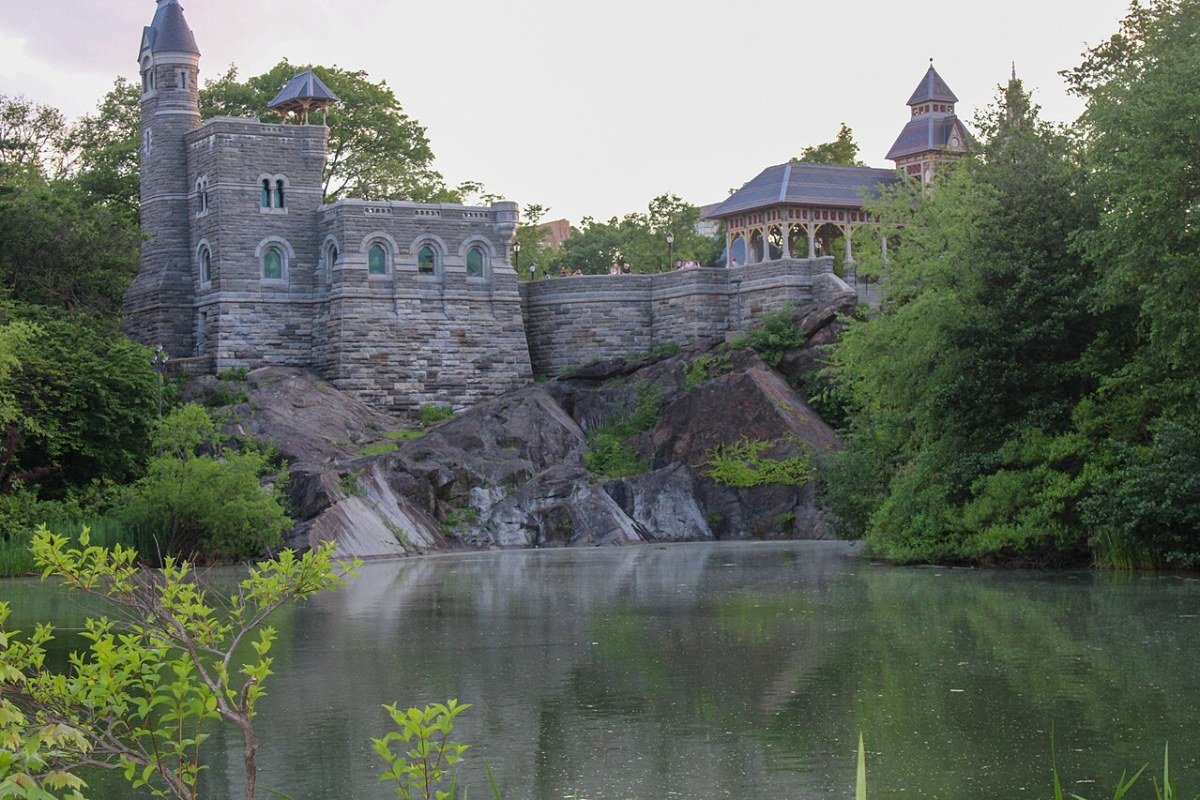
The city’s neighborhoods are the trip within the trip, each one a distinct social world. Walk the galleries and restaurants of the Lower East Side, the brownstone blocks and Prospect Park edge of Brooklyn’s Park Slope, the Chinese kitchens of Flushing in Queens and Sunset Park in Brooklyn, the jazz clubs along Harlem’s 125th Street, the food halls of Chelsea and Hell’s Kitchen, and the High Line, the elevated park threading the Meatpacking District and West Chelsea. Central Park anchors it all — 843 acres, 26,000 trees, the Bethesda Fountain, the Reservoir, the Conservatory Garden, and the Great Lawn serving as the city’s shared backyard. For the best skyline view in town, ride the Staten Island Ferry: free and running daily across New York Harbor between Whitehall Terminal in Manhattan and St. George Terminal on Staten Island, a 25-minute crossing that slides past the Statue of Liberty with the towers of Lower Manhattan behind.

The Adirondacks: Eastern America’s Wilderness
The Adirondack Park covers 6 million acres of northern New York. Created in 1892 and protected by a “forever wild” clause written into the state constitution in 1894, it holds more wilderness than any other state east of the Mississippi. The 46 High Peaks — summits above 4,000 feet by a 1920s survey whose readings are now known to be imprecise, though the list has stuck as the defining challenge of Adirondack hiking — run from the gentle, heavily trafficked top of Mount Marcy, at 5,343 feet the highest point in the state, to remote western summits reachable only by multi-day trips with hard miles of trail between trailhead and peak.
Then there is the water: 3,000 lakes, 30,000 miles of rivers and streams, and 1,200 miles of designated canoe routes. The Northern Forest Canoe Trail threads the region on its 740-mile run from Old Forge, New York to Fort Kent, Maine. Lake Placid, which hosted the 1932 and 1980 Winter Olympics, is the classic Adirondack village — the Miracle on Ice rink, the Olympic Museum, the ski jumps, and the Mirror Lake Inn keep it busy year-round in the heart of the High Peaks. Saranac Lake next door wears a plainer, less resort-polished face, and serves as the favored launch point for canoeists working the Saranac and Raquette river systems on long flatwater journeys.
The Hudson Valley
The Hudson Valley runs 150 miles along the river from New York City north to the Capital Region, and across the last two decades it has emerged as one of the most serious farm-to-table food destinations in the Northeast, its kitchens fed by the demanding New York City restaurant market. History layers onto the food. Four of the state’s great historic house museums stand here — the Vanderbilt Mansion, Springwood (Franklin D. Roosevelt’s birthplace and lifelong home), Clermont, and Olana, the Moorish-style home of Hudson River School painter Frederic Church. So does some of the country’s best art outside a city: Dia Beacon, Storm King Art Center (a 500-acre sculpture park in the Hudson Highlands), and Bannerman’s Island Arsenal, a ruined armory on a river island you can reach by kayak. West of the Hudson rise the Catskills, the low but dramatic range that inspired the Hudson River School itself. They hold 98 peaks above 3,000 feet — 35 of them clear 3,500 feet, the Catskill 3500 Club list that draws serious hikers — along with the ski slopes of Hunter, Windham, and Belleayre and a string of preserved small towns built around the weekend-escape trade.
Niagara Falls and Western New York
Niagara Falls is really three waterfalls — American Falls, Bridal Veil Falls, and Horseshoe Falls, the last straddling the US–Canada border — and together they move roughly 6 million cubic feet of water a minute over the crestline, the most powerful falls in North America by flow rate. It ranks among the most visited natural attractions in the world. The New York side opens onto Niagara Falls State Park, the oldest state park in the country, established in 1885. From the Prospect Point Observation Tower and the deck of the Maid of the Mist, which has carried passengers since 1846, you get the American and Horseshoe falls from entirely different angles. Buffalo sits 22 miles away and has spent the past decade reinventing itself: new development along the Erie Canal Harbor, the reborn Buffalo AKG Art Museum (the former Albright-Knox, reopened in 2023 after a major expansion, with one of the finest postwar and contemporary collections outside New York City), and the bars and restaurants of the Elmwood Village have made it one of the most interesting smaller cities in the Northeast.
The Finger Lakes
The Finger Lakes are eleven long, narrow lakes in central New York, carved by glaciers out of old north-south stream valleys. The wine country here took shape over roughly four decades, and the region now ranks with the most respected in the country. The Rieslings off Seneca Lake’s hillside vineyards hold their own against German bottlings in international competitions, and the Pinot Noirs and Cabernet Francs have drawn the kind of critical attention that would have seemed far-fetched when the first modern wineries opened here in the 1970s. At the south end of Seneca Lake, Watkins Glen State Park sends a 1.5-mile gorge trail past 19 waterfalls and across a stone footbridge — one of the most visited natural sites in New York outside the Adirondacks and Niagara. West of Ithaca on Cayuga Lake, Taughannock Falls State Park guards the 215-foot Taughannock Falls, the tallest single-drop waterfall east of the Rocky Mountains, reached by an easy 1.5-mile walk along the stream bed.
Frequently Asked Questions
What cultural institutions make New York City the cultural capital of the Western world?
New York City’s museum ecosystem is unmatched in North America. The Metropolitan Museum of Art covers 5,000 years of human art history across 2 million objects. The American Museum of Natural History is the largest natural history museum in the world, occupying four full city blocks. The Museum of Modern Art holds the definitive collection of modern and contemporary art. The Guggenheim (Frank Lloyd Wright’s spiral building), the Whitney Museum of American Art, the Brooklyn Museum, and dozens of smaller institutions complete the picture. The performing arts infrastructure — Carnegie Hall, Lincoln Center (Metropolitan Opera + New York Philharmonic + NYC Ballet + Film Society), 41 Broadway theaters, Madison Square Garden, and an off-Broadway ecosystem producing more experimental theater per square mile than any city in the world — makes NYC the only American city where every major art form operates at the highest professional level simultaneously.
What is the Adirondack Park and what can you do there?
Adirondack Park — 6 million acres in northern New York, protected by a “forever wild” clause in the New York State Constitution since 1894 — is the largest publicly protected area in the contiguous United States, larger than Yellowstone, Everglades, Glacier, and Grand Canyon national parks combined. The 46 High Peaks (summits above 4,000 feet) range from the summit of Mount Marcy (5,343 feet, New York’s highest point) to remote peaks reachable only by multi-day expeditions. The 3,000 lakes, 30,000 miles of rivers and streams, and 1,200 miles of designated canoe routes make for paddling of extraordinary scope. The Northern Forest Canoe Trail passes through the Adirondacks on its 740-mile route from Old Forge, New York to Fort Kent, Maine. Lake Placid hosted the 1932 and 1980 Winter Olympics.
What is the Hudson Valley and what makes it worth visiting?
The Hudson Valley — the 150-mile corridor of the Hudson River from New York City north to the Capital Region — has become one of the most significant farm-to-table food destinations in the northeastern United States, a reputation built across two decades and fed by the proximity of the New York City restaurant market. Dia Beacon, Storm King Art Center (a 500-acre sculpture park in the Hudson Highlands), and Bannerman’s Island Arsenal are exceptional art experiences. Four major historic estates — the Vanderbilt Mansion, Springwood (FDR’s birthplace and home), Clermont, and Olana (Hudson River School painter Frederic Church’s home) — rank among the finest historic house museums in the state. West of the Hudson, the Catskills offer hiking (98 peaks above 3,000 feet, 35 of them above 3,500 feet on the Catskill 3500 Club list), skiing (Hunter, Windham, and Belleayre), and preserved small towns.
What are the Finger Lakes and what wine can you find there?
The Finger Lakes region — eleven narrow lakes in central New York carved by glacial action from north-south stream valleys — has grown into one of the most respected American wine regions to emerge over the last four decades. The Rieslings produced on Seneca Lake’s hillside vineyards compete with German counterparts in international competitions. Finger Lakes Pinot Noirs and Cabernet Francs have received significant critical attention. Watkins Glen State Park at the south end of Seneca Lake sends a 1.5-mile gorge trail past 19 waterfalls. Taughannock Falls State Park on Cayuga Lake west of Ithaca guards the Taughannock Falls — at 215 feet, the tallest single-drop waterfall east of the Rocky Mountains. Ithaca, home to Cornell University and Ithaca College, is the most culturally complete small city in the region.
What is Niagara Falls and how do you experience it?
Niagara Falls — three waterfalls (American Falls, Bridal Veil Falls, and Horseshoe Falls straddling the US–Canada border) — is the most powerful waterfall in North America by flow rate, moving roughly 6 million cubic feet of water per minute over the combined crestline. Niagara Falls State Park is the oldest state park in the United States, established in 1885. The Maid of the Mist boat tour (running since 1846) and the Prospect Point Observation Tower offer different perspectives on the falls. Buffalo, 22 miles away, has undergone a real revival — the Buffalo AKG Art Museum (reopened in 2023 after a major expansion) holds one of the finest collections of postwar and contemporary art outside New York City, and the Elmwood Village food and bar scene is one of the Northeast’s most interesting.