
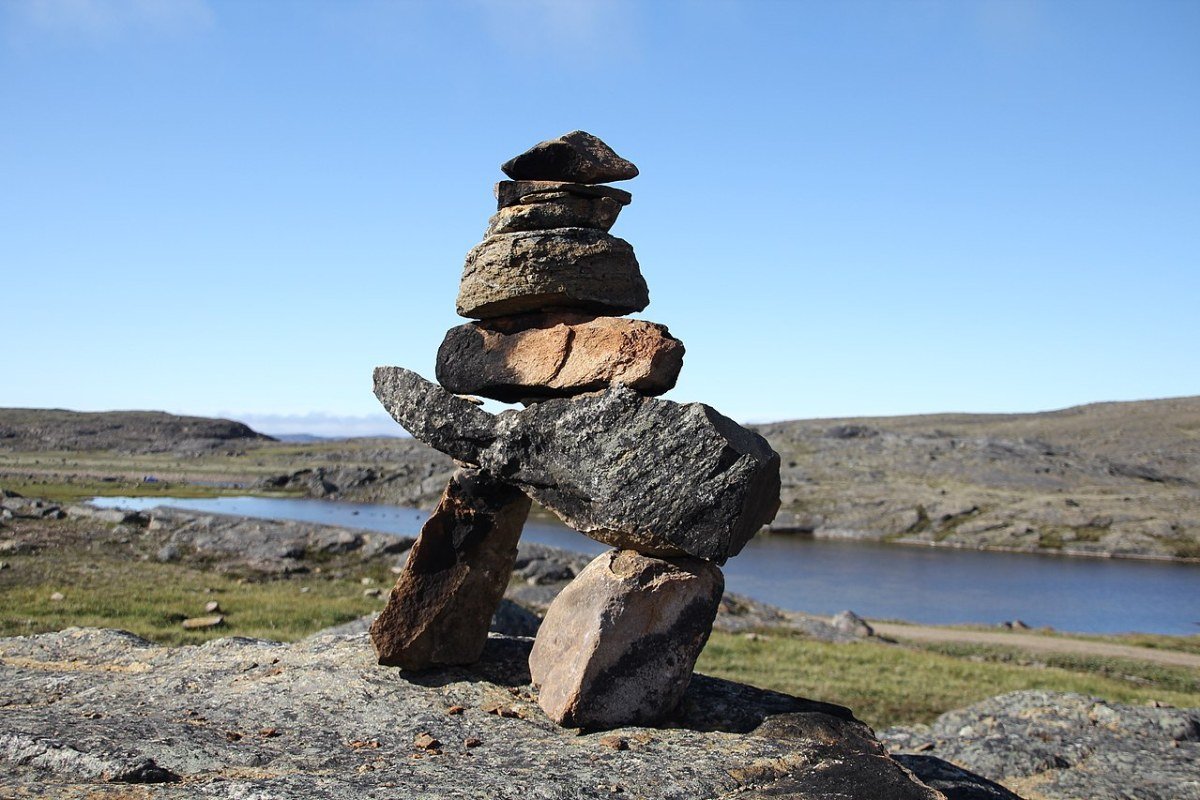
Nunavut is the world’s last great unfenced wilderness — a territory of 2.09 million km² where the industrial footprint is negligible, the wildlife populations rank among the largest left on earth, and the land still holds the raw Arctic character that has shaped human culture and natural history for thousands of years. Travel here demands more preparation, more expense, and more respect for the environment than anywhere else in Canada, but what it gives back is rare: polar bears on the sea ice, narwhal in the fjords, barren-ground caribou crossing tundra rivers in herds that run to the horizon, and the midnight sun pouring its summer light over country so vast and still that it resets a visitor’s sense of wildness itself. Nothing here is managed or amenitized. It is the real thing.
Polar Bear Viewing: The Hudson Bay Coast
Nunavut‘s western Hudson Bay coastline — running from Arviat in the south through Rankin Inlet to Coral Harbour on Southampton Island — sits on the polar bear’s seasonal migration corridor between the inland summer denning grounds and the winter sea ice where the bears hunt ringed seals. October and November are the window: the bears gather along the coast and wait for Hudson Bay to freeze, and the territory’s best polar bear watching happens here. It is more accessible and less commercialized than the famous Churchill, Manitoba operation, with sightings playing out in unmanaged wild country rather than through tourism infrastructure.
- Arviat bear encounters: Arviat (3,000 residents) sits squarely on the migration route, and in late October bears move through the community and the surrounding tundra in real numbers. Guided tundra walks and snowmobile tours from the hamlet put visitors close to wild bears without the trappings of a managed park
- Coral Harbour: Coral Harbour (Salliq, 900 residents) on Southampton Island is ringed by one of the densest concentrations of polar bears on the whole Hudson Bay coast, where sea ice, tundra, and rocky shoreline combine into ideal bear habitat
- Safety: Polar bears are among the few animals on earth that will actively hunt a person. Nunavut communities run Polar Bear Alert programs to manage conflicts, and wildlife tours are led by Inuit guides who read bear behaviour for a living. Heading out without a local guide is strongly discouraged
Narwhal and Arctic Marine Wildlife
The waters off Nunavut hold marine life of global weight — most of the world’s narwhal, plus large numbers of bowhead whale, beluga, walrus, and ringed and bearded seals.
- Narwhal: The narwhal — the “unicorn of the sea,” whose males carry a spiralled tusk up to 3 metres long — lives almost entirely in Nunavut waters, where surveys count roughly 160,000 animals, about 90 percent of the world’s total. The densest gatherings are in the northern Baffin Island fjords (Eclipse Sound near Pond Inlet, Admiralty Inlet, and Lancaster Sound) and the Foxe Basin. Small-boat narwhal trips out of Pond Inlet in July and August rank among the finest wildlife outings anywhere
- Bowhead whale: The bowhead (up to 20 metres long and able to live past 200 years) is back in numbers here; the Baffin Bay population is recovering from the era of commercial whaling. Eclipse Sound and Lancaster Sound are key summer feeding grounds
- Walrus: Walrus haul out in the Foxe Basin and along the Hudson Bay coast, where hundreds rest on beaches and rocky points; boat tours reach the haul-outs from Coral Harbour and other Hudson Bay communities
- Beluga: Belugas pour through Hudson Bay and the eastern Arctic each summer. At Cunningham Inlet on Somerset Island, hundreds gather in a shallow river estuary to calve and rub parasites off their skin — one of the more remarkable marine gatherings in Canada
Auyuittuq National Park: Arctic Mountaineering and Hiking
Auyuittuq National Park (21,470km², Baffin Island, UNESCO Tentative World Heritage Site) is Nunavut’s most visited park — fjords, glaciated peaks, and the Akshayuk Pass route cutting straight through its core. Reaching it means a floatplane from Iqaluit (to Pangnirtung or Qikiqtarjuaq) and proper expedition planning:
- Akshayuk Pass: The 97km route through the pass crosses some of the most striking Arctic country a prepared hiker can reach — a corridor between the fjord systems of the Cumberland Peninsula, hemmed by the Penny Ice Cap’s outwash glaciers, granite walls topping 1,000m, and the wildlife (Arctic hare, Arctic fox, snowy owl) of the tundra valley floor. Expect 7 to 14 days end to end; most parties arrange a pickup floatplane at the far end
- Thor Peak: Earth’s greatest purely vertical drop — roughly 1,250 metres of overhanging granite falling away at an average angle past vertical. Thor is the preserve of expedition big-wall climbers and counts among the world’s ultimate climbing objectives
- Penny Ice Cap: The Penny Ice Cap (6,000km² of ice on the Cumberland Peninsula plateau) sends calving glaciers down within sight of the park, and its retreat is one of the closest-watched markers of Arctic climate change
Sirmilik National Park: Bylot Island Birds
Sirmilik National Park (22,200km², reached from Pond Inlet) takes in Bylot Island — one of the planet’s great seabird nurseries — and the Borden Peninsula of northern Baffin Island. Its sea cliffs hold nesting thick-billed murres (an estimated 300,000-plus birds), black-legged kittiwakes, northern fulmars, and black guillemots, while the tundra behind them supports polar bear, musk ox, Arctic fox, and snow geese. Boat tours from Pond Inlet run Eclipse Sound to the island in July and August for the bird colonies and the wildlife of the surrounding fjords.
Quttinirpaaq National Park: The Top of Canada
Quttinirpaaq National Park (37,775km², on Ellesmere Island, the world’s second-northernmost national park after Greenland’s Northeast Greenland National Park) is the hardest park in Canada to reach — charter aircraft only, out of Resolute Bay, at $5,000 to $10,000-plus per person for the flight alone. Ancient glaciers, polar desert, musk ox, Arctic wolf, and the High Arctic ecosystem at its most extreme make up the landscape; around Lake Hazen — the largest lake by volume north of the Arctic Circle — a sheltered thermal oasis supports a surprising spread of life in the lake basin. Trips here are for committed wilderness travellers only, and few places on the continent reward them more.
On-the-Land Experiences with Inuit Guides
The richest day out in Nunavut is rarely a national park trek. More often it is an on-the-land trip with an Inuit guide — a snowmobile run to a traditional hunting camp, ice fishing for Arctic char through the sea ice, a boat out to narwhal grounds, or a visit to a caribou crossing. Every community has hunters and harvesters who take visitors onto the land the way Inuit have for generations. Booked through community tourism coordinators, Nunavut Tourism, or direct local contacts, these trips open a window onto a living relationship with the Arctic that has all but vanished elsewhere.
Frequently Asked Questions
Where is the best place to see polar bears in Nunavut?
Nunavut’s western Hudson Bay coastline — from Arviat in the south through Rankin Inlet to Coral Harbour on Southampton Island — offers the most reachable polar bear watching in the territory. October and November are the prime window, when bears gather along the coast and wait for Hudson Bay to freeze; sightings happen in unmanaged wild country rather than through the tourism setup at Churchill, Manitoba. Arviat (roughly 3,000 residents) sits directly on the migration route, and in late October bears move through the community and surrounding tundra in real numbers. Guided tundra walks and snowmobile tours from Arviat put travellers close to wild bears. Coral Harbour on Southampton Island is ringed by one of the densest polar bear concentrations on the Hudson Bay coast. One caution stands above the rest: polar bears are among the few animals that will actively hunt a person, so all wildlife watching in bear country should be done with experienced Inuit guides who understand bear behaviour.
What makes Nunavut exceptional for narwhal and Arctic marine wildlife viewing?
Nunavut’s waters hold most of the world’s narwhal — surveys count roughly 160,000 animals, about 90 percent of the global total — concentrated in the Baffin Island fjords, Lancaster Sound, and the High Arctic. The narwhal’s tusk (an elongated left canine that reaches up to 3 metres in males) has made it the most storied of Arctic whales. Eclipse Sound, Pond Inlet (Mittimatalik), and the Sirmilik National Park area are the premier places to find them in summer and fall, when the animals move through the polynyas and leads in the sea ice. Bowhead, beluga, walrus, ringed seal, and bearded seal all turn up in good numbers as well. Floe-edge camps — pitched at the edge of the sea ice where open water draws wildlife in spring — give travellers the chance to encounter several Arctic species at once, and Inuit outfitters run them from communities including Pond Inlet and Clyde River (Kangiqtugaapik).
What outdoor experiences does Auyuittuq National Park offer?
Auyuittuq National Park (21,470km² on Baffin Island’s Cumberland Peninsula) takes its name from the Inuktitut for “the land that never melts,” a nod to the Penny Ice Cap, the largest icefield in the eastern Canadian Arctic, which fills much of the park’s interior. The Akshayuk Pass — a 97km route through a glaciated valley between Pangnirtung (Panniqtuuq) in the south and Overlord in the north — is one of the world’s great wilderness hiking corridors, threading past soaring granite walls, glacial rivers, and arctic tundra on a scale often compared to the Patagonian Andes. Mount Asgard (2,015m, its twin cylindrical summits familiar from the opening sequence of the 1977 James Bond film The Spy Who Loved Me) is the park’s most photographed peak and a serious mountaineering objective. Access needs advance permits and logistics; the Pangnirtung Parks Canada office coordinates it.
What are Nunavut’s caribou migration experiences?
Nunavut holds several of North America’s major barren-ground caribou herds — the Qamanirjuaq herd (around 253,000 animals at the 2022 survey, one of the largest barren-ground herds in Canada, ranging across the Kivalliq region into Manitoba and Saskatchewan), the Beverly herd (Kivalliq/NWT border region), and smaller herds across the territory. The spring push north to the calving grounds and the fall return south are among the last great wildlife spectacles on earth, with caribou crossing tundra rivers in numbers that run to the horizon. Baker Lake (Qamani’tuaq), the only inland community in Nunavut, sits on the Thelon River system at the heart of major migration routes and makes the easiest base for caribou watching and for reaching the Thelon Wildlife Sanctuary — one of Canada’s least-visited and most important wildlife areas. Caribou harvesting remains central to Inuit food culture, and Nunavut’s wildlife rules protect subsistence harvesting by Inuit beneficiaries.
What is the midnight sun and aurora borealis experience in Nunavut?
Nunavut’s latitude — most of the territory lies north of 60°N, with large stretches above the Arctic Circle (66.5°N) and High Arctic communities past 70°N — produces the most extreme light cycles in Canada. Above the Arctic Circle the midnight sun, true round-the-clock daylight, comes around the summer solstice: Resolute Bay (74°N) sees roughly four months of continuous daylight from May through August, while Iqaluit (63°N, just below the Circle) gets about two months of white nights, where the sun barely sets and full darkness never arrives. The reverse — polar night — settles over the High Arctic from about November through January, with Resolute in near-total darkness for close to three months. The aurora borealis shows over every Nunavut community through the dark season, and minimal light pollution under clear Arctic skies makes the territory one of the finest aurora destinations on earth. Iqaluit’s position near the auroral oval, plus daily flights from Ottawa, makes it the most practical base for an aurora trip. Aim for September through March, with activity usually peaking around September, October, February, and March.