Nunavut — “Our Land” in Inuktitut — is Canada’s youngest, largest, and most remote territory, a vast Arctic jurisdiction of 2.09 million km² created in 1999 from the largest Indigenous land claim settlement in Canadian history. It takes in nearly a fifth of Canada’s total landmass yet holds a population of roughly 41,000, the majority of them Inuit, spread across 25 communities reachable only by air or, in summer, by sea. This is not casual tourism. A trip here demands planning, the right equipment, and a real budget, and it rewards travellers willing to commit to one of the most remote landscapes on Earth. What you get in return is specific: polar bears on the Hudson Bay sea ice, the calving glaciers and high-Arctic midnight sun of northern Baffin Island’s fjords, the deep quiet of tundra with no roads or trails, and a living Inuit culture rooted in this land for 4,000 years.
Iqaluit: The Arctic Capital
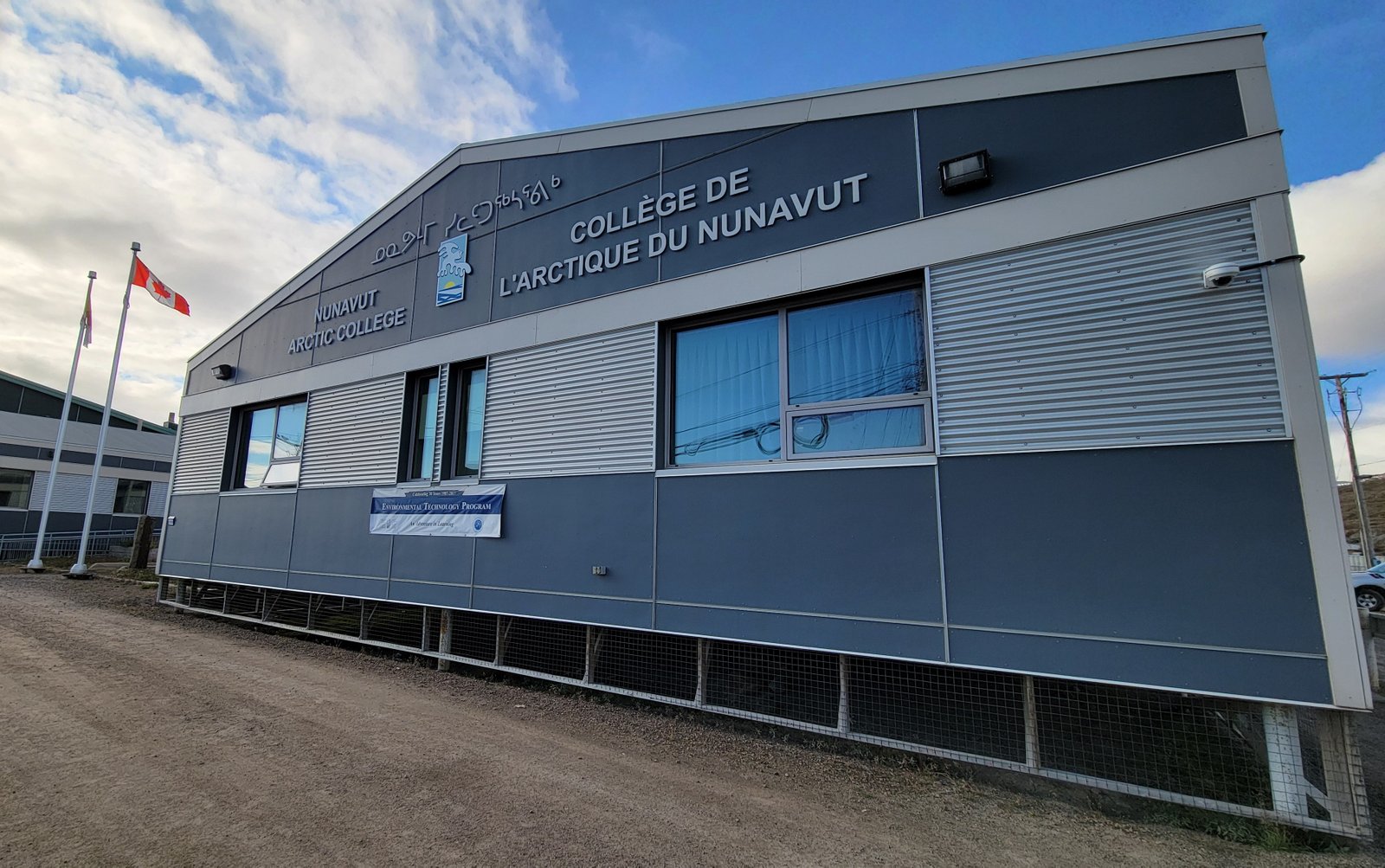
Iqaluit (about 8,000 residents, on Baffin Island’s Frobisher Bay, 2,000km north of Ottawa) is Nunavut’s capital and its only city — small, fast-growing, and the territory’s governmental, commercial, and cultural hub all at once. It began in 1942 as a United States military air base (the Frobisher Bay Air Base), grew into the administrative centre of the Eastern Arctic under federal governance, and became the capital of the new territory of Nunavut in 1999. The character of the place is an unusual mix. Inuktitut is the dominant language outside government offices, and Inuit art galleries, the Nunatta Sunakkutaangit Museum, and everyday practice keep a culture that has adapted to the 21st century without losing its tie to the land. Layered over that are federal and territorial government infrastructure and the rotating cast of consultants, civil servants, and resource-industry workers who pass through any northern capital.
- Nunatta Sunakkutaangit Museum: The territorial museum in Iqaluit’s Qikiqtani region houses an excellent collection of Inuit artifacts, tools, clothing, and art representing the Dorset and Thule cultures that preceded the contemporary Inuit and the living traditions of the Qikiqtani Inuit today
- Apex: The original Inuit community adjacent to Iqaluit’s main settlement — a small, traditional community on the shores of Frobisher Bay where the old Hudson’s Bay Company post and the residential character of Nunavut’s earliest planned community are preserved
- Sylvia Grinnell Territorial Park: The park at the mouth of the Sylvia Grinnell River (a 20-minute drive from downtown Iqaluit) provides the most accessible Arctic tundra walking, Arctic char fishing, and land experience available from Iqaluit; the river’s Arctic char run in late summer is spectacular — thousands of char concentrated in the lower river in preparation for spawning, visible from the riverbank
- Sea ice travel: In winter and spring (March–May), Iqaluit residents cross Frobisher Bay’s sea ice by snowmobile to reach hunting camps, watch dog-team races on the bay, and get out on the land in the customary Inuit way. Guided trips onto the ice — dog sledding, ice fishing, camp visits — are the most culturally grounded thing a visitor can do in Iqaluit
Baffin Island: The Arctic’s Greatest Island
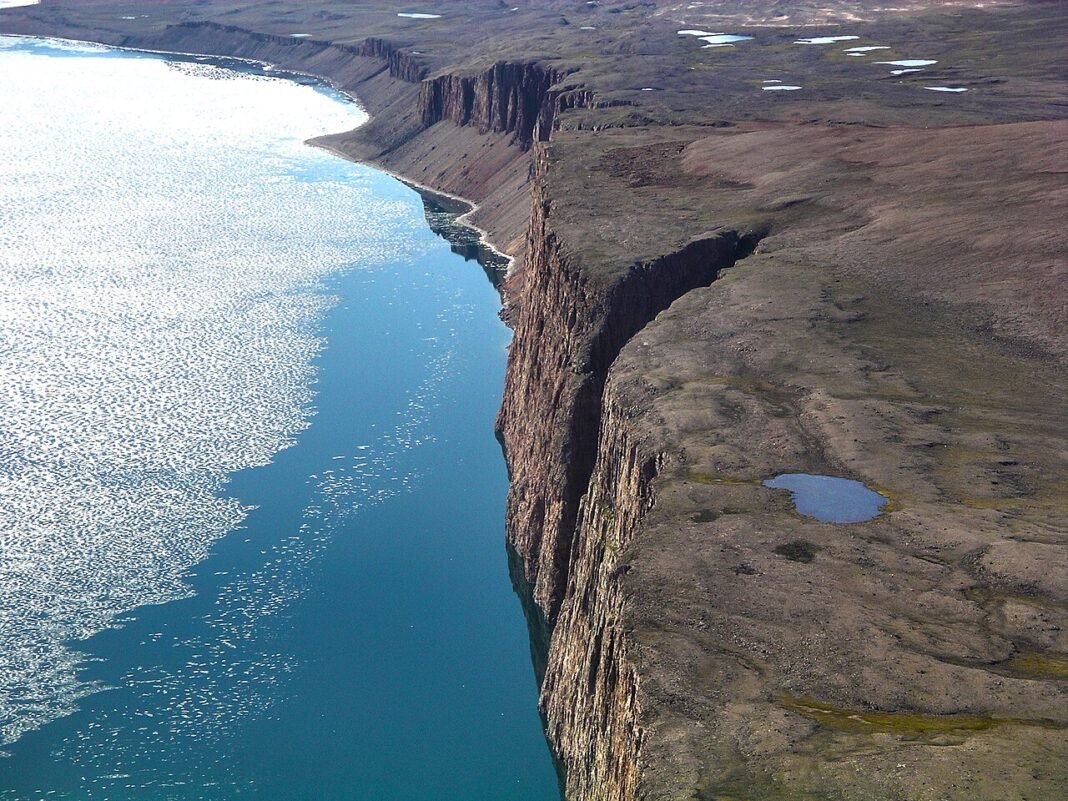
Baffin Island (507,000km², the world’s fifth-largest island) holds Nunavut‘s most striking country — the glaciated peaks and fjords of the Baffin Mountains along the eastern coast, the Foxe Basin’s sea ice and walrus habitat to the west, and the granite walls and glaciers of Auyuittuq National Park on the island’s northeastern peninsula.
- Auyuittuq National Park: “The Land That Never Melts” (a UNESCO Tentative World Heritage Site) encompasses 19,000km² of Arctic landscape on Baffin Island’s Cumberland Peninsula — the Penny Ice Cap (one of the largest ice caps in the Eastern Arctic), Thor Peak (the world’s greatest vertical drop, 1,200m of uninterrupted cliff), and the Akshayuk Pass (a 97km hiking route through the park’s central mountain corridor) are the main draws. Access is by charter air from Iqaluit to Pangnirtung or Qikiqtarjuaq; the park requires genuine expedition preparation and Parks Canada registration
- Pangnirtung: The community of 1,500 at the head of Pangnirtung Fjord — arguably the finest fjord setting of any Nunavut community, with glacier-carved walls rising 500m above turquoise water — is the gateway to Auyuittuq and a centre of Inuit art production (Pangnirtung tapestries are internationally recognized as among the finest Inuit textile arts)
- Clyde River (Kangiqtugaapik): The community of 1,000 on Baffin Island’s northeastern coast, adjacent to the Sam Ford Fjord system, is emerging as a base for expeditionary fjord kayaking and wildlife viewing; the Sam Ford Fjord — a roughly 110km system of glacier-polished granite walls, among the most spectacular on Baffin Island — and its tributaries offer exceptional paddling
Churchill and the Western Hudson Bay: Polar Bear Capital
Churchill sits in Manitoba, but the western Hudson Bay polar bear country reaches into Nunavut’s coastal communities — Arviat, Rankin Inlet, and Baker Lake — which see far fewer visitors than the Churchill circuit. The bears gather along the coast in October and November, waiting for the sea ice to set so they can hunt ringed seals, and they can be sighted from these settlements. What you won’t find is Churchill’s tundra-buggy machinery: here the bears turn up in a wild, unmanaged setting, on their own terms rather than the tour operators’.
Kivalliq Region: Baker Lake and the Barren Lands
Baker Lake (Qamani’tuaq, about 2,100 residents) is Nunavut’s only inland settlement, sitting on the west shore of its namesake lake in the Kivalliq region, roughly 40km from the precise geographic centre of Canada. It is the gateway to the Thelon Wildlife Sanctuary — at 52,000km², the largest wildlife refuge on the North American continent — and to the Beverly-Qamanirjuaq herd, one of the largest barren-ground caribou populations left in North America. The hamlet is also a serious centre of Inuit art, known for printmaking and wall hangings that record the Inland (Caribou) Inuit culture of the Kivalliq barren lands.
Practical Information for Nunavut Travel
- Access: Every Nunavut community is reachable only by air. Canadian North (the Inuit-owned carrier formed when First Air and Canadian North merged in 2019) is the main airline serving Iqaluit and the wider Qikiqtani region from Ottawa, Montreal, and other southern hubs; Calm Air links the Kivalliq region to Winnipeg. The annual summer sealift delivers bulk cargo only — there is no passenger sea service
- Accommodation: Each community has 1–2 hotels or government-managed guest houses; advance booking is essential and capacity is very limited. Iqaluit has the most options (the Frobisher Inn and several smaller properties)
- Cost: Travel to Nunavut is expensive — return flights from Ottawa to Iqaluit run $800–$1,500; hotel rooms in Iqaluit run $250–$400/night. Food, activities, and equipment add substantially to the budget. A one-week Iqaluit trip typically costs $3,000–$5,000 per person excluding equipment
- Best time to visit: March–May for dog sledding, sea ice travel, and clear Arctic light; June–August for midnight sun, tundra wildflowers, and Arctic wildlife; October for polar bear viewing on the Hudson Bay coast
Frequently Asked Questions
What is Nunavut and why is travel here so different from anywhere else?
Nunavut — “Our Land” in Inuktitut — is Canada’s youngest territory, created in 1999 from the largest Indigenous land claim settlement in Canadian history. It covers 2.09 million km² (nearly one-fifth of Canada’s total landmass) yet has a population of roughly 41,000, the majority Inuit, living in 25 communities reachable only by air. A trip takes real planning, expedition-grade equipment, and a serious budget: return flights from Ottawa to Iqaluit run $800–$1,500; hotel rooms cost $250–$400/night; a one-week Iqaluit visit typically runs $3,000–$5,000 per person excluding equipment. What it buys is rare — polar bears on Hudson Bay sea ice, the high-Arctic midnight sun and calving glaciers of northern Baffin Island’s fjords, the profound quiet of the tundra, and a living Inuit culture rooted in this land for 4,000 years.
What is Auyuittuq National Park and what makes it unique?
Auyuittuq National Park (“The Land That Never Melts”), on Baffin Island’s Cumberland Peninsula, encompasses 19,000km² of Arctic landscape including the Penny Ice Cap (one of the largest ice caps in the Eastern Arctic), Thor Peak (the world’s greatest vertical drop, 1,200 metres of uninterrupted cliff), and the Akshayuk Pass (a 97km hiking route through the park’s mountain corridor). Pangnirtung, the gateway community of 1,500 at the head of Pangnirtung Fjord, sits in arguably the finest fjord setting of any Nunavut community — glacier-carved walls rising 500 metres above turquoise water — and is internationally recognized for Pangnirtung tapestries, among the finest Inuit textile arts in the world. Access requires charter air from Iqaluit and genuine expedition preparation; Parks Canada registration is mandatory.
What is the Iqaluit experience for visitors?
Iqaluit (about 8,000 residents on Baffin Island’s Frobisher Bay, 2,000km north of Ottawa) is Nunavut’s capital and only city — fast-growing, with Inuktitut the dominant language outside government offices and Inuit cultural identity woven through daily life. The Nunatta Sunakkutaangit Museum holds an excellent collection of Inuit artifacts, tools, clothing, and art from the Dorset and Thule cultures. In winter and spring (March–May), guided trips onto the sea ice — dog sledding, ice fishing, and camp visits — are the most culturally grounded thing a visitor can do here. Sylvia Grinnell Territorial Park, 20 minutes from downtown, offers tundra walking and late-summer Arctic char fishing, with thousands of char visible from the riverbank during the spawning run.
What wildlife can visitors encounter in Nunavut?
Few places carry a wildlife roster like Nunavut’s. Polar bears: the western Hudson Bay coast (Arviat, Rankin Inlet, Baker Lake) draws them in October–November as they wait for sea ice to form, in a wild, unmanaged setting without Churchill’s tundra-buggy operations. Narwhal and beluga whales: the fjords of Baffin Island and the Foxe Basin make for summer whale watching by boat from Pond Inlet and Arctic Bay. Barren-ground caribou: the Beverly-Qamanirjuaq herd, one of North America’s largest, migrates through the Kivalliq region around Baker Lake each year. Walrus haul-outs, Arctic foxes, Peary caribou, and muskoxen round out a list found almost nowhere else.
When is the best time to visit Nunavut and how do you get there?
Nunavut rewards season-specific planning: March–May for dog sledding, sea ice travel, snowmobile expeditions, and the sharp clarity of Arctic spring light as the sun returns after polar night; June–August for midnight sun (in the High Arctic and northern Baffin), tundra wildflowers, whale watching, and the easiest hiking and kayaking conditions; October for polar bear viewing on the Hudson Bay coast. Every community is reached only by air — Canadian North (the Inuit-owned airline created by the 2019 First Air/Canadian North merger) serves Iqaluit and the Qikiqtani region from Ottawa, Montreal, and other southern hubs, while Calm Air links the Kivalliq region to Winnipeg. There are no roads between communities. Beds are scarce, so book 3–6 months ahead, and line up guided expedition operators early for the most demanding destinations, including Auyuittuq and the High Arctic communities.