Wisconsin‘s outdoor recreation is built on an extraordinary foundation of freshwater — 15,000+ named lakes, 84,000 miles of rivers and streams, and the shores of two Great Lakes (Michigan and Superior) create a paddling, fishing, and swimming landscape that rivals any inland state in the country. The Apostle Islands National Lakeshore on Lake Superior’s Chequamegon Bay is the premier sea kayaking destination in the freshwater United States; the Boundary Waters-adjacent Northwoods canoe routes offer wilderness water travel rivaling Minnesota’s BWCA at lower permit pressure; the Driftless Area’s limestone bluffs and cold-water trout streams in the southwest corner carve out a completely different outdoor experience from the lake country elsewhere in the state. In winter, Wisconsin’s 25,000-mile snowmobile network and the cross-country ski trails at the Birkie near Cable and the Northwoods resorts deliver top-tier recreation for a northern state that embraces rather than endures its winters. For trip-planning context across the state, see our Wisconsin travel guide.
Apostle Islands National Lakeshore: Superior Sea Kayaking
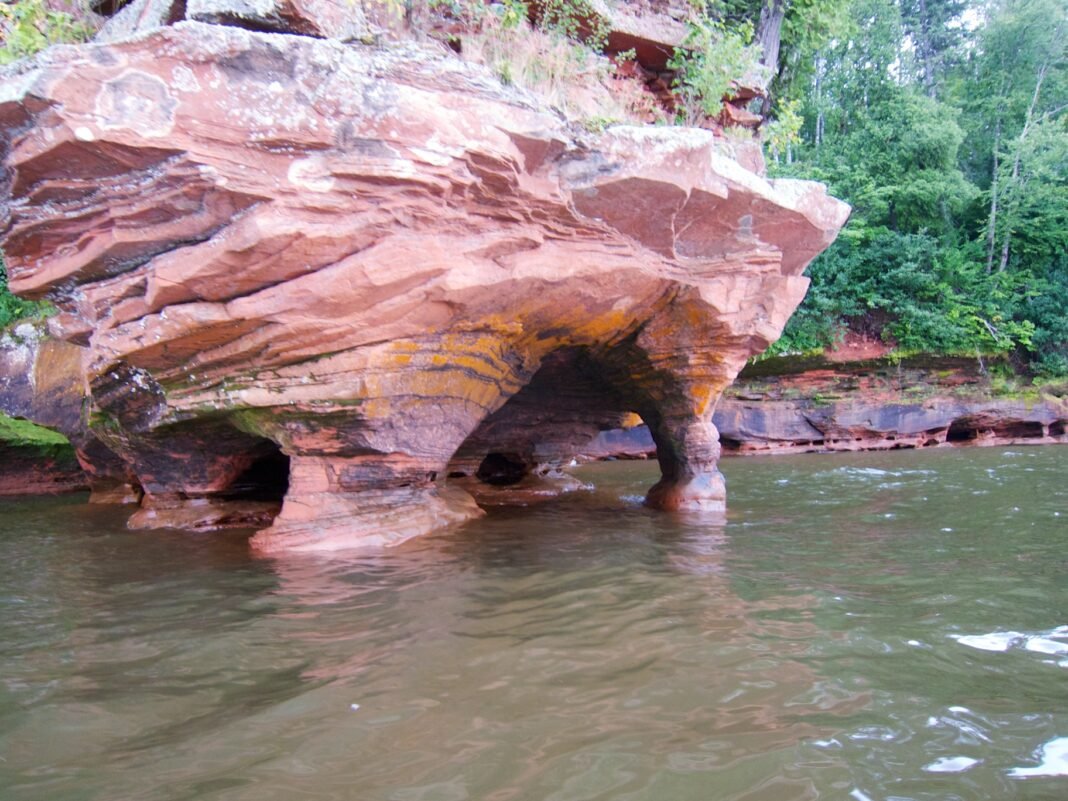
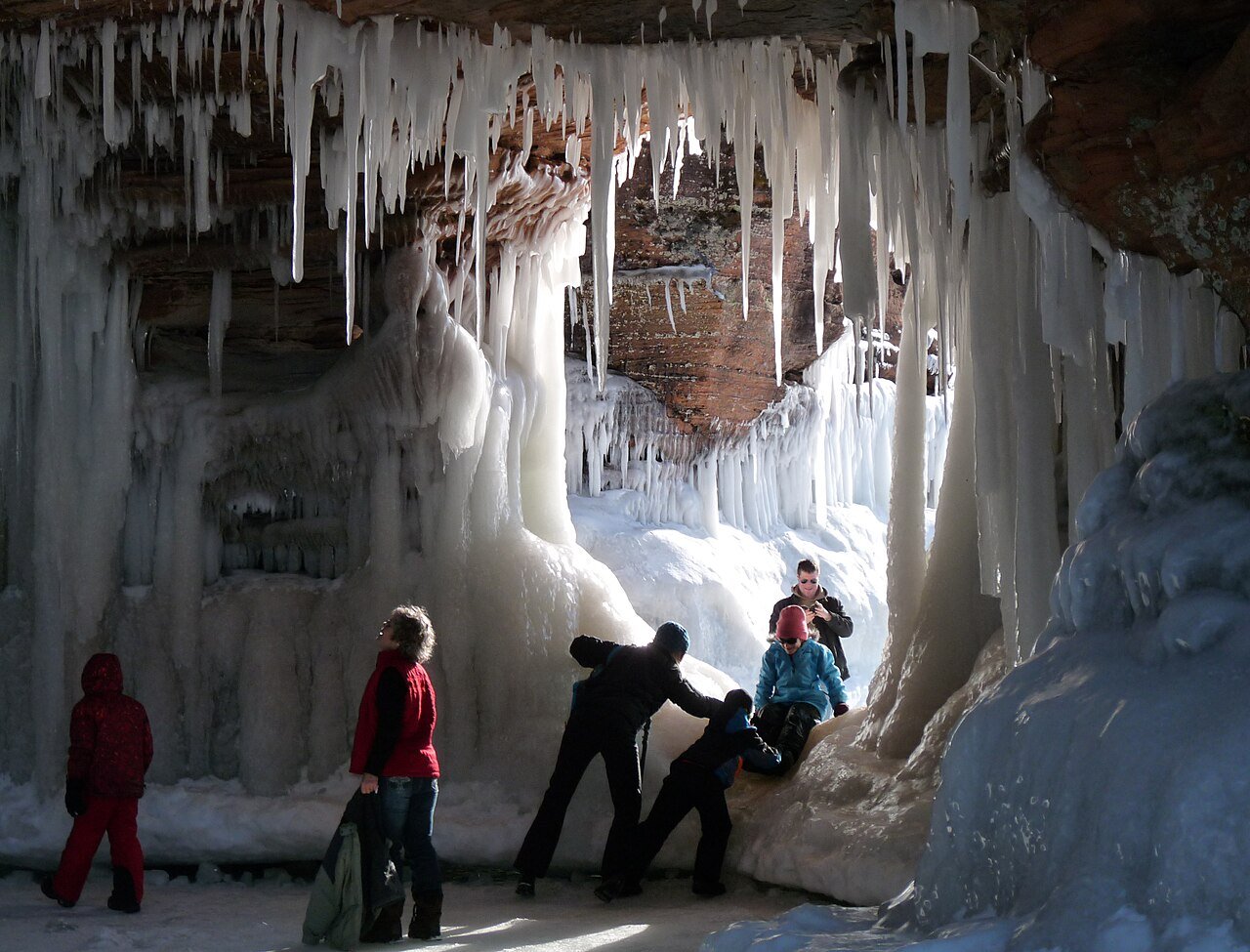
The Apostle Islands, a cluster of 21 islands off Wisconsin’s Bayfield Peninsula on Lake Superior, hold what may be the most varied sea kayaking terrain in the freshwater United States — sandstone sea caves carved by Superior’s waves, old-growth forest on islands uninhabited for decades, active lighthouses (the densest concentration of historic lighthouses on any freshwater body in the world), and the scale and cold-water intensity of a true Great Lakes experience. The mainland sea caves near Meyers Beach (reached from the shoreline near Cornucopia, 14 miles from Bayfield) are the park’s signature geological feature — a half-mile of wave-carved caves reachable by kayak May–October and on foot across the ice when Superior freezes (an increasingly rare and spectacular winter event). The island camping system requires backcountry permits (reserved through Recreation.gov) and kayak transport; the Bayfield maritime culture supports numerous outfitters and guided trips.

The Driftless Area — the southwestern corner of Wisconsin that the glaciers missed, leaving a terrain of deeply carved ridges and valleys with no equal in the upper Midwest — holds the state’s roughest hiking and its best cold-water trout fishing:
- Wyalusing State Park: A confluence overlook where the Wisconsin River meets the Mississippi from bluffs 500 feet above the water; one of the great river views in the Midwest; effigy mounds and woodland archaeology
- Devil’s Lake State Park: 500-foot quartzite bluffs above a glacially dammed lake; the most visited state park in Wisconsin (nearly 2.3 million annual visits); the Balanced Rock and Potholes trails deliver genuinely challenging hiking with sweeping bluff views
- Coulee country trout streams: The Driftless Area’s spring-fed streams (Timber Coulee, West Fork Kickapoo, Willow Creek) hold exceptional brown and brook trout fishing in country that looks like the Swiss Alps transplanted to the Midwest
- Ice Age National Scenic Trail: 1,200 miles tracing the terminal moraine of the last glacial advance across Wisconsin; the 60-mile Kettle Moraine segment is the easiest to reach and most scenically varied stretch
Door County Kayaking and Cycling
Door County’s 300 miles of shoreline offer excellent sea kayaking on both the Green Bay and Lake Michigan sides of the peninsula, with sharply different water character:
- Green Bay side: Protected waters, shallower and warmer; better for beginners; access from Egg Harbor and Ephraim
- Lake Michigan side: Open water, cliff scenery, sea caves; more challenging paddling that demands experience and close attention to conditions; Cave Point and Whitefish Dunes are the standout destinations
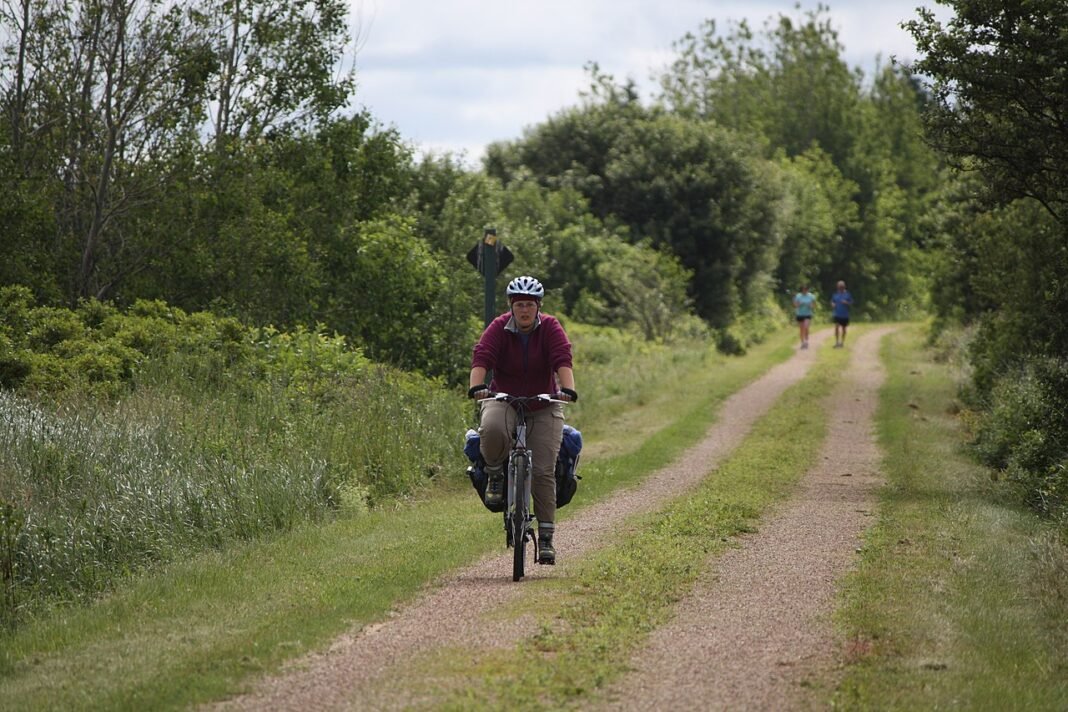
- Peninsula State Park cycling: The 5.1-mile Sunset Trail and the park road network through Peninsula State Park constitute the most popular cycling route in Wisconsin; combined with Door County’s 80+ miles of county roads through orchards and lakeshore, the peninsula’s cycling ranks among the best in the Midwest
- Winter snowmobiling: Door County’s 50-mile snowmobile trail connects the peninsula’s communities when conditions allow; access to the broader statewide 25,000-mile system from the peninsula’s northern trailheads
Wisconsin Fishing: Walleye, Muskie, and Great Lakes Salmon
Wisconsin fishing is a multi-season, multi-species tradition that defines recreational life in the Northwoods lake country. The opener of the walleye season (first Saturday in May) is a cultural event comparable in significance to opening day baseball in other states — ice-out fishing pressure on the state’s 15,000 lakes is extraordinary. The muskellunge (muskie) fishing on Lac du Flambeau, Chippewa Flowage, and the Chain O’Lakes is among the finest in the world; Wisconsin consistently produces trophy muskies over 50 inches. Lake Michigan salmon and trout fishing (Chinook, coho, brown trout, lake trout) provides Great Lakes sportfishing on charter boats out of Port Washington, Sheboygan, and Racine; the Wisconsin DNR’s stocking programs sustain a world-class salmon fishery in waters directly accessible from Milwaukee’s lakefront. Ice fishing, practiced statewide from December through early March, is the state’s most egalitarian recreational tradition — a darkhouse on a frozen lake with a tip-up line set for walleye is as Wisconsin an experience as any.
Frequently Asked Questions
What makes the Apostle Islands the finest sea kayaking destination in the freshwater United States?
The Apostle Islands National Lakeshore (21 islands plus 12 miles of Wisconsin mainland shore on Lake Superior’s Chequamegon Bay) offers the most varied sea kayaking terrain in the freshwater United States — a mix of sandstone sea caves, offshore islands, historic lighthouses, and the wild open water of Lake Superior that has no real parallel among the inland states. The sea caves along the mainland unit near Meyers Beach are the Apostle Islands’ most photographed feature — sandstone formations sculpted by wave action into arches, tunnels, and chambers accessible by kayak in calm weather and on foot across the frozen lake surface in winter. Kayak outfitters in Bayfield provide guided day trips and multi-day camping expeditions to the islands, with Outer Island (the most remote) requiring 10+ miles of open water crossing. Lake Superior’s conditions require genuine sea kayaking skill and weather judgment — the lake can become life-threatening in minutes as summer squalls develop with little warning. The winter ice cave experience (when Lake Superior freezes sufficiently, typically January–February) draws tens of thousands of visitors on foot to one of the most remarkable winter landscapes in North America.
What does the American Birkebeiner offer and why is it significant for Nordic skiing?
The American Birkebeiner — held each February in the Cable and Hayward area of northern Wisconsin — is the largest cross-country ski race in North America, drawing around 12,000 skiers across its events. The marquee races run from Cable to the finish in downtown Hayward — a 50-kilometer (31-mile) skate course and a 53-kilometer (33-mile) classic course — with shorter events (the Kortelopet at 29km and the Prince Haakon at 15km) accommodating recreational skiers. The race is modeled on Norway’s Birkebeiner (the original 54km historical race commemorating the 1206 rescue of the infant Prince Haakon) and has become the definitive American Nordic ski cultural event — a community gathering as much as a race, with pasta dinners, ski waxing culture, and the unique experience of thousands of skiers moving through birch and pine forest simultaneously. The Birkie Trail, maintained year-round by the American Birkebeiner Ski Foundation, provides 60+ kilometers of groomed Nordic ski trail in winter and mountain biking trail in summer — some of the finest groomed cross-country terrain in the country outside of the Upper Midwest racing circuits.
What makes the Driftless Area Wisconsin’s most distinctive natural landscape for outdoor recreation?
Wisconsin’s Driftless Area — the southwestern corner of the state that escaped all Pleistocene glaciation — provides the most topographically dramatic outdoor recreation in Wisconsin: limestone bluff hiking with 400-foot relief, spring-fed cold-water trout streams (the Kickapoo River valley and Vernon County’s spring creeks are the Midwest’s premier fly fishing destinations), and mountain biking on ridge-top trails with valley views that seem more appropriate to the Appalachians than the upper Midwest. Wildcat Mountain State Park (Vernon County) provides the most dramatic ridge-top hiking and views in the Driftless Area, with the canoeing on the Kickapoo River below providing easy access to flatwater paddling through a landscape of cliffs and wooded shores. The Elroy-Sparta State Trail (32 miles, the first rail trail in the US, established 1967) passes through three tunnels cut through the Driftless bluffs — including Tunnel 3 between Norwalk and Sparta (about 3,810 feet, roughly three-quarters of a mile) — in a wooded valley setting that defined the American rail trail model. The 400 State Trail and the Sparta-Elroy extensions provide additional cycling.
What does Peninsula State Park offer as Door County’s most popular state park?
Peninsula State Park in Door County (3,776 acres on the limestone peninsula along Green Bay) draws roughly a million visitors a year, making it the busiest state park in Door County and one of the most popular in Wisconsin. The park takes in about eight miles of Green Bay shoreline, the Eagle Bluff Lighthouse (an 1868 active lighthouse open for tours), and a setting of limestone escarpment, cedar forest, and water views. The 20-plus miles of hiking and mountain biking trails include the Eagle Trail (the park’s most rugged, following the bluff edge with cliff-top views over Green Bay) and the Shore Trail (the easiest, running along the Green Bay water’s edge). In winter, the park’s trails serve as the primary cross-country skiing terrain in Door County. Peninsula Players Theatre — billed as America’s oldest professional resident summer theater, running since 1935 — performs on the park’s southern shore each summer. Advance camping reservations are essential; the campground books months ahead for summer weekends.
What is Wisconsin’s Northwoods and what does it offer for paddling and fishing?
Wisconsin’s Northwoods — the northern third of the state, dominated by the Chequamegon-Nicolet National Forest (1.5 million acres) and the chain of lakes, rivers, and wetlands created by the Laurentian glaciation — is the Midwest’s most significant freshwater recreation landscape outside of Minnesota. The region’s 1,000+ interconnected lakes support the largest remaining walleye population in the continental United States, and the musky (muskellunge) fishing on the Chippewa Flowage (about 15,000 acres, created by the Chippewa River dam system, and where Louis Spray landed the 69-pound, 11-ounce world-record muskie in 1949) anchors Wisconsin’s Northwoods “Musky Capital of the World” claim. The Northern Highland-American Legion State Forest (236,000 acres) includes the Namekagon River section of the St. Croix National Scenic Riverway — a designated Wild and Scenic River — and connects to BWCA canoe routes in Minnesota via the St. Croix watershed. The American Birkebeiner trail system in Cable forms the Northwoods’ most developed non-motorized trail network. Wisconsin’s snowmobile trail system (roughly 25,000 miles, among the most in the nation) keeps the Northwoods open year-round for winter recreation.