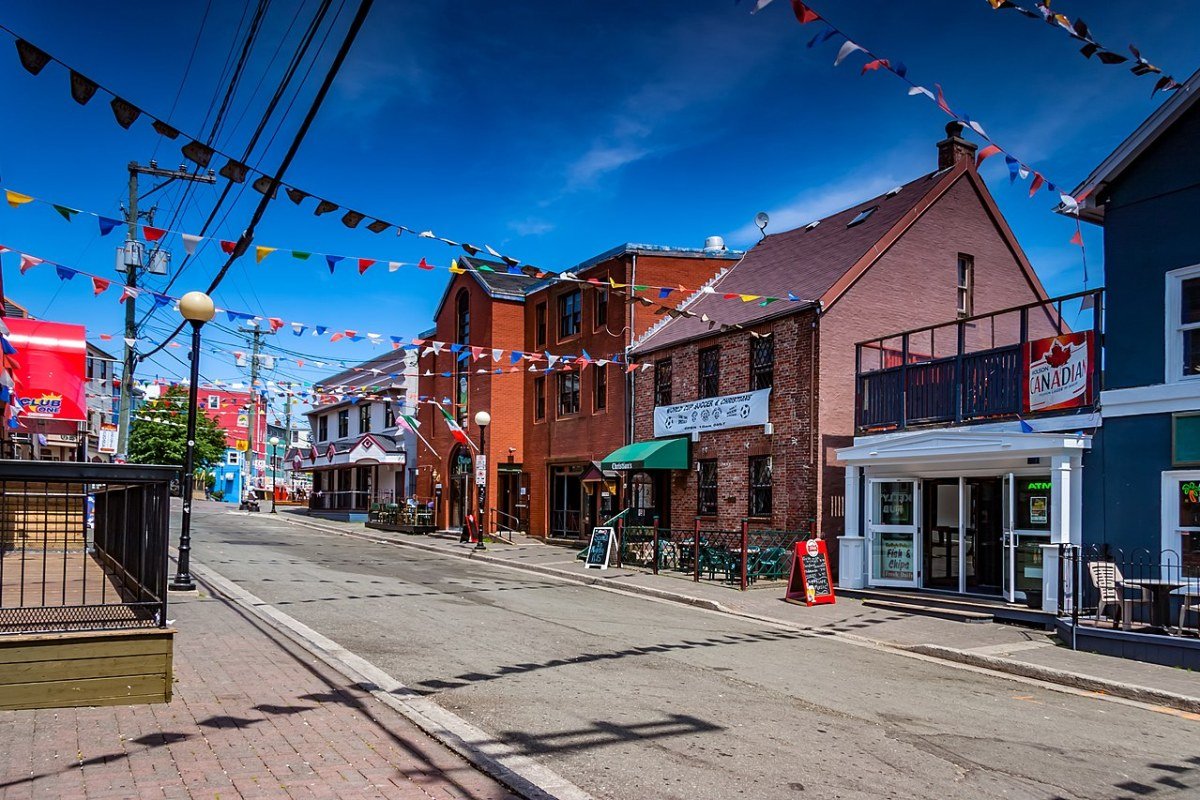
Moving to Newfoundland and Labrador is unlike a move to any other Canadian province — the island of Newfoundland is physically separated from the mainland by the Cabot Strait, so the relocation itself involves either flying to St. John’s or taking the Marine Atlantic ferry from North Sydney, Nova Scotia to Port aux Basques (about 7 hours, with vehicle) or Argentia (14–16 hours, summer only). Once you have arrived, the province’s administrative processes run through Service NL for driver’s licences and vehicle registration and the Department of Health and Community Services for provincial health coverage. The Newfoundland accent is one of the most recognizable in North America, the outport tradition runs deep, and pride in a distinct pre-Confederation identity is real — which means settling here asks for a cultural adjustment that a move between mainland provinces does not. Newfoundlanders are famously warm toward “come from aways” (CFAs), and the social side of settling in rewards patience and a genuine interest in the local culture.

Getting Here: Ferry and Air Access
- Marine Atlantic ferry (North Sydney to Port aux Basques): The primary vehicle ferry route; approximately 6–7 hours crossing; vehicle plus driver rate CAD $250–$450 depending on season and cabin selection; reservations essential in summer (July–August fully booked months in advance); year-round service with weather disruptions in winter
- Marine Atlantic ferry (North Sydney to Argentia): The longer alternative route to the Avalon Peninsula (14–16 hours); summer only (mid-June–late September); arrives closer to St. John’s; vehicle plus driver CAD $400–$700 with cabin; the more comfortable crossing for those who book a cabin
- Air access: St. John’s International Airport (YYT) has direct connections to Halifax, Montreal, Toronto, Ottawa, and seasonal routes to London; Corner Brook is served by Deer Lake Airport (YDF) with connections to Halifax and Toronto; charter and regional services connect smaller communities
Driver’s Licence and Vehicle Registration: Service NL
- Service NL: The provincial service delivery agency handles all driver’s licence, vehicle registration, and provincial identification transactions; Service NL Centres are located in St. John’s, Mount Pearl, Corner Brook, Gander, Grand Falls-Windsor, and regional centres throughout the province; many renewals can also be completed online through MyGovNL
- Licence transfer: New residents must obtain a Newfoundland and Labrador driver’s licence within 90 days of establishing residency; Canadian licences from other provinces are exchanged directly without testing
- Vehicle registration: Vehicles must be registered in Newfoundland and Labrador within 90 days; annual registration fees are moderate; vehicle inspection by a licensed inspection station is required for initial registration
- Auto insurance: Newfoundland uses the private insurance market; the province has historically had among the highest auto insurance rates in Canada because of its claims experience; expect CAD $1,400–$2,200/year for standard coverage in the St. John’s area; rates vary significantly by vehicle type and driving record
Provincial Health: Medical Care Plan
- Medical Care Plan (MCP): Apply for Newfoundland and Labrador’s provincial health coverage through the MCP registration process; forms are available at gov.nl.ca or Service NL centres; bring proof of residence and identity documents
- Coverage transition: When you move from another Canadian province, your former province’s plan generally covers you for up to three months while your MCP application is processed; keep your originating health card active, or arrange private coverage, until your MCP card arrives
- One provincial authority: Since April 2023 the former regional boards have been merged into a single authority, Newfoundland and Labrador Health Services (NL Health Services), which runs the system through regional operations
- Eastern operations (Avalon): The Avalon Peninsula’s hospital network, including the Health Sciences Centre and St. Clare’s Mercy Hospital in St. John’s — the province’s only tertiary care site for complex specialties
- Western operations: Serve Corner Brook and the west coast from the Western Memorial Regional Hospital in Corner Brook; secondary and community care for the island’s western population
- Labrador-Grenfell operations: Serve the Labrador coast and Happy Valley-Goose Bay from the Labrador Health Centre; community health centres serve the remote coastal Inuit and Innu communities of Labrador
- NL Prescription Drug Program: Provincial drug benefits for seniors 65+ on Old Age Security and the Guaranteed Income Supplement (the 65Plus Plan), and low-income individuals and families through the Foundation and Access Plans; the Assurance Plan provides catastrophic coverage when eligible drug costs exceed 5% to 10% of net income, depending on income level
Schools and Post-Secondary Education
- Newfoundland and Labrador English School District: The single province-wide English school district manages all public K–12 schools; French immersion is available from Grade 1 (early immersion) in major communities including St. John’s, Mount Pearl, Corner Brook, and Gander
- Conseil scolaire francophone provincial: French-language public schooling for the province’s francophone minority community; limited to a small number of schools in St. John’s and Port-au-Port Peninsula communities
- Memorial University of Newfoundland (MUN): The province’s sole university (around 17,000 students) with campuses in St. John’s (main) and Corner Brook (Grenfell Campus); strong programs in ocean sciences (the Ocean Sciences Centre), engineering, medicine (the Faculty of Medicine), business, and social work; the internationally recognized ocean engineering and offshore technology research reflects the province’s resource economy; tuition rates are among the lowest in Canada
- College of the North Atlantic (CNA): The provincial public college network with 17 campuses across the island and Labrador; trades, technology, health sciences, and business programs for the provincial workforce
Employment and Immigration
- Newfoundland and Labrador Provincial Nominee Program (NLPNP): Streams for skilled workers with job offers in NL, Atlantic immigration program express entries, and international graduates from MUN and CNA; priority sectors include healthcare, construction trades, ocean technology, and information technology
- Atlantic Immigration Program (AIP): Federal program designating NL employers to support permanent residence for foreign workers; healthcare, oil and gas support industries, and information technology are the most active sectors
- Remote work attraction: Newfoundland has promoted itself as a remote work destination through its “Come Home Year” campaigns; lower housing costs, dramatic coastline, and a distinctive culture draw remote workers from Ontario and BC willing to trade a commute for a different pace of life
- Seasonal and resource employment: The province’s traditional pattern of seasonal fishery work supplemented by oil industry rotation has broadened; the aquaculture industry (salmon farming on the south coast) and ocean technology companies in St. John’s are growing employment sectors that run independently of commodity price cycles
Frequently Asked Questions
How do you get to Newfoundland and Labrador when relocating?
Newfoundland is physically separated from the mainland by the Cabot Strait — the relocation itself requires either flying to St. John’s or taking the Marine Atlantic ferry. The primary vehicle route is North Sydney, Nova Scotia to Port aux Basques (approximately 6–7 hours; vehicle plus driver CAD $250–$450 depending on season; year-round service with weather disruptions in winter). The alternative is North Sydney to Argentia on the Avalon Peninsula (14–16 hours; summer only, mid-June–late September; vehicle plus driver CAD $400–$700 with cabin — the more comfortable crossing if you book a cabin). Both ferry routes require advance reservations: July and August are fully booked months ahead. Air access: St. John’s International Airport (YYT) has direct connections to Halifax, Montreal, Toronto, and Ottawa; Corner Brook is served by Deer Lake Airport (YDF) with connections to Halifax and Toronto.
What are the driver’s licence, vehicle registration, and auto insurance requirements in Newfoundland?
Service NL is the provincial agency handling all driver licensing, vehicle registration, and provincial identification — Service NL Centres are located in St. John’s, Mount Pearl, Corner Brook, Gander, Grand Falls-Windsor, and regional centres throughout the province, and many renewals can be done online through MyGovNL. New residents must transfer to a Newfoundland and Labrador licence within 90 days of establishing residency; Canadian licences from other provinces exchange directly without testing. Vehicles must be registered in NL within 90 days; a vehicle inspection at a licensed inspection station is required for initial registration. Auto insurance in Newfoundland uses the private insurance market and has historically been among the highest-rate provinces in Canada because of its claims experience — expect CAD $1,400–$2,200 per year for standard coverage in the St. John’s area; rates vary significantly by vehicle type and driving record.
How does Newfoundland’s health coverage work for new residents?
Newfoundland’s Medical Care Plan (MCP) provides provincial health coverage — apply through the MCP registration process at gov.nl.ca or at Service NL centres, bringing proof of residence and identity documents. When you move from another Canadian province, your former province’s plan generally covers you for up to three months while your MCP application is processed, so keep your originating health card active or arrange private coverage until your MCP card arrives. Since April 2023 the province’s four former regional boards have been merged into a single authority, Newfoundland and Labrador Health Services, which delivers care through regional operations: the Avalon (Health Sciences Centre and St. Clare’s Mercy Hospital in St. John’s — the province’s only tertiary care site for complex specialties); the west coast (Western Memorial Regional Hospital in Corner Brook); and Labrador-Grenfell (the Labrador coast and Happy Valley-Goose Bay from the Labrador Health Centre, with community health centres serving remote coastal Inuit and Innu communities). The NL Prescription Drug Program covers seniors 65+ on Old Age Security and the Guaranteed Income Supplement (the 65Plus Plan), and low-income individuals and families through the Foundation and Access Plans; the Assurance Plan provides catastrophic coverage when eligible drug costs exceed 5% to 10% of net income, depending on income level.
What is Newfoundland’s employment landscape?
Newfoundland’s economy has long swung between boom-bust resource cycles, and understanding that history is essential preparation for the province. The offshore oil industry — centred on the Hibernia, Hebron, Terra Nova, and White Rose production platforms in the Jeanne d’Arc Basin east of St. John’s — provides exceptionally well-paid work for offshore crews, engineers, and petroleum support services when oil prices are favourable; the 2020 oil price crash produced a sharp NL industry contraction that reminded the province of its resource dependency. Memorial University’s ocean sciences and offshore technology research sustain internationally significant ocean engineering employment in St. John’s. The public sector — the government of NL, the health system, and the K–12 schools — is the province’s most stable employer base. Growing alternatives include a small but internationally competitive information technology cluster in St. John’s, the aquaculture industry (salmon farming on the south coast) that has grown apart from traditional fishery cycles, and the province’s active push as a remote work destination built on lower housing costs and a dramatic coastline.
What makes Newfoundland’s culture and community distinctive for new residents?
Newfoundland has one of the most distinctive regional identities in Canada — the Newfoundland accent is among the most recognizable in North America, outport communities keep traditions that predate Confederation (NL joined Canada in 1949, the last province to do so), and that pre-Confederation pride sets the province apart from mainland Canada. The term “come from away” (CFA) describes mainlanders who have moved to NL; it is used affectionately rather than dismissively, and Newfoundlanders are warm toward newcomers who engage with local culture. Settling in rewards patience and real participation: St. John’s colourful “Jellybean Row” houses, the George Street festival district, the Royal St. John’s Regatta (North America’s oldest annual sporting event, held on Quidi Vidi Lake), and the province’s music and storytelling traditions create a cultural depth that arrivals consistently describe as unlike anywhere else in Canada.