Northern Ireland rarely tops relocation shortlists, yet it offers a combination few other parts of the UK can match. Housing is among the most affordable of any UK nation, the natural landscape is exceptional, the community culture is strong, and the region’s constitutional position, the Windsor Framework’s dual UK-EU market access, is beginning to draw international professionals and businesses. Belfast’s transformation since 1998 has removed the barrier that kept most relocators away before the Good Friday Agreement. What remains is a place that delivers the full framework of UK citizenship, employment rights, and NHS-equivalent healthcare, alongside a property market cheaper than London or the south of England: the average Belfast home sold for around £181,000 in early 2026, against a UK figure nearer £268,000. Add the shortest hop of any UK region to both the Irish and British markets, plus coastline and uplands that hold their own against anywhere in Britain. The Antrim coast, the Mourne Mountains, and the Fermanagh lakelands are proper outdoor country. The honest qualifications are real but manageable: the sectarian geography of some Belfast neighbourhoods, the uncertainty around Northern Ireland’s constitutional future, and an employment market that narrows considerably outside the public sector and a handful of high-growth industries. Arrive with clear professional objectives and an open mind, and none of these are dealbreakers.
Immigration and Visa Considerations
Northern Ireland uses the same UK immigration system as England, Scotland, and Wales. Every visa route and requirement is identical (Skilled Worker, Graduate Visa, Youth Mobility Scheme, and the rest), and there is no Northern Ireland-specific visa. What the region’s constitutional position does add is a set of extra options for certain nationalities:
- Irish citizenship for Northern Ireland residents: Under the Good Friday Agreement, everyone born in Northern Ireland is entitled to Irish citizenship as a birthright. More relevant to relocators, anyone who builds up the qualifying residence in the Republic (broadly five years of reckonable residence in the previous nine, including one continuous year before applying) can apply for Irish naturalisation, which confers EU citizenship and the right of free movement across the EU. Time spent living in Northern Ireland does not, on its own, count toward that residence requirement; it counts only for applicants married to or in a civil partnership with an Irish citizen, or through the discretionary “Irish associations” route.
- EU citizens: EU nationals moving to Northern Ireland occupy a uniquely complex position post-Brexit. They need UK visas for employment, since EU freedom of movement in the UK ended in January 2021, but they may be able to keep EU travel rights through Irish citizenship routes that are not open to residents of Great Britain.
- Irish passport holders: Citizens of the Republic of Ireland have an unrestricted right of abode in Northern Ireland and the UK under the Common Travel Area (CTA), the bilateral UK-Ireland agreement that predates EU membership and continues after Brexit. Irish citizens need no visa or permit to live and work in Northern Ireland.
Finding Employment
- Health and Social Care: The Health and Social Care service, Northern Ireland’s equivalent of the NHS, is the region’s largest employer, with a workforce of close to 68,000 full-time-equivalent staff (around 75,000 people in post) as of late 2025. Its integrated model is unusual within the UK: unlike the NHS in England and Scotland, where health and social services run separately, Northern Ireland’s HSC combines both in a single structure. International recruitment from the Philippines, India, and the EU runs continuously for nursing, physiotherapy, and other clinical roles.
- Legal services: Belfast has grown into a serious UK and international legal-services hub. A&O Shearman, Baker McKenzie, A&L Goodbody, and a widening field of international firms have set up here, drawn by UK legal expertise, operating costs well below London’s, and the ability to service both UK and Irish law from one office.
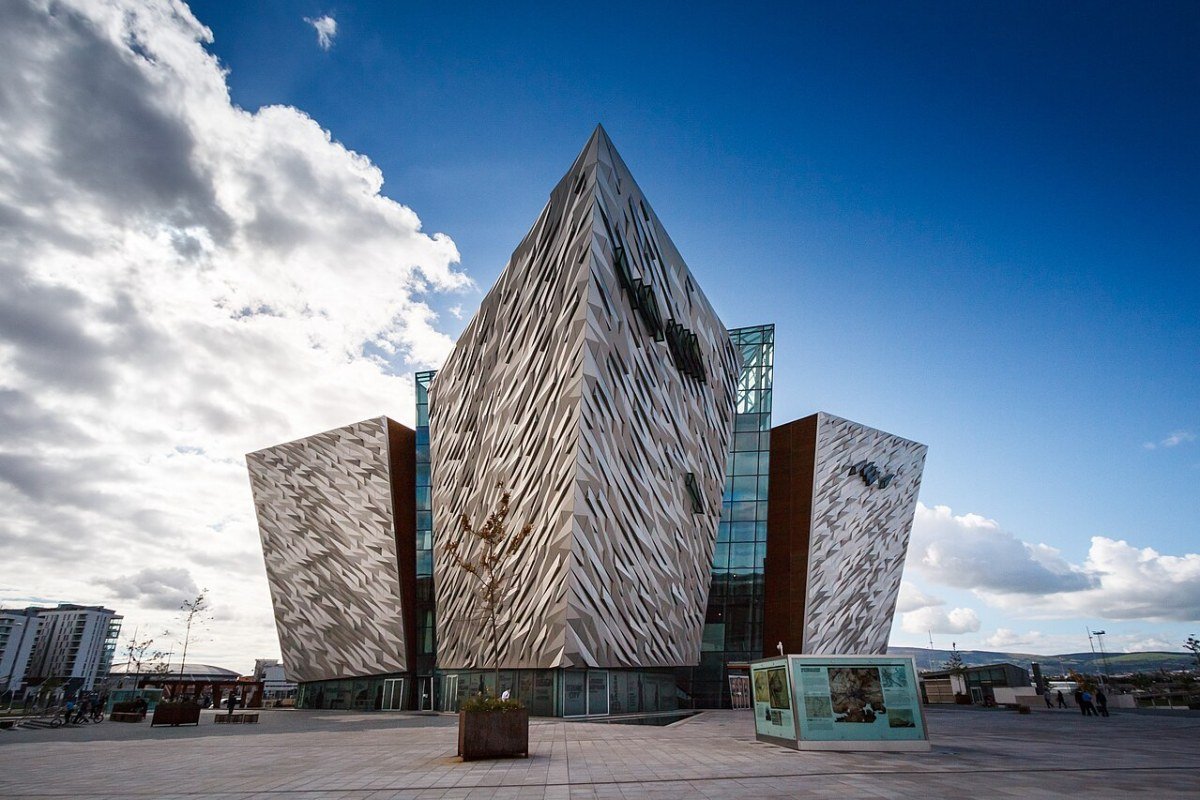
- Technology and fintech: The Catalyst Belfast accelerator, Citi’s Belfast technology centre (more than 4,000 employees, making it Northern Ireland’s largest financial-services employer), Allstate Northern Ireland (around 1,700, down from a peak above 2,300 in 2019), and a growing fintech cluster have made Belfast a serious UK tech base. The physical heart of the sector is the Catalyst campus in the Titanic Quarter.
- Tourism: Tourism has expanded sharply on the back of the Game of Thrones filming legacy, the Giant’s Causeway, and Belfast’s cultural revival, and it employs large numbers in hospitality, guiding, and tour operations. Seasonal work clusters along the Antrim coast and around the Mournes.
- Cross-border opportunities: The border with the Republic opens up dual-jurisdiction work that exists almost nowhere else in the UK. Professionals based in Northern Ireland can take roles on either side, and the Belfast-Dublin economic corridor supports a steady flow of people who commute or work remotely across the line.
.jpg?width=1200)
Practical Relocation Information
- Getting to Northern Ireland: Belfast International Airport (Ryanair, easyJet, British Airways, and others) and Belfast City Airport (George Best, with Aer Lingus, British Airways Cityflyer, and others) connect to London, Manchester, Birmingham, Edinburgh, Glasgow, and dozens of European cities. Dublin Airport, two hours south by road or coach, offers the widest range of long-haul connections. Stena Line and P&O Ferries sail from Belfast and Larne to Cairnryan in Scotland and Liverpool in England, carrying vehicles as well as foot passengers.
- Cross-border travel: The border between Northern Ireland and the Republic is invisible, with no customs and no passport checks thanks to the Common Travel Area. Crossing by car feels no different from crossing a county boundary; the only signals are the road signs (speed in km/h in the Republic, mph in Northern Ireland) and the switch from sterling to euro.
- Banking: Northern Ireland is served by both the big UK banks (Barclays, HSBC, Santander) and local institutions (Ulster Bank, Bank of Ireland Northern Ireland, Danske Bank Northern Ireland) that issue their own banknotes. These Northern Irish notes are the same currency, sterling, as English ones, but technically a “promise to pay” rather than Bank of England notes, and they are not always accepted outside Northern Ireland.
- Schools: The school system is administered separately from the rest of the UK. Northern Ireland keeps an active grammar-school sector, with the 11-plus selection test still in use (unlike England, where grammar schools are now rare), and it runs a distinct integrated-schools movement that sets out to educate Catholic and Protestant children together. Most schools fall into one of two denominational categories, controlled (Protestant) or maintained (Catholic), a structure that shapes the wider educational landscape.
Community and Cultural Life
The Troubles still shape community life here in ways both visible and subtle. In some Belfast neighbourhoods, the flags, the painted kerbstones, and the murals signal community identity, and newcomers do need to read that geography without letting it dominate their picture of the place. These markers express a real historical experience rather than a performance for visitors. The most genuinely mixed parts of the city are the Cathedral Quarter, the south Belfast Queen’s Quarter, and the Holywood and north Down commuter towns: welcoming to newcomers whatever their background and largely free of the boundary tensions that still mark parts of north and west Belfast.
The everyday social culture, built around the pub, the ceilidh, the football match, and the Ulster Fry (Northern Ireland’s entry in the great British breakfast debate, on the menu of every cafe and restaurant in the region), is warm and open to anyone who turns up without assuming the Troubles define everything. Visitors and relocators routinely rank Northern Irish people among the friendliest in the UK, and the particular directness of Belfast conversation, a trait it shares with Glasgow and one immediately familiar to anyone from either city, makes settling in easier than in more reserved parts of the country.
Frequently Asked Questions
What are the unique visa and citizenship options for moving to Northern Ireland?
Northern Ireland uses the same UK immigration system as England, Scotland, and Wales, with identical visa routes (Skilled Worker, Graduate Visa, Youth Mobility Scheme, and so on). Its constitutional position, however, adds significant options not available to residents of Great Britain. Irish citizens have an unrestricted right of abode in Northern Ireland and the UK under the Common Travel Area (CTA), the bilateral UK-Ireland agreement that predates EU membership and continues after Brexit; they need no visa or permit to live and work here. Under the Good Friday Agreement, everyone born in Northern Ireland is entitled to Irish citizenship as a birthright, and anyone who builds up the qualifying residence in the Republic (broadly five reckonable years in the previous nine) can apply for Irish naturalisation, which confers EU citizenship and free movement across the EU; residence in Northern Ireland alone does not count toward that requirement unless the applicant is married to an Irish citizen or qualifies through “Irish associations”. EU citizens moving to Northern Ireland still need UK visas for employment (EU freedom of movement in the UK ended in January 2021) but may keep EU travel rights through Irish citizenship pathways unavailable in Great Britain, which makes the region a uniquely positioned UK entry point for EU nationals.
What is Northern Ireland’s employment landscape?
The Health and Social Care service (HSC, Northern Ireland’s equivalent of the NHS) is the largest employer, with close to 68,000 full-time-equivalent staff (around 75,000 people in post) as of late 2025 and an integrated model, unusual in the UK, that combines health and social services in one structure. Belfast’s legal-services sector has become a substantial UK and international hub: A&O Shearman, Baker McKenzie, A&L Goodbody, and a growing field of international firms have established operations here, drawn by UK legal expertise at costs below London’s plus the ability to service both UK and Irish law. The technology and fintech sector centres on the Catalyst campus in the Titanic Quarter, where Citi’s Belfast technology centre (more than 4,000 employees, Northern Ireland’s largest financial-services employer), Allstate Northern Ireland (around 1,700, down from a peak above 2,300 in 2019), and a growing fintech cluster have built Belfast into a recognised UK tech base. Cross-border work is a real option, with the Belfast-Dublin corridor supporting commuting and dual-jurisdiction employment. Tourism employs large numbers too, driven by the Game of Thrones filming legacy, the Giant’s Causeway, and Belfast’s cultural revival.
How does the Northern Ireland school system differ from the rest of the UK?
Northern Ireland runs its school system separately from the rest of the UK, with several distinctive features. The 11-plus grammar-school selection test is still in use, and unlike England, where grammar schools are now rare, Northern Ireland maintains a functioning grammar sector with real academic prestige; its Controlled Grammar and Voluntary Grammar schools select at age 11 and send high proportions of pupils to Russell Group universities. The denominational structure remains in place, with most schools either controlled (effectively Protestant) or maintained (Catholic), reflecting the community divisions of Northern Ireland’s history. A separate integrated-schools movement deliberately educates Catholic and Protestant children together, and its places are oversubscribed, a sign that parental demand for shared education outstrips current capacity. For families arriving from elsewhere, the selection culture matters: most grammar schools now use the single SEAG transfer test introduced in 2024 (run by GL Assessment), while a number of schools still accept the separate AQE assessment, and preparation for either supports a sizeable private-tutoring industry. Parents who want grammar-school places generally begin in Year 5 (age nine to ten).
How do you get to Northern Ireland and what is cross-border travel like?
Belfast International Airport (Ryanair, easyJet, British Airways, and others) and Belfast City Airport (George Best, with Aer Lingus and British Airways Cityflyer) connect to London, Manchester, Birmingham, Edinburgh, Glasgow, and dozens of European cities. Dublin Airport, two hours south by road or coach (Translink or Dublin Coach), offers the widest range of long-haul connections, and many Northern Ireland residents use it for intercontinental travel. Stena Line and P&O Ferries sail from Belfast and Larne to Cairnryan in Scotland and Liverpool in England, carrying vehicles as well as passengers. The border between Northern Ireland and the Republic is invisible, with no customs and no passport checks under the Common Travel Area. Crossing by car feels no different from crossing a county boundary; the only signals are the road signs shifting between mph and km/h and the currency moving between sterling and euro.
What is Belfast’s community and cultural life like for newcomers?
Belfast’s recovery since the Troubles ranks among the more striking urban turnarounds in recent European history. The Cathedral Quarter, the Titanic Quarter, and the south Belfast Queen’s Quarter are lively, welcoming, internationally connected districts that bear little resemblance to the city of the 1980s. The sectarian geography of some neighbourhoods (flags, painted kerbstones, and murals marking community identity) is a reality newcomers need to read without letting it dominate, since it reflects real historical experience, and meeting it with curiosity rather than avoidance only deepens the experience of living here. The most genuinely shared spaces, welcoming whatever your background, are the Holywood and north Down commuter towns, the Stranmillis and Malone areas of south Belfast, and the Cathedral Quarter and city centre. The local social culture, the pub, the ceilidh, the Saturday-morning Ulster Fry, is warm and inclusive, and the particular directness of Belfast conversation (a trait shared with Glasgow and instantly recognisable between the two cities) makes settling in faster than in more reserved parts of the UK.