Most people file South Dakota under Mount Rushmore and move on, which is a shame, because the state packs in some of the most varied terrain anywhere between the Great Plains and the Rocky Mountains. The Black Hills rise from the western prairie like a forested island, and they hold far more than the presidential sculpture: Crazy Horse Memorial, the bison herds of Custer State Park, the rare boxwork formations of Wind Cave National Park, and the Wild West history of Deadwood. To the east, Badlands National Park spreads its eroded spires, buttes, and pinnacles across the White River plateau. And up in the northeast, the Glacial Lakes region shelters prairie wetlands that matter to migratory waterfowl across the continent. Come for the carved faces and you tend to leave realizing you booked too few days.

- Capital: Pierre (second-smallest state capital by population in the US, after Montpelier, Vermont)
- No state income tax — one of only nine states
- Mount Rushmore: about 2 million annual visitors
- Badlands: 1 million annual visitors
- Custer State Park: Home to one of the world’s largest free-roaming bison herds (1,300+ animals)
The Black Hills: More Than Mount Rushmore
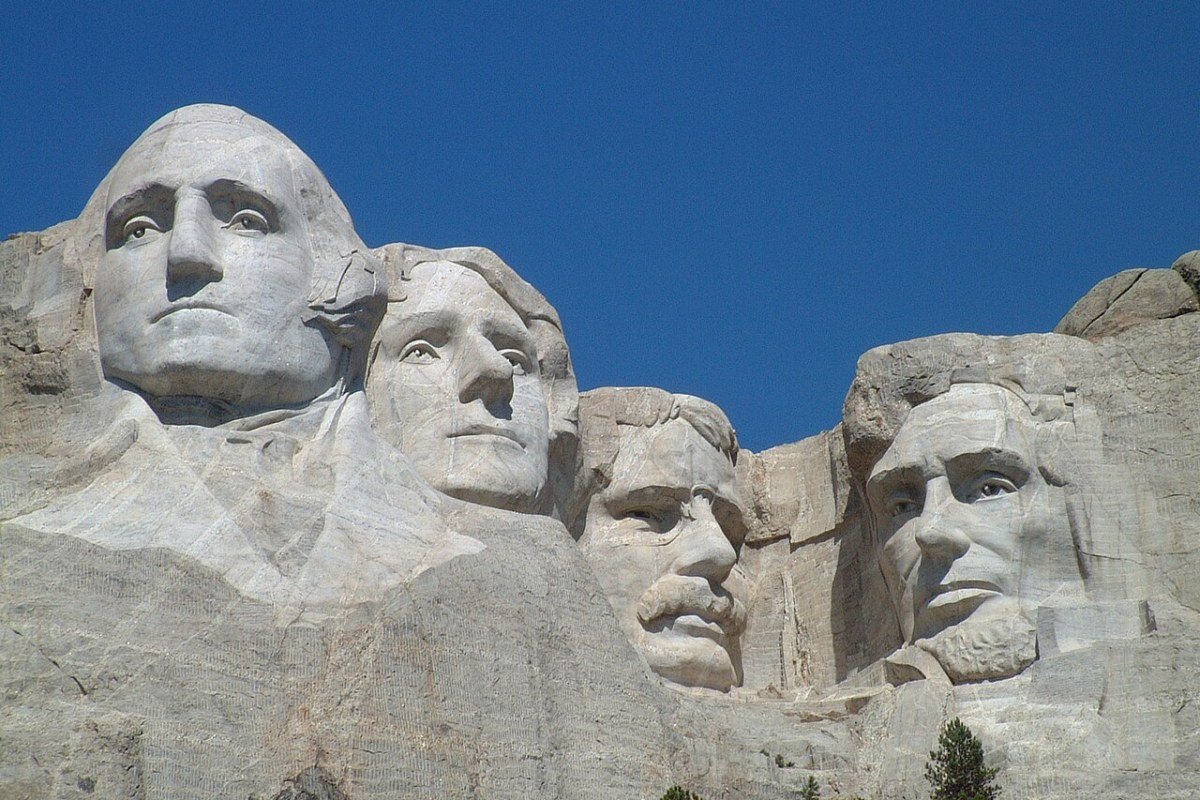
The Black Hills — named by the Lakota Sioux for the dark appearance of their ponderosa pine forests against the prairie sky — rise 3,000 feet above the surrounding plains in the southwestern corner of South Dakota, covering 6,000 square miles of mountain terrain that contains more attractions per square mile than almost any comparable area in the American West. Mount Rushmore itself, while genuinely impressive in person (the scale of the sculpture exceeds most visitors’ expectations), is just one node in a network of destinations that justify several days of exploration.
Crazy Horse Memorial sits 17 miles from Mount Rushmore, and the scale is hard to overstate: a mountain carving of the Lakota warrior astride his horse that, once finished, will dwarf the entire Rushmore sculpture. Work began in 1948, and the Crazy Horse Memorial Foundation has turned down federal funding throughout, keeping the project Native American-directed. No completion date has ever been set.
.jpg?width=1200)
Badlands National Park: A Landscape Carved by Erosion
Badlands National Park protects 244,000 acres of the White River Badlands — an eroded landscape of layered sedimentary rock where millennia of erosion have sculpted buttes, pinnacles, and canyons that shift color dramatically with the angle of the light. The 40-mile Badlands Loop Road provides access to the park’s most dramatic overlooks, with pullouts every few miles offering views of the formations and the prairie grasslands that surround them.
- Sunrise/sunset viewing: The formations’ orange and purple hues are most intense at the day’s ends
- Door Trail: Easy 0.75-mile boardwalk into the formation maze
- Notch Trail: Moderate 1.5-mile hike with ladder climb and canyon views
- Prairie dog towns: Large black-tailed prairie dog colonies visible along the loop road
- Fossil exhibits: The White River Badlands have yielded more mammal fossils than any other place on Earth
Deadwood: America’s Most Famous Frontier Town
Deadwood, in the northern Black Hills, is the best-preserved Wild West town in America — a National Historic Landmark where Wild Bill Hickok was shot in 1876 while holding the “dead man’s hand” (aces and eights), where Calamity Jane roamed the saloons, and where the 1874 discovery of gold triggered the Black Hills Gold Rush that violated the 1868 Fort Laramie Treaty with the Lakota Sioux. The town has preserved its late-19th-century commercial architecture while developing a casino and entertainment industry (gambling was legalized in 1989 specifically to fund historic preservation) that now draws several million visitors a year. The Mount Moriah Cemetery, where Hickok and Calamity Jane are buried, provides historical depth that the gaming establishments cannot.
Wind Cave and Jewel Cave: Underground South Dakota
Wind Cave National Park, adjacent to Custer State Park, protects the world’s densest cave system — more than 150 miles of mapped passages containing boxwork calcium carbonate formations found in this quality nowhere else on Earth. The cave’s name comes from the strong air currents that flow in and out of the cave entrance as atmospheric pressure changes. Jewel Cave National Monument, 13 miles west of Custer, is the second-longest cave in the United States, with 200+ miles of mapped passages and crystal-lined walls that inspired its name.
Glacial Lakes Region and the Missouri River
Eastern South Dakota’s Glacial Lakes region — shaped by the last Ice Age’s terminal moraines and kettle lakes — contains more than 3,000 lakes and wetlands that provide some of the finest pheasant hunting and walleye fishing in North America. The annual South Dakota pheasant season (opening day in October) is one of the most celebrated hunting events in the country. The walleye fishing on Lakes Oahe, Francis Case, and Sharpe — the Missouri River reservoir chain — provides year-round angling that rivals any fishery in the upper Midwest. The Dignity sculpture on the east bank of the Missouri near Chamberlain — a 50-foot stainless steel sculpture of a Lakota woman — is one of the most striking public artworks in the Great Plains.
Getting the Most Out of Your Visit
A few practical notes. Lodging inside and around the Black Hills books up fast in July and August, and it gets close to impossible during the Sturgis Rally in early August, so reserve well ahead if you are traveling in summer. A car is non-negotiable here; the parks and the scenic byways sit far apart, and there is no public transit worth planning around. For current trail conditions and wildlife sightings, the staff at the Badlands and Wind Cave visitor centers tend to know more than any app, and chatting with residents in Rapid City or Custer turns up the kind of detours that don’t make the maps. Build in more days than the mileage suggests: between the Wildlife Loop, Iron Mountain Road, and the Badlands overlooks, the driving is the point, not an obstacle to it.
Frequently Asked Questions
What is the Black Hills of South Dakota and what makes it more than Mount Rushmore?
The Black Hills — named by the Lakota Sioux for the dark appearance of ponderosa pine forests against the prairie sky — rise 3,000 feet above the surrounding plains in southwestern South Dakota, covering 6,000 square miles with more attractions per square mile than almost any comparable area in the American West. Beyond Mount Rushmore (which is genuinely impressive in person — the scale exceeds most visitors’ expectations), the region contains: Crazy Horse Memorial (17 miles from Rushmore — a mountain carving of the Lakota warrior that, when completed, will be larger than the entire Rushmore sculpture, in progress since 1948 and funded without federal money to keep it Native American-directed); Custer State Park (71,000 acres with one of the world’s largest free-roaming bison herds of 1,300+ animals on the Wildlife Loop Road); Wind Cave National Park (the world’s densest cave system); and Deadwood (a National Historic Landmark Wild West town).
What is Badlands National Park?
Badlands National Park protects 244,000 acres of the White River Badlands — an eroded landscape of layered sedimentary rock where millennia of erosion have sculpted buttes, pinnacles, and canyons that change color dramatically with the light, turning lavender at dawn and deep orange at dusk. The 40-mile Badlands Loop Road provides access to the most dramatic overlooks. The White River Badlands have yielded more Eocene and Oligocene mammal fossils than any other place on Earth. Best experiences: the Door Trail (easy 0.75-mile boardwalk into the formation maze), the Notch Trail (moderate 1.5 miles with a ladder climb and canyon views), large black-tailed prairie dog towns along the loop road, and sunrise/sunset viewing when the formations glow. Badlands draws approximately 1 million visitors annually.
What is Deadwood and why is it historically significant?
Deadwood, in the northern Black Hills, is the best-preserved Wild West town in America — a National Historic Landmark where Wild Bill Hickok was shot in 1876 while holding the “dead man’s hand” (aces and eights), where Calamity Jane lived and worked, and where the 1874 discovery of gold triggered the Black Hills Gold Rush that violated the 1868 Fort Laramie Treaty with the Lakota Sioux. The town has preserved its late-19th-century commercial architecture while developing a casino and entertainment industry (gambling was legalized in 1989 specifically to fund historic preservation) that draws several million visitors a year. The Mount Moriah Cemetery, where both Wild Bill Hickok and Calamity Jane are buried, provides the historical depth that the gaming establishments cannot.
What are Wind Cave and Jewel Cave?
Wind Cave National Park, adjacent to Custer State Park, protects the world’s densest cave system — more than 150 miles of mapped passages containing boxwork calcium carbonate formations found in this quality nowhere else on Earth. The cave’s name comes from the strong air currents that flow in and out of the cave entrance as atmospheric pressure changes. The surface prairie above the cave system is managed for bison and elk. Jewel Cave National Monument, 13 miles west of Custer, is the second-longest cave in the United States (200-plus miles of mapped passages and the fifth-longest in the world), its walls lined with the calcite crystals — nailhead and dogtooth spar — that gave the cave its name. Between the two, South Dakota holds two of the longest cave systems on Earth within a half-hour drive of each other.
When is the best time to visit South Dakota and how do you get there?
The best time to visit the Black Hills and Badlands is May through September, with June and September offering the best balance of weather, wildlife activity, and manageable crowds. The Sturgis Motorcycle Rally in August (one of the largest in the world, drawing 500,000+ riders in peak years) significantly increases traffic and accommodation prices in the Black Hills — book far ahead or avoid that week. The Rapid City Regional Airport (RAP) provides the most convenient air access to the Black Hills and Badlands. A rental car is essential — the attractions are spread across a large area, and the scenic drives (the Wildlife Loop Road, the Needles Highway, US-16A Iron Mountain Road with its tunnels framing Mount Rushmore) are central to the South Dakota experience. Allow a minimum of 3–4 days to do justice to the Black Hills and Badlands circuit.