South Dakota’s residential landscape is anchored by two cities with fundamentally different characters — Sioux Falls in the east, a growing regional hub that has attracted corporate investment and provides the most complete urban amenity set in the state; and Rapid City in the west, a smaller city whose proximity to the Black Hills recreation corridor and the Badlands gives it a lifestyle appeal that Sioux Falls, for all its economic dynamism, cannot match. Between and around these anchors, a constellation of smaller cities and towns — Spearfish, Brookings, Watertown, Aberdeen — provides community character for households whose priorities are space, affordability, and the particular social texture of the Northern Plains.

1. Sioux Falls: The Prairie Metropolis
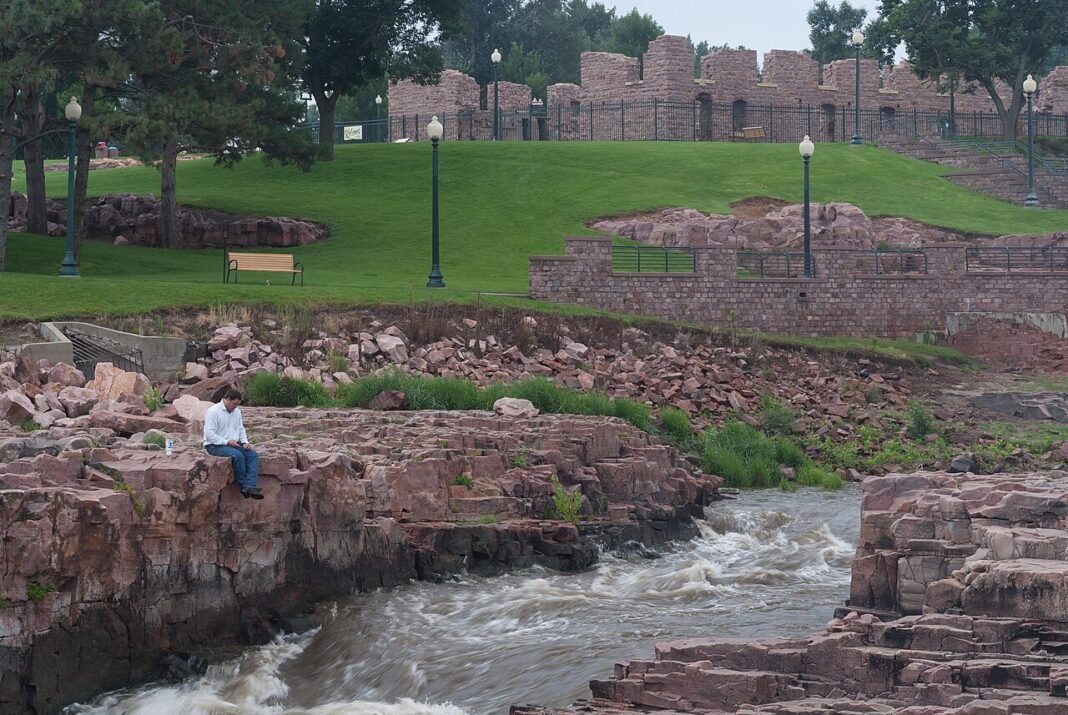
Sioux Falls is South Dakota’s most complete city — the largest in the state at roughly 225,000 residents, the fastest growing, and the most economically diverse. The city has built its economy on financial services (Citibank’s South Dakota credit card operations employ thousands; dozens of national banks maintain South Dakota charters for favorable banking laws), healthcare (Sanford Health, the largest rural health system in the US, is headquartered here), and retail (as the regional hub for a 5-state area, Sioux Falls’ retail sector serves a catchment of 1 million people). The city’s downtown has been revitalized around Falls Park — the namesake waterfall of quartzite falls on the Big Sioux River — with restaurants, arts venues, and residential development that has given Sioux Falls an urban core commensurate with its ambitions.
- Downtown/Falls Park area: Urban walkable core; condos and lofts $250K–$450K
- McKennan Park: Historic tree-lined neighborhood; Craftsman homes $280K–$420K
- Tea / Harrisburg: Premier suburban school districts; new construction $320K–$480K
- Brandon: Eastern suburb with community feel; $280K–$380K
2. Rapid City: Gateway to the Black Hills
Rapid City’s appeal is inseparable from the Black Hills that rise immediately west of the city — the ability to ski at Terry Peak, mountain bike the Mickelson Trail, hike in Custer State Park, and return to a city of about 86,000 with real restaurants, hospitals, and cultural infrastructure makes Rapid City one of the most appealing outdoor-lifestyle cities in the northern Great Plains. The downtown’s Main Street Square has been renovated into a lively community gathering space, and the city’s life-sized presidential statues placed at downtown intersections have become both a tourist attraction and a source of local pride.
.jpg?width=1280)
3. Spearfish: The Black Hills’ Quiet Favorite
Spearfish, in the northern Black Hills near the Wyoming border, has emerged as the most sought-after smaller community in South Dakota — a university town (Black Hills State University) with a walkable Main Street, direct access to Spearfish Canyon (one of the most dramatic limestone canyons in the Black Hills), and a quality-of-life reputation that has attracted remote workers and retirees from across the region. The Roughlock Falls Nature Area and Spearfish Canyon Scenic Byway are accessible within minutes of downtown. Median prices of $280,000–$360,000 remain well below comparable mountain communities in Colorado or Wyoming.
4. Brookings: University Town on the Plains
Brookings, home to South Dakota State University (14,000 students) in the eastern Coteau des Prairies, provides a university-town character that gives it cultural infrastructure disproportionate to its 25,000 residents. The university’s agricultural research programs make Brookings the intellectual center of South Dakota’s agricultural economy, and the South Dakota Art Museum on the SDSU campus holds the largest collection of Harvey Dunn prairie paintings — a uniquely South Dakotan art tradition. Housing stays affordable at $200,000–$270,000 median, and the quality of life for people who thrive in a college-town setting is high.
5. Hot Springs: The Wellness Town
Hot Springs, at the southern end of the Black Hills near Wind Cave National Park and the Mammoth Site (a remarkably preserved Pleistocene sinkhole where 61 columbian and woolly mammoths have been excavated), is the most historically distinctive small town in the Black Hills. The town’s Sioux quartzite buildings, constructed during the late 19th-century resort boom around its natural warm springs, give Hot Springs an architectural coherence rare in small western towns. Median prices of $190,000–$260,000 make it the most affordable Black Hills community with real character, and the proximity to Wind Cave and Custer State Park provides recreation access superior to most larger towns.
6. Aberdeen: The Northern Hub
Aberdeen, in north-central South Dakota, is the state’s third-largest city and the service hub for a vast agricultural region — a city of about 28,000 with Northern State University, a regional medical center, and the retail and service concentration that makes it the dominant community for a 100-mile radius of surrounding farmland. The city’s economy is stable, driven by healthcare, education, and agriculture, and its housing costs (median $180,000–$230,000) are among the lowest of any regional service center in the state. For workers whose jobs are in regional services or agriculture, Aberdeen strikes a reasonable cost-to-quality balance that the more tourism-inflated towns of the Black Hills cannot match.
Choosing a South Dakota community comes down to honest priority-setting, and the state rewards it. If outdoor recreation and a mountain lifestyle top your list, look west to Rapid City and the Black Hills. If you want employment depth, urban amenities, and the fullest set of services, head east to Sioux Falls. Buyers chasing maximum affordability in a college-town setting should weigh Brookings or Vermillion, while anyone drawn to the particular texture of small-city Plains life at the lowest price points will find the widest choice among the dozens of smaller towns that serve the state’s farming regions. No single place suits every preference, but South Dakota’s lack of a state income tax makes every community on this list more financially appealing than its counterparts across the state line.
Frequently Asked Questions
What has made Sioux Falls one of the fastest-growing mid-sized cities in the upper Midwest?
Sioux Falls is South Dakota’s most complete city — the largest in the state at roughly 225,000 residents, the fastest growing, and the most economically diverse. The city’s economy is built on financial services (Citibank’s South Dakota credit card operations employ thousands, and dozens of national banks maintain South Dakota charters for the state’s favorable banking laws), healthcare (Sanford Health, the largest rural health system in the United States, is headquartered in Sioux Falls), and retail (as the regional hub for a five-state area, its retail sector serves a catchment of approximately one million people). The downtown has been revitalized around Falls Park — quartzite falls on the Big Sioux River — with restaurants, arts venues, and residential development. Downtown and Falls Park area condos and lofts run $250,000 to $450,000; the historic McKennan Park neighborhood offers Craftsman homes at $280,000 to $420,000; the premier suburban school districts of Tea and Harrisburg offer new construction at $320,000 to $480,000.
What makes Rapid City appealing as an outdoor lifestyle city in western South Dakota?
Rapid City’s appeal is inseparable from the Black Hills that rise immediately west of the city — the ability to ski at Terry Peak, mountain bike the Mickelson Trail (109-mile rail trail through the Black Hills), hike in Custer State Park (home to a free-roaming bison herd of approximately 1,300 animals, one of the largest public bison herds in the world), and return to a city of about 86,000 with real restaurants, hospitals, and cultural infrastructure makes Rapid City one of the most appealing outdoor-lifestyle cities in the northern Great Plains. Downtown’s Main Street Square has been renovated into a community gathering space, and the city’s life-sized presidential statues placed at downtown intersections have become a distinctive attraction. Mount Rushmore (25 miles south) and Badlands National Park (50 miles east) make Rapid City the most strategically positioned touring base in the Northern Plains.
What makes Spearfish the most sought-after smaller community in South Dakota?
Spearfish, in the northern Black Hills near the Wyoming border, has emerged as the most sought-after smaller community in South Dakota — a university town (Black Hills State University) with a walkable Main Street, direct access to Spearfish Canyon (one of the most dramatic limestone gorge landscapes in the Black Hills, with Roughlock Falls and Spearfish Falls as highlights along the Spearfish Canyon Scenic Byway), and a quality-of-life reputation that has attracted remote workers and retirees from across the region. The trail network in and around the canyon provides hiking and mountain biking within minutes of downtown. Median prices of $280,000 to $360,000 remain well below comparable mountain communities in Colorado or Wyoming, and South Dakota’s no-income-tax advantage adds further financial appeal for remote workers choosing between mountain communities.
What does the Mammoth Site at Hot Springs offer as a scientific and visitor attraction?
Hot Springs, at the southern end of the Black Hills near Wind Cave National Park, is home to the Mammoth Site — one of the most remarkable paleontological discoveries in North America. The site preserves a Pleistocene sinkhole where warm spring water attracted mammoths approximately 26,000 years ago, and 61 individual mammoths (both Columbian and woolly species) have been excavated in place in what is the world’s largest in situ mammoth research site. The site is still actively excavated, and visitors can watch paleontologists at work on the exposed bone bed. The town’s Sioux quartzite buildings, constructed during the late 19th-century resort boom around the area’s natural warm springs, give Hot Springs an architectural coherence rare in small western towns. Median home prices of $190,000 to $260,000 make it the most affordable Black Hills community with genuine historic character.
What does Brookings offer as a university town on the eastern South Dakota plains?
Brookings, home to South Dakota State University and its 14,000 students in the eastern Coteau des Prairies, provides a university-town character that gives it cultural infrastructure disproportionate to its 25,000 residents. The university’s agricultural research programs make Brookings the intellectual center of South Dakota’s agricultural economy — SDSU operates significant research programs in agriculture, engineering, and pharmacy. The South Dakota Art Museum on the SDSU campus holds the largest collection of Harvey Dunn prairie paintings — a uniquely South Dakotan art tradition documenting the homesteader experience on the Northern Plains. Housing is genuinely affordable at $200,000 to $270,000 median. The South Dakota Agricultural Heritage Museum provides additional historical context for the regional economy. Brookings’s position 50 miles north of Sioux Falls via I-29 provides reasonable access to the state’s largest city for households who want university-town character at lower prices.