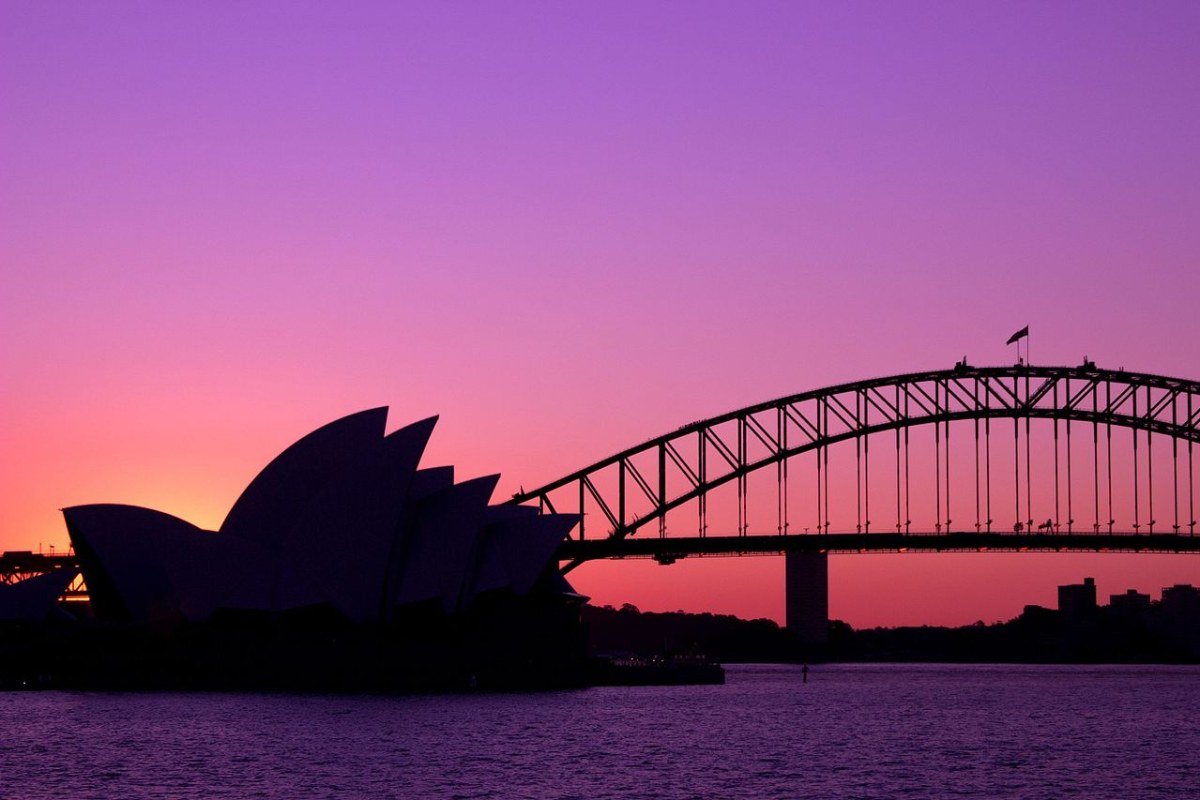
New South Wales is Australia’s most visited state and its most varied. Within its borders sit Sydney Harbour — arguably the world’s loveliest urban waterway, framed by the Opera House and the Harbour Bridge in a pairing that has come to stand for Australia itself — the Blue Mountains’ sandstone escarpments and eucalyptus-filled valleys two hours from the city, the beaches of Byron Bay at the state’s northern tip where the eastern mainland juts furthest into the Pacific, and the wine country of the Hunter Valley, Orange, and Mudgee that has made New South Wales one of the country’s premier cool-climate wine destinations. Sydney, the state capital and Australia’s largest city (5.6 million), leads the southern hemisphere in finance, the arts, and tourism — a world-class city set against extraordinary natural beauty. Beyond it, the state holds more national parks, World Heritage Sites, and protected wilderness than any other in Australia, from the subtropical rainforests of the Border Ranges on the Queensland boundary to the alpine snowfields of the Snowy Mountains near Victoria.
Sydney: The Harbour City
Sydney Harbour (officially Port Jackson) is the defining feature of Australia’s largest city — a drowned river valley running 19 kilometres inland from the Heads, with 317 kilometres of shoreline taking in beaches, coves, headlands, and islands that make the harbour an outdoor recreation landscape as much as a commercial waterway. The Sydney Opera House — Jørn Utzon’s World Heritage-listed masterpiece, completed in 1973 and inscribed by UNESCO in 2007 — and the Sydney Harbour Bridge, the world’s widest long-span steel arch bridge and the “Coathanger” to locals, together frame the view from Circular Quay that has become the most reproduced urban image in the southern hemisphere.
Sydney Must-Experiences
- Sydney Harbour Bridge Climb: The 3.5-hour climb to the summit arch (134m above harbour level) provides the most dramatic panorama of the city and harbour; book months in advance for summer weekends
- Sydney Opera House: Tours available daily; evening performances (Sydney Symphony, Opera Australia, Sydney Theatre Company) make the building the venue, not just the spectacle
- Bondi to Coogee Coastal Walk: 6km along the sandstone clifftops from Bondi Beach south through Tamarama, Bronte, and Clovelly to Coogee; the finest urban coastal walk in Australia
- Taronga Zoo: 4,000 animals above the harbour; the ferry from Circular Quay arrives with Harbour Bridge views; the zoo’s sky safari gondola provides animal viewing with the CBD backdrop
Blue Mountains: World Heritage Wilderness Near Sydney
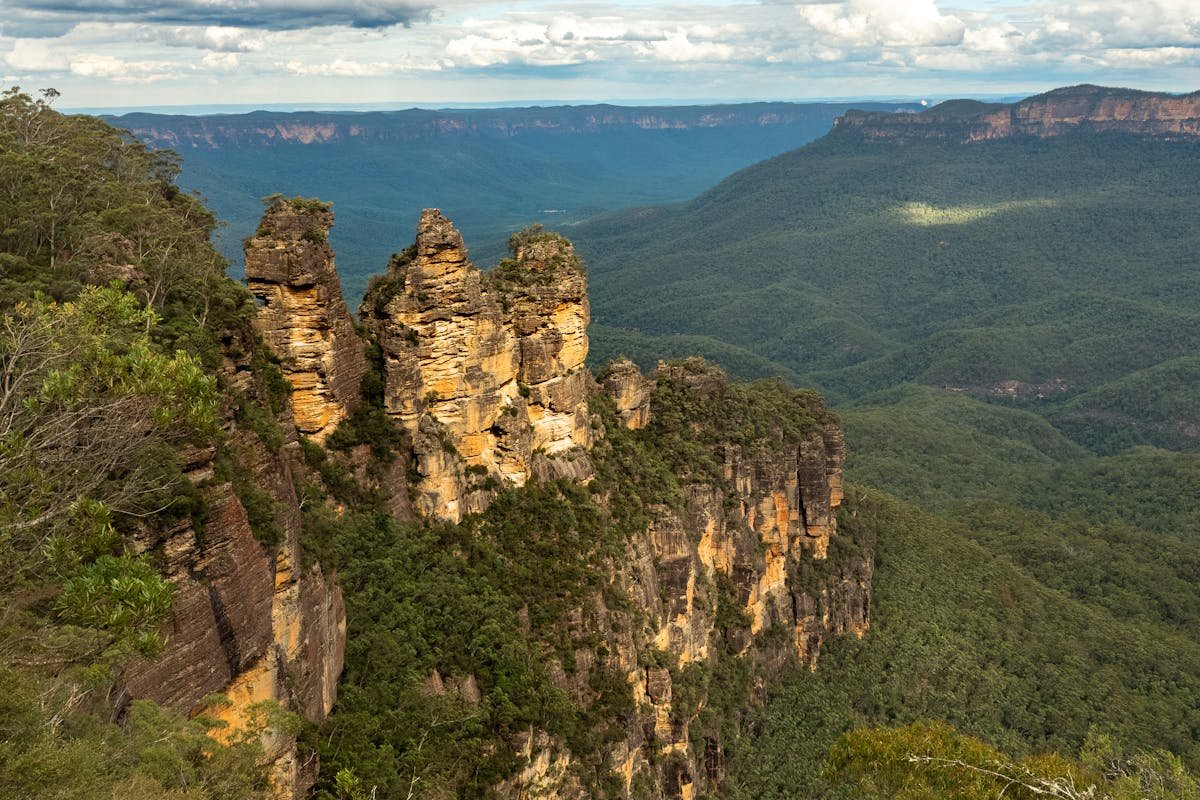
The Blue Mountains, declared a World Heritage Area in 2000 as part of the Greater Blue Mountains Area (1.03 million hectares), begin 65 kilometres west of Sydney and extend through deeply dissected sandstone plateau country to the Lithgow coal valleys beyond. The name derives from the distinctive blue haze of eucalyptus oil vapour that hangs over the valleys — a perpetual atmospheric phenomenon of the world’s largest eucalyptus forests. Katoomba is the mountains’ main town, and Echo Point — the lookout above the Three Sisters sandstone formation and the Jamison Valley — draws the heaviest crowds of any viewpoint in the range. The Six Foot Track (45 kilometres from Katoomba to Jenolan Caves, 2–3 days) and the Federal Pass Track through the valley below the Three Sisters rank among the classic walks.
Byron Bay: The Eastern-Most Point
Byron Bay, at the easternmost point of the Australian mainland where the Cape Byron lighthouse marks the spot, is Australia’s best-known beach town and the anchor of a northern NSW alternative-lifestyle culture that has drawn artists, surfers, wellness seekers, and — more recently — wealthy relocators from Sydney and Melbourne for decades. Main Beach and the Pass hold the most consistent surf, while Belongil Beach to the north and Tallow Beach stretching south from the Cape offer quieter swimming. The Byron Bay Bluesfest (Easter, running annually since 1990) is the largest blues and roots music festival in the southern hemisphere. Inland, the Bangalow, Mullumbimby, and Nimbin hinterland supplies the counterculture backdrop that has shaped Byron’s identity since the 1970s.
Hunter Valley: Australia’s Oldest Wine Region
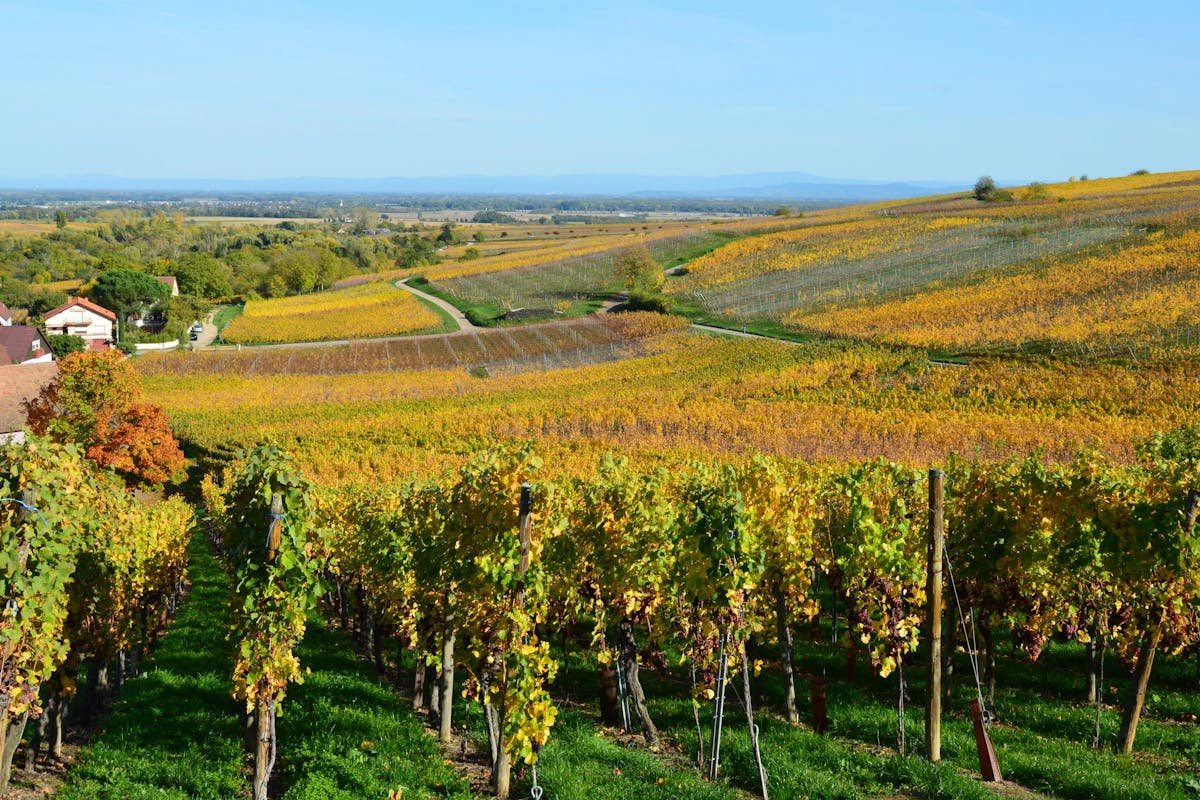
The Hunter Valley, two hours north of Sydney, is Australia’s oldest wine region — its first vineyards were planted in the 1820s — and its busiest, with more than 150 cellar doors, weekend visitors from Sydney filling boutique accommodation, and the region’s signature varieties carrying the tasting experience: Semillon, regarded as the finest expression of the grape outside Bordeaux, and Shiraz. The Lower Hunter around Pokolbin packs in the cellar doors; the Upper Hunter at Muswellbrook and Denman keeps its wineries remote and its traffic light. The Hunter Valley Gardens, whose Christmas Lights display runs from November, and the Hunter Valley Cheese Company anchor the food-and-flowers side of a visit.
Planning Your New South Wales Visit
New South Wales’s geography rewards a multi-centre itinerary — Sydney as the base, with day trips to the Blue Mountains (2 hours west by train), the Hunter Valley (2 hours north by car or bus), and the Royal National Park (1 hour south by train and ferry). The NSW TrainLink network links Sydney with Byron Bay (10 hours, with an overnight option), Broken Hill (13 hours, for the outback experience), and Canberra (3.5 hours). Travellers planning a 7-to-10-day trip might give 3–4 days to Sydney itself — the harbour, the surf beaches, the dining — 2 days to the Blue Mountains, and 2 days to either the Hunter Valley or Byron Bay, depending on whether wine country or beach culture wins out. Spring (September–November) and autumn (March–May) bring the steadiest weather across the state’s varied regions.
Getting the Most Out of Your Visit
A few practical points that will improve any trip to New South Wales. Book accommodation and major attractions — particularly national parks, popular hiking trails, and well-known restaurants — as far in advance as possible; the most desirable options can fill weeks or months ahead, especially in peak season. A car gives you the most flexibility for exploring beyond the main centres, and many of the state’s best experiences sit in places that public transport does not reach easily. Sound local knowledge tends to surface in regional visitor centres, independent bookshops, and conversations with residents — the discoveries you remember are rarely the ones in the guidebooks. Allow more time than you think you need: New South Wales rewards travellers who slow down and explore in depth rather than racing to cover maximum ground in minimum time.
Frequently Asked Questions
What makes Sydney Harbour the world’s most beautiful urban harbour?
Sydney Harbour (officially Port Jackson) is the defining feature of Australia’s largest city — a drowned river valley extending 19 kilometres inland from the Heads, with 317 kilometres of shoreline encompassing beaches, coves, headlands, and islands that make the harbour an outdoor recreation landscape as much as a commercial waterway. The Sydney Opera House (Jørn Utzon’s World Heritage-listed masterpiece, one of the 20th century’s greatest buildings) and the Sydney Harbour Bridge (the world’s largest steel arch bridge, the “Coathanger” to locals) frame the view from Circular Quay that has become the most reproduced urban image in the Southern Hemisphere. Sydney Harbour’s essential experiences include the Manly Ferry (a 30-minute harbour crossing that remains the finest transport experience in Australia), the Harbour Bridge Climb (providing 360-degree views of the harbour and city from the bridge arch’s summit), the Sydney Harbour National Park’s walking tracks (the Spit Bridge to Manly walk is 10km along the harbour’s north shore), and the BridgeClimb summit views at dawn or dusk.
What does the Blue Mountains offer as a day trip from Sydney?
The Blue Mountains — the sandstone escarpment and eucalyptus-filled valleys two hours west of Sydney — offer the most accessible wilderness experience of any major Australian city. The Three Sisters rock formation at Echo Point (Katoomba) is the range’s signature image: three sandstone columns rising above the Jamison Valley, best seen from the Echo Point lookout. The Grand Canyon walk (6km loop from Evans Lookout) drops through slot canyons and emerald forest pools in a landscape whose tropical character surprises visitors despite its temperate location. The Wentworth Falls walk (5.7km return) descends to the base of a 187-metre waterfall through hanging swamp and rainforest. Blue Mountains World Heritage Area (1.03 million hectares, listed 2000) protects the world’s greatest concentration of eucalyptus species diversity. Leura’s café strip and the Hydro Majestic Hotel at Medlow Bath provide the most refined Blue Mountains village character. The Scenic Railway at Katoomba (the world’s steepest passenger railway at a 52-degree incline) descends into the Jamison Valley in 2 minutes.
What makes Byron Bay one of Australia’s most distinctive coastal destinations?
Byron Bay, at the easternmost point of the Australian mainland where New South Wales projects furthest into the Pacific, has grown from a sleepy surf town into Australia’s most aspirational — and one of its most expensive — coastal destinations, with property prices that rival Sydney’s eastern suburbs. The Cape Byron Lighthouse, marking the country’s most easterly point and reached by a 3.7km coastal walk, sits above the finest headland scenery on the NSW coast. Byron’s surf breaks span the full ability range, from the beginner-friendly Clarkes Beach to the long right-hand point break at The Pass and the powerful Tallow Beach. The Byron Bay area has become Australia’s major yoga, wellness, and festival destination (Splendour in the Grass music festival) while maintaining the natural assets — migrating humpback whales (June–November), spinner dolphins year-round, and the subtropical hinterland towns of Bangalow, Mullumbimby, and Federal — that give it genuine substance beyond its reputation.
What wine regions does New South Wales offer and what are their specialties?
New South Wales has established several of Australia’s most distinctive wine regions. The Hunter Valley (2.5 hours north of Sydney) is the state’s most visited wine region — internationally known for Semillon (a distinctive lean, acidic style that ages for 10–20 years into one of the world’s great white wines) and Shiraz. The Hunter’s warm, humid summers challenge winemaking but produce wines of unique character; Tyrrell’s, Brokenwood, and Mount Pleasant are the region’s leading producers. Orange (5 hours west of Sydney) is a high-altitude cool-climate region (900+ metres) producing Chardonnay, Pinot Noir, and Sauvignon Blanc of increasing international recognition. Mudgee (4 hours northwest) provides robust red wines (Cabernet Sauvignon and Shiraz) in a pastoral landscape with excellent value relative to the Hunter. The Central Ranges (Canberra District, extending into NSW) produces Riesling and cool-climate Shiraz of exceptional quality. New South Wales’s wine output constitutes approximately 25% of Australian wine production.
What Snowy Mountains experiences does New South Wales offer in winter and summer?
The Snowy Mountains in the state’s far south provide Australia’s highest terrain and its most significant alpine experiences. Kosciuszko National Park (6,900km², the largest in NSW) protects Australia’s highest peak — Mount Kosciuszko (2,228m, Australia’s highest point) — accessible via the Thredbo chairlift (operating year-round) and a 13km return walk to the summit along the Main Range. In winter, Perisher (the largest ski area in the Southern Hemisphere by trail count) and Thredbo (the longest ski runs in Australia, 5.9km) operate from June to September; the Australian ski industry is limited by elevation (most runs below 2,000m) and variable snowfall. In summer, the Kosciuszko Main Range walk (26km from Charlotte Pass) and the Alpine Way cycling route provide some of the finest subalpine hiking and cycling terrain in Australia. The Thredbo River trout fishery is one of Australia’s premier fly fishing destinations for brown and rainbow trout. The Snowy Mountains Scheme — 16 major dams, 7 power stations, 145km of tunnels and 80km of aqueducts built between 1949 and 1974 — remains one of the great engineering achievements in Australian history and still supplies a large share of eastern Australia’s renewable energy.