Moving to Nebraska is administratively simple — the state’s systems are efficient and the requirements are straightforward. The harder preparation lies elsewhere: understanding the economic geographies of the state’s two metro areas (Omaha and Lincoln have distinct job markets and neighborhood characters), bracing for the weather of Great Plains living (tornadoes and severe thunderstorms are seasonal realities), and reading the particular grain of local community life, which rewards showing up over standing back. For households leaving coastal markets on cost or lifestyle, Nebraska tends to deliver on its financial promise — the housing affordability is real, and the neighborliness Nebraskans are known for offers the social connection that urban anonymity so often withholds.

Driver’s License and Vehicle Registration
Driver’s license: New Nebraska residents must obtain a Nebraska driver’s license within 30 days of establishing residency. The Nebraska Department of Motor Vehicles (DMV) handles licensing through county DMV offices. Required: proof of identity (US passport, or birth certificate plus Social Security card), proof of Social Security number, and proof of Nebraska residency (two documents showing your Nebraska address — utility bill, bank statement, or lease). A vision screening is mandatory. A knowledge test applies only if your current license has been expired more than one year; otherwise the transfer is handled by surrendering the out-of-state license and paying the applicable fee. Nebraska’s REAL ID-compliant driver’s license requires the standard documentation package. Nebraska’s county-based DMV system means that some rural counties have limited office hours — scheduling in advance is recommended, particularly in smaller county seats.
Vehicle registration: Nebraska vehicle registration is handled by the county treasurer’s office — not the DMV, which handles driver’s licenses separately. This is an important administrative distinction: you may need to visit two separate county offices to complete both the license transfer and vehicle registration. Nebraska requires vehicle registration within 30 days of establishing residency. Registration fees are based on vehicle age and value; the motor vehicle tax (a personal property tax on vehicle value) is assessed and collected at registration, declining as the vehicle ages. Out-of-state vehicles require a VIN inspection at the county treasurer’s office or by a participating law enforcement agency before they can be titled in Nebraska — there is no statewide annual safety inspection, and emissions testing is not required outside specific metropolitan counties.
Severe Weather: The Great Plains Reality
Nebraska sits in the heart of Tornado Alley and sees some of the most violent thunderstorm activity in North America. The state averages roughly 50 tornadoes a year, with peak season running April through July. Unlike the forested states back east, Nebraska’s flat terrain gives a long, clear line of sight on approaching storms — twisters here are often visible from miles off, buying residents more warning time than they would get in hillier country. That advantage shouldn’t be mistaken for lower risk, though: Nebraska tornadoes hit as hard as any on the Plains, and the long distances between towns mean help can be farther away than it would be in a city.
New residents should: identify the storm shelter location in their home (interior rooms on the lowest floor, away from windows — or a basement, which most Nebraska homes have and which provides substantial protection from all but the strongest tornadoes); sign up for their county’s emergency alert system; and note the location and schedule of community warning sirens. The National Weather Service offices in Omaha and North Platte are strong on storm prediction and advance warning, and the coordination between the NWS, local emergency management, and broadcast media during a storm is both fast and reliable. The biggest hazard after tornadoes is hail — Nebraska produces some of the largest stones on Earth, and roof and auto claims are a routine part of the state’s insurance market. Before the spring storm season, new residents should confirm that their auto policy carries comprehensive coverage and that their homeowners policy covers hail damage.

Employment in Nebraska
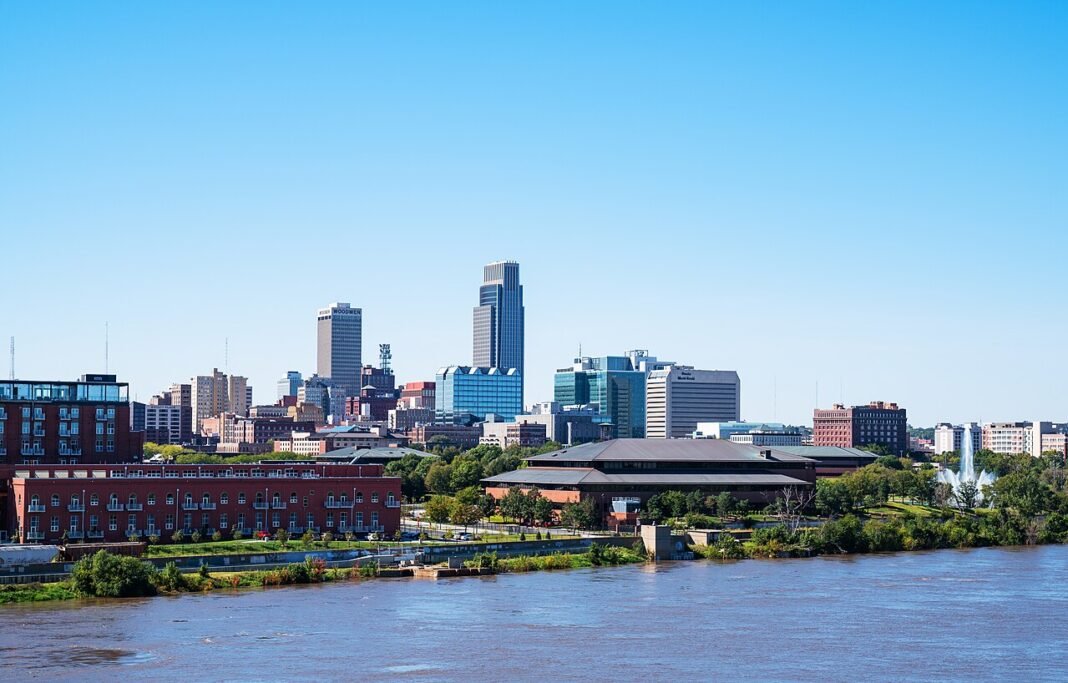
Nebraska’s economy rests on an unusual pairing: a deep agricultural base and a density of corporate headquarters that makes Omaha one of the most economically stable cities in the country. Berkshire Hathaway, the investment conglomerate led by Warren Buffett, calls Omaha home, and its subsidiaries (GEICO, Berkshire Hathaway Energy, Burlington Northern Santa Fe, among others) ripple through the local job market. Union Pacific Railroad, one of the two big western freight carriers, is also headquartered here, employing thousands across corporate, technology, and operations roles. Mutual of Omaha, Ameritas Life, and Woodmen Life anchor a sizable insurance and financial-services sector. ConAgra Brands still runs a large campus in Omaha — its original hometown, which it kept after relocating the corporate headquarters to Chicago in 2016 — staffing research, supply chain, and administrative functions.
The University of Nebraska system (flagship campus in Lincoln, medical center and a separate campus in Omaha) is a heavyweight employer in both academics and healthcare. Nebraska Medicine, CHI Health, and Methodist Health System carry much of the region’s medical workforce. Offutt Air Force Base in Bellevue, home of US Strategic Command, ranks among the country’s most strategically important installations and feeds steady military, contractor, and service-sector work into the surrounding towns. Out in the smaller cities and rural counties, the jobs come from agricultural processing and manufacturing — meatpacking (Tyson, JBS, and others operate large Nebraska plants), ethanol production, and farm-equipment manufacturing.
Nebraska’s Community Character
Nebraska’s social culture grows out of a prairie heritage of self-reliance and neighborliness — the kind of place where everyone’s contribution to the whole is both needed and noticed. Small-town Nebraska tends to welcome new arrivals with warmth that feels genuine rather than performed, and even Omaha holds onto more of that character than its size would suggest. Pitching in through churches, civic groups, school support committees, and volunteer organizations is the baseline expectation here, not the rare gesture, and the texture of social life depends far more on showing up than on passively consuming whatever entertainment a big city puts on offer.
University of Nebraska football is the closest thing the state has to a shared religion. The Cornhuskers play at Memorial Stadium in Lincoln, which seats 85,458 in a city of roughly 300,000 and has sold out every home game since 1962 — an NCAA record that outlasts every other program’s by a wide margin. On a Saturday, the stadium becomes the third-largest “city” in Nebraska, and the whole town turns into a sea of Husker red. It is the fastest, fullest introduction to the state’s identity a newcomer can get. Even for those who do not care about the game itself, grasping what it means here goes a long way toward fitting in.
Frequently Asked Questions
What are the driver’s license and vehicle registration requirements when moving to Nebraska?
Nebraska has an important administrative distinction: driver’s licenses and vehicle registration are handled by two separate county offices. Driver’s license: must be obtained within 30 days of establishing Nebraska residency; processed at the county DMV office; requires proof of identity, Social Security number, and two proofs of Nebraska residency; vision screening required; knowledge test required only if your license has been expired more than one year. Vehicle registration: within 30 days; processed at the county treasurer’s office (not the DMV); fees based on vehicle age and value; a motor vehicle tax (personal property tax, declining with vehicle age) is assessed and collected at registration. Out-of-state vehicles require a VIN inspection before being titled in Nebraska; there is no statewide annual safety inspection and no emissions testing outside specific metropolitan counties.
What severe weather preparation does Nebraska require?
Nebraska averages approximately 50 tornadoes annually — among the higher counts in the Great Plains — with peak season April through July. Nebraska’s flat terrain provides excellent storm visibility, which can be an advantage over more topographically complex states. Most Nebraska homes have basements, providing substantial protection. Every new resident should: identify their basement or interior first-floor shelter; sign up for the county emergency alert system; and know community siren schedules. Beyond tornadoes, Nebraska hailstorms produce some of the world’s largest hail — vehicle and roof damage from hail is a regular Nebraska insurance event. Ensure comprehensive auto coverage and verify hail coverage in your homeowners policy before the spring storm season begins; this is critical preparation, not optional.
What makes Omaha’s employment base unusual for a mid-size city?
Omaha packs in far more corporate headquarters than a city its size usually does. Berkshire Hathaway (Warren Buffett’s investment conglomerate, whose subsidiaries include GEICO, Berkshire Hathaway Energy, and Burlington Northern Santa Fe) is based here. Union Pacific Railroad — one of the two big western US freight carriers — also runs its corporate headquarters from Omaha, employing thousands across corporate, technology, and operations roles. Mutual of Omaha, Ameritas Life, and Woodmen Life anchor a deep insurance and financial-services sector. ConAgra Brands still operates a large Omaha campus — its original hometown, kept after the HQ moved to Chicago in 2016. Offutt Air Force Base in Bellevue houses US Strategic Command and feeds steady military, contractor, and service work across the metro.
How does Nebraska football function as a community integration vehicle?
University of Nebraska football is the state’s closest thing to a shared religion. The Cornhuskers play at Memorial Stadium in Lincoln, which seats 85,458 in a city of roughly 300,000 and has sold out every home game since 1962 — an NCAA record well beyond any other program’s. Home Saturdays turn Lincoln into a sea of Husker red and give new residents the fastest possible read on local identity. Even for those indifferent to the sport, understanding what it means here matters: it is hard to connect with Nebraska communities while waving off the Huskers.
What is Nebraska’s community culture like for newcomers?
Nebraska’s community culture is shaped by the prairie heritage of self-reliance and genuine neighborliness. New arrivals are typically welcomed with authentic warmth — not performed friendliness — in ways that consistently surprise transplants from coastal markets where social engagement is more transactional. Community involvement through churches, civic organizations, school support groups, and volunteer organizations is the normal expectation rather than the exceptional commitment. Omaha retains more small-town character than its metropolitan size might suggest. Low housing costs, manageable commutes, a strong social fabric, and the Henry Doorly Zoo (consistently ranked among the best in the United States) as a year-round family draw add up to a quality of life that coastal transplants often find more satisfying in practice than they expected going in.