
Alberta‘s cost of living rests on two structural advantages that set the province apart in Canada: the lowest provincial income tax rates in the country (Alberta charges 8 per cent on the first $61,200 of income and tops out at 15 per cent, with the highest basic personal amount of any province) and the absence of a provincial sales tax (the 5 per cent federal GST applies, but there is no PST or HST). The combined effect is sizeable — a household earning CAD $150,000 in Alberta typically keeps CAD $5,000–$8,000 more each year than an equivalent one in Ontario once income tax, Ontario’s Health Premium and Alberta’s missing provincial sales tax are netted out. That math has made Alberta, and Calgary in particular, the destination of choice for income-maximizing households willing to accept the Prairie climate (cold winters, hot dry summers) and the boom-bust volatility of an oil-dependent economy. Housing has tracked the cycle closely — the 2014–2016 oil price collapse triggered steep price declines and high vacancy rates in Calgary and Edmonton, while the recovery and the firmer oil prices of the early 2020s pushed values back toward previous peaks. Heading into 2026, the market is strong yet far cheaper than Vancouver or Toronto.

Alberta Cost at a Glance 2026
- Calgary average detached price: CAD $844,000 (CREB May 2026 average); typical range CAD $650,000–$900,000; condos CAD $320,000–$430,000
- Inner Calgary (Beltline, Inglewood, Ramsay): CAD $700,000–$1.1M (detached)
- Edmonton average: CAD $589,000 (detached, REALTORS Association of Edmonton April 2026); composite benchmark CAD $432,000; condos CAD $195,000–$280,000
- Lethbridge and Red Deer: CAD $280,000–$380,000
- Medicine Hat and Lloydminster: CAD $220,000–$320,000
- ENMAX/EPCOR electricity: Alberta’s deregulated electricity market means prices vary; average household CAD $1,400–$2,200/year; natural gas heating (common in Alberta) CAD $800–$1,400/year
- Provincial income tax savings: A household earning CAD $100,000 keeps roughly CAD $2,500–$4,000/year more than in Ontario after income tax and the Ontario Health Premium; at CAD $200,000 the gap widens to CAD $8,000–$12,000/year, largely thanks to the Ontario surtax that does not exist in Alberta
- No provincial sales tax (PST): Only the federal 5 per cent GST applies; a household spending CAD $50,000/year on taxable goods avoids roughly CAD $3,500–$4,500 in PST compared with provinces that charge HST or GST plus PST
Calgary: The Oil Capital’s Housing Market
Calgary‘s housing market is the most cyclical of any major Canadian city — tied so directly to the West Texas Intermediate oil price that boom-time bidding wars and bust-time buyer’s markets can occur within a single decade. The 2026 picture is a market that has rebounded strongly from the 2014–2020 weakness and now sits broadly at mid-cycle levels: cheaper than Vancouver and Toronto, but higher than the bargain prices that lured eastern Canadian migrants during earlier downturns. According to the Calgary Real Estate Board, the average detached home traded at about CAD $844,000 in May 2026, with apartment-style condos averaging CAD $326,000. The neighbourhoods break down like this:
- The Beltline: Calgary’s most urban neighbourhood; the 17th Avenue SW strip (the Red Mile) with its restaurants, bars, and boutiques; the 1970s-era high-rise condo stock supplemented by new developments; condos CAD $300,000–$500,000; the most walkable address in Calgary
- Inglewood and Ramsay: The historic east end; Calgary’s arts and craft brewery community; independent restaurants on 9th Avenue SE; the Bow River pathway access; character houses CAD $600,000–$900,000; the most characterful inner-east alternative to the Beltline
- Kensington and Sunnyside: North of the Bow River, 10 minutes from the downtown core; the Kensington Road village strip; the Riley Park community hub; family detached houses CAD $700,000–$1.0M
- Mission and Cliff Bungalow: South of 17th Avenue SW; tree-lined streets of bungalows and infill housing; proximity to the Elbow River and Stanley Park; detached CAD $750,000–$1.2M
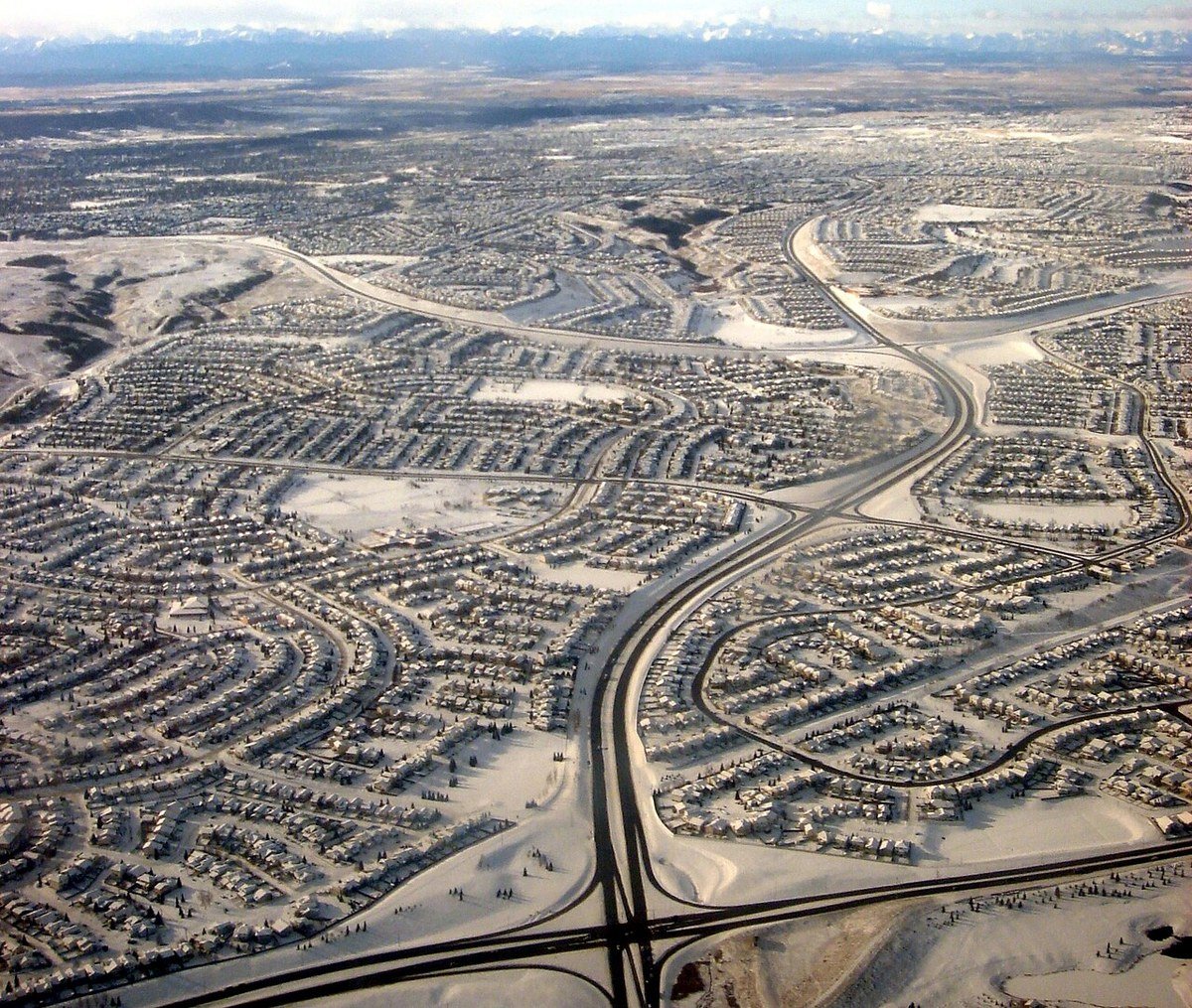
- New communities (Evanston, Mahogany, Auburn Bay): Calgary’s outer ring offers the most housing value — new detached homes at CAD $550,000–$750,000 in planned communities with lakes, pathways, and full suburban services
The Alberta Advantage: Tax Savings in Practice
Alberta does levy a provincial income tax, but at materially lower rates than every other province and with the country’s highest basic personal amount — together they deliver most of the practical “Alberta Advantage” households talk about. Here is the real-world impact at different income levels, with income tax, the Ontario Health Premium and PST differences all added up:
- CAD $80,000 household income: Net annual saving vs Ontario approximately CAD $2,000–$3,500 (income tax plus Health Premium); vs BC approximately CAD $1,500–$3,000
- CAD $150,000 household income: Net annual saving vs Ontario approximately CAD $5,000–$8,000 once income tax, the Health Premium and avoided PST on typical spending are combined; vs BC approximately CAD $4,000–$6,500
- CAD $250,000 household income: Net annual saving vs Ontario approximately CAD $12,000–$18,000, with the Ontario surtax (a 20–56 per cent levy stacked on top of provincial tax owed at higher incomes) doing most of the work; at this level the saving can match the yearly housing-cost difference between comparable Calgary and Toronto neighbourhoods
- No PST impact: A household spending CAD $50,000/year on taxable goods and services avoids roughly CAD $3,500–$4,500 versus a province with 7–9 per cent PST; the no-PST gain matters most on vehicles, electronics, and home furnishing purchases
Natural Gas and Home Heating
Alberta produced about 60 per cent of Canada’s marketable natural gas in 2024 according to the Canada Energy Regulator, and that infrastructure dominance keeps home heating in Calgary and Edmonton overwhelmingly gas-fired at some of the lowest delivered prices anywhere in the country. In practice, a detached house through a Calgary winter (temperatures that regularly drop to -20°C to -30°C) costs CAD $150–$350/month to heat during the coldest stretch, for an annual total of CAD $800–$1,400. For anyone comparing Alberta with BC (electric heating in milder winters) or Ontario (steeper gas delivery costs), cheaper gas and a colder, longer heating season roughly cancel out into similar yearly energy bills.
Who Alberta Makes Financial Sense For
Alberta’s financial case lands hardest for high earners in oil and gas, engineering, technology, and healthcare — fields where local salaries hold their own against Ontario and BC while the tax structure adds a permanent income gain of CAD $3,000–$18,000 a year depending on what you make. For households that want mountain access alongside city amenities, Calgary’s 130-km hop to Banff and the Rockies, at house prices 40–50 per cent below comparable Vancouver neighbourhoods, is hard to beat anywhere in Canada. Edmonton’s affordability — composite (all-property) benchmark prices around CAD $432,000 and average detached values close to CAD $589,000 in early 2026 — suits buyers chasing maximum value and northern Alberta’s resource-economy jobs. The province rewards anyone who runs the numbers: the tax savings compound over the years into wealth that outlasts any single housing cycle.
Frequently Asked Questions
Does Alberta have a provincial income tax?
Yes — but Alberta charges the lowest provincial rates in Canada. The bottom bracket is 8 per cent on the first CAD $61,200 of taxable income (the new 8 per cent bracket was introduced for 2025 and indexed for 2026) and the top rate is 15 per cent, alongside the highest basic personal amount in the country. With no provincial sales tax on top (only the federal 5 per cent GST applies), the result is Canada’s most favourable tax environment. A household earning CAD $150,000 typically nets CAD $5,000–$8,000 more per year than an equivalent Ontario one once income tax, the Ontario Health Premium and PST differences are combined; at CAD $250,000 the gap can reach CAD $12,000–$18,000, with the Ontario surtax doing most of the heavy lifting.
Is Calgary affordable compared with Vancouver and Toronto?
Yes — Calgary detached homes averaged about CAD $844,000 in May 2026 (CREB) and condos CAD $326,000, against Vancouver benchmark detached prices above CAD $1.8M and Toronto detached averages above CAD $1.1M. Paired with the lowest provincial income tax rates in Canada and no PST, Calgary delivers the strongest financial package among major Canadian cities. Banff and the Rockies sit about 130 km west — a 90-minute to two-hour drive — making Calgary the only large Canadian city with world-class mountain access and broadly affordable urban housing.
What is the most affordable major city in Alberta?
Edmonton — Alberta’s capital and the most affordable major Canadian city with a population above one million. The composite (all-property) benchmark sat at CAD $432,000 in April 2026 (REALTORS Association of Edmonton), while the detached benchmark was about CAD $530,000 and average detached prices were close to CAD $589,000; condo apartments averaged around CAD $226,000. The University of Alberta, provincial government employment, and northern Alberta’s energy industry anchor a relatively stable economy. For buyers after maximum purchasing power with urban amenities, Edmonton is the best financial value among Canada’s big cities.
What is heating like in Alberta?
Alberta winters are genuinely cold — Calgary temperatures regularly drop to -20°C to -30°C. That said, the province produced about 60 per cent of Canada’s marketable natural gas in 2024, which keeps delivered heating prices among the lowest anywhere in the country. Annual natural gas heating runs CAD $800–$1,400 for a detached house. Calgary’s pathway network (over 1,000 km of paved paths, often cited as the largest urban pathway system in North America) and the downtown +15 indoor walkway system let residents manage winters practically.
Is Alberta’s economy stable?
Cyclical — Alberta’s economy is heavily tied to oil prices, creating boom-bust swings that ripple through employment and home values. The 2014–2016 oil price collapse caused steep Calgary housing declines and high vacancy rates before the recovery took hold. For workers in oil and gas, engineering, or resource industries, that volatility calls for financial-resilience planning. Households in healthcare, government, and technology face steadier conditions. Edmonton’s government and university employment base is more stable than Calgary’s energy sector.