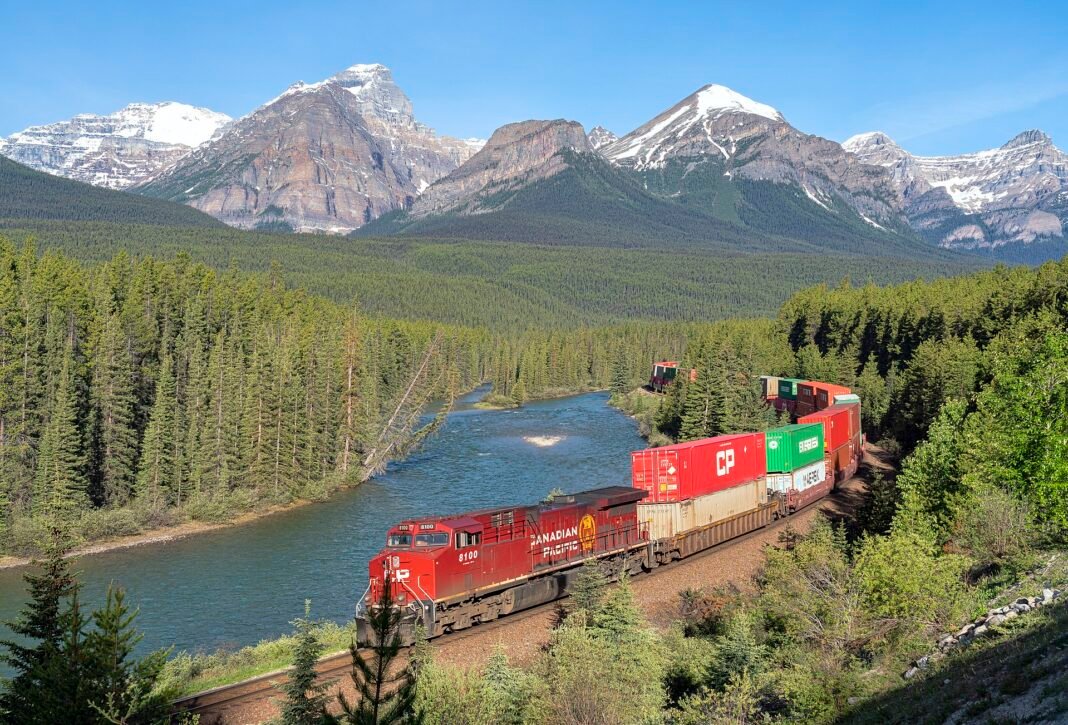
Canada’s scale is the first thing every visitor needs to internalize: at 9.98 million square kilometres, it’s the second largest country on earth — larger than the contiguous United States, larger than the entire European Union. The distance from Halifax on the Atlantic coast to Vancouver on the Pacific is roughly 6,000 kilometres by road. Getting from Montreal to Banff by train takes four days. This is not a country where you nip between cities in a couple of hours. Transportation planning is one of the most important parts of any Canadian trip, and weighing your options — their costs, their speeds, their trade-offs — determines whether your itinerary is realistic or wishful thinking.
Domestic Air Travel: The Practical Choice for Long Distances
Flying is the obvious way to cover the long hauls between Canada‘s big cities, and most Canadians do it as a matter of course. Air Canada is the flag carrier with the broadest route map — serving every large city and many smaller regional airports through its three hubs at Toronto Pearson, Montreal Trudeau, and Vancouver International. WestJet is the main competitor, with strong coverage of western Canada routes and an expanding transatlantic network to the UK and Europe. Flair Airlines, the lone survivor of Canada’s ultra-low-cost wave after rival Lynx Air collapsed in February 2024, offers very cheap fares on select corridors (typically Calgary–Vancouver, Toronto–Vancouver, and a handful of eastern routes) when booked well in advance. International arrivals funnel through Toronto Pearson, Vancouver International, and Montreal Trudeau, which together handle most overseas flights. Montreal is particularly well-served by transatlantic routes from France, the UK, and other European cities. Flights to Canada from London take 7–8 hours to Toronto or Montreal; from Sydney, about 15 hours direct to Vancouver, or 22–24 hours to Toronto (usually via Vancouver or Los Angeles).
VIA Rail: The Scenic Alternative
VIA Rail Canada operates the national passenger rail network — not fast, not cheap compared with flying, but in certain cases extraordinary value as an experience in its own right. The key routes:
- The Quebec–Windsor Corridor (Quebec City–Montreal–Ottawa–Toronto) has the most frequent service — multiple daily trains linking Canada’s most populated cities. Montreal to Toronto takes about 5 to 5.5 hours; Montreal to Ottawa 2 hours. Book 2–3 weeks ahead for the best fares (economy seats from around $90, rising to $200 or more for last-minute or peak Montreal–Toronto travel).
- The Canadian (Toronto to Vancouver via Winnipeg, Saskatoon, Edmonton, and Jasper) takes four days and four nights and is one of the world’s great train journeys, with departures twice weekly in each direction. The route crosses the prairies, climbs the Rockies through Jasper National Park, and descends to Vancouver through the Fraser Canyon. A coach seat is included in the base fare; sleeping-car berths add significant cost but include all meals in the dining car.
- The Ocean (Montreal to Halifax) takes around 22 hours through Quebec and the Maritime provinces — a comfortable overnight option for reaching Atlantic Canada.
- The Corridor trains (within Ontario and Quebec) are generally the most cost-effective VIA Rail services for the practical traveller; the transcontinental trains are best approached as experiences rather than efficient transportation.
Intercity Buses: Filling the Gaps After Greyhound
Long-distance coach travel in Canada changed dramatically when Greyhound Canada shut down all domestic routes permanently in May 2021, having already abandoned western Canada in 2018. No single operator has replaced its country-wide reach, so the system is now a patchwork of regional carriers. FlixBus runs domestic routes across British Columbia, Alberta, Saskatchewan, Manitoba, and Ontario, plus cross-border services to the United States. Rider Express, a Regina-based company, covers much of western Canada, with services reaching Vancouver, Calgary, and Winnipeg. Megabus centres its Canadian network on Toronto, serving routes into Quebec and across the US border. For most visitors, buses make sense on shorter intercity hops where flying is overkill and the train doesn’t run; for long crossings, rail or air is usually the better call. The booking aggregator Busbud is a practical way to compare schedules across these operators in one place.
Renting a Car: Essential for Rural Canada
A rental car is essential for exploring the Canadian Rockies, the Maritimes, the Okanagan Valley, Newfoundland, the Laurentians, and anywhere outside the cities. Canada drives on the right, the same as the United States. Roads in urban and inter-urban areas are generally excellent and well-signposted in both English and French (in Quebec). A few practical notes:
- Winter tires: Legally required in British Columbia on designated highways from October 1 to April 30 on most mountain routes (some lower-elevation designated roads end March 31); required in Quebec from December 1 to March 15 on all passenger vehicles — the only province-wide mandate in Canada. Most rental companies supply winter-spec cars in these seasons — confirm when booking.
- Wildlife hazards: Moose and deer on rural roads at night are a genuine danger in most provinces. Drive cautiously after dark away from towns, particularly near wetlands and forests.
- Distances: Even within a single province, the gaps between towns can be far longer than they appear on a map. Calgary to Banff is 1.5 hours; Calgary to Jasper (via the Icefields Parkway) is 4–5 hours. Factor driving time into itineraries honestly.
- Fuel: Gasoline (gas) prices vary considerably by province — Quebec and the Maritimes tend to be cheaper; British Columbia and the territories more expensive. Full-service stations are common in populated areas; fill up before entering remote stretches.
Urban Transit: Getting Around Canada’s Cities
Canada’s larger cities have functional public transit systems, though car use remains very high by European standards. Montreal’s STM metro (4 lines, 68 stations) is clean, reliable, and serves most of the city effectively — arguably the best urban transit system in the country. Toronto’s TTC (subway, streetcar, bus) covers the city extensively, though the system is crowded at peak times; the Presto card handles payment across all modes. Vancouver’s TransLink (SkyTrain automated metro, buses, SeaBus, West Coast Express) is generally considered the best-integrated system of the lot — the Canada Line SkyTrain connects the airport to downtown in 25 minutes. Ottawa’s O-Train LRT covers the central city with good links to the main tourist areas. Calgary’s CTrain is free to ride in the downtown core (a useful detail). In every city, transit apps such as Google Maps and Transit provide real-time routing.
Ferries: Connecting Canada’s Coast and Islands
Several ferry routes are integral to Canada’s transportation network. BC Ferries operates an extensive system on the British Columbia coast: the Tsawwassen–Swartz Bay crossing (to Vancouver Island, 95 minutes) and the Horseshoe Bay–Langdale crossing (to the Sunshine Coast) carry millions of passengers a year. The Inside Passage sailing (Port Hardy to Prince Rupert, around 16 hours) is one of the finest coastal journeys in North America, threading channels, fjords, and island wilderness — the summer run is a daytime cruise, while winter sailings cross overnight. Marine Atlantic runs the ferry between North Sydney, Nova Scotia, and Port aux Basques, Newfoundland (around 7 hours) — the essential link to Newfoundland, which cannot otherwise be reached by road. The PEI ferry (Caribou, NS to Wood Islands, PEI, 75 minutes) offers an alternative to the Confederation Bridge for reaching Prince Edward Island. Along the St. Lawrence, smaller ferries connect south-shore communities to Quebec City and Montreal’s south shore.

The Trans-Canada Highway: A Road Trip for the Ages
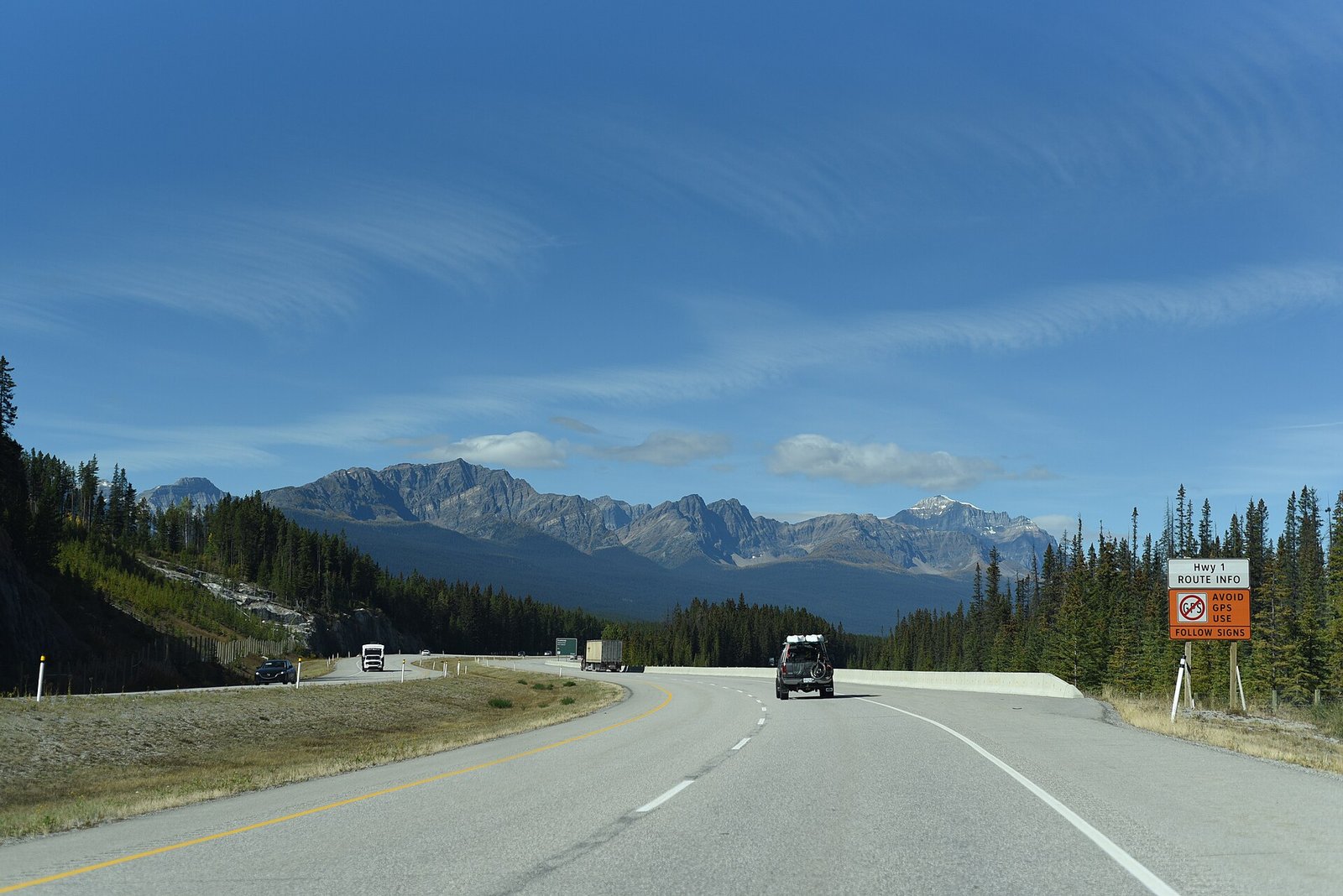
The Trans-Canada Highway (Highway 1) runs 7,821 kilometres from Victoria, British Columbia, to St. John’s, Newfoundland — one of the longest national highways on earth. Driving the full route is a serious undertaking (allow three to four weeks at a reasonable pace), but specific sections rank among the world’s great road trips. The stretch through the Canadian Rockies (Calgary to Revelstoke via Banff and Yoho national parks) is first-rate mountain driving. The north shore of Lake Superior through Ontario — the largest stretch of freshwater shoreline anywhere — is dramatic and largely unspoiled. The Maritime section through New Brunswick and Nova Scotia pairs handsome coastline with small, characterful towns. The Trans-Canada connects everything — it’s the spine of the country, and following it reveals Canada’s character in a way that flying between airports never can.
Frequently Asked Questions
What are the best options for domestic air travel in Canada?
Across a landmass of 9.98 million square kilometres, aviation does the heavy lifting that geography refuses to make easy any other way. The domestic market is essentially a duopoly between two carriers with very different profiles — a legacy network with global codeshares on one side, a Calgary-born challenger with deep western roots on the other — flanked by Flair, the last carrier standing from Canada’s ultra-low-cost wave, which has reshaped fare expectations on a handful of trunk routes since the early 2020s after rival Lynx Air collapsed in February 2024. Connectivity tends to concentrate at Toronto, Vancouver, and Montreal, while regional players such as Porter (from Billy Bishop) and Pascan fill in eastern gaps the majors find unprofitable. Worth knowing before you book: the federal Air Passenger Protection Regulations entitle travellers to compensation on a tiered scale — up to CAD 400, 700, or 1,000 depending on the length of a delay within the carrier’s control — but the burden of proof sits with the passenger, and refusals are routinely appealed to the Canadian Transportation Agency. Operators such as Inuit-owned Air Inuit and Canadian North (acquired by Exchange Income Corporation in 2025) handle most northern routes above the 55th parallel, where scheduled jet service simply does not exist.
How does VIA Rail work and when is it worth taking?
The Crown corporation behind Canada’s intercity rail has spent decades running two very different products under one brand. In the southeast, the Quebec City–Windsor spine carries the commuter and business traffic that justifies the operation — Montreal–Toronto in roughly five hours, Montreal–Ottawa in two, with economy fares that start near $90 on advance bookings and compete reasonably well with Porter and Air Canada shuttle flights once airport transit is factored in. Further afield, the model shifts character entirely: The Canadian rolls between Toronto and Vancouver over four days via Winnipeg, Saskatoon, Edmonton, and Jasper, and The Ocean covers the 22-hour overnight to Halifax. The catch to plan around: because freight operator CN owns most of the track outside the Corridor, VIA trains routinely yield to grain and container traffic, and delays of six to twelve hours on transcontinental departures are not unusual. The Sudbury–White River and Winnipeg–Churchill trains remain lifelines for off-grid communities and access points for trips no road can replicate.
Can you still travel Canada by intercity bus after Greyhound closed?
You can, but the network looks nothing like it did before Greyhound Canada shut down all domestic routes in May 2021. No carrier has rebuilt the old coast-to-coast web, so coach travel now runs on a patchwork of regional operators. FlixBus serves British Columbia, Alberta, Saskatchewan, Manitoba, and Ontario plus cross-border runs into the United States; Rider Express, based in Regina, covers much of the West and reaches Vancouver, Calgary, and Winnipeg; Megabus centres its Canadian operations on Toronto with routes into Quebec and across the border. The result is decent coverage on busy intercity corridors and thin-to-nonexistent service on remoter stretches, where VIA Rail or a rental car does the job instead. Comparison sites such as Busbud pull these operators into a single schedule search, which saves piecing together routings carrier by carrier.
When do you need a rental car in Canada?
Beyond the dense southern corridor of cities, self-driving stops being optional and becomes the only realistic way to reach the country’s defining landscapes. Quebec’s December 1 to March 15 winter-tire mandate is unique in North America and is enforced with on-the-spot fines, while British Columbia’s October 1 to April 30 rule applies specifically to designated highways marked with regulatory signage rather than to every road in the province. Provincial driver’s licences from most countries are honoured for visits of three to six months depending on the province, though an International Driving Permit is strongly recommended for any roadside stop, since francophone-province officers may ask for a translated document. The detail that catches people out: most Canadian rental contracts exclude gravel roads by default, which voids coverage on the Dempster Highway to Inuvik, much of Labrador’s Trans-Labrador Highway, and large stretches of access roads in the territories — specialist outfitters in Whitehorse and Yellowknife rent purpose-built vehicles for that terrain. Cross-border rentals into the United States require explicit written authorization and often carry surcharges of CAD 10–25 per day.
How does urban transit work in Canada’s major cities?
Urban networks in Canada vary far more in coverage and ambition than first impressions suggest. Montreal’s underground runs rubber-tired rolling stock on a French-derived design, which makes it noticeably quieter than the steel-wheel systems elsewhere on the continent and explains why the network expanded in the run-up to Expo 67 rather than being shaped by postwar car suburbs. Vancouver’s SkyTrain is North America’s longest fully automated metro and uses the same Bombardier-developed linear-induction technology that Toronto’s Scarborough RT once did. Ottawa’s Confederation Line — opened in 2019 — has been dogged by an extensive judicial inquiry into procurement and reliability that concluded in late 2022 by sharply criticizing city officials and the construction consortium. Toronto’s streetcar network remains the largest in North America, and Calgary’s free downtown CTrain zone, introduced as a pilot in 1981, still runs along Seventh Avenue, though council has been reviewing its future since 2026. Tap-to-pay credit cards now work directly on Toronto’s TTC and Vancouver’s TransLink gates, removing the need for short-stay visitors to buy a Presto or Compass card; Montreal’s STM is rolling out open bank-card payment through 2026, so for now an OPUS card or the Chrono app is still required there.
What ferry services are essential for touring coastal Canada?
Saltwater and large-river crossings remain central to the national transport web in ways landlocked travellers often underestimate. The west coast operation is a provincial Crown corporation whose Tsawwassen–Swartz Bay crossing functions effectively as the Highway 17 extension to Vancouver Island. The Inside Passage sailing between Port Hardy and Prince Rupert remains a marine-highway ferry rather than a cruise — vehicles, freight, and locals share the deck with summer visitors, and the roughly 16-hour schedule was reworked after the 2006 sinking of the Queen of the North reshaped operational protocols. Marine Atlantic is federally subsidized and is the only practical way to bring a vehicle to Newfoundland, with the longer Argentia route operating only from mid-June to late September. One planning quirk worth knowing for Prince Edward Island: both ways onto the island are free, because the Confederation Bridge and the Caribou–Wood Islands ferry each collect their fare only when you leave. Ottawa slashed both charges in August 2025 — halving the ferry fare and cutting the bridge toll for a passenger vehicle from over CAD 50 to CAD 20 — so the two exits now cost much the same — pick whichever suits your route rather than your budget.