
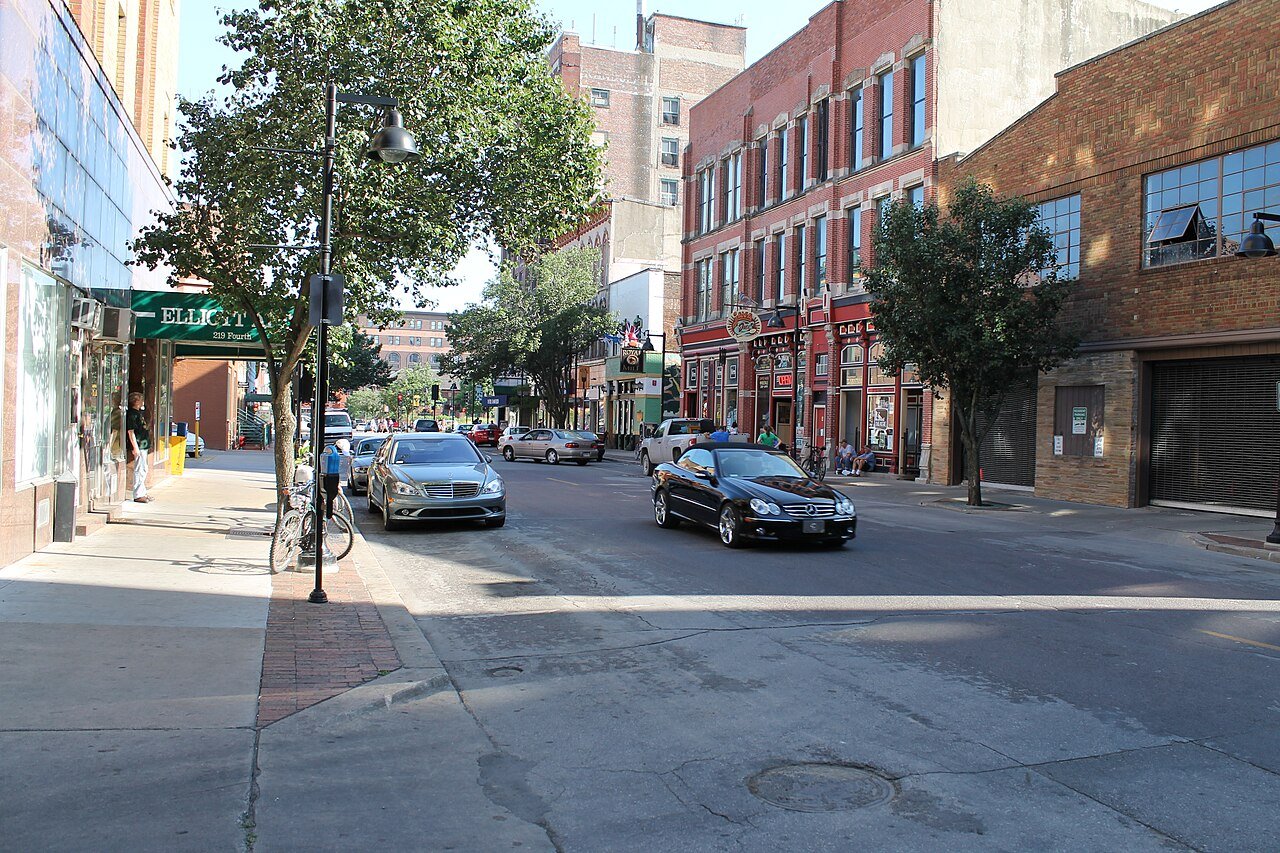
Iowa ranks among the most genuinely affordable states in the country, and the reason is worth getting right. It is not that wages are low – the state’s median household income sits a touch under the national figure, within striking distance of it. It is that the cost base those wages push against runs well below average in almost every category that matters. Housing, groceries, utilities, taxes, and healthcare all land under the national mark, which gives households who understand the local math a path to financial stability that has grown elusive in pricier markets. And Iowa is not cheap because nothing happens here. Des Moines and Iowa City have built real restaurant scenes, arts institutions, and a craft-brewing culture over the past two decades. The affordability persists alongside that growth, not because of its absence.

Housing: Genuinely Affordable at Every Scale
Few states with a real metropolitan center keep housing this accessible. In Des Moines, the largest city and economic anchor, median home prices land between $190,000 and $260,000 – a fraction of what comparable-sized metros command elsewhere. The most sought-after neighborhoods, from Beaverdale and Merle Hay to Windsor Heights, Clive, and the Jordan Creek area of West Des Moines, run $230,000 to $380,000. Only in the high-income suburbs of Waukee and Urbandale, where development pressure has been heaviest, do premium listings push past $500,000.

Iowa City, home to the University of Iowa and its renowned writing program, Big Ten campus, and sprawling medical research complex, carries an academic premium that pushes median prices to $250,000-$320,000 – still a bargain against college towns on either coast. Cedar Rapids, the second-largest city, averages $170,000-$210,000. Waterloo-Cedar Falls, in the northeast, sits at $140,000-$190,000. Down the list, Davenport, Sioux City, Dubuque, and Council Bluffs deliver solid urban amenities with medians of $120,000-$180,000.

Rents follow the same curve. A one-bedroom in a desirable Des Moines neighborhood averages $900-$1,300. Iowa City runs $900-$1,200, propped up by student demand near campus. Cedar Rapids and the other mid-sized cities offer one-bedrooms for $700-$1,000. For the amenities on offer, these are among the lowest rents in the Midwest.
Taxes: A Reform That Reshaped the Picture
Iowa’s income tax has changed dramatically. A reform first enacted in 2022 was accelerated, and as of the 2026 tax year the state applies a single flat rate of 3.8% to all taxable income – down from a graduated structure that topped out at 8.53% and once placed Iowa among the higher-tax states in the Midwest. The flat rate meaningfully lightens the load for middle- and upper-income households. Iowa also leaves Social Security untaxed, and residents 55 and older pay no state tax on pension, IRA, or 401(k) income, which has made the state notably friendlier to retirees.
Property tax cuts the other way. Rates sit above the national average, landing around 1.4-1.6% of assessed value in the higher-levy counties such as Polk, home to Des Moines. On a $220,000 home, that works out to about $3,000-$3,500 a year – real money, but nowhere near the bite the same percentage takes in New Jersey or Illinois, simply because Iowa’s home values start so much lower. The homestead credit and military exemptions trim the bill further for those who qualify.
Groceries and Consumer Costs
Grocery prices in Iowa run among the lowest anywhere in the country, roughly 5-10% under the national figure – a direct dividend of sitting at the center of American agriculture. The state grows more corn and raises more pork and eggs than any other, ranks second only to Illinois in soybeans, and feeds cattle and runs dairy herds at scale, and that proximity to the source keeps retail prices on staples down. Hy-Vee, the employee-owned chain founded in the state, blankets Iowa with stores whose consistent pricing helps anchor the whole grocery market.
Utilities and Transportation
Electricity comes in a shade under typical US rates, a benefit of the state’s enormous wind fleet – Iowa draws around 60% of its power from wind, a larger share than any other state. Natural gas stays competitive, and auto insurance lands below the national norm. Public transit, though, barely registers outside the Des Moines metro and its DART bus network. For nearly every Iowa household, that means budgeting around a car, and usually two.
Why the Numbers Work for Remote Earners
Iowa’s cost structure opens a particular door for anyone whose paycheck is not tied to the local economy – remote employees, retirees, online business owners. A household earning $95,000 in Portland that moves to Des Moines while keeping that same income sees its effective spending power jump by roughly 30-35%, on housing and consumer costs alone, without a single raise. Pair that arithmetic with the cities’ improving texture – Des Moines’s dining and gallery scene, Iowa City’s literary energy, the breweries scattered across the state – and the case for a move gets harder to dismiss for households willing to rethink where their money goes furthest. Iowa’s affordability, Midwestern steadiness, and genuine livability make it one of the more sensible relocation bets of 2026, and its appeal keeps sharpening year over year.
Budgeting Practically for Iowa
Knowing the cost of living is the starting point; the next step is sorting which costs are fixed and which you can shape. Housing is the biggest lever in almost any budget, and the right neighborhood within a given Iowa city can swing your monthly outlay sharply while keeping you near the things you care about. Utilities, transport, and food add up quietly, so small monthly differences compound into real money over a year. Against high-cost cities like New York, San Francisco, or Sydney, Iowa’s edge is measurable, and people who relocate often report a stronger financial footing and a better day-to-day life. Treat the figures here as a framework, and confirm current rents and prices for your specific target area, since local markets can move faster than the annual cost-of-living studies.
Frequently Asked Questions
Is Iowa an affordable state to live in?
Yes – Iowa offers genuine affordability across nearly every major spending category. Des Moines median home prices run $190,000-$260,000, grocery costs land 5-10% below the national average, and the state now applies a flat 3.8% income tax (down from a graduated top rate of 8.53%). Remote workers who keep an out-of-state income while living in Iowa effectively gain 30-35% in spending power through lower costs alone.
What is the average rent in Des Moines?
One-bedroom apartments in desirable Des Moines neighborhoods average $900-$1,300 per month. Iowa City runs $900-$1,200, with university-driven demand near campus. Cedar Rapids and other mid-sized Iowa cities offer one-bedrooms at $700-$1,000. These are among the lowest rents for comparable amenities in any US state with significant metro infrastructure.
What is Iowa’s income tax rate?
As of the 2026 tax year, Iowa applies a single flat income tax rate of 3.8% to all taxable income, down from a graduated structure that topped out at 8.53% – one of the most significant state tax reductions in recent US history. Iowa does not tax Social Security, and residents 55 and older owe no state tax on pension, IRA, or 401(k) income, making the state increasingly friendly to retirees.
Does Iowa have high property taxes?
Property taxes in Iowa sit above the national average, running roughly 1.4-1.6% of assessed value in the higher-levy counties, including Polk County around Des Moines. On a $220,000 home, that comes to about $3,000-$3,500 a year – notable, but far lighter in absolute dollars than the same rate on higher-value homes in coastal markets. The homestead credit and military exemptions reduce the bill for those who qualify.
Why do remote workers benefit especially from living in Iowa?
The advantage comes from earning a higher-market wage while spending against Iowa’s lower cost base. A household earning $95,000 in Portland that moves to Des Moines while keeping the same remote income gains roughly 30-35% in effective spending power through cheaper housing, groceries, and consumer costs – with no raise involved. Improving cultural infrastructure in Des Moines and Iowa City means the lifestyle trade-off is smaller than it was a decade ago.