Iowa’s residential options span a wider range than most people expect from a state associated primarily with agriculture. Des Moines has emerged as a genuinely competitive Midwestern city, while Iowa City ranks among the country’s most engaging college-town environments. Mid-sized Cedar Rapids delivers stability at exceptional cost, and the Mississippi River towns of the east carry historic character that few Midwest communities can match. This guide covers the most compelling options for new and prospective Iowa residents.
1. Des Moines — Iowa’s Complete City
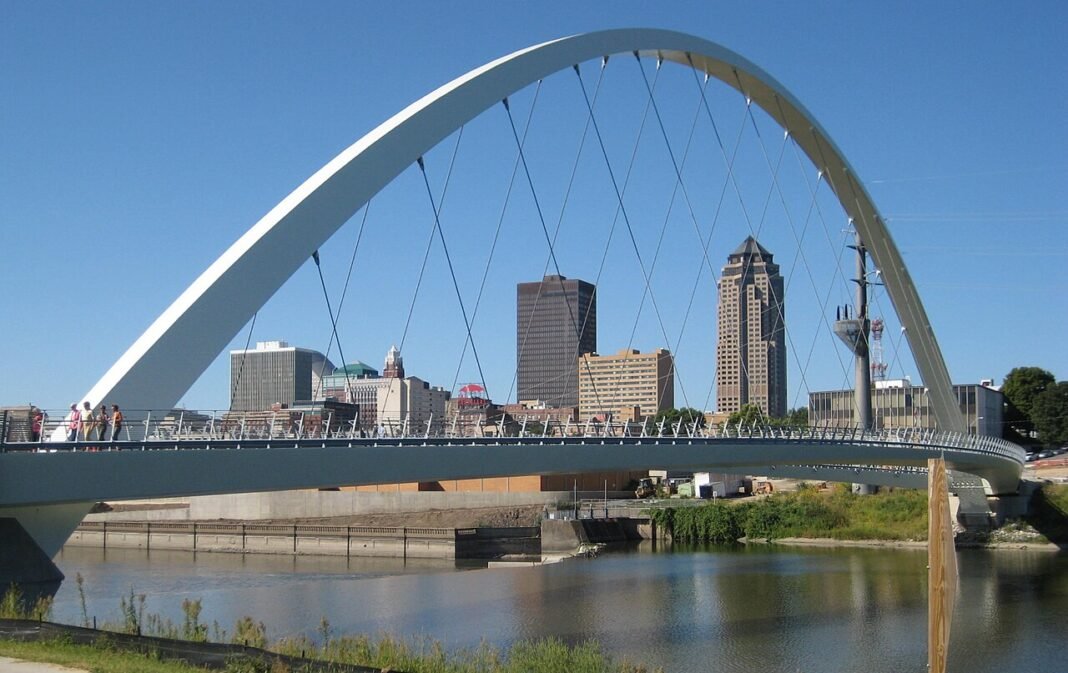
The state capital is where the case for urban Iowa gets made most convincingly. Growing tech and insurance-industry employment, an improving food and arts scene, strong suburban schools (Waukee, West Des Moines, Ankeny, and Johnston all run highly rated districts), and the most affordable major-metro housing costs in the Midwest add up to a residential proposition more people are discovering. The metro’s 700,000 residents get the practical advantages of a smaller city — manageable commutes, an easy airport, no parking crises — alongside the amenity density that only metropolitan scale provides.
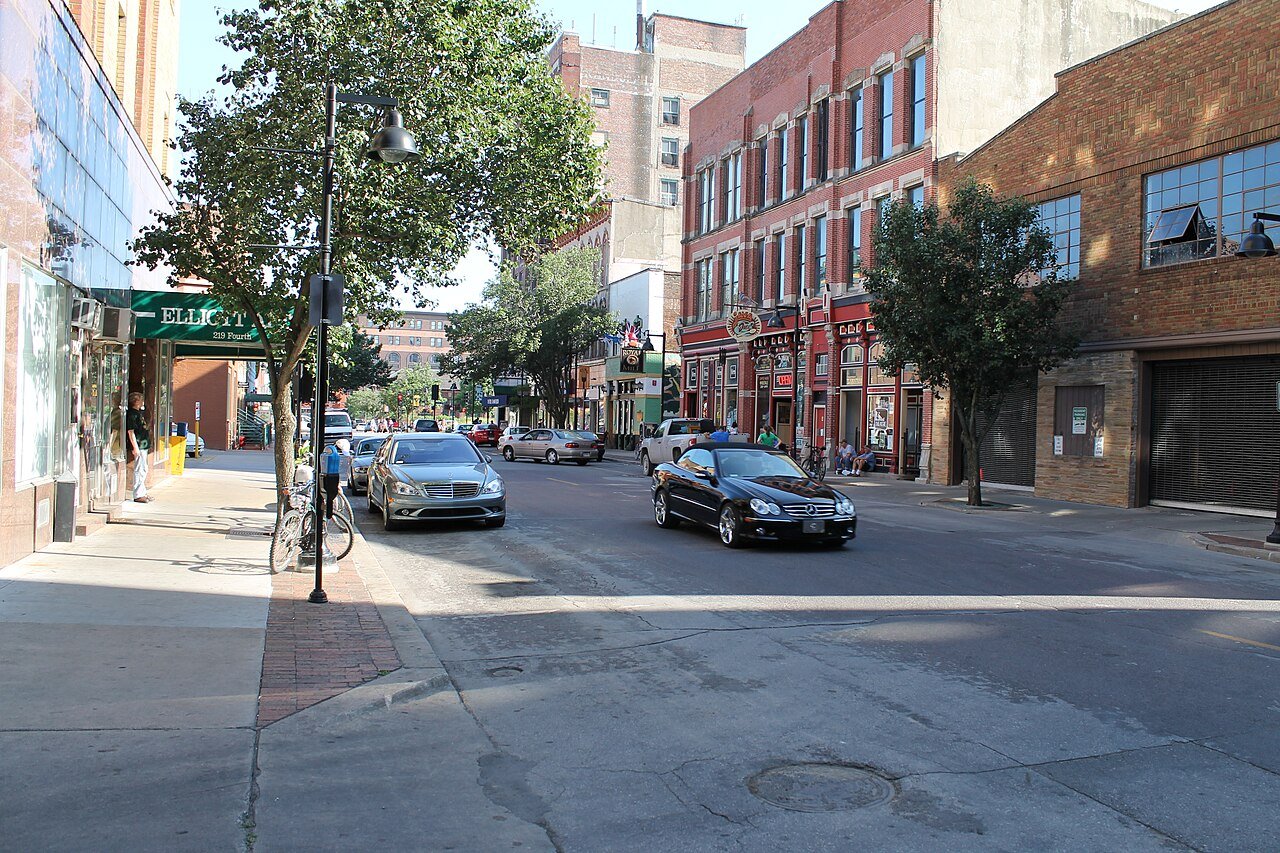
Within Des Moines, the most desirable neighborhoods include Beaverdale (a walkable North Side neighborhood with Art Deco commercial character and excellent independent restaurants), the East Village (the city’s liveliest urban district, where the State Capitol stands as a backdrop to a dense block of restaurants, bars, and boutiques), and the Gray’s Lake area (where the trail system and lake access create a recreational asset within the city). The Western suburbs of Clive, Urbandale, and Waukee provide excellent school districts and new construction at $250,000–$380,000. Waukee has particular momentum as a destination for Des Moines families.
2. Iowa City — The Best College Town Value in America
Iowa City, built around the University of Iowa and designated by UNESCO as a City of Literature (one of only a handful of American cities to hold this designation, reflecting the university’s renowned Iowa Writers’ Workshop — the graduate creative writing program that has produced more Pulitzer Prize winners than any other), is the most culturally rich small city in Iowa and one of the most engaging college towns in the Midwest. The combination of the Writers’ Workshop literary culture, the university’s Hancher Auditorium (a nationally significant performing arts venue rebuilt as a LEED-certified facility after the 2008 flood), outstanding independent restaurants, and the pedestrian-oriented downtown centered on the Pedestrian Mall give a community of 75,000 a cultural depth that far larger cities struggle to match.

Housing in Iowa City runs $220,000–$310,000 for median single-family homes — significantly below comparable university towns in more expensive states. The Coralville area adjacent to Iowa City has newer commercial development and slightly more affordable housing. North Liberty, to the north, has grown rapidly as a Des Moines-to-Iowa City corridor community. The Iowa River corridor through the city opens up trail access, rowing, and natural area connections that make the physical environment more attractive than typical small Midwestern cities.
3. Cedar Rapids — Practical and Affordable
Cedar Rapids, Iowa’s second-largest city at 140,000 (metro 270,000), is the state’s industrial and commercial center — home to Quaker Oats (the largest cereal facility in the world operates in Cedar Rapids), Rockwell Collins (now Collins Aerospace), and a food manufacturing base that gives the city an economic stability rooted in industries that don’t vanish when tech cycles shift. The Czech Village and the New Bohemia district (now NewBo), settled by the late-19th- and early-20th-century Bohemian immigrants who came to work the city’s packinghouses, form one of the most distinctive ethnic heritage districts in the Midwest.
Cedar Rapids’s housing market, at $160,000–$220,000 for median homes, is among the most accessible in the state. The city’s recovery from the 2008 flood (which damaged roughly 10 percent of its structures) drove significant downtown revitalization, with the NewBo City Market anchoring the most engaging pedestrian-commercial scene in the metro. Day to day, Cedar Rapids trades on compact convenience: short commutes, Iowa City 30 minutes away, and direct flights from the Eastern Iowa Airport.
4. Ames — College Town Stability
Ames, home to Iowa State University (the land-grant university that has produced some of the country’s most significant agricultural and engineering research), is a college community of 69,000 that provides the amenity benefits of university life — cultural programming, athletic events, research employment, and a younger demographic that supports a restaurant and entertainment scene — at housing costs of $200,000–$280,000. Campustown, adjacent to the ISU campus, and downtown Ames form walkable commercial districts. The proximity to Des Moines (30 minutes north on I-35) means that Ames residents have access to the capital city’s metropolitan amenities without paying urban prices.
5. Dubuque — Mississippi River Heritage
Dubuque, at the eastern terminus of Iowa on the Mississippi River bluffs, is Iowa’s oldest city — established in 1788, when Julien Dubuque secured rights from the Meskwaki to mine the lead deposits later confirmed by a Spanish land grant, and developed in the 19th century into a river commerce and lead mining center whose Victorian commercial and residential architecture survived largely intact because the city’s economic stagnation after 1900 prevented the demolition and replacement that consumed comparable heritage in more economically active cities. The result is an architectural preservation inventory that has made heritage tourism a significant driver of Dubuque’s revival.
The National Mississippi River Museum & Aquarium in Dubuque ranks among the finest river history and natural science institutions in the country. The Fenelon Place Elevator, a funicular billed as the world’s steepest and shortest scenic railway, carries passengers from the lower town up to the bluff-top residential neighborhoods. Median home prices in Dubuque of $200,000–$250,000 keep it among the most affordable river heritage cities in America.
Iowa’s residential cities share a common trait that distinguishes them from equivalent-sized cities in more competitive markets: they are building value rather than extracting it. The investment in Des Moines’s cultural district, Iowa City’s literary designation, Cedar Rapids’s heritage preservation, and Ames’s university community creates urban quality that is genuine rather than marketing — and the price for it, in Iowa, is still accessible by almost any standard.
Frequently Asked Questions
What makes Des Moines Iowa’s most complete city for new residents?
Des Moines makes the strongest case for urban living in Iowa. Growing tech and insurance-industry employment, an improving food and arts scene, excellent suburban school districts (Waukee, West Des Moines, Ankeny, and Johnston all rank highly), and the most affordable major-metro housing costs in the Midwest create a residential proposition that more people are discovering. The metro’s 700,000 residents benefit from practical advantages of a smaller city — manageable commutes, easy airport access, no parking crises — while accessing metropolitan-scale amenities. The most desirable neighborhoods include Beaverdale (walkable North Side, Art Deco character, excellent independent restaurants), the East Village (the city’s liveliest urban district with the State Capitol as a backdrop), and the Western suburbs of Clive, Urbandale, and Waukee ($250,000–$380,000) offering excellent school districts and new construction.
What makes Iowa City one of America’s best college-town values?
Iowa City, home to the University of Iowa and designated by UNESCO as a City of Literature (one of only a handful of American cities to hold this designation, reflecting the university’s Iowa Writers’ Workshop — the graduate creative writing program that has produced more Pulitzer Prize winners than any other), is the most culturally rich small city in Iowa. Hancher Auditorium (a nationally significant performing arts venue rebuilt as a LEED-certified facility after the 2008 flood), outstanding independent restaurants, and a pedestrian-oriented downtown centered on the Pedestrian Mall give a community of 75,000 a cultural depth that far larger cities struggle to match. Housing runs $220,000–$310,000 for median single-family homes — significantly below comparable university towns in more expensive states. The Iowa River corridor provides trail access, rowing, and natural area connections that make the physical environment more attractive than typical small Midwestern cities.
Why is Cedar Rapids a practical and affordable Iowa choice?
Cedar Rapids, Iowa’s second-largest city at 140,000 (metro 270,000), is the state’s industrial and commercial center — home to Quaker Oats (the largest cereal facility in the world), Collins Aerospace (Rockwell Collins), and a food manufacturing base that provides economic stability rooted in industries that don’t vanish when tech cycles shift. The Czech Village and NewBo City Market (New Bohemia) provide some of the most distinctive ethnic heritage districts in the Midwest. Housing at $160,000–$220,000 is among the most accessible in the state. Cedar Rapids has the practical advantage of a short metropolitan commute time, proximity to Iowa City (30 minutes), and direct flight access from The Eastern Iowa Airport.
What does Ames offer as a college-town alternative to Iowa City?
Ames, home to Iowa State University (the land-grant university that has produced some of the country’s most significant agricultural and engineering research), is a college community of 69,000 that provides university life benefits — cultural programming, Big 12 athletics, research employment, and a younger demographic supporting a restaurant and entertainment scene — at housing costs of $200,000–$280,000. Campustown, adjacent to the ISU campus, and downtown Ames provide walkable commercial districts. The proximity to Des Moines (30 minutes north on I-35) means Ames residents have access to the capital city’s metropolitan amenities without paying urban prices.
What makes Dubuque unique among Iowa’s cities?
Dubuque, at Iowa’s eastern terminus on the Mississippi River bluffs, is Iowa’s oldest city — established in 1788 — and its Victorian commercial and residential architecture survived largely intact because economic stagnation after 1900 prevented the demolition and replacement that consumed comparable heritage in more economically active cities. The National Mississippi River Museum and Aquarium is one of the finest river history and natural science institutions in the country. The Fenelon Place Elevator — a cable car providing access from the lower town to the bluff-top residential neighborhoods — is one of the most charming transportation curiosities in the Midwest. Median home prices of $200,000–$250,000 make Dubuque one of the most affordable river heritage cities in America.