Iowa is the state travelers cross on Interstate 80 and rarely stop in — a habit that ranks among the most significant missed opportunities in American travel. A place that produces one-fifth of the nation’s corn and one-third of its pork has also given the country Grant Wood’s regionalist paintings, the Field of Dreams film site, 10,000 miles of trails and bike routes (including the world’s largest annual bicycle event), a craft brewery and food scene in Des Moines that rivals bigger Midwestern cities, and the Mississippi River bluff country of the east, which is genuinely beautiful by any standard. Iowa rewards the visitor who arrives with curiosity rather than low expectations.
Des Moines: The Midwest’s Most Underrated City
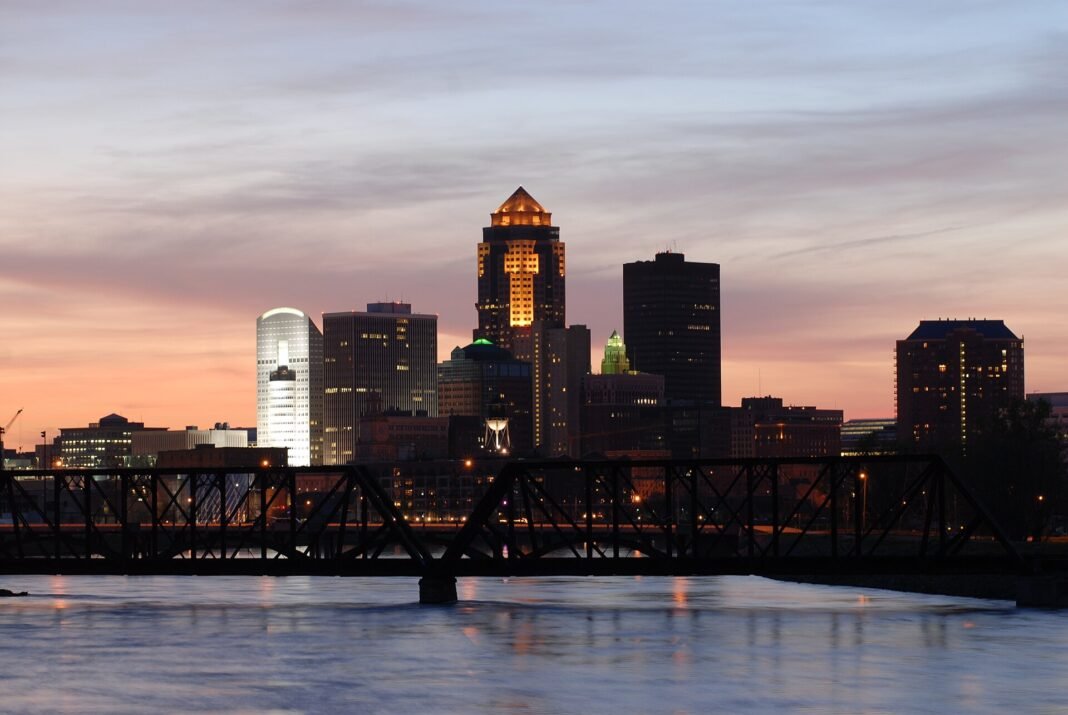
Iowa’s capital and largest city has assembled a roster of cultural institutions out of all proportion to its metro population of about 750,000. Take the Des Moines Art Center: housed in buildings by Eliel Saarinen, I.M. Pei, and Richard Meier — three of the 20th century’s leading architects — it holds a contemporary collection in a facility that would draw crowds in any major American city, and admission is free. Add the Science Center of Iowa, the World Food Prize Foundation, and the State Capitol itself, with its five-dome design (four smaller domes ringing the central gold-leaf one) and a sweeping interior mural program, and you have a civic cluster that reflects Iowa’s land-grant tradition and agricultural wealth.

Just east of the Capitol grounds, the East Village has grown over the past decade into the city’s liveliest dining and retail district — a walkable run of independent restaurants, craft cocktail bars, coffee shops, and shops that would not feel out of place in Portland or Nashville. Down on Court Avenue, the Downtown Farmers’ Market runs Saturdays from May through October and pulls in around 20,000 visitors a week at the height of the season, making it one of the largest in the Midwest.
Effigy Mounds and the Mississippi River Bluffs
Near Marquette in the state’s northeastern corner, Effigy Mounds National Monument protects more than 200 prehistoric earthworks raised by Indigenous people between about 1,400 and 750 years ago. Many take animal forms — bears, eagles, and long linear shapes — and rank among the finest examples of monumental earthen construction in North America. Set high on the Mississippi River bluffs, with sweeping views across the water to Wisconsin, the site pairs archaeological weight with real landscape drama. Its standout feature, the Marching Bear Group, sends a procession of ten bear-shaped mounds along the bluff top, anchoring a trail system that links the earthworks across 14 miles of forested ridge.
.jpg?width=1200)
The Mississippi corridor through this part of the state — from Dubuque north to the Minnesota line — offers some of the best river scenery in the upper Midwest. The Great River Road (US Route 61) strings together historic towns such as McGregor and Marquette, where the Wisconsin and Iowa bluffs frame the water at its most dramatic. At the southeastern edge of Iowa’s River Country, Dubuque preserves one of the Midwest’s finest collections of Victorian commercial architecture and carries visitors up to the bluffs aboard the Fenelon Place Elevator, billed as the world’s shortest and steepest scenic railway.
The Field of Dreams: Dyersville
Outside Dyersville sits the Field of Dreams movie site, the working Iowa farm where the 1989 Kevin Costner film was shot. It has drawn fans since the picture’s release, then grew into a permanent baseball complex after Major League Baseball chose it to host an annual Field of Dreams game starting in 2021. The original farmhouse, the corn rows from which players emerge on screen, and the diamond itself survive much as they looked during filming. That MLB matchup — two big-league clubs facing off in a temporary stadium beside the original field — has become one of the most emotionally charged events on the regular-season calendar.

RAGBRAI: The World’s Largest Bike Ride
RAGBRAI — the Register’s Annual Great Bicycle Ride Across Iowa — has run since 1973 and, by attendance (roughly 10,000 registered riders plus several times that many day riders), stands as the world’s largest annual bicycle touring event. The route shifts every year but always cuts west to east, opening with a wheel dip in the Missouri River and closing with one in the Mississippi, covering about 450 miles over a week. Its real flavor is small-town Iowa at full tilt: communities vie to be named overnight host towns, and the result is a week-long celebration that introduces the state’s warmth to thousands of riders who had given it little thought before mounting their bikes.

Amana Colonies
Near Iowa City in the east-central part of the state, the Amana Colonies are a cluster of seven villages founded in 1855 by German pietist immigrants who held property in common until 1932, when a vote known as the “Great Change” reorganized the colonies along conventional corporate lines. Their 19th-century German-American architecture — stone houses, brick workshops, woolen mills, communal kitchens — survives in unusual density precisely because that shared history spared the buildings the demolition and replacement that erased most comparable settlements. The Amana Heritage Museum interprets the past, while the Amana appliance brand (its refrigerator maker traces its roots here) ties the old community to the working present, keeping the Colonies well clear of museum-piece status.

Iowa’s rewards are personal and cumulative rather than showy. This is not a land of natural spectacle but of genuine American texture: the farm country that feeds the nation, the small towns that keep their downtowns more intact than many bigger cities, the river bluffs that reveal a state the interstate driver never sees, and the cultural institutions of Des Moines that speak to a quiet pride in Iowa’s intellectual and agricultural inheritance.
Frequently Asked Questions
What cultural institutions make Des Moines worth visiting?
For a metro of about 750,000, Des Moines carries a cultural roster out of proportion to its size. The Des Moines Art Center — set in buildings by Eliel Saarinen, I.M. Pei, and Richard Meier, three of the 20th century’s leading architects — shows a strong contemporary collection and charges no admission. The Iowa State Capitol carries five domes, with four smaller ones surrounding the central gold-leaf dome, plus an extensive interior mural program. On Court Avenue, the Downtown Farmers’ Market runs Saturdays from May through October, drawing around 20,000 visitors a week in peak season and ranking among the largest in the Midwest. Just east of the Capitol, the East Village has become the city’s most appealing dining and retail district, a walkable mix of independent restaurants and craft cocktail bars.
What is Effigy Mounds National Monument and why is it significant?
Effigy Mounds National Monument, near Marquette in northeastern Iowa, protects more than 200 prehistoric earthworks built by Indigenous people some 1,400 to 750 years ago. Many are shaped as animals — bears, eagles, and long linear forms — placing them among North America’s finest examples of monumental earthen construction. Perched on the Mississippi River bluffs, the site offers wide views across the water to Wisconsin, joining archaeological importance to landscape drama. Its highlight, the Marching Bear Group, lines up ten bear-shaped mounds along the bluff top, and a 14-mile trail network threads through the forested ridge to connect them. Nearby in Dubuque, the Fenelon Place Elevator — billed as the world’s shortest and steepest scenic railway — carries visitors from the historic downtown up to the bluffs.
What is RAGBRAI and why is it significant as an Iowa event?
RAGBRAI — the Register’s Annual Great Bicycle Ride Across Iowa — has run since 1973 and ranks, by attendance, as the world’s largest annual bicycle touring event. Roughly 10,000 registered riders (plus several times that number of day riders) follow a route that changes yearly but always crosses the state west to east, opening with a wheel dip in the Missouri River and ending with one in the Mississippi, about 450 miles over a week. Each year the course passes through different Iowa communities, which compete to serve as overnight host towns. The ride puts the state’s small-town character and hospitality on full display and continues to win over thousands who had given Iowa little thought before mounting their bikes — one of the longest-running cycling events anywhere.
What is the Field of Dreams site in Iowa?
The Field of Dreams movie site near Dyersville is the working Iowa farm where the 1989 Kevin Costner film was shot. It has welcomed visitors since the picture’s release and expanded sharply after Major League Baseball decided to stage an annual Field of Dreams game there beginning in 2021, with two big-league clubs meeting in a temporary stadium beside the original field and players walking out of the corn in a nod to the film’s most famous scene. The original farmhouse, the corn rows, and the diamond remain much as they looked during filming. The yearly MLB game has grown into one of the regular season’s most emotionally charged events, pulling national television audiences well beyond those of a typical date.
What are the Amana Colonies and what makes them historically unusual?
The Amana Colonies are seven villages in east-central Iowa founded in 1855 by German pietist immigrants who held property in common until 1932, when a vote remembered as the “Great Change” reorganized them along conventional corporate lines. Their 19th-century German-American architecture — stone houses, brick workshops, woolen mills, communal kitchens — endures in rare concentration because that shared history spared the buildings the demolition that erased most comparable settlements. The Amana Heritage Museum interprets the communal era, while the Amana appliance brand (the Amana Corporation, now a Whirlpool subsidiary, traces its origins to the colonies’ refrigeration workshops) links the historic community to American manufacturing today.