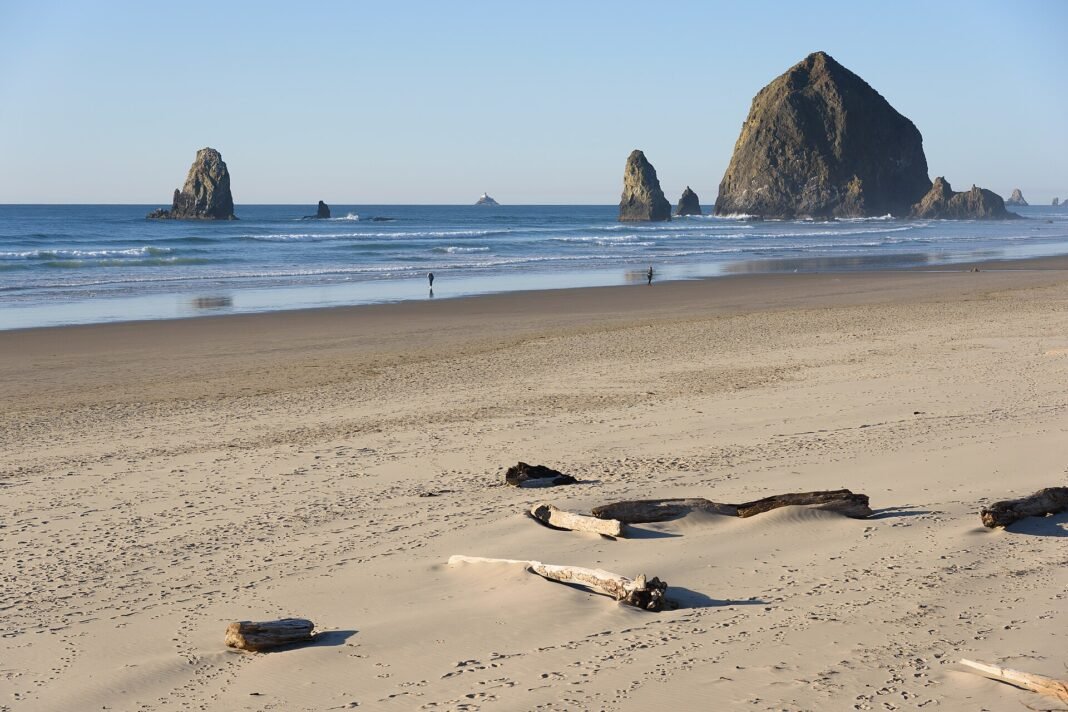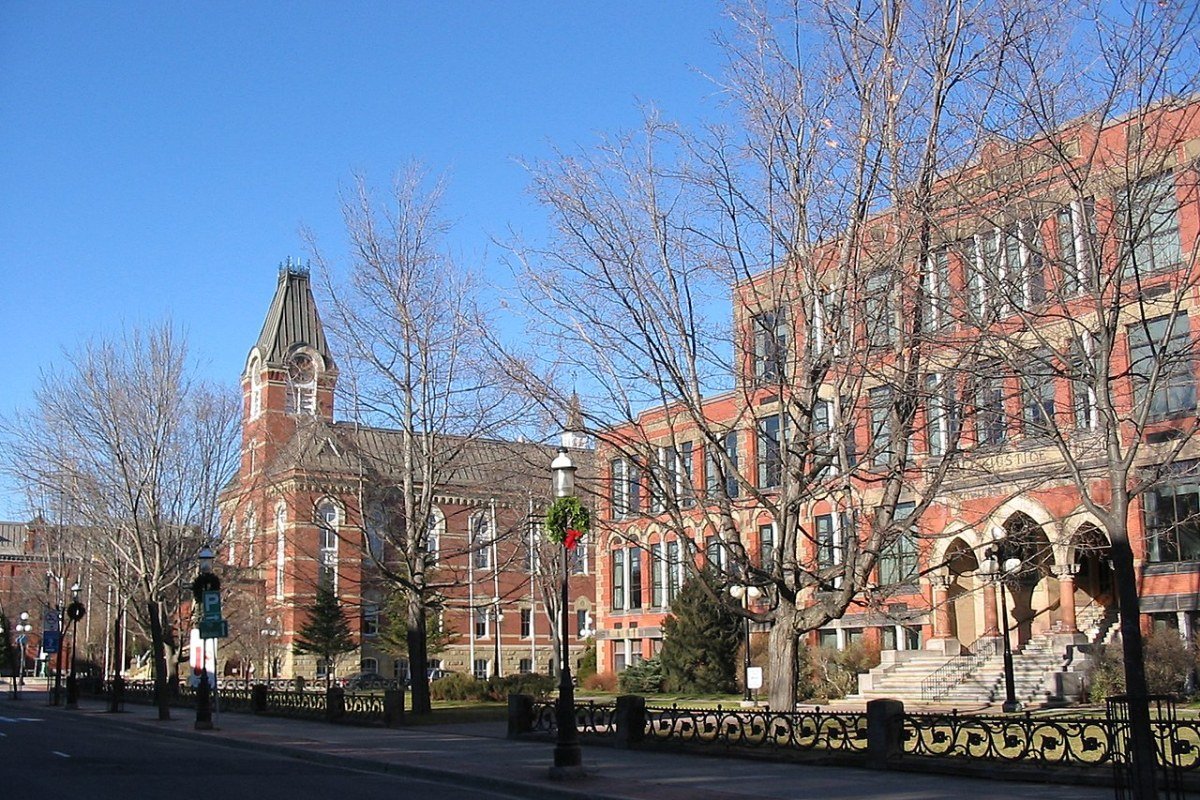
New Brunswick’s residential geography mirrors the province’s bilingual makeup and its three-city structure: Moncton as the commercial and transportation hub, Fredericton as the university-and-government capital, and Saint John as the working port city whose heritage core punches well above its current economic weight. Beyond the housing affordability that keeps the province among Canada’s best-value urban markets, the standout feature here is how close extraordinary landscapes sit to every front door — the Bay of Fundy’s tidal drama, the Fundy Trail’s cliff-edge wilderness, and the Northumberland Strait’s warm-water beaches all fall within 90 minutes of any major population centre. Choosing between New Brunswick’s cities comes down to three temperaments: francophone energy (Moncton and Dieppe), full-service capital living (Fredericton), and heritage authenticity (Saint John).
1. Moncton: Downtown and the Urban Core
Moncton’s revitalized downtown — the Main Street corridor running from the CN rail heritage district to the Petitcodiac River’s Bore Park — is the province’s most energetic core. The Main Street dining and arts strip, the Moncton Farmers Market (one of Atlantic Canada’s largest), the Magnetic Hill entertainment cluster, and the river’s restored waterfront (the 2021 causeway-to-bridge conversion brought the tidal bore back to its full drama) give the area genuine momentum. French and English businesses share nearly every commercial block, lending Moncton’s centre a bilingual texture found nowhere else in the region. Inner-city condos and older homes with period detail run from CAD $230,000–$380,000.
2. Dieppe: The Bilingual Suburb
Dieppe, the French-majority city immediately east of Moncton — contiguous in daily life if not in governance — is one of Atlantic Canada’s fastest-growing municipalities. What began as a bedroom community has matured into a centre with its own commercial base, cultural identity, and a strongly bilingual population of residents (about three-quarters speak both French and English). Champlain Place (the largest shopping centre in the region), the Dieppe Arts and Culture Centre, and the new subdivisions spreading across the eastern edge of town give the suburb a distinctly Acadian flavour. Newly built detached homes at CAD $300,000–$440,000 and townhouses from CAD $260,000 draw families who want bilingual schools and recent construction.
.jpg?width=1280)
3. Fredericton’s University District and Skyline
Fredericton’s appeal centres on the University of New Brunswick campus and the streets on the hill above the Saint John River — a compact, walkable pocket where Victorian homes, elm-lined avenues, and the river-valley trail system combine into one of the province’s most liveable inner-city settings. The Skyline neighbourhood (1960s–1980s family housing west of the university) lists from CAD $300,000–$430,000; downtown heritage properties — period row houses and Victorian homes a short walk from the Beaverbrook Art Gallery and the Garrison District — start around CAD $280,000, exceptional value for character housing in a working capital.
4. Saint John’s Uptown and South End
Saint John’s Uptown — the Victorian commercial and residential streets of Canada’s oldest incorporated city — offers period living that little else in the province can match, at prices that reflect the city’s economic struggles as much as its architectural legacy. Along the King Street and Princess Street corridor, heritage row houses and Victorian terraces start near CAD $180,000 for properties that need work, an unusual opportunity for buyers ready to take on a restoration. The South End (the residential quarter above the Uptown, facing the Fundy shore) has renovated homes at CAD $240,000–$380,000 — some of the finest Victorian streetscapes in Atlantic Canada at prices few comparable cities can match.
5. Sackville: The University Town
Sackville (population about 6,100), on the New Brunswick–Nova Scotia border at the head of the Bay of Fundy, ranks among Atlantic Canada’s most fully realized small university towns. The Mount Allison University campus — consistently rated Canada’s top primarily undergraduate university — anchors a community whose cultural depth far outstrips its size: the Owens Art Gallery (the oldest university art gallery in Canada), the Sackville Waterfowl Park (an internationally significant wetland at the edge of town), and a historic Victorian main street together draw academics, artists, and remote workers from across the region. Detached homes near campus run CAD $180,000–$310,000, and the surrounding Tantramar Marshes deliver some of the province’s finest birdwatching across wide, evocative open country.
6. Caraquet: The Acadian Heart
Caraquet (population around 4,300), on the Acadian Peninsula in northeastern New Brunswick, is the cultural capital of Acadian Canada — host of the Festival acadien de Caraquet (August, the largest Acadian celebration in the country), gateway to the Village Historique Acadien, and commercial centre for the Chaleur Bay fishing communities. For anyone after francophone immersion in a small-town setting at low prices (detached homes from CAD $120,000–$220,000), Caraquet and the wider peninsula offer a way of life found nowhere else in anglophone Atlantic Canada. The deep-sea fishing trade, a tight-knit social fabric, and the warm summer water of Chaleur Bay — among the warmest saltwater swimming north of Virginia — keep drawing remote workers and retirees who want something the bigger cities cannot offer.
Making Your Decision
Choosing where to live in New Brunswick comes down to matching your priorities with what each city and town actually delivers. Budget, career prospects, access to outdoor recreation, climate, and community feel all weigh differently depending on your life stage and values — and no ranking can stand in for that personal read. The places profiled here are the strongest all-round options, but the province has smaller communities that make a compelling case for anyone willing to trade urban convenience for affordability, quiet, or closer ties to the landscape. If you can, spend at least a long weekend in your shortlisted towns before committing — the practical details matter enormously, but so does the harder-to-measure question of whether a place fits where you are in life.
Frequently Asked Questions
What makes Moncton the best place to live in New Brunswick?
Moncton — about 102,000 in the city proper and roughly 196,000 across the metropolitan area, sitting at the geographic centre of the province’s transportation network — became in 2025 the first New Brunswick city to pass 100,000 residents, and it consistently ranks as the province’s strongest market for jobs, economic growth, and everyday livability for working-age households. As Canada’s first officially bilingual city (a status it adopted in 2002, with French and English near parity), it has drawn a substantial call-centre and business-process-outsourcing sector along with financial-services operations from national institutions including TD, RBC, and Assumption Life. Downtown revitalization since 2010 — Main Street’s restaurant and bar scene, the Resurgo Place museum, the Moncton Market, and a growing arts quarter — has turned around a city that was in steep decline after CN Rail’s departure. Riverview (across the Petitcodiac River, a separate municipality of roughly 22,000) and Dieppe (adjacent, predominantly French-speaking, around 34,000) round out the metro area and offer distinct options — Dieppe’s newer housing and French-language schools for bilingual families, Riverview’s older suburban feel and lower property taxes.
What is Fredericton like as a place to live?
Fredericton — New Brunswick’s provincial capital, with roughly 79,000 in the city and about 125,000 across the metropolitan area, on the Saint John River 170 km west of Moncton — offers the most complete small-capital lifestyle in Atlantic Canada: a walkable historic downtown, the University of New Brunswick (founded 1785, the oldest English-language university in the country), St. Thomas University, and a government sector that delivers the kind of employment stability resource-dependent communities cannot. The Fredericton Community Market (Saturdays, on the York Street level of the historic CN Station) is among the province’s finest. Riverside trails — the paved North and South Riverfront Trails that run along both banks of the Saint John River — plus skiing at Crabbe Mountain (50 minutes away) and Poley Mountain give the city its outdoor dimension, while the Harvest Jazz and Blues Festival (late September, across multiple downtown stages) stands as one of Atlantic Canada’s most distinguished outdoor music events. For households with provincial government work, Fredericton offers quality of life per dollar among the highest of any Canadian capital — median detached prices sit at CAD $330,000–$450,000, with university-adjacent and downtown heritage houses reaching CAD $400,000–$650,000.
What does Saint John offer and what are its challenges?
Saint John — Canada’s oldest incorporated city (1785), with a population of roughly 81,000 on the Bay of Fundy at the mouth of the Saint John River — is the province’s industrial and port centre. The Irving Oil Refinery, the largest in Canada at more than 320,000 barrels a day, dominates the local economy alongside the Port of Saint John and the Irving shipyards. The Uptown (the original commercial core on the peninsula between harbour and river) has seen real revitalization: the King Street pedestrian corridor, the Imperial Theatre (1913, fully restored), the New Brunswick Museum, and the Old City Market (operating continuously since 1876, the oldest in Canada). The challenges are genuine — the city carries the highest poverty rate of any of the province’s larger cities, persistent decline in the North End near the refinery complex, and a population trend that has only recently turned positive. The upside for buyers is just as concrete: detached houses in the heritage blocks of the Lower South End and Victoria sell for CAD $200,000–$380,000, the most affordable period urban housing of any Atlantic Canadian city.
What are New Brunswick’s housing costs and how do they compare?
New Brunswick consistently offers the most affordable housing of any Canadian province with a significant urban centre, with detached houses across its three main cities — Moncton, Fredericton, and Saint John — and their suburbs typically running CAD $200,000–$450,000. Moncton has posted the sharpest price appreciation in Atlantic Canada outside Halifax, driven by interprovincial migration from Ontario and B.C. during and after the pandemic: median detached prices climbed from roughly CAD $210,000 in 2019 to CAD $380,000–$450,000 in 2026, yet remain well below comparable Ontario cities. Fredericton’s median detached sits at CAD $330,000–$420,000, while Saint John remains the cheapest of the three at CAD $200,000–$330,000. The province’s First-Time Home Buyer programs and partial HST rebates on new construction ease entry costs. Property is assessed provincially rather than municipally, at uniform rates, with owner-occupied homes taxed at a reduced rate — a system that delivers more predictable costs than the wide municipal variation seen in Ontario and B.C.
What employment sectors drive New Brunswick’s economy?
New Brunswick has the most diversified economy of the Maritime provinces, with no single industry defining it the way oil sands define Alberta or fish processing defines Newfoundland. The public sector — provincial government, federal offices, the universities, the English and French school districts, and the Horizon and Vitalité health authorities — provides the most stable employment. The Irving Group of Companies (privately held, spanning oil refining, forestry, newspapers, convenience stores, shipbuilding, and transportation) is the single most significant private employer; the family’s reach within the province is proportionally greater than that of any single family in any other Canadian province. Call centres and business-process outsourcing (actively recruited by Opportunities NB to tap the bilingual workforce) anchor employment in Moncton and Fredericton. Aquaculture — Atlantic salmon farming in the Bay of Fundy and Northumberland Strait — is a growing field, alongside potato production (New Brunswick is one of Canada’s leading potato provinces) and wild blueberries, where the province is among the world’s largest producers, with the bulk of the crop grown on the Acadian Peninsula and in Kent County.