Louisiana‘s outdoors is unlike any other in the United States — a state of cypress swamps, Gulf barrier islands, the largest river delta in North America, migrating birds in astronomical concentrations, and freshwater fishing on some of the richest waterways in the country. The state’s natural assets are shaped by the Mississippi River’s 12,000-year history of building and rebuilding the delta plain, by the warm waters of the Gulf of Mexico that fuel a remarkable marine food chain, and by the convergence of the Central and Mississippi flyways over Louisiana’s coastal wetlands — a meeting point that ranks these marshes among the continent’s great bird migration stopovers.
.jpg?width=1280)
Swamp Tours and Bayou Exploration
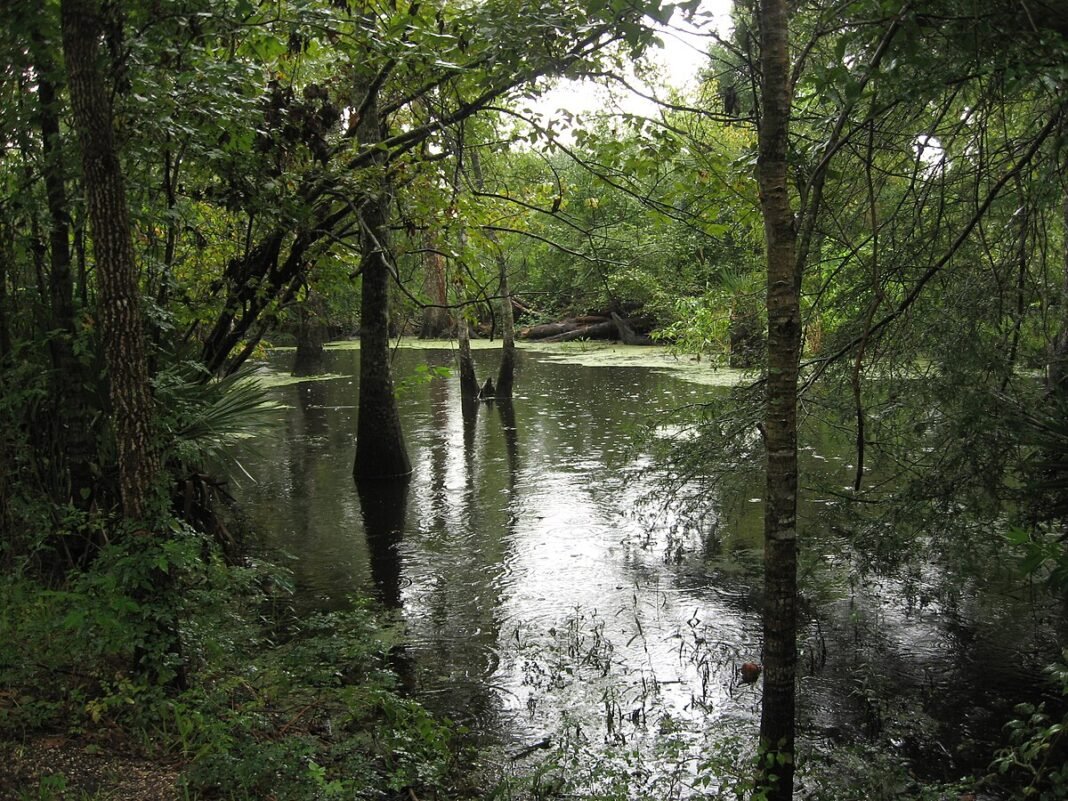
The Atchafalaya Basin, Honey Island Swamp east of New Orleans, and the bayou systems of Terrebonne and Lafourche parishes open up swamp country that stays wild and biologically rich. Boat tours — from small airboats to covered pontoon vessels — reach cypress swamp interiors where American alligators turn up year-round, roseate spoonbills feed in the shallows, and Spanish moss draped over ancient cypress trees creates an atmosphere unlike anything north of the Louisiana border.
Kayaking the Atchafalaya is the most immersive swamp experience you can have without a guide — the basin’s sheer extent and its network of navigable channels leave paddlers with adequate navigation skills room to roam for days (getting lost out here is a real risk, given the scale of the swamp and how alike the channels look, so GPS and careful planning are essential). Launch points at Henderson and Breaux Bridge make for convenient access, and the Sherburne Wildlife Management Area allows camping within the basin for multi-day expeditions.

Birding: The Mississippi Flyway Concentration Point
Louisiana’s coastal wetlands rank among the most important bird habitats in North America. At the convergence of the Central and Mississippi flyways, the marshes, swamps, and cheniers (remnant live oak ridges on the coastal plain) concentrate migrating birds in spring and fall in numbers that are hard to describe without seeming to exaggerate. The Cameron Prairie and Sabine National Wildlife Refuges in southwest Louisiana protect the coastal marsh and prairie where Greater White-fronted Geese, Snow Geese, and Ross’s Geese winter in the hundreds of thousands. The Creole Nature Trail All-American Road, a 180-mile loop through Calcasieu and Cameron parishes, threads viewing platforms and boardwalks across the coastal marshes and includes 26 miles of natural Gulf beaches.
The Chenier Plain, the coastal ridge region of southwest Louisiana, is famous for spring migration fallouts — events in which waves of northbound songbirds, crossing the Gulf of Mexico in spring without stopping, are forced down by bad weather onto the first land they reach, the Louisiana coast. On the best days, a single live oak grove can hold dozens of species of warblers, tanagers, orioles, and vireos at densities that overwhelm even experienced birders. Cameron Parish and the towns of Holly Beach and Johnson’s Bayou serve as the primary access points for the chenier birding experience.
Fishing: Louisiana’s Extraordinary Productivity
Louisiana consistently lands more pounds of commercial seafood than any other state except Alaska — a measure of how productive the waters at the Mississippi River delta really are. For recreational anglers, the state’s inland and coastal waters hold some of the finest fishing in the country. Freshwater bass fishing in the Atchafalaya Basin lakes (Henderson Lake, Grand Lake, Six Mile Lake) is recognized worldwide; the basin’s vegetation and water quality feed largemouth bass to remarkable size and number. Red drum (redfish) fishing in the coastal marshes of south Louisiana anchors a substantial guide industry, and the backwater channels between Delacroix and Lafitte hold some of the densest redfish habitat in North America.
The Louisiana oyster fishery — working the shallow bays and estuaries of the coast, mostly around Plaquemines and Terrebonne parishes — yields some of the most prized Gulf oysters anywhere, and the lease system (private leaseholders working specific oyster beds) lets visitors take part in harvesting on guided tours that connect them directly to one of the state’s most distinctive food traditions.
Jean Lafitte National Historical Park
Jean Lafitte National Historical Park and Preserve protects surviving pieces of the Mississippi River delta ecosystem south of New Orleans. The Barataria Preserve unit, reached from Marrero, carries roughly nine miles of boardwalk and dirt trails through bottomland hardwood forest, cypress-tupelo swamp, and marsh. Its alligator population is among the most visible in the state, and the spring wildflower season (March–May) brings out sweeping displays of Louisiana iris, spider lily, and native swamp plants. Farther afield, the park’s units in the French Quarter, in Chalmette (site of the Battle of New Orleans in January 1815), and in Eunice (dedicated to Cajun cultural preservation) round out a nationally significant program tying together Louisiana’s natural and cultural heritage.
Louisiana’s outdoors asks for a different frame than the mountain or desert West — it rewards the visitor and resident who learn to read wetland country: the abundance of life, the play of light on water and cypress and Spanish moss, and the quiet freedom of paddling a wilderness that sits within an hour or two of one of America’s great cities. That pairing — wild nature beside cultural richness — belongs to Louisiana and is matched nowhere else in the country.
Getting the Most Out of Your Visit
A few practical points will improve any trip to Louisiana. Book accommodation and major attractions — particularly national parks, popular hiking trails, and well-known restaurants — as far in advance as possible; the most desirable options can fill weeks or months ahead, especially in peak season. Having a car gives you real flexibility for exploring beyond the main centers, since most of Louisiana’s best experiences sit in places not easily reached by public transport. The sharpest local knowledge tends to surface in regional visitor centers, independent bookshops, and in conversation with residents — the discoveries that stay with you are rarely the ones in the guidebooks. Allocate more time than you think you need: Louisiana consistently rewards travelers who slow down and explore in depth rather than trying to cover maximum ground in minimum time.
Frequently Asked Questions
What swamp and bayou exploration does Louisiana offer?
The Atchafalaya Basin, Honey Island Swamp east of New Orleans, and the bayou systems of Terrebonne and Lafourche parishes open up swamp country that stays genuinely wild and biologically rich. Boat tours — from airboats to covered pontoon vessels — reach cypress swamp interiors where American alligators turn up year-round, roseate spoonbills feed in shallow water, and Spanish moss draped over ancient cypress trees creates an atmosphere unlike anything north of the Louisiana border. Kayaking the Atchafalaya is the most immersive experience available without a guide — the basin’s network of navigable channels leaves room to roam for days, though GPS and careful planning are essential given the scale of the swamp. Launch points at Henderson and Breaux Bridge make for convenient access, and the Sherburne Wildlife Management Area allows camping within the basin for multi-day expeditions.
What makes Louisiana’s coastal birding along the Mississippi Flyway exceptional?
Louisiana’s coastal wetlands rank among the most important bird habitats in North America. Sitting at the convergence of the Central and Mississippi flyways, the marshes and cheniers concentrate migrating birds in spring and fall in extraordinary numbers. The Cameron Prairie and Sabine National Wildlife Refuges in southwest Louisiana protect coastal marsh where Greater White-fronted Geese, Snow Geese, and Ross’s Geese winter in the hundreds of thousands. The Creole Nature Trail All-American Road is a 180-mile loop through Calcasieu and Cameron parishes, with viewing platforms and boardwalks over the marshes and 26 miles of natural Gulf beaches. The Chenier Plain in southwest Louisiana is known for spring migration fallouts — events in which waves of northbound songbirds crossing the Gulf are forced down by bad weather onto the first Louisiana live oak groves they reach, packing warblers, tanagers, orioles, and vireos into a single grove at densities that overwhelm experienced birders.
What freshwater and coastal fishing does Louisiana offer?
Louisiana consistently lands more pounds of commercial seafood than any other state except Alaska — a measure of the Gulf’s productivity at the Mississippi River delta. The freshwater bass fishing in the Atchafalaya Basin lakes (Henderson Lake, Grand Lake, Six Mile Lake) is recognized worldwide; the basin’s vegetation and water quality feed largemouth bass to remarkable size and number. Red drum (redfish) fishing in the coastal marshes of south Louisiana anchors a substantial guide industry, and the backwater channels between Delacroix and Lafitte hold the most concentrated redfish habitat in North America. The Louisiana oyster fishery — working the bays and estuaries of Plaquemines and Terrebonne parishes — yields some of the most flavorful Gulf oysters in the country, and guided harvesting tours connect visitors directly to one of the state’s most distinctive food traditions.
What does Jean Lafitte National Historical Park offer outdoor visitors?
Jean Lafitte National Historical Park and Preserve protects surviving pieces of the Mississippi River delta ecosystem south of New Orleans. The Barataria Preserve unit, reached from Marrero, carries roughly nine miles of boardwalk and dirt trails through bottomland hardwood forest, cypress-tupelo swamp, and marsh. Its alligator population is among the most visible in the state, and the spring wildflower season (March–May) brings out sweeping displays of Louisiana iris, spider lily, and native swamp plants. The park reaches beyond Barataria to include units in the French Quarter (interpreting New Orleans’s history), Chalmette (site of the Battle of New Orleans in January 1815), and Eunice (dedicated to Cajun cultural preservation) — a nationally significant program tying together Louisiana’s natural and cultural heritage across a single park system.
What makes the Atchafalaya Basin one of North America’s most important wilderness areas?
The Atchafalaya Basin is the largest river swamp in the United States — a roughly 900,000-acre floodplain where the Atchafalaya River distributes Mississippi River water through a network of channels, lakes, and swamp forests before draining into the Gulf of Mexico near Morgan City. The basin supports North America’s largest population of American alligators, along with black bears, river otters, bald eagles, roseate spoonbills, and more than 300 bird species. Its cypress-tupelo forest, which grows only in standing water, is one of the last large intact tracts of bottomland hardwood swamp on the continent. The mix of proximity to Baton Rouge (under an hour) and New Orleans (roughly two hours) with genuine wilderness character — no roads, minimal infrastructure, and real remoteness in the swamp interior — gives the Atchafalaya an ecological standing without close parallel in the eastern United States.