
Saskatchewan’s outdoor recreation is defined by the Prairie horizon and the wilderness north of it — a province where the defining outdoor experience for residents is the road trip into big sky country (the Qu’Appelle Valley, the Cypress Hills, the Great Sand Hills), the lake cabin culture of the southern forest, and the genuine backcountry of Prince Albert National Park’s canoe routes and interior. The province’s most extraordinary natural features — the Athabasca Sand Dunes (the most northerly active sand dunes in the world, reached only by floatplane to the far northwest), the Churchill River’s Class III rapids, and the boreal lake country of the Canadian Shield — count among the least-visited true wilderness in Canada, so those who make the journey meet landscapes in a state of near-complete solitude. The Prairie itself — the grassland, the coulees, the buffalo pounds, and the Big Sky sky — is the backdrop for daily outdoor recreation that residents engage with on foot, by bicycle, and by canoe from the city edges of Saskatoon and Regina.
Waskesiu and Prince Albert National Park
Prince Albert National Park (3,875km²) north of Prince Albert is Saskatchewan‘s most complete outdoor recreation destination:
- Canoe routes: The Hanging Heart Lakes and the Sandy-Waskesiu circuit open up 2–5 day backcountry canoe routes through the lake country; the Grey Owl trail (a paddle across Kingsmere Lake followed by a short portage to Ajawaan Lake) leads to the preserved cabin of Grey Owl in the heart of the park
- Waskesiu townsite: The 1930s summer resort village on Waskesiu Lake; beach swimming, rental boats, and the Heritage Museum’s natural history interpretive program; the townsite’s golf course is one of the most visually distinctive in the country (fairways carved through the spruce and pine)
- Wildlife viewing: The park’s grey wolf, black bear, moose, elk, and the free-ranging plains bison herd of the Sturgeon River plains add up to wildlife watching that ranks among the most reliable in any Canadian national park outside the mountain parks
- Boundary Bog Trail: A 3.5km boardwalk through a Labrador tea and black spruce bog; the easiest peatland to reach in the park, where boreal bird species (white-throated sparrow, common loon, osprey) turn up reliably
Cypress Hills Interprovincial Park
The Cypress Hills — a plateau rising 600m above the surrounding Prairie on the Saskatchewan-Alberta border, 450km southwest of Regina — is the most ecologically surprising landscape in Saskatchewan: a forested highland that escaped the last glaciation (the hills’ elevation kept the glaciers from overriding them), creating a refugium of biodiversity where pronghorn antelope, elk, and a rare native trout population (the Westslope cutthroat trout of Battle Creek) coexist in a landscape that looks more like Montana than the Prairie provinces:
- Fort Walsh National Historic Site: The North-West Mounted Police fort built in 1875 near the site of the Cypress Hills Massacre (1873); the fort’s interpretive centre lays out the context for Canada’s most significant early police history
- Hiking: The Cypress Hills trail network (roughly 60km) traverses the plateau’s edge and the interior forest; the Shoreline Trail along the Centre Block reservoir and the Bald Butte Trail rank among the most scenic options
- Dark Sky Preserve: The Cypress Hills carry a Dark Sky Preserve designation (2004) — the low light pollution and the plateau’s clear Prairie air produce astronomical conditions of exceptional quality, and the Alberta and Saskatchewan park operations run observatory programs

Meewasin Valley and Urban Outdoor Recreation
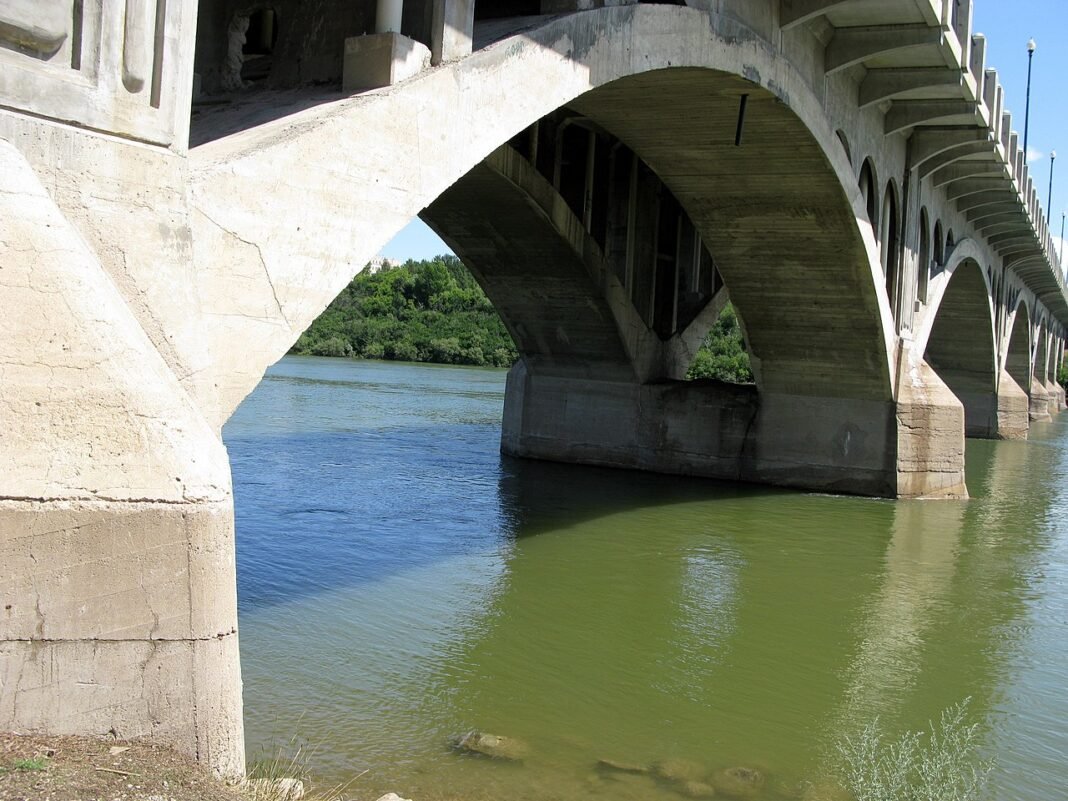
Saskatoon’s Meewasin Valley Trail (roughly 105km along both banks of the South Saskatchewan River) is Saskatchewan’s most-used outdoor recreation infrastructure:
- Cycling: The river valley trail carries car-free cycling from the University of Saskatchewan campus through the downtown and south to the newer communities; the crossings at the University and Broadway bridges close a riverside loop that is Saskatoon’s most popular cycling circuit
- Wanuskewin Heritage Park: The archaeological and cultural landscape of 6,000 years of Northern Plains Indigenous occupation; the tipi camp, the bison pound archaeological feature, and the interpretive centre on the valley edge above the South Saskatchewan together form the most significant Indigenous cultural landscape within reach of any Prairie city
- Winter skiing (Table Mountain): Saskatchewan’s largest downhill ski area is Table Mountain Regional Park, a 20-minute drive west of Battleford; around 11 runs and a 110m vertical drop served by high-speed quads make it the province’s primary alpine ski destination, with a tubing hill and terrain park alongside
Churchill River: Northern Adventures
The Churchill River system — the historic voyageur canoe highway that linked Hudson Bay to the Athabasca country — carries Saskatchewan’s most adventurous paddling:
- Churchill River canoe route: The classic run from Île-à-la-Crosse east to Pelican Narrows (roughly 400km, 14–21 days) threads the lake country of the Shield’s northern edge with Class I–III rapids and portages; genuine backcountry paddling with minimal infrastructure and deep solitude
- Missinipe (Churchill River Canoe Outfitters): The small community of Missinipe on Otter Lake is Saskatchewan’s canoe outfitting hub; guided day trips on the Churchill River and multi-day expedition rentals open one of Canada’s finest wilderness canoe systems without having to haul equipment from the cities
Planning Your Outdoor Adventure
The outdoor experiences described in this guide reward practical preparation. For wilderness and protected areas, check trail conditions, permit requirements, and seasonal access with the relevant land management authority before departure — trail closures, fire restrictions, and entry quotas can change quickly, and many high-demand parks now require advance reservations that were not needed in previous years. Weather in Saskatchewan can change rapidly, particularly in mountain terrain and during shoulder seasons; a layered approach with a waterproof outer shell is advisable for most outdoor pursuits regardless of the season. For water-based activities — paddling, snorkelling, diving, surfing — check current conditions with local outfitters who will have the most accurate and up-to-date information. Leave No Trace principles apply throughout: pack out everything you bring in, stay on established trails, give wildlife space, and leave natural features undisturbed for the next visitor.
Frequently Asked Questions
What does Prince Albert National Park offer as Saskatchewan’s premier wilderness destination?
Prince Albert National Park — 3,875 square kilometres of boreal forest, lakes, and wetlands in central Saskatchewan, 200km north of Saskatoon — marks the transition zone between the prairie grassland to the south and the boreal forest that runs north to the treeline, and it is the most reachable wilderness for Saskatchewan residents. The park’s lake system (Waskesiu Lake, the largest, holds the primary visitor infrastructure — a beach, townsite, and boat rentals) and the Grey Owl cabin (Beaver Lodge, reached only by canoe or snowshoe — a paddle across Kingsmere Lake and a short portage to Ajawaan Lake — the wilderness home of Archibald Belaney, the Englishman who lived as Grey Owl and became one of the 20th century’s first celebrity conservationists) rank among its most distinctive draws. The free-ranging plains bison herd (reintroduced; one of only a handful of wild herds in Canada) grazes the Sturgeon River plains in the park’s southern section, within reach by vehicle from Waskesiu. The moose population is among the densest in Saskatchewan, and the Narrows Road corridor rewards evening wildlife watching.
What are the Athabasca Sand Dunes and why are they significant?
The Athabasca Sand Dunes — 100km of active sand dunes along the southern shore of Lake Athabasca in northwestern Saskatchewan — are the most northerly active sand dune system in the world (at 59°N latitude, well above the Arctic Circle equivalent in biological terms) and represent a unique geological feature of global significance. The dunes reach heights of 30m in places and support endemic plant species found nowhere else on Earth — Mackenzie hairgrass, Tyrrell’s willow, floccose tansy, and other plants that have evolved in the dune micro-habitat over the roughly 8,000 years since glacial retreat. The William River delta provides the dune system’s most dramatic active dune faces. Access is exclusively by float plane from Points North Landing or La Ronge — there are no roads within 200km — making the Athabasca Sand Dunes the most remote accessible geological feature in Saskatchewan and one of the most genuinely off-the-grid wilderness experiences in Canada. The area is a provincial wilderness park; camping is permitted but no facilities exist. Northern lights viewing (September to March) from the dune system is exceptional due to the complete absence of light pollution.
What outdoor recreation does the Canadian Shield portion of Saskatchewan offer?
Northern Saskatchewan — above the transition from prairie to boreal, north of Prince Albert — is defined by the Canadian Shield: ancient Precambrian rock scoured by glaciation into a landscape of lakes, rivers, and boreal forest that covers approximately two-thirds of the province’s area. The Churchill River system (flowing east across northern Saskatchewan) is the most significant canoe route in the province — more than 1,000km of waterway from Île-à-la-Crosse toward the eastern boundary passes through some of the most remote and beautiful paddling terrain in Canada, with Class I–IV rapids, portages, and wilderness camping on Crown land; Missinipe on Otter Lake is its principal outfitting base. La Ronge (population around 3,000, the largest community in northern Saskatchewan, 250km north of Prince Albert on Lac La Ronge — Saskatchewan’s fifth-largest lake at 1,413 km²) serves as the gateway for northern wilderness expeditions; the largest lake lying entirely within the province is Wollaston Lake to the northeast. Cree Lake, Wollaston Lake, and Reindeer Lake (a vast border lake studded with some 5,500 islands) deliver the most remote fishing in the province for northern pike, walleye, lake trout, and arctic grayling. The northern communities (La Loche, Buffalo Narrows, and Ile-a-la-Crosse) are predominantly Dene and Métis, with the Dene language still in daily use.
What wildlife watching experiences does Saskatchewan offer?
Saskatchewan’s wildlife diversity spans the entire range from mixed-grass prairie to boreal forest to sub-Arctic, providing species combinations available nowhere else in Canada at accessible distances from provincial cities. The Last Mountain Lake National Wildlife Area (North America’s first federal bird sanctuary, established 1887, at the north end of Last Mountain Lake — southern Saskatchewan’s longest natural lake at about 93km) is the most significant staging area for migratory waterfowl on the central flyway, with Sandhill cranes (up to 50,000 staging in September), Snow geese, and 280+ shorebird species. Grasslands National Park’s black-tailed prairie dogs — the only wild colony in Canada — support burrowing owls, ferruginous hawks, and swift foxes that are otherwise absent from the Canadian landscape. Pronghorn antelope (the fastest land animal in North America, with a running speed of up to 88km/h maintained over distance) roam the short-grass prairie of the extreme south. The boreal forest’s moose and black bear populations provide accessible wildlife viewing in Prince Albert National Park, while woodland caribou remain in the far north. The Quill Lakes in central Saskatchewan (a cluster of saline and freshwater lakes) support phalaropes, avocets, and Wilson’s phalaropes in concentrations that attract shorebird observers from across North America.
What does dark sky and aurora viewing offer in Saskatchewan?
Saskatchewan’s combination of flat terrain, minimal urban light pollution outside of Saskatoon and Regina, low annual cloud cover (the sunniest province in Canada, with Estevan holding the national record for most sunshine hours), and high latitude makes it one of the premier aurora borealis viewing provinces in Canada. The Cypress Hills International Dark Sky Preserve (shared with Alberta, established 2004, one of the first designated dark-sky preserves in Canada) offers the most formal infrastructure for dark-sky observation in the south of the province, while Grasslands National Park — designated a Dark Sky Preserve in 2009 and among the darkest measured night skies in Canada — anchors the southwest. The northern boreal — La Ronge and above — delivers the most intense auroral viewing, with the Kp-3 threshold producing visible displays at La Ronge’s latitude (55°N) on nights of moderate geomagnetic activity. The peak aurora season (September–March) aligns with Saskatchewan’s coldest months; sub-zero temperatures are the primary obstacle. The province’s widespread network of provincial parks (100+ in the system) provides camping infrastructure across the boreal for summer dark sky viewing, with the Milky Way core visible from mid-April to mid-September in the absence of cloud and moisture that limits visibility in coastal provinces.