Idaho’s cost of living tells a story of two distinct trajectories: historically one of the most affordable western states, now a state in the middle of a rapid transition driven by migration from California, Washington, and Oregon. The state’s cost index — approximately 5–10% below the national average in most categories in 2020 — has shifted considerably as population growth has pressured housing markets, particularly in the Treasure Valley (Boise metro area) and the Coeur d’Alene region. Yet Idaho still represents a substantially more affordable option than its western coastal neighbors, and its smaller communities offer cost structures well below national averages for residents who don’t need big-city amenities.

Housing: The Most Variable Category
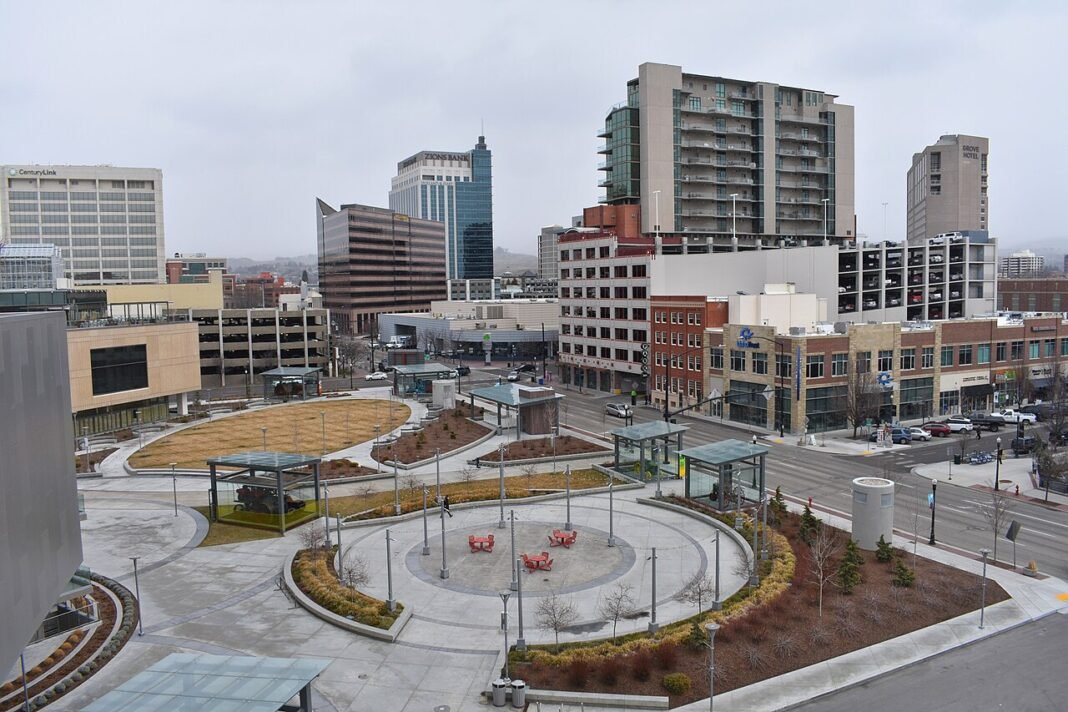
Idaho’s housing market bifurcated sharply during the 2020–2023 migration wave, with the Boise metropolitan area experiencing some of the fastest home price appreciation in the United States. Median home prices in Boise and its suburbs (Meridian, Nampa, Eagle, Caldwell) now run roughly $430,000 to $550,000 — a steep climb from the $220,000–$280,000 range of five years ago. That figure still trails most Pacific Northwest and California markets, but it has outpaced local wage growth and created affordability pressure for longtime residents and first-time buyers in ways that were not present five years ago.
Outside the Boise metro, Idaho‘s housing market is far more accessible. Twin Falls, the commercial center of south-central Idaho, shows median home prices of $280,000–$340,000. Pocatello, in eastern Idaho, averages $280,000–$330,000. Idaho Falls offers similar pricing. Even Coeur d’Alene — which has also experienced significant migration-driven price increases — shows median home prices of $350,000–$450,000 that stay below Pacific Northwest resort and small-city markets of similar appeal. In the state’s smaller communities — Sandpoint, Salmon, Weiser, Montpelier — housing costs reflect rural western market dynamics, with median prices often $180,000–$240,000.

Rental markets follow the same geography. Boise one-bedroom apartments average $1,300–$1,700 per month in desirable neighborhoods, with larger units in the $1,600–$2,200 range. Coeur d’Alene runs slightly lower. Twin Falls and Pocatello remain under $1,000–$1,200 for equivalent units in most neighborhoods. Idaho does not have a statewide rent control law, and the fast-growing markets in the Boise area have seen above-inflation rent increases in recent years.
Groceries and Everyday Expenses
Grocery costs in Idaho run approximately 5–8% below the national average — a modest but meaningful discount that reflects the state’s agricultural production, with Idaho potatoes, dairy (Idaho is one of the top dairy-producing states), beef, and trout all produced locally in quantities that hold prices down. The major grocery chains operating in Idaho (Albertsons, which was founded in Boise in 1939 and is headquartered there; Fred Meyer; WinCo Foods; Walmart) keep pricing tight, and WinCo in particular is frequently cited by Idaho residents as offering the lowest prices in the state.
Utility costs are a significant advantage for Idaho residents. Idaho’s electricity rates are among the lowest in the United States — roughly 11–12 cents per kilowatt-hour against a national average near 17–18 cents — reflecting the state’s hydroelectric power generation from the Snake River and Columbia River systems. Natural gas costs are also competitive. For households with electric heating or cooling loads, Idaho’s utility advantage translates to real monthly savings relative to most of the country.
Taxes: Idaho’s Competitive Structure
Idaho’s state income tax is a flat 5.3% (reduced in stages from a previous graduated structure) on taxable income above the lowest brackets — in line with neighboring states and well below Oregon (9.9% top rate) and California (13.3%). There is no income tax on Social Security benefits, making Idaho relatively attractive for retirees with mixed income sources. Washington State has no income tax at all, which gives it a specific advantage for high earners, but Idaho’s absence of a capital gains surcharge (which Washington enacted) makes them comparable for investment income.
Idaho’s property tax rate of approximately 0.5–0.7% of assessed value is below the national average, and the homeowner exemption (which shields half of an owner-occupied home’s value, up to $125,000) gives long-term homeowners real relief. The state sales tax is 6%, with no local additions across most of the state (only a handful of resort cities levy a small local option) — slightly below average nationally. The absence of a local income tax in Boise and other Idaho cities is an advantage relative to states like Oregon (which allows city income taxes) and some eastern states with heavy municipal taxation.
Healthcare Costs
Healthcare in Idaho presents a mixed picture. Premiums on the state’s health insurance marketplace (Your Health Idaho) are somewhat below national averages, but Idaho’s rural character means that specialist access is limited outside the Boise metro — residents in smaller communities may face travel costs for specialist care that offset premium savings. St. Luke’s Health System and Saint Alphonsus Regional Medical Center in Boise provide tertiary care referral options, and both health systems have expanded regional facilities in Twin Falls and other larger communities. Idaho expanded Medicaid under the ACA in 2020, after voters approved the measure in 2018, broadening coverage for lower-income residents — a factor worth weighing for households near the eligibility threshold.
Transportation Costs
Idaho is a car-dependent state — the Boise metro has no passenger rail service, limited public bus service, and infrastructure built around automobile commuting. Gas prices in Idaho typically run well over a dollar per gallon below California’s — in 2026, roughly $4.50 in Idaho against close to $6.00 in California — and are competitive with most western states. The cost of car insurance in Idaho is below the national average, reflecting the state’s relatively lower accident rates and litigation environment compared to major metropolitan states. The lack of real public transit options means that most Idaho households budget for two vehicles — a practical reality that adds $400–$600 per month to transportation costs compared to households in cities with robust transit systems.
Quality of Life Value
The honest cost-of-living assessment for Idaho in 2026 is this: Boise has lost its status as a dramatically affordable western city, but it stays noticeably less expensive than Portland, Seattle, Denver, or any California metro — while offering outdoor recreation access and quality of life amenities that have historically been associated with much pricier markets. The state’s smaller communities remain genuinely affordable by any national standard. The tradeoffs involve accepting a more rural service environment outside Boise, limited public transit, and healthcare access challenges in remote areas. For households prioritizing outdoor access, lower taxes, and escape from the congestion and cost of major Pacific Coast metros, Idaho’s value proposition holds up even after the migration-driven price increases of recent years.

Remote workers who relocated to Idaho from California or Washington during the pandemic and retained their origin-state salaries experienced a dramatic cost-of-living improvement even at current Idaho prices. That arbitrage has narrowed as Idaho costs have risen, but it persists — Idaho housing at $450,000 is expensive by the state’s historical standards yet still lands 30–40% below equivalent properties in the Portland or Denver suburbs. For the right household profile, Idaho continues to offer a compelling balance of cost and quality of life that justifies the migration trend that has defined the state’s recent growth.
Frequently Asked Questions
Is Idaho still an affordable state to live in?
Idaho remains more affordable than its Pacific Coast neighbors, but the pandemic-era migration wave significantly changed the Boise metro. Median home prices in Boise and its suburbs now run $430,000–$550,000 — up from $220,000–$280,000 five years ago. Even so, Boise sits 30–40% below comparable Portland or Denver suburbs. Smaller Idaho cities like Twin Falls ($280,000–$340,000), Pocatello ($280,000–$330,000), and Idaho Falls remain genuinely affordable by any national standard.
What is the average rent in Boise, Idaho?
Boise one-bedroom apartments in desirable neighborhoods average $1,300–$1,700 per month, with larger units running $1,600–$2,200. Coeur d’Alene is slightly lower. Twin Falls and Pocatello remain under $1,000–$1,200 for comparable one-bedroom units. Idaho has no statewide rent control, and Boise-area rents have seen above-inflation increases in recent years alongside the population surge.
Does Idaho have low electricity costs?
Yes — Idaho’s electricity rates are among the lowest in the United States at roughly 11–12 cents per kilowatt-hour, against a national average near 17–18 cents. This reflects the state’s substantial hydroelectric power generation from the Snake River and Columbia River systems. For households with electric heating, cooling, or EV charging, the savings compared to California or Northeast rates are significant over the course of a year.
What is Idaho’s income tax rate?
Idaho levies a flat income tax rate of 5.3% — well below Oregon’s top rate of 9.9% and California’s 13.3%. Social Security benefits are not taxed. Property taxes run 0.5–0.7% of assessed value annually, and the homeowner exemption shields half of a primary residence’s value, up to $125,000 — real relief for long-term homeowners.
How does Boise compare financially to Portland and Denver?
Boise housing at $430,000–$550,000 runs 30–40% below comparable Portland or Denver suburbs, while offering similar access to outdoor recreation and a similar quality of life. Idaho’s flat 5.3% income tax also compares favorably to Oregon’s 9.9% top rate. Remote workers who relocated from California or the Pacific Northwest and retained out-of-state salaries have experienced meaningful cost-of-living improvements even at current Boise prices.