Idaho holds the largest contiguous wilderness in the lower 48 — the 2.3-million-acre Frank Church–River of No Return Wilderness — and ranks among the top states in the country for total designated wilderness, with roughly 4.8 million protected acres set inside more than 20 million acres of national forest. These aren’t marketing numbers. They translate to outdoor recreation that survives at a scale and in a state of preservation rarely seen in 21st-century America. The outdoor enthusiast who comes to Idaho prepared to drive unpaved roads, carry a map, and leave the established tourist loop behind will find experiences that rival — and often exceed — what can be found in more famous western states.

Skiing and Winter Sports
Sun Valley — the first destination ski resort in the United States, opened by Union Pacific Railroad in 1936 — still ranks among the best skiing in North America. Bald Mountain (Baldy) offers 3,400 vertical feet, 75 runs, and the rare distinction of being one of the few major American ski mountains where runs from the top descend directly to the base without losing terrain to flat sections. Dollar Mountain handles the gentler end of the spectrum for beginners and families. Sun Valley’s snowmaking and grooming operation is among the most sophisticated in the country; the resort consistently produces excellent groomed conditions that many Colorado mountains struggle to match.

Schweitzer Mountain Resort near Sandpoint is Idaho‘s other world-class ski destination — 2,900 acres, 92 named runs, and an average of 300 inches of annual snowfall that produces some of the best powder in the Pacific Northwest. Because Schweitzer draws mostly Northwest skiers rather than national crowds, the lift lines that would be unacceptable at Utah or Colorado resorts almost never form here. Bogus Basin, just 16 miles from downtown Boise, rounds out the picture as a local mountain with 2,600 acres and night skiing — an extraordinary asset for a state capital to have essentially within reach of city limits.
Whitewater Rafting: The Salmon and Payette Rivers
Idaho’s river system delivers the best whitewater rafting in the continental United States — a claim backed by both the volume and the quality of the available runs. The Main Salmon River, flowing through the Frank Church–River of No Return Wilderness, opens up multi-day float trips across 79 miles of roadless canyon. Class III–IV rapids, extraordinary canyon scenery, abundant wildlife (otters, osprey, black bears, deer, and rattlesnakes are regular sightings), and true remoteness — no road touches the canyon for the entire length of the float — combine into a river experience you won’t find elsewhere in the continental US outside the Grand Canyon.

The Middle Fork of the Salmon, often cited as the finest multi-day wilderness river run in North America, flows for roughly 100 miles through the Frank Church Wilderness with more than 100 named rapids, hot springs, Native American pictographs, abandoned mining camps, and spectacular alpine and canyon scenery. Float trips require advance planning — permits through the National Forest lottery are required for the peak summer season, and outfitted trips need booking months in advance. The effort is justified by a wilderness experience that is essentially unchanged from what existed a century ago.
The Payette River system, closer to Boise, opens up more accessible whitewater for day trips and weekenders. The North Fork of the Payette near Cascade runs Class IV–V water that draws expert kayakers from across the West; the Main Payette near Banks offers Class III–IV water suited to guided day trips with beginners. The Payette River Games, held each year in Cascade, ranks among the premier whitewater competition festivals in the country.
Hiking: Wilderness Access Without the Crowds
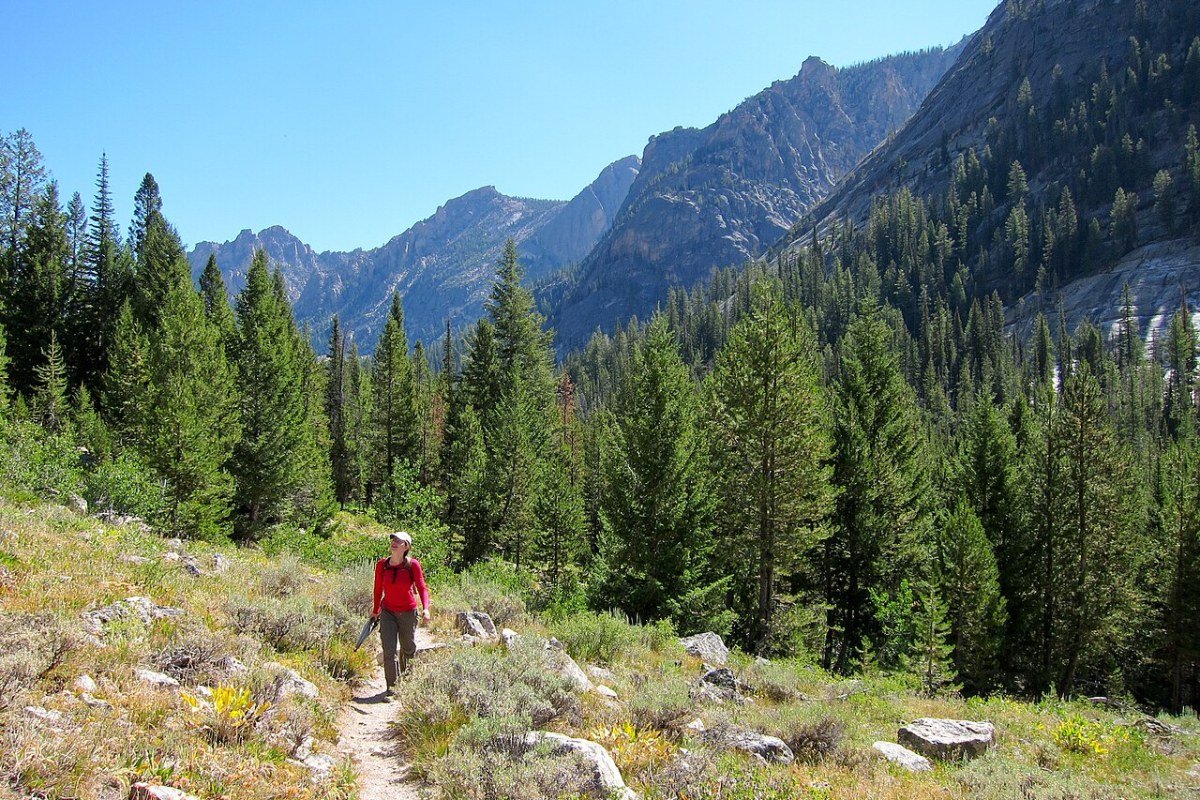
Idaho’s hiking trails see far less traffic than comparable terrain in Colorado, Utah, or the Pacific Northwest — a byproduct of the state’s low tourism profile that benefits those who know about it. The surrounding Sawtooth National Recreation Area lays out more than 700 miles of maintained trails through some of the most dramatic mountain scenery in the Rockies, with roughly 350 of those miles inside the Sawtooth Wilderness itself. The Alice-Toxaway Loop (about 19 miles, rated moderate to difficult) circles through the Sawtooth backcountry past a string of alpine lakes, with route variations that stretch a trip to anywhere from two to four days depending on pace and detours.

The Selway-Bitterroot Wilderness, on the Idaho-Montana border, is one of the largest wilderness areas in the lower 48 at 1.3 million acres. The Selway River forms the spine of the wilderness, reachable by trail from multiple trailheads. The Bitterroot Divide marks the border with Montana; trails climbing to the divide open up views east into the Bitterroot Valley and west into the Idaho drainage system. Elk populations in the Selway-Bitterroot are among the highest in any wilderness area in the country — wildlife sightings here are near-certain on multi-day trips.
Mountain Biking and Cycling
The Wood River Valley trail system, centered on Ketchum, lays out mountain biking across an extensive network of singletrack and doubletrack that links the valley floor to the ridge systems above Sun Valley. South of Ketchum, the Pioneer Mountains Scenic Byway threads a dramatic paved cycling route through high-altitude ranch country. The Trail of the Coeur d’Alenes in northern Idaho is one of the best paved rail-trails in the United States — 73 miles of smooth pavement through the historic Silver Valley, with no motor vehicle traffic and a gentle grade that opens the full route to casual cyclists willing to commit to a two-day trip.
Boise’s Foothills trail system, reached from multiple trailheads inside the city limits, packs 190 miles of mountain biking and hiking trails onto the rolling terrain above town. Its closeness to downtown Boise makes after-work trail access routine for residents — a trail-to-office commute that ranks among the city’s most significant quality-of-life assets. New singletrack added in recent years, built through partnerships between the city and mountain biking advocacy groups, has produced Foothills riding that holds its own against destination trail systems in other western cities.
Fly Fishing: World-Class Waters
Idaho’s fly fishing encompasses rivers and streams that are among the most storied trout waters in the Rocky Mountain West. Silver Creek, near Sun Valley — a spring-fed stream that flows through The Nature Conservancy’s Silver Creek Preserve near Picabo — is considered one of the most technically demanding dry-fly fisheries in the United States, where the clear water and highly selective trout (rainbow and brown trout averaging 16–20 inches) require exact presentation and matching of the hatch. Ernest Hemingway fished Silver Creek; it remains a pilgrimage site for serious fly fishers.
The South Fork of the Snake River, between Heise and Swan Valley in eastern Idaho, ranks among the most productive dry-fly rivers in the country — an agricultural-edge freestone river where heavy hatches of pale morning duns, caddis, and salmonflies set up some of the most memorable surface fishing in the Rocky Mountain region. Guided drift boat trips on the South Fork run through outfitters in Idaho Falls and Swan Valley.
Rock Climbing and Bouldering
City of Rocks National Reserve, in south-central Idaho near the Nevada border, holds some of the best granite climbing in the American West — more than 700 identified routes on the sculpted granite formations of a landscape that served as a major landmark on the California Trail in the 1840s and 1850s. The rock here rewards climbers with featured faces, excellent friction, and a range of route styles from beginner slab to expert crack. A campground inside the reserve makes multi-day climbing trips easy, without the approach logistics typical of remote climbing areas.
Idaho’s outdoor recreation rewards the visitor or resident who shows up as a participant rather than a spectator. The state’s wilderness is the real thing — not managed or softened for mass tourism — and the rivers, mountains, and backcountry that define its geography demand preparation, capability, and a tolerance for country that has been left wild. That very character is what sets Idaho’s outdoors apart, and it is what the state’s most devoted outdoor community — both long-term residents and increasingly well-informed visitors — values most.
Frequently Asked Questions
What makes Sun Valley’s skiing unique compared to other American ski resorts?
Sun Valley, opened in 1936 as the first destination ski resort in the United States, maintains a distinction that sets it apart from most other major American ski mountains: Bald Mountain’s runs from the summit descend directly to the base without flat sections that break momentum or require skating. This near-continuous vertical — combined with 3,400 feet of vertical drop, 75 runs, terrain that begins above treeline with Pioneer Mountains panoramas, and one of the most sophisticated snowmaking and grooming operations in the country — produces consistently excellent skiing through the heart of winter. Schweitzer Mountain Resort near Sandpoint, with 2,900 acres and 300 inches of average annual snowfall, draws Pacific Northwest powder seekers; lift lines that would be unacceptable at Utah or Colorado resorts are genuinely rare here. Bogus Basin, just 16 miles from downtown Boise, offers 2,600 acres with night skiing — extraordinary proximity to a state capital.
What makes the Salmon River one of the premier whitewater destinations in the United States?
The Salmon River system is the crown jewel of Idaho whitewater. The Main Salmon River flows through 79 miles of roadless canyon in the Frank Church–River of No Return Wilderness with Class III–IV rapids, abundant wildlife (otters, osprey, black bears, deer, and rattlesnakes), and genuine remoteness — no road accesses the canyon for the entire float length. The Middle Fork of the Salmon (roughly 100 miles through the Frank Church Wilderness) is often cited as the finest multi-day wilderness river run in North America: more than 100 named rapids, natural hot springs, Native American pictographs, abandoned mining camps, and alpine scenery unchanged from a century ago. Middle Fork permits are allocated through a National Forest lottery; outfitted trips require booking months in advance. The Payette River system near Boise offers more accessible Class III–V whitewater for day trips.
What hiking does Idaho’s Sawtooth Wilderness offer?
The Sawtooth National Recreation Area in central Idaho has more than 700 miles of maintained trails — roughly 350 of them inside the Sawtooth Wilderness itself — through Rocky Mountain terrain that sees far less traffic than comparable Colorado, Utah, or Pacific Northwest destinations, a consequence of Idaho’s lower tourism profile that directly benefits those who make the trip. The Alice-Toxaway Loop (roughly 19 miles, rated moderate to difficult) is the signature multi-day route, traversing a circuit through the Sawtooth backcountry past a string of alpine lakes with route variations allowing trips of two to four days. The Selway-Bitterroot Wilderness on the Idaho-Montana border (1.3 million acres, one of the largest wilderness areas in the lower 48) hosts elk populations among the highest in any US wilderness area — multi-day trips virtually guarantee wildlife sightings. The Frank Church–River of No Return Wilderness (about 2.3 million acres) is the largest contiguous wilderness area outside Alaska.
What makes Silver Creek one of the world’s most significant fly fishing destinations?
Silver Creek, near Sun Valley on The Nature Conservancy’s Silver Creek Preserve near Picabo, is a spring-fed stream flowing through flat sagebrush and ranch terrain — one of the most technically demanding dry-fly fisheries in the United States. The clear water, smooth current, and highly selective rainbow and brown trout (averaging 16–20 inches) require exact presentation and precise matching of the hatch that tests expert fly fishers. Ernest Hemingway fished Silver Creek regularly during his years in Ketchum; it remains a literary and angling pilgrimage site. The South Fork of the Snake River between Heise and Swan Valley in eastern Idaho is a complementary world-class destination — exceptional hatches of pale morning duns, caddis, and salmonflies produce memorable surface fishing with guided drift boat access from Idaho Falls and Swan Valley outfitters.
What does City of Rocks National Reserve offer rock climbers?
City of Rocks National Reserve in south-central Idaho near the Nevada border offers some of the best granite climbing in the American West — more than 700 identified routes on sculpted granite formations that rise from high-desert terrain along what was a major landmark on the California Trail in the 1840s and 1850s. Emigrant inscriptions from the California Gold Rush era are still visible on the granite surfaces. The granite is exceptional: featured faces, excellent friction, and route variety spanning beginner slab climbing to expert crack climbing. The on-site campground allows multi-day climbing trips without difficult approach logistics. City of Rocks is dramatically less crowded than comparable granite climbing areas in Yosemite Valley or Joshua Tree, making it one of the most rewarding under-the-radar climbing destinations in the western United States for those who seek quality without crowds.