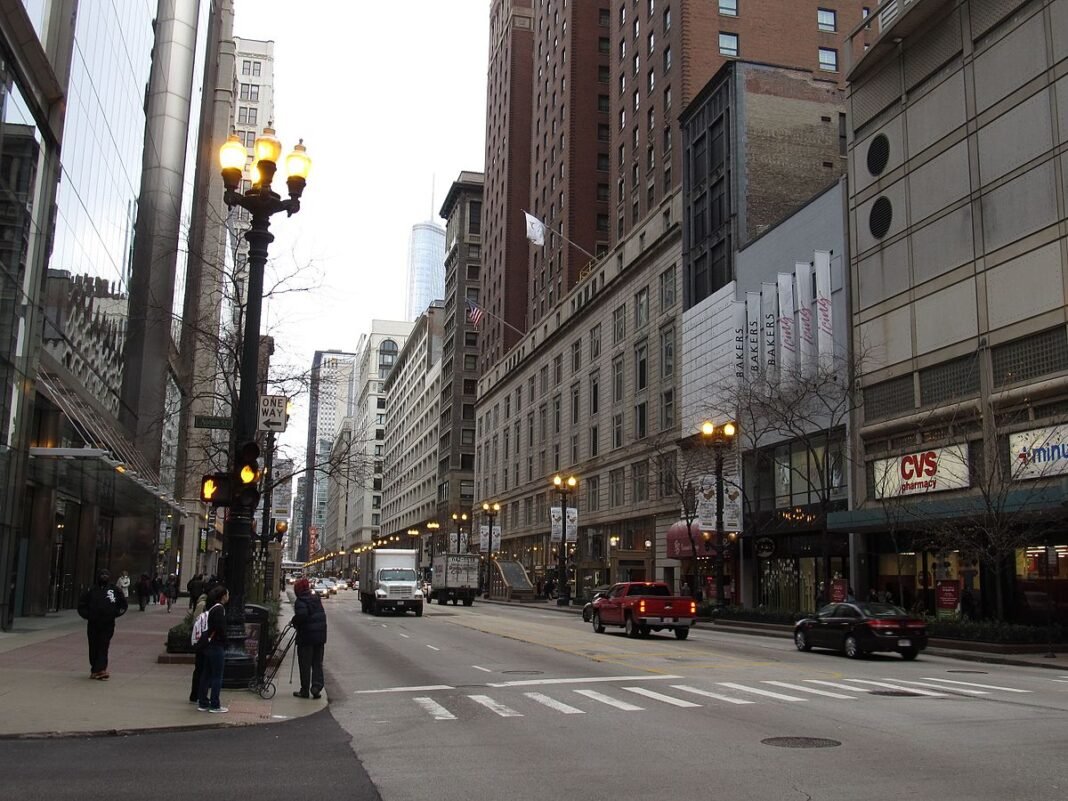
Moving to Illinois — to Chicago, its suburbs, or one of the state’s mid-sized cities — means getting ready in a few areas that work differently here: the tax structure, transit, and the reality of a Midwestern winter. Illinois is not a hard state to settle into, but a handful of specifics — especially property taxes, the gap between Chicago and downstate, and cold-weather preparation — tend to surprise newcomers who arrive without doing their homework. Here is what to sort out before you land.

Driver’s License and Vehicle Registration
Driver’s license: New Illinois residents have 90 days to get an Illinois license after establishing residency. The Secretary of State’s office handles licenses, and most facilities let you book an appointment online. Documentation follows the REAL ID standard: one proof of identity (passport or certified birth certificate), one proof of Social Security number, and two proofs of Illinois residency (utility bills, bank statements, or similar documents that show your address). Expect a written knowledge test and a vision screening; no road test is required if your out-of-state license is still valid.
Vehicle registration: Vehicles must be registered within 30 days of becoming a resident — a tighter window than the license deadline, which catches some people out. The Illinois Secretary of State processes registrations, and a VIN inspection is part of the process. Cook County (the Chicago metro) is an emissions-testing area: gas-powered vehicles more than four model years old need a test every two years, while newer cars, fully electric vehicles, and pre-1968 antiques are exempt. Registration fees are moderate, and the annual sticker is renewed through the Secretary of State.
Chicago-Specific Considerations
Parking is one of the bigger line items new Chicago residents underestimate. A Chicago city sticker — the annual permit for any vehicle garaged in the city — is due within 30 days of establishing a Chicago address, priced by vehicle weight and engine size. Many neighborhoods also layer on residential permit zones for street parking. Storing a car in the city, whether on the street, in a garage, or in a lot, runs roughly $150 to $400 a month. That math pushes plenty of residents in transit-rich areas toward going car-free, which works well given how far the CTA reaches. For anyone arriving from a place built around driving, that shift is often the largest adjustment of the move.

Chicago’s CTA (Chicago Transit Authority) runs the L — the elevated and subway network — plus a wide bus system. The Ventra card covers it all, with single-ride, 1-day, 3-day, and unlimited monthly passes. Metra commuter rail links the suburbs to downtown. For most residents, the transit map is not a nice-to-have; it is the framework daily life is built around, to a degree few other American cities can match.

Illinois State Tax Filing
Illinois withholds its 4.95% flat income tax from your first paycheck, so salaried new arrivals have nothing to set up. Self-employed and freelance workers should register for quarterly estimated payments with the Illinois Department of Revenue. The general merchandise sales tax is 6.25% at the state level, with local add-ons on top: Chicago’s combined rate sits at 10.25% on general merchandise, among the highest of any major US city. Food, drugs, and medical items are taxed at a lower rate.
Property tax kicks in at purchase. The seller’s prior bill is prorated at closing, and the first bill for your own ownership period lands roughly 12 to 18 months later, because the Illinois property tax cycle runs about a year behind. That delay trips up buyers who haven’t planned for it — build the full annual property tax figure into your budget from day one of ownership rather than waiting for the bill to arrive.
Winter Preparation
Chicago winters are a genuine planning item, not a footnote. January highs and lows run between roughly 18 and 32°F, with stretches of subzero cold most years. The “Hawk,” the wind that comes off Lake Michigan, can drive wind chills 20 to 30 degrees below the air temperature — cold that turns hazardous fast without the right gear. The short list for the season: a properly insulated parka rather than a light fleece, insulated waterproof boots, wool or synthetic base layers, and the daily accessories (hat, scarf, gloves) you will reach for from November through March.

Prepping a car for the season matters too. Winter tires — not all-seasons — are a strong idea in the city and close to essential in the collar counties and downstate. Keep an ice scraper, a snow brush, and a bag of sand or a set of traction mats in the trunk. The city’s snow operation is one of the largest anywhere and clears major streets reliably, but residential side streets can stay unplowed for 24 to 48 hours after a big storm. Learning how the local weather alerts work — winter storm warnings, wind chill advisories — and how school closings are announced is worth the effort for families with kids.
Neighborhood Research: Chicago’s Critical Variable
Few large American cities vary as sharply block to block as Chicago does — in safety, transit access, school quality, and character — and those differences rarely show up in online listings or a single visit. Before committing to a neighborhood, walk it at different hours, talk to people who actually live there rather than only agents, and pull block-level data (the Chicago Police Department’s CLEAR portal publishes incident-level crime records). The city’s neighborhood diversity is one of its best features, but it rewards specific research over general impressions.
Illinois’s Economy and Job Market
Chicago anchors one of the five largest metropolitan economies in the United States. Major employers headquartered here include United Airlines, Kraft Heinz, Morningstar, and Hyatt, and the Chicago Mercantile Exchange and Chicago Board of Trade make the city a global hub for derivatives trading. Healthcare, logistics, and professional services round out a deep and varied job base — O’Hare ranks as the busiest airport in the country, which keeps the region’s freight and travel networks humming. Beyond Chicago, the suburbs and downstate offer their own economies, from corporate corridors in DuPage County to the state capital in Springfield, so it is worth matching your job search to the part of Illinois you are actually targeting.
Frequently Asked Questions
What are the driver’s license and vehicle registration requirements when moving to Illinois?
Driver’s license: obtain it within 90 days of establishing Illinois residency; bring proof of identity, your Social Security number, and two proofs of Illinois address; a vision screening and written knowledge test are required. Vehicle registration: within 30 days — a shorter window than the license deadline; a VIN inspection is required at an Illinois Secretary of State facility or authorized inspection station. If you move to Chicago specifically, you also need a Chicago City Vehicle Sticker within 30 days of establishing a Chicago address — a separate municipal requirement on top of state registration. Cook County is an emissions-testing area, so gas-powered vehicles more than four model years old need a test every two years; rural Illinois counties generally do not require one.
What financial surprises should new Illinois residents anticipate?
Three items tend to catch newcomers out: (1) Property tax timing — Illinois property taxes run about a year behind, so your first bill arrives 12 to 18 months after purchase and is not part of your initial mortgage escrow estimate. Budget for that lump sum. (2) Chicago combined sales tax — the city’s combined rate reaches 10.25%, among the highest of any major US city, which adds up across everyday purchases. (3) The 4.95% flat income tax applies at every income level. And for Chicago residents, garage parking downtown runs $150 to $400 a month — an ongoing cost transplants from cheaper cities often underestimate.
How does Chicago’s transit system work and how does it affect neighborhood selection?
Chicago runs one of the most extensive public transit systems in the US. The CTA L has eight color-coded lines serving the city and close suburbs, with the bus network filling the gaps. Metra commuter rail reaches the wider metro (DuPage, Lake, Will, and Kane counties), making car-free or car-light suburban living realistic. In the city, L access shapes housing demand — places within walking distance of a stop command higher prices and faster commutes. The Loop is the hub, and measuring commutes in L stops rather than miles is a useful way to compare neighborhoods.
How should new Chicago residents approach neighborhood research?
Chicago neighborhoods shift in character, safety, and amenities over short distances, so block-level research matters more here than in most US cities. The Chicago Police Department’s CLEAR portal (gis.chicagopolice.org) publishes block-level crime incident data, letting you study specific streets instead of relying on broad reputations. Round it out with Chicago Magazine’s neighborhood guides and local community organization sites for social and commercial context. Visiting on a weekday morning, a weekday evening, and a weekend gives the fullest picture of daily life.
What does Illinois’s job market look like for new residents?
Chicago anchors one of the five largest US metropolitan economies. Major employers headquartered in the area include United Airlines, Kraft Heinz, Morningstar, and Hyatt, while the Chicago Mercantile Exchange and Chicago Board of Trade make the city a center of US derivatives trading. Healthcare, logistics, and professional services are large employment bases, and O’Hare — the busiest airport in the country — keeps the region’s freight and travel networks active. Outside Chicago, suburban corporate corridors and downstate cities offer their own opportunities, so align your search with the specific part of Illinois you plan to call home.