Idaho’s population centers vary dramatically — from the emerging metropolitan feel of Boise to the resort-town affluence of Ketchum to the farm-country identity of Twin Falls and the northern lake-country draw of Coeur d’Alene and Sandpoint. Where you settle in Idaho depends heavily on income source, lifestyle priorities, and tolerance for rural versus urban tradeoffs. This guide covers the most realistic options for people weighing Idaho as a long-term home.
1. Boise — The Complete Package
Boise is Idaho’s only city that offers the full range of urban amenities — a downtown with genuine dining and cultural depth, a job market spanning technology, healthcare, government, finance, and agriculture, multiple hospital systems, a state university (Boise State, with 28,519 students and nationally competitive programs in business, engineering, and social work), and the Boise River Greenbelt and Boise Foothills trail system reaching right into the city limits. Pair all that with housing costs still well below Seattle or Portland, and you have one of the fastest-growing metros in the country over the past decade.

The neighborhoods of Boise vary considerably. The North End — the city’s most walkable and architecturally distinguished neighborhood, with tree-lined streets, Craftsman bungalows, Hyde Park’s independent restaurants and shops, and Foothills trailheads a short walk away — is consistently the most coveted address and commands a corresponding premium. The East End, near Warm Springs Avenue and the geothermally heated hot-springs district, delivers a similar feel at slightly lower prices. The bench neighborhoods (areas on the flat mesa above the Boise River valley) are more affordable and more car-dependent.

Meridian, Boise’s largest suburb and one of the fastest-growing cities in the United States, provides newer construction, more affordable single-family housing, and a suburban character that differs substantially from Boise’s intown neighborhoods. Eagle, to the northwest, combines suburban family-oriented development with higher-income demographics and excellent schools. Nampa and Caldwell, the western anchors of the Treasure Valley, offer the most affordable housing in the metro but trade urban amenity access for driving distance.
2. Coeur d’Alene — Lakefront Living in the North
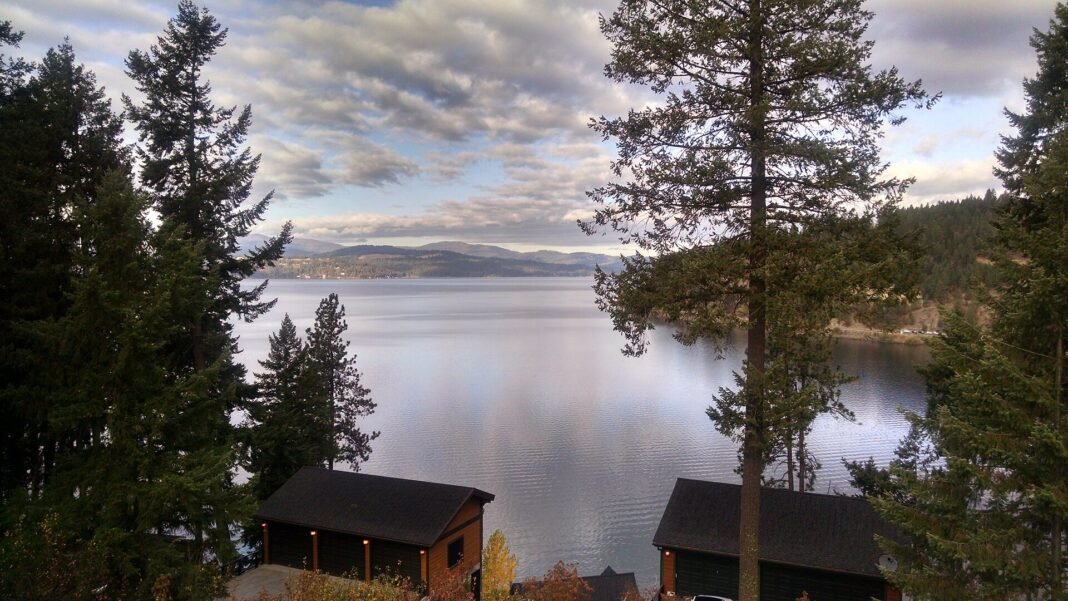
Coeur d’Alene proposes a fundamentally different bargain from Boise: a town of about 58,000 built around Lake Coeur d’Alene, with a walkable lakefront downtown, exceptional outdoor recreation (boating, nearby ski hills, the Trail of the Coeur d’Alenes), and a regional economy centered on healthcare, retail, real estate, and resort hospitality. It has pulled in heavy migration from the Pacific Northwest — Seattle and Portland especially — drawn by prices still below those markets, the natural setting, and what many describe as a more traditional, slower-paced local culture.
Coeur d’Alene’s lakefront blocks, particularly those north of Sherman Avenue with water frontage, command the region’s highest prices — $500,000–$800,000 for homes near the water. The Post Falls area to the west runs cheaper, with family housing at $280,000–$380,000. Hayden and Hayden Lake to the north mix suburban subdivisions with lake-frontage properties. The Rathdrum Prairie, stretching north from Post Falls, has seen significant new construction that provides the most affordable entry to the region’s housing market.
3. Twin Falls — Agricultural Hub With Outdoor Proximity
Home to roughly 56,000 people, Twin Falls is the commercial and cultural anchor of the Magic Valley — south-central Idaho’s farm heartland, where the Snake River Plain’s volcanic soil and the river’s water turn out world-class yields of potatoes, dairy, trout, and sugar beets. (The valley around Twin Falls alone accounts for a sizable share of US farmed trout.) Its economy runs deeper than the agricultural base suggests: the Chobani plant here, the world’s largest yogurt factory, has poured manufacturing investment and professional jobs into the region.
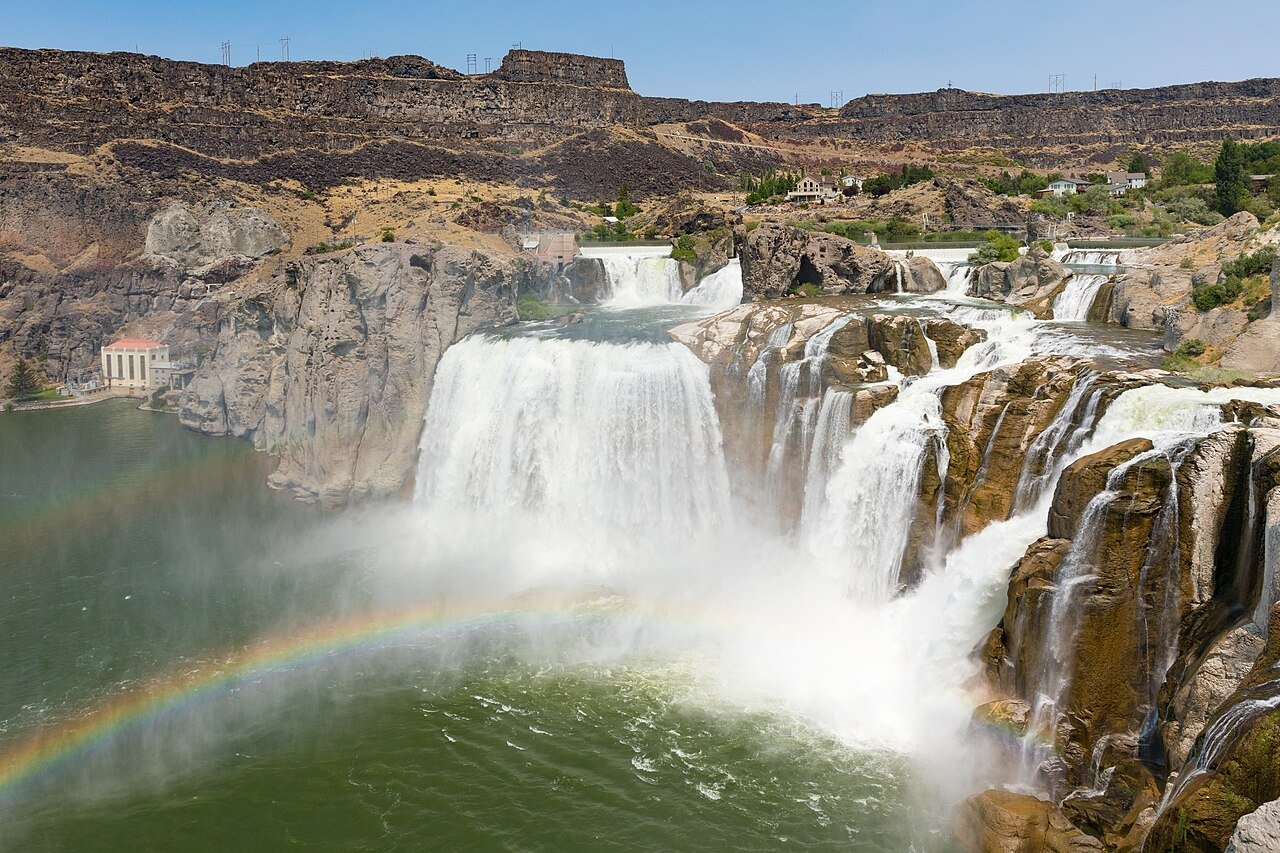
The value holds up by any Idaho metric: median home prices of $280,000–$340,000, lower than Boise or Coeur d’Alene, set against Shoshone Falls, the Snake River Canyon rim (a paved north-rim path opens up the canyon views and reaches the bridge where BASE jumpers leap legally into the gorge), and the Sawtooth Mountains and Sun Valley within a two-hour drive. The College of Southern Idaho, a well-regarded community college, adds local education options and cultural programming. For residents who want affordability, the outdoors at the doorstep, and a real sense of place, Twin Falls is Idaho’s most underrated mid-sized city.
4. Idaho Falls — Eastern Idaho’s Center
About 69,000 people live in Idaho Falls (the metro runs to roughly 172,000), making it the biggest city in eastern Idaho and the commercial hub for a region built on heavy agricultural output, the Idaho National Laboratory (one of the country’s largest federal research facilities, specializing in nuclear energy and employing thousands of engineers and scientists), and a roughly two-hour drive to Grand Teton and Yellowstone National Park. The Snake River runs through the heart of town over a series of falls, with a riverside greenbelt for walking and cycling — a setting prettier than the city’s modest size would suggest.
That federal-lab payroll gives Idaho Falls an unusually high concentration of technical professionals and above-average median income for its size. Home prices average $250,000–$320,000 — well under Boise — and with little California-origin migration pressure, increases have stayed milder than across the Treasure Valley. Eastern Idaho’s Mormon influence runs strong here, shaping the local culture, retail environment, and social fabric far more visibly than in Boise or Coeur d’Alene.
5. Ketchum/Sun Valley — The Mountain Town Option
Ketchum, the town next to the Sun Valley ski resort in the Wood River Valley, delivers the most complete mountain-town life in Idaho — with all the costs that implies. Median home prices here now top $1 million; the valley’s pull has drawn wealthy second-home buyers who have squeezed the available housing stock and pushed prices to levels that make full-time residency tough for anyone without substantial means or a remote income tied to bigger markets. Service industry workers and resort employees typically commute from Hailey (15 minutes south) or Bellevue (25 minutes south) where housing is more accessible in the $350,000–$500,000 range.
For households that can afford it, the payoff is exceptional: world-class skiing, outstanding fly fishing, a summer arts calendar that rivals far larger cities, and the daily reward of living among the highest peaks in southern Idaho. The Hemingway literary legacy, the Sun Valley Music Festival, the outdoor-recreation economy, and a genuine cosmopolitanism (the Sun Valley resort has drawn international visitors since the 1930s, making the place more globally aware than most small Idaho towns) set Ketchum apart in a way no other town in the state replicates.
6. Sandpoint — Lake-and-Mountain Living in the Far North
Sandpoint sits at the northern tip of Lake Pend Oreille — Idaho’s largest and deepest lake, 43 miles long and 1,150 feet deep — pairing a population of about 11,000 with remarkable surroundings. Schweitzer Mountain Resort rises 11 miles above town across 2,900 acres of ski terrain. The lake, in view from most of town, opens up swimming, sailing, paddling, and fishing. Downtown packs in independent restaurants, galleries, bookstores, and music venues at a level disproportionately worldly for its size, a reflection of the artists, writers, and outdoor-minded professionals who have chosen Sandpoint for its mix of scenery and relative affordability.
Idaho’s best cities share a trait that distinguishes them from comparable communities in more famous western states: they are not performing for visitors. Boise is not curating a tourism image. Twin Falls is not competing for weekend getaway traffic. Even Sun Valley, which is explicitly a resort, maintains a year-round character that keeps it from feeling purely transactional. That authenticity — the sense that a place exists for its residents rather than for its marketing — is what the best Idaho communities offer, and it is a quality that is genuinely scarce in the contemporary American West.
Frequently Asked Questions
What makes Boise one of the fastest-growing cities in the western United States?
Boise is Idaho’s only city that offers the full range of urban amenities alongside housing costs still significantly below Seattle or Portland — a combination that has made it one of the fastest-growing metros in the country for the past decade. The job market spans technology, healthcare, government, finance, and agriculture. Boise State University (28,519 students) anchors a nationally competitive business and engineering academic community. The Boise River Greenbelt — a roughly 25-mile paved pathway along the river — and the Boise Foothills trail system (190 miles of hiking and mountain biking within the city limits) provide urban outdoor access comparable to the finest in the American West. The North End neighborhood (tree-lined Craftsman bungalows, Hyde Park commercial street) and the Basque Block (downtown hub of the largest Basque diaspora community in North America, with authentic restaurants, a cultural center, and a frontón handball court) give Boise genuine cultural distinctiveness.
What does Coeur d’Alene offer as a place to live in northern Idaho?
Coeur d’Alene offers a quality of life built around Lake Coeur d’Alene — a glacially carved lake 25 miles long with 109 miles of shoreline — combined with a walkable lakefront downtown, excellent outdoor recreation (lake activities, nearby ski areas, the 73-mile Trail of the Coeur d’Alenes paved cycling rail-trail), and a regional economy in healthcare, retail, real estate, and resort hospitality. The city of about 58,000 has attracted significant migration from the Seattle and Portland areas, drawn by housing costs still below Pacific Northwest markets and by what many describe as a more traditional community culture. Lakefront neighborhoods command $500,000–$800,000; the Post Falls area west of the city provides more affordable family housing at $280,000–$380,000. The nearby town of Wallace — entirely listed on the National Register of Historic Places — preserves intact Victorian silver-boom architecture from the 1880s–1910s.
What does Twin Falls offer and why is it Idaho’s most underrated city?
Twin Falls is the commercial and cultural center of south-central Idaho’s Magic Valley — an agricultural heartland producing significant US yields of potatoes, dairy, and farmed trout. The Chobani yogurt plant in Twin Falls is the world’s largest yogurt factory, bringing manufacturing investment and professional employment. Shoshone Falls (212 feet, 45 feet taller than Niagara Falls) is on the city’s doorstep; the Snake River Canyon rim provides a paved pathway with dramatic canyon views and legal BASE jumping from the bridge. Median home prices of $280,000–$340,000 — lower than Boise or Coeur d’Alene — combined with proximity to Sun Valley and the Sawtooth Mountains (within a two-hour drive) make Twin Falls Idaho’s most underrated mid-sized city for residents who value affordability and outdoor access. The College of Southern Idaho provides local education and cultural programming.
What makes Idaho Falls significant and what is the Idaho National Laboratory?
Idaho Falls, with a population of about 69,000 (metro roughly 172,000), is the largest city in eastern Idaho and the commercial center for a region shaped by agriculture and by the Idaho National Laboratory (INL) — one of the largest federal research facilities in the country, specializing in nuclear energy research and development and employing thousands of engineers and scientists. INL employment has given Idaho Falls an atypically high concentration of technical professionals and above-average median household income for its size. The city sits about 2 hours from Grand Teton National Park and roughly 2 hours from Yellowstone’s West entrance — proximity that makes it a practical base for visiting the greater Yellowstone ecosystem. Housing averages $250,000–$320,000. The Snake River flows through the city center over a scenic series of falls, with a riverside greenbelt providing cycling and walking access.
What does Sandpoint offer as one of Idaho’s most distinctive small towns?
Sandpoint sits at the northern end of Lake Pend Oreille — Idaho’s largest and deepest lake at 43 miles long and 1,150 feet deep, deep enough that the US Navy has used the lake for submarine acoustic testing for decades through the Acoustic Research Detachment at Bayview. The town of about 11,000 has Schweitzer Mountain Resort 11 miles above it (2,900 acres of ski terrain, 300 inches annual snowfall), a lake providing year-round sailing, paddling, and fishing, and a downtown concentration of independent restaurants, galleries, bookstores, and music venues that is disproportionately sophisticated for the population size. Artists, writers, and outdoor-oriented professionals have chosen Sandpoint for its combination of natural beauty and relative affordability compared to comparable mountain towns. The annual Festival at Sandpoint and Schweitzer Mountain’s summer mountain biking season extend the community’s cultural and outdoor calendars year-round.