The Great Ocean Road is one of the world’s great coastal drives — 243 kilometres of winding bitumen carved into the sea cliffs of Victoria’s southwestern coast, with the Twelve Apostles limestone stacks as its famous centrepiece. Built by returning World War I soldiers between 1919 and 1932 as a memorial to those who had served — the world’s largest war memorial, dedicated to the men who built it — the road today passes through surf towns, ancient rainforests, clifftop lookouts above the Southern Ocean, and national park wilderness. Unlike many “scenic drives” that dazzle for 20 minutes and turn monotonous for the rest, the Great Ocean Road stays spectacular for virtually its entire length. Here’s how to give it the time it deserves.
How to Drive It: Direction, Timing, and Duration
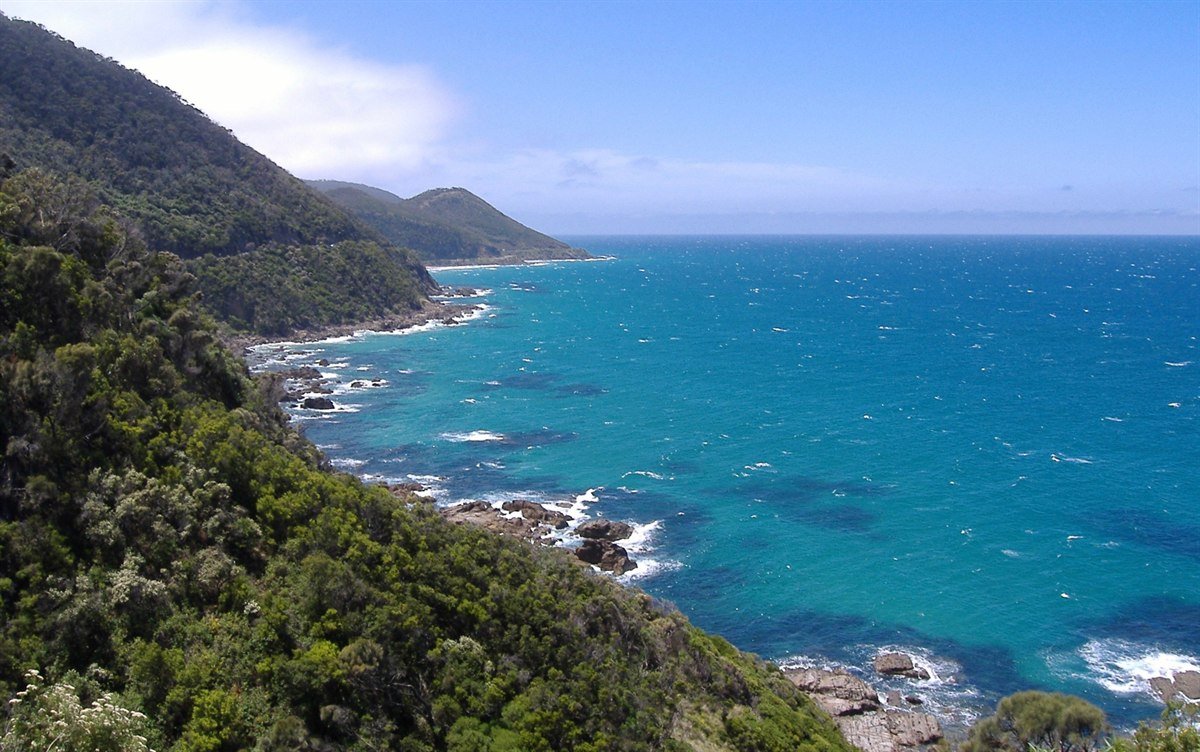
The road runs from Torquay (90 minutes southwest of Melbourne) to Allansford, near Warrnambool. Most visitors drive it west from Torquay — this keeps the ocean on the passenger side for the most scenic sections, and the Twelve Apostles catch the best light in the afternoon, when you reach them from the east. Allow a minimum of two days (three is better) to stop at the main attractions; a single-day dash from Melbourne misses most of what makes the road special. The driving itself is slow — the route is winding, narrow in places, and you’ll want to pull over constantly. Book accommodation in Lorne, Apollo Bay, or Port Campbell in advance; summer weekends fill up months ahead.
Torquay to Lorne: Surf Country
Torquay is the surfing capital of Australia — home to the Australian National Surfing Museum (formerly Surfworld, billed as the world’s largest surfing and beach-culture museum, tracing the sport from Hawaiian royalty to Rip Curl’s global empire) and the flagship stores of Quiksilver and Rip Curl, both founded here in the 1960s on the profits of a surf culture the town created. Bells Beach (5km south, a short detour off the main road) is one of the most famous surf breaks in the world — the big right-hand point break hosts the Rip Curl Pro, the world’s longest-running professional surfing contest, held annually over the Easter long weekend. Point Addis Marine National Park (between Torquay and Anglesea) has one of Victoria’s best beach walks with excellent surf views. Anglesea is worth a stop for its extraordinary golf course, where kangaroos graze on the fairways year-round, entirely unconcerned by golfers.
Lorne is the first substantial town on the road — a long-established holiday destination with a beautiful beach, a thriving independent arts scene, good restaurants, and access to the Erskine River walk (ending at the 30-metre Erskine Falls, a 45-minute stroll). The Lorne Pier to Pub swim (January) is the largest ocean swim in the world — roughly 4,000 swimmers cross the bay from the pier to the surf club beside the pub.
Apollo Bay and the Great Otway National Park
Apollo Bay is a working fishing town with excellent fresh seafood, a Saturday morning market, and access to the hinterland forests of the Great Otway National Park. The Cape Otway Lightstation (the oldest surviving lighthouse on mainland Australia, lit in 1848) is worth a detour — Lighthouse Road passes through prime koala habitat, and sightings are common year-round in the eucalypts that line the way between the main highway and the lighthouse. The Maits Rest Rainforest Walk (45 minutes, free) descends into a pocket of cool temperate rainforest — tall myrtle beech, tree ferns, and ancient blackwoods that make you forget the ocean is minutes away. Zip-line tours through the forest canopy offer a different perspective again.
The Twelve Apostles and Port Campbell
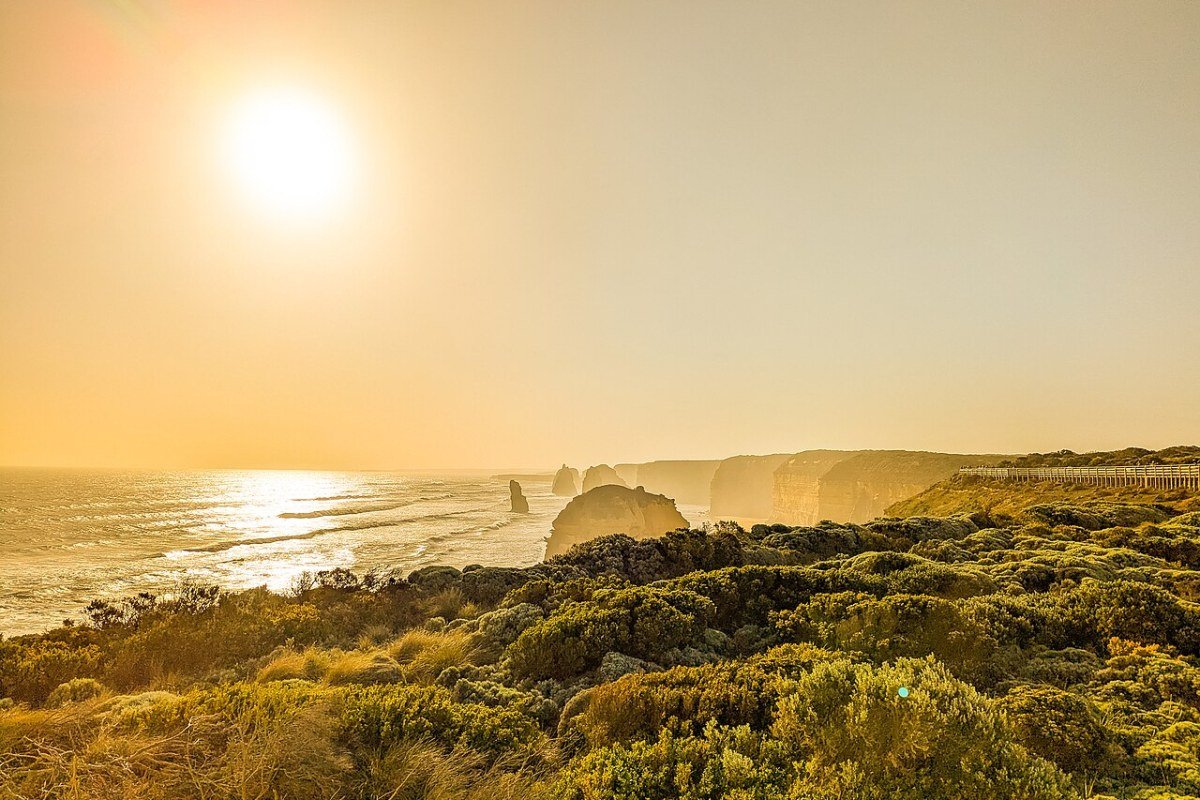
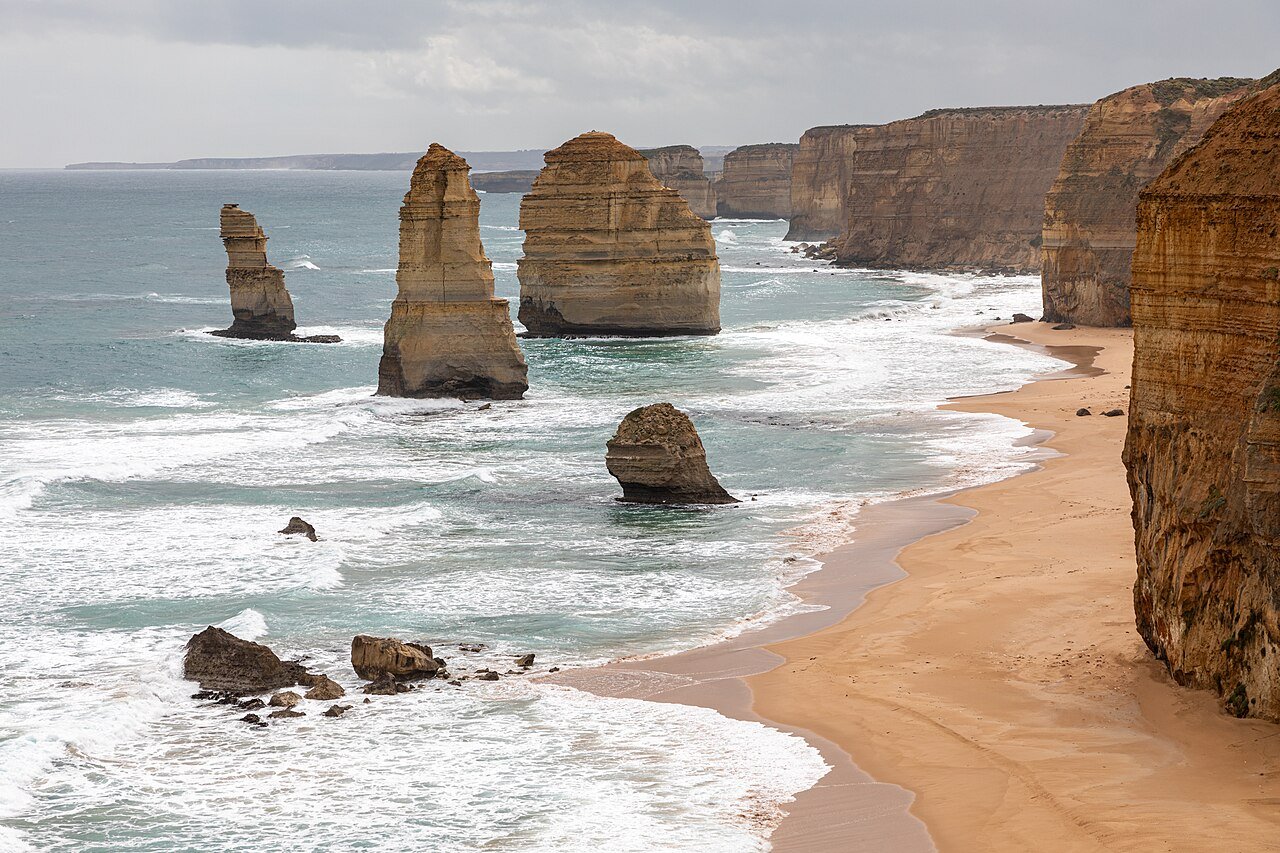
The Twelve Apostles — actually seven (one collapsed in 2005 and another in 2009, and there were only ever nine to begin with) — are limestone stacks rising up to 45 metres above the Southern Ocean, separated from the mainland by the relentless erosion of the waves. The visitor centre and viewing platforms are excellent. Helicopter operators work from a pad beside the site, and the flights are genuinely spectacular (from about AUD $165 for 10 minutes above the coastline), with seats often available on the day. Go at sunrise — the car park stays open even when the visitor centre is closed — for the finest light and smallest crowds; sunset is equally beautiful but busier.
Loch Ard Gorge (about 3km west of the Twelve Apostles, free) is arguably more dramatic — sheer limestone cliffs enclosing a sheltered beach with brilliant turquoise water, reached via a short, steep path. It is named for the iron clipper that wrecked here on 1 June 1878 with the loss of 52 lives; only two people survived, both 19 years old — Eva Carmichael, an Irish emigrant, and Tom Pearce, a ship’s apprentice who hauled her ashore and then climbed the gorge to raise the alarm. The wreck story and the grave of four victims are recounted at the site. The Grotto and London Arch (formerly London Bridge — the connecting span collapsed in 1990, stranding two tourists on the isolated arch) are other excellent nearby stops.
Wildlife Along the Road
The Great Ocean Road region has superb wildlife that many visitors miss by staying in their cars. Koalas are regularly seen in the Cape Otway area — look up into the forks of the manna gums (grey eucalypts) along Lighthouse Road and around Bimbi Park. Kangaroos and wallabies graze in the national park clearings at dawn and dusk — the camping areas at Cape Otway and Johanna Beach are particularly good. Southern right whales and humpbacks (June–October, peak July–September) can be seen from clifftop lookouts near Warrnambool — the town is considered one of the best places in the world for land-based whale watching, with dedicated viewing platforms at Logans Beach. Little penguins come ashore after dark at several points along the coast — the London Bridge viewing platform near Port Campbell overlooks a small colony that returns at dusk.
Getting There and Practical Tips
The Great Ocean Road is best driven with a rental car from Melbourne — V/Line runs a train to Geelong and a connecting coach on to Apollo Bay and Warrnambool, but the service is slow and infrequent. The full drive from Torquay to Warrnambool takes about three hours non-stop, or two to three days with all the stops. You can also pick up a car in Melbourne and drop it in Adelaide: from Warrnambool the Princes Highway carries on west through Portland and Mount Gambier to South Australia, with the Grampians National Park an excellent inland detour along the way. Accommodation: Lorne and Apollo Bay have the best range of options at all price points; Port Campbell has limited but adequate choices near the Twelve Apostles. Book December–January accommodation three to six months ahead. Fuel up at Lorne or Apollo Bay — prices climb sharply further along the road.
Frequently Asked Questions
How should you plan and time the Great Ocean Road drive?
Drive the Great Ocean Road from east to west — starting at Torquay (90 minutes west of Melbourne) and ending near Warrnambool. This direction keeps the ocean on the passenger side of the car for the most dramatic coastal views and means the afternoon light falls on the Twelve Apostles from the most photogenic angle. The full drive from Torquay to Allansford is 243km; a non-stop run takes about 3.5 hours, but allowing two to three days lets you properly explore the beaches, national parks, and towns. Leave Melbourne early — before 8am on weekends — to avoid heavy traffic as far as Geelong. The road is narrow and winding in sections, overtaking opportunities are limited, and following a slow vehicle can be frustrating, so use the designated overtaking lanes. Lorne and Apollo Bay are the best overnight stops: Lorne has better restaurants and nightlife, while Apollo Bay is quieter and closer to Cape Otway. Beyond Apollo Bay the road heads inland through the Otway Ranges before reaching the Port Campbell National Park section with the Apostles.
What are the highlights between Torquay and Apollo Bay?
Torquay is the surf capital of Australia — home to Rip Curl and Quiksilver, the Australian National Surfing Museum, and access to Bells Beach, which hosts the Rip Curl Pro, the world’s longest-running professional surfing competition, held annually over Easter. The section between Torquay and Lorne (40km) has numerous small surf beaches — Jan Juc, Anglesea, and Aireys Inlet with its lighthouse — framed by the first stretch of coastal cliff scenery. Lorne (68km from Geelong) is the most attractive town on the Great Ocean Road, with good restaurants, boutique accommodation, and the excellent Erskine Falls (a 30-metre waterfall, 1.5km walk from the car park). Between Lorne and Apollo Bay (44km), the road narrows to a single lane in each direction with cliff walls rising immediately on one side and the ocean below on the other — the most dramatic section of coastal driving. Apollo Bay (185km from Melbourne) is a working fishing village with excellent fresh seafood — oysters, scallops, and crayfish at the harbour.
What is Cape Otway and the Otway Ranges section?
From Apollo Bay, the road turns inland through the Great Otway National Park — ancient rainforest of mountain ash, myrtle beech, and tree ferns in dramatic contrast to the coastal scenery just left behind. The Cape Otway Lightstation (13km south of the main road) is worth the detour: it is the oldest surviving lighthouse on mainland Australia, lit in 1848, and stands on a headland above Bass Strait where scores of ships were wrecked before the light was established. The Otway Ranges hold significant populations of wild koalas in the roadside manna gums — scan the upper branches carefully and you will almost certainly spot several. The Maits Rest rainforest boardwalk (45 minutes return) is the best introduction to the ancient forest on a short time budget. The inland section from Apollo Bay to the Twelve Apostles takes about 90 minutes and represents the most dramatic change of scenery on the entire drive — from ocean, to rainforest, to the limestone cliffs and stacks of Port Campbell.
What are the Twelve Apostles and other geological highlights?
The Twelve Apostles are limestone stacks rising from the Southern Ocean off the Port Campbell National Park coast — the result of millions of years of erosion as waves carved sea caves into the soft limestone cliffs, which then collapsed to leave isolated pillars. There are seven stacks standing today (the name “Twelve Apostles” was adopted for tourism marketing; the formation was originally known as “The Sow and Piglets”). The stacks are best seen at sunrise (arriving by 6am, ahead of the tour buses) or at sunset; helicopter flights (from about AUD $165 for 10 minutes) provide an extraordinary perspective, taking in all seven stacks at once. Loch Ard Gorge (about 3km west of the Apostles) is named for the clipper Loch Ard, wrecked in 1878 with the loss of 52 lives; only two people survived — Tom Pearce and Eva Carmichael — in a story of extraordinary drama, and the gorge itself is one of the most beautiful on the coast. London Arch (formerly London Bridge) was a two-span arch until January 1990, when the connecting span collapsed, stranding two tourists on the outer section who had to be rescued by helicopter. The Bay of Islands, further west toward Warrnambool, has equally dramatic coastal scenery with far fewer visitors.
What wildlife can you see along the Great Ocean Road?
Koalas are the signature animal of the Great Ocean Road drive — the manna gums along the road through the Otway Ranges shelter wild populations, and patient scanning almost always reveals several. Kennet River (between Lorne and Apollo Bay) and the Cape Otway road are the most reliable spots. Echidnas — short-beaked, and the most widespread native mammal in Australia — are often seen foraging in the undergrowth. Eastern grey kangaroos and wallabies graze at dusk in cleared areas along the route. Southern right whales, which can reach 15 metres and 80 tonnes, migrate along this coast from June to October, with Warrnambool’s Logans Beach whale nursery the most reliable place in southern Australia to watch them from land as cows and calves rest in the shallow bay. Little penguins, the smallest penguin species at about 33cm and 1kg, come ashore at the London Bridge viewing platform near Port Campbell and at Phillip Island, east of Melbourne, each evening at dusk. Birds along the way include sea eagles, gannets, cormorants, and the spectacular red-tailed black cockatoo in the Otway Ranges.