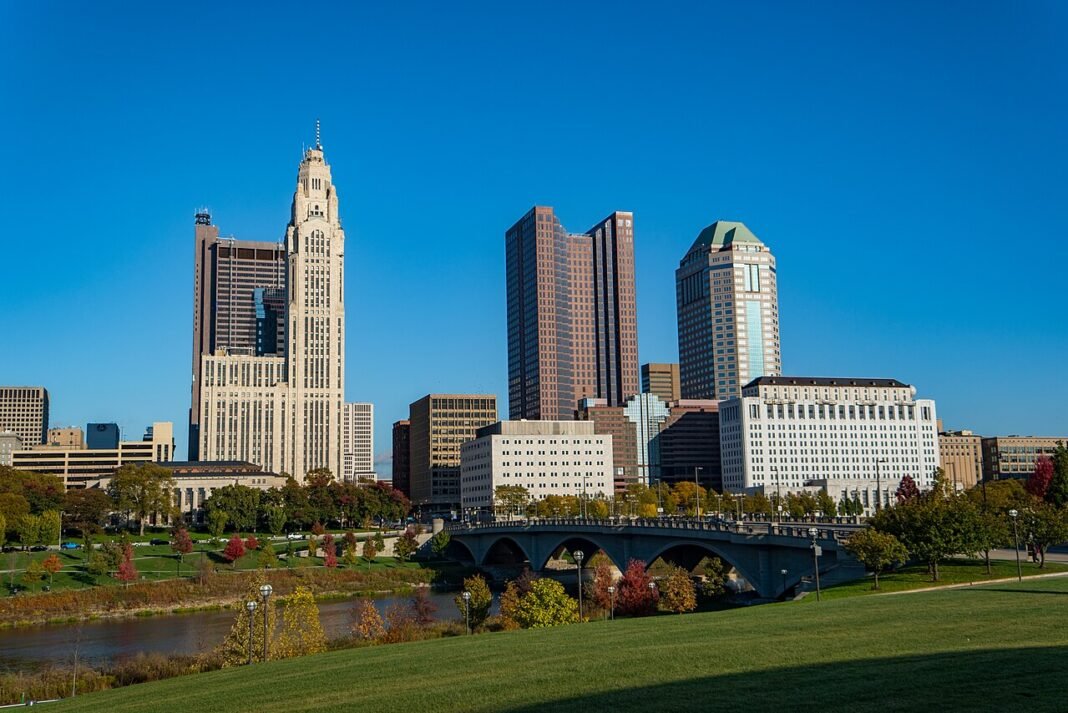
Moving to Ohio is administratively uncomplicated, financially attractive by most comparisons to northeastern or West Coast origin points, and increasingly appealing for households seeking the quality of urban life that Ohio’s three big cities now provide at prices well below comparable markets elsewhere. The practical preparation involves choosing which Ohio — the Columbus metro’s tech-driven growth economy, Cleveland’s post-industrial renaissance with extraordinary housing value, or Cincinnati‘s distinctive hill-city culture — best fits the specific household’s employment situation, lifestyle priorities, and community values. The administrative transition (driver’s license, vehicle registration, voter registration) is straightforward and follows standard Midwestern efficiency. The lifestyle adjustment for households from the coasts comes down mainly to reckoning with real Midwest winters and recalibrating expectations about density — Ohio’s cities have a true urban core, but at Midwest scale rather than coastal scale.

Driver’s License and Vehicle Registration
New Ohio residents must obtain a state driver’s license within 30 days of establishing residency — one of the shorter windows of any state. The Ohio Bureau of Motor Vehicles (BMV) administers licensing through Deputy Registrar agencies; bring your unexpired out-of-state license, proof of identity (passport or birth certificate), proof of Social Security number, and two documents from different sources establishing Ohio residency (utility bill, bank statement, or lease/mortgage statement). Most license transfers require only a vision screening and the knowledge test, with no road skills test for holders of a valid out-of-state license. Vehicle registration must be completed within 30 days of establishing residency — bring the title, proof of insurance, and payment for registration fees, which are based on vehicle weight and age. Ohio requires an emissions inspection (E-Check) for vehicles registered in seven northeast Ohio counties anchored by Cuyahoga; Franklin (Columbus), Hamilton (Cincinnati), and most of the state are exempt.
Ohio’s Flat State Income Tax and Local Income Tax System
The state simplified its individual income tax dramatically for 2026: a flat 2.75% rate applies to taxable income above $26,050, with no tax owed on income below that threshold. That single rate replaces the previous multi-bracket system (2.5%–3.5% top rate) and makes Ohio one of the lower-tax flat-rate states in the country. Starting in 2026, individuals with taxable income above $500,000 also lose access to personal, spousal, and dependent exemptions and to the joint filing credit, slightly increasing the effective rate for high earners. For most relocating households, the flat state rate is the easy part of the calculation.
The more consequential — and most distinctive — financial consideration is the local income tax. Most Ohio municipalities levy 1.5–2.5% on top of the state rate, and that tax applies both to residents and to non-residents who work inside the municipality. Where it gets complicated is the credit for taxpayers who live in one municipality and work in another: some places grant a full credit for taxes paid elsewhere, others only a partial one. Before committing to a specific Ohio address, new residents should check both the local rate and the credit rules for their intended home and workplace municipalities through The Finder tool on tax.ohio.gov. The gap between a full-credit and a partial-credit situation can run $1,000–$2,000 a year for middle-income households. Ohio also offers a property tax homestead exemption — for 2026, eligible homeowners age 65+ or permanently disabled with household income under roughly $41,000 can shield the first $29,000 of home market value from property taxes.
Finding Employment
Several pillars anchor the state’s job market. Healthcare leads (the Cleveland Clinic, OhioHealth, Nationwide Children’s Hospital in Columbus, and UC Health in Cincinnati are all leading employers), followed by financial services (Columbus’s financial services sector, anchored by Nationwide Insurance headquartered downtown and JPMorgan Chase’s Columbus operations — at roughly 20,000 Ohio workers, JPMorgan Chase is the metro’s largest private employer — plus a growing fintech presence), consumer goods and retail headquartered in Cincinnati (Procter & Gamble, Kroger, Fifth Third Bank), logistics and manufacturing (central Ohio’s position in the national distribution network supports major Amazon and automotive supply chain operations), and technology. Intel’s Ohio One semiconductor campus in New Albany — in Licking County, immediately east of Columbus — represents one of the largest economic development projects in Ohio history; the first fabrication plant is now targeting completion around 2030 after timeline revisions, but the supply chain, construction, and engineering employment around the project is already reshaping the Columbus metro labor market. The state’s universities — Ohio State (a Big Ten flagship), Case Western Reserve, Cincinnati, Oberlin — generate research and startup activity that feeds the broader economy. Remote workers increasingly choose Ohio for its housing value while earning salaries calibrated to higher-cost markets.
Housing: Columbus, Cleveland, Cincinnati, and Toledo
Housing affordability is the headline reason most coastal transplants choose Ohio, but the three major metros differ sharply. Columbus is the state’s growth market — median home prices in early 2026 sat near $290,000 with year-over-year appreciation in the 6–7% range, reflecting steady demand driven by Intel hiring, Ohio State, and the tech and finance sectors. Cincinnati’s median is roughly $248,000 with similar momentum, supported by Procter & Gamble and the broader Fortune 500 base. Cleveland remains the affordability outlier of the three, with a median sale price around $125,000 in early 2026 — substantial historic homes in walkable neighborhoods like Ohio City, Tremont, and Lakewood routinely sell for less than the down payment in a coastal market. Toledo offers the lowest entry point of any major Ohio metro and a Lake Erie waterfront location, though employment options are thinner. Property taxes are levied at the county level and vary widely by school district — a critical variable in total housing cost.
Schools and Education
Public school quality varies sharply by community, a direct result of the state’s reliance on local property taxes for school funding — an arrangement that creates wide gaps between wealthy suburban districts and city or rural schools. The state’s highest-rated public school districts (Upper Arlington, Dublin, Solon, Wyoming in Cincinnati, Mariemont) consistently rank among the top performers in the Midwest and compete with comparable districts nationally. Parents relocating to Ohio with school-age children should prioritize school district research alongside housing research — the difference between Ohio’s best and average districts is substantial, and the community choice directly determines educational access. Private and parochial school options exist in all three metros for families who prefer to live in a more affordable community while accessing school choice.
Healthcare Access
By national standards, Ohio’s healthcare is exceptional. The Cleveland Clinic ranks year after year among the nation’s top hospitals and remains a leading destination for cardiac care, while the OhioHealth and Nationwide Children’s systems in Columbus and UC Health in Cincinnati deliver world-class medicine across the state’s largest population centers. For routine care, the big metros offer deep primary care and specialist networks. Health insurance costs through employer-sponsored plans are broadly consistent with national averages; the ACA marketplace provides coverage options for self-employed and small business households. Rural areas of Ohio face the same primary care access challenges as rural America broadly, but any household in a major metro or its suburbs has access to exceptional medical resources.
Climate: Lake Erie and the Four Seasons
The state sits firmly in the four-seasons humid continental climate zone, but the experience shifts meaningfully by latitude. Cleveland and the northern lakeshore counties catch lake-effect snow off Lake Erie that can dump heavy accumulations in narrow corridors east of the city — the Chardon/Snowbelt area routinely tops 100 inches a year while downtown Cleveland may see half that. Columbus and Cincinnati, farther south, get milder winters with less snow but still demand winter tires, a snow shovel, and patience for the occasional severe storm. Summers across the state are warm and humid, with frequent thunderstorms; July highs sit in the mid-80s in all three metros. Spring and fall are the standout seasons — long, colorful, and reliably pleasant. Coastal transplants should plan a winter coat upgrade and accept that January and February will test the patience of anyone arriving from a milder climate.
What to Expect: Cultural Adjustment
Households moving to Ohio from coastal cities commonly report a few consistent adjustments: the reduced cost of living is immediately apparent and deeply welcome; the weather requires acceptance (Cleveland’s lake-effect winters are genuinely significant, while Columbus and Cincinnati winters are milder but still require preparation); the absence of certain big-city amenities (fewer international direct flights, less dense public transit, smaller walkable districts) takes some getting used to; and the warmth and directness of Midwestern social culture is almost universally reported as a pleasant surprise. Ohio’s best restaurants, neighborhoods, and experiences are rarely the obvious ones, and newcomers who take the time to explore tend to find the state more rewarding than its reputation suggests.
Preparing for Your Move
The logistical side of relocating to Ohio follows a familiar sequence regardless of where you are coming from: secure housing before or immediately after arrival, transfer any professional licenses if your occupation requires it, register your vehicle and update your driver’s license within Ohio’s 30-day window for new residents, and register to vote at your new address. Connecting with community organizations, sports clubs, neighborhood associations, or professional networks early in the process can dramatically accelerate the sense of belonging. In many parts of Ohio that have grown rapidly over the past decade, a significant proportion of the population has relocated from elsewhere, which means that being new to the area is genuinely normal — and that the infrastructure for meeting people and building a life from scratch is well established.
Frequently Asked Questions
What are the driver’s license and vehicle registration requirements when moving to Ohio?
Driver’s license: must be obtained within 30 days of establishing Ohio residency — one of the shorter windows nationally. The Ohio Bureau of Motor Vehicles (BMV) handles licensing through Deputy Registrar agencies; requires proof of identity, Social Security number, and two documents from different sources establishing Ohio residency. Vision screening and knowledge test required; no road skills test for applicants with a valid unexpired out-of-state license. Vehicle registration: also within 30 days; registration fees are based on vehicle weight and age. Ohio’s E-Check emissions inspection is required only in seven northeast Ohio counties anchored by Cuyahoga — Franklin (Columbus), Hamilton (Cincinnati), and most of the state are exempt. Bring the title, proof of insurance, and payment when registering.
How does Ohio’s state and local income tax system work in 2026?
Ohio adopted a flat individual income tax for 2026: 2.75% on taxable income above $26,050, with no state tax on income below that threshold. The flat rate replaced the previous multi-bracket structure (2.5%–3.5% top rate) and makes Ohio one of the lower flat-rate states in the country. Taxpayers above $500,000 also lose access to personal exemptions and the joint filing credit. The more consequential financial consideration is local income tax: most Ohio municipalities levy 1.5–2.5% local income tax on top of the state rate, applying to both residents and non-residents earning income within the municipality. Credit rules between home and work municipalities vary — verify both rates and credit structure on The Finder at tax.ohio.gov before choosing an address. Difference between full-credit and partial-credit situations: $1,000–$2,000/year for middle-income households.
What is Ohio’s employment base and the Intel economic development story?
Ohio’s economy spans healthcare (Cleveland Clinic, OhioHealth, Nationwide Children’s in Columbus, UC Health in Cincinnati), financial services (Nationwide Insurance HQ in Columbus, JPMorgan Chase as the metro’s largest private employer with roughly 20,000 Ohio workers, plus a growing fintech ecosystem), Cincinnati-headquartered consumer brands (Procter & Gamble, Kroger, Fifth Third Bank), logistics and manufacturing (central Ohio distribution hub for Amazon + automotive supply chain), and technology. Intel’s Ohio One semiconductor campus in New Albany (Licking County, immediately east of Columbus) is one of the largest economic development projects in Ohio history — the first fab is now targeting completion around 2030 after timeline revisions, but the supply-chain, construction, and engineering employment around the project is already reshaping Columbus metro hiring. Big Ten flagship Ohio State, Case Western Reserve, Cincinnati, and Oberlin generate research and startup pipelines.
How affordable is housing in Columbus, Cleveland, Cincinnati, and Toledo?
Cleveland is the affordability outlier — a median sale price around $125,000 in early 2026, with substantial historic homes in walkable neighborhoods (Ohio City, Tremont, Lakewood) at prices that still startle arrivals from the coasts. Cincinnati’s median sits near $248,000, supported by the Procter & Gamble–anchored Fortune 500 employment base. Columbus is the state’s growth market with median home prices near $290,000 in early 2026 and year-over-year appreciation in the 6–7% range, driven by Intel, Ohio State, and the tech and finance sectors. Toledo offers the lowest entry point of any major Ohio metro plus Lake Erie waterfront, with thinner employment options. Property taxes are levied at the county level and vary widely by school district — a critical variable in total housing cost.
What is Ohio’s healthcare infrastructure like?
Ohio punches well above the national average on healthcare. The Cleveland Clinic ranks regularly among the top hospitals in the country and is a longtime leader in cardiac care, drawing patients nationally and internationally for complex heart procedures. OhioHealth and Nationwide Children’s anchor central Ohio care; UC Health anchors Cincinnati academic medicine. For routine needs, the big metros offer robust primary care and specialist networks that outperform national averages on access and quality. Any household in a major metro or suburb has access to medical resources that exceed most comparable US markets in quality, particularly for complex specialty care in Cleveland and Columbus.
How do Ohio’s three major cities differ as relocation destinations?
Columbus: the fastest-growing major Ohio city, driven by Ohio State University, Intel, and a growing tech ecosystem; the most cosmopolitan food and culture scene; the most straightforward employment landscape for new arrivals. Cleveland: post-industrial renaissance with extraordinary housing value — substantial homes in walkable historic neighborhoods for a fraction of coastal prices; lake-effect winters that are among Ohio’s most significant; the Cleveland Clinic as a nationally renowned healthcare anchor. Cincinnati: distinctive hill-city urban culture; the strongest urban neighborhood fabric in Ohio; a Procter & Gamble, Kroger, and Fifth Third Bank corporate presence that provides a mature financial-services and consumer-goods employment base; the most European urban character in the state. Choosing which Ohio is the most important relocation decision — they are genuinely different cities with different employment and community profiles.