
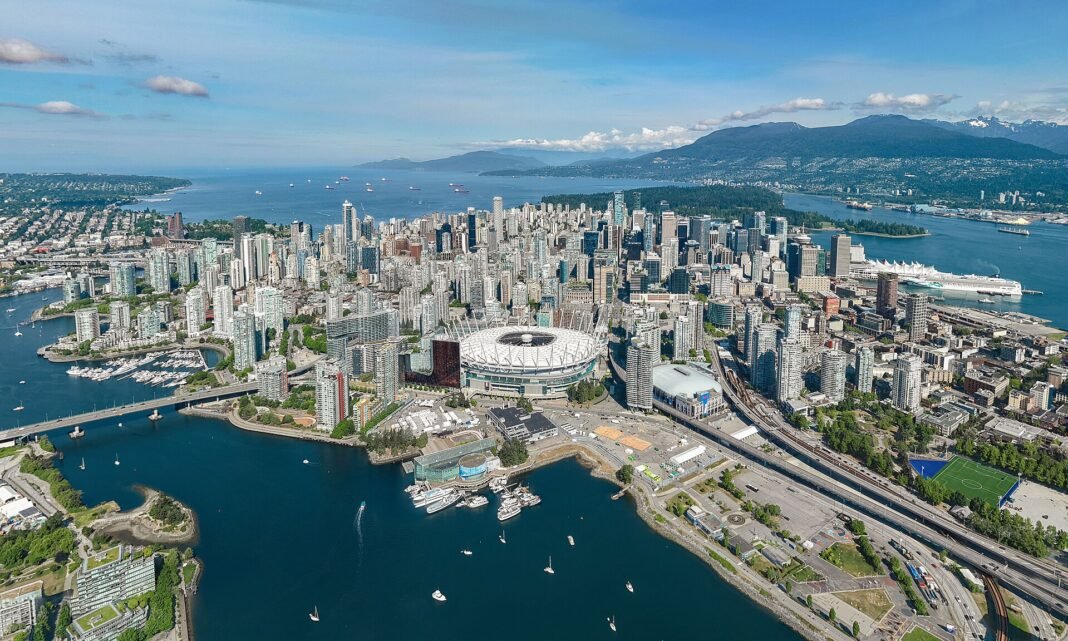
Vancouver’s setting is extraordinary — a city pressed between the Coast Mountains to the north, the Pacific Ocean to the west, and the agricultural flatlands of the Fraser Valley to the south. On a clear day (they happen far more often than the rainy reputation suggests, particularly from June to September), the view from English Bay of the glass-and-steel downtown skyline set against a backdrop of snow-capped peaks is among the most beautiful urban vistas on earth. But Vancouver is far more than a pretty backdrop. It’s cosmopolitan, outdoor-obsessed, deeply diverse (over 40% of residents were born outside Canada), and rich in accomplished food, creative energy, and genuine livability. Understanding the city means getting beyond the postcard view.
Stanley Park: 1,000 Acres of Old-Growth Forest in the City
Stanley Park ranks among the great urban parks of the world — 405 hectares of old-growth forest, gardens, beaches, and seawall on a forested peninsula in Burrard Inlet. The 8.8-kilometre Seawall (part of a continuous path that extends much further around the city) is perfect for cycling or running, with the snow-capped mountains of the North Shore visible across the inlet and freighters anchored in English Bay. Ancient western red cedars and Douglas firs tower above the forest trails; the park has abundant wildlife — raccoons, great blue herons, coyotes, bald eagles. Prospect Point at the peninsula’s northern tip offers the best views of the Lions Gate Bridge, an elegant suspension span opened in 1938. Rent a bike at the park entrance and spend at least half a day — the circumference Seawall loop takes 2–3 hours at a relaxed cycling pace.
Granville Island: The Best Market in Canada
Granville Island is a False Creek peninsula that traded its heavy industry for one of Canada’s great public markets. The Granville Island Public Market is the centrepiece — covered, open year-round, and almost overwhelming in its density of good food: local produce, artisan cheese from BC dairies, fresh bread from multiple bakeries, smoked Pacific salmon, handmade pasta, prepared foods from a dozen cuisines, and a cider bar and several microbreweries in the same complex. The surrounding island has artisan studios (potters, glassblowers, jewellers), independent theatres, well-regarded restaurants, and the Emily Carr University of Art and Design. Take the small Aquabus water ferry from Yaletown or the West End for the best approach. Arrive before 11am on weekends if you want any hope of a parking space; the ferry sidesteps the problem entirely.
Gastown, Chinatown, and the Downtown Core
Gastown is Vancouver’s original neighbourhood — Victorian brick buildings, cobblestone streets, and the famous Steam Clock (which toots on the quarter hour, powered by steam from an underground system). It’s been gentrified into a mixed district of acclaimed restaurants, craft breweries, independent galleries, and tech startup offices, but retains enough of its rough edges to feel authentic. The neighbourhood transitions directly into Chinatown — one of the largest and historically most significant Chinese communities in Canada, with excellent dim sum restaurants (Sun Sui Wah and Kirin are city institutions), the famous Dr. Sun Yat-Sen Classical Chinese Garden, and a night market in summer. The Downtown Eastside, on the western edge of both neighbourhoods, is a sobering contrast — one of Canada’s most visible concentrations of poverty, addiction, and homelessness. Walking through this juxtaposition is part of understanding Vancouver honestly; it’s an issue the city has grappled with for decades without resolution.
Kitsilano and the West Side
Kitsilano (“Kits”) on the south side of False Creek is Vancouver’s most pleasant neighbourhood for walking — a grid of heritage houses and bungalows, independent cafés, well-regarded restaurants on West 4th Avenue and Broadway, and Kitsilano Beach (among the best urban beaches in Canada, with a heated outdoor swimming pool open in summer). The Vancouver Museum and the H.R. MacMillan Space Centre overlook the water at Vanier Park, at the beach’s eastern end. The University of British Columbia campus, at the far western end of the peninsula, has the Museum of Anthropology (housing a world-class collection of First Nations art and artifacts, including monumental totem poles by Bill Reid) — a small museum of rare quality, and genuinely not to be missed.
North Shore: Adventure on the Doorstep
Cross Burrard Inlet by SeaBus from Waterfront Station (a 12-minute crossing, running every 15–30 minutes) and you’re in North Vancouver — a district of mountain trails, ski resorts, and outdoor activities unmatched for urban accessibility anywhere in the world. Grouse Mountain (accessible by Skyride gondola, $89 adult) has skiing and snowshoeing in winter, and in summer offers a grizzly bear habitat (two resident bears, Grinder and Coola), a lumberjack show, a resident peregrine falcon demonstration, and panoramic views of the city and the Strait of Georgia. The Grouse Grind (a 2.5km trail climbing 800m of vertical) is Vancouver’s most punishing fitness ritual — locals race it for time. Capilano Suspension Bridge (140m long, suspended 70m above the Capilano River canyon — touristy, expensive, and genuinely thrilling) crosses a canyon of old-growth trees. Lynn Canyon (free) has an equally impressive suspension bridge and superb canyon trails at no cost. Deep Cove, in the northeastern corner of North Vancouver, is a kayaking and paddleboarding hub with good restaurants, coffee, and a beautiful inlet setting.

Food in Vancouver: One of North America’s Great Dining Cities
Vancouver’s food scene is shaped profoundly by its large Chinese, Japanese, Korean, and South Asian communities — and the result is a dining landscape that rivals any city in North America. The Richmond suburb south of Vancouver has one of the deepest concentrations of Chinese food outside Asia: the Crystal Mall area and the night market (open on summer weekends) serve Cantonese dim sum, Shanghainese soup dumplings, Taiwanese beef noodles, and Sichuan hot pot at prices that would be remarkable in Shanghai. Japanese food — particularly ramen (Ramen Danbo and Jinya are both excellent), sushi, and izakaya-style dining — is outstanding throughout the city. Pacific seafood deserves its own paragraph: wild BC spot prawns (available fresh in May–June), fresh Dungeness crab, sockeye salmon, and Fanny Bay oysters are all superb, and restaurants like The Salmon n’ Bannock (the only Indigenous fine dining restaurant in the city) and Miku (aburi sushi) are essential Vancouver experiences. The farm-to-table scene using BC’s extraordinary agricultural produce — Okanagan peaches, Fraser Valley berries, Gulf Island cheese — has produced some of the most accomplished casual dining in Canada.
Day Trip: Whistler
Whistler, 125km north of Vancouver on Highway 99 (the Sea-to-Sky Highway, one of the world’s most scenic drives), is a premier ski resort and a rewarding summer mountain destination. In winter, Whistler Blackcomb has the largest ski area in North America by number of runs — 200+ trails across two mountains connected by the Peak 2 Peak gondola, whose 3.03km span between towers held the world record as the longest unsupported gondola span until 2017. In summer, mountain biking (the Whistler Mountain Bike Park ranks among the world’s finest), hiking, and sightseeing replace the skiing. The Sea-to-Sky Gondola at Squamish (halfway between Vancouver and Whistler) provides access to exceptional hiking at altitude without the Whistler prices.
Getting There and Practical Information
Vancouver International Airport is Canada’s second busiest, with direct connections from Asia, Europe, the US, and across Canada. The Canada Line SkyTrain connects the airport to downtown in about 25 minutes (roughly $11 one-way, including the YVR AddFare, paid with a Compass card — the contactless transit payment system). Flights to Vancouver from London take 9–10 hours; from Sydney, about 15 hours. The best time to visit is June–September: long daylight hours, warm but not hot temperatures (20–25°C), and reliably drier weather. Rain arrives in earnest in October and persists through March — this is the “rainy season” that gives Vancouver its reputation, but the city barely slows down. The ski season on the North Shore mountains (Grouse, Cypress, Seymour) typically runs December to March.
Frequently Asked Questions
What makes Stanley Park and Granville Island essential Vancouver experiences?
Stanley Park ranks among the great urban parks of the world — 405 hectares of old-growth forest, gardens, beaches, and seawall on a forested peninsula in Burrard Inlet. The 8.8-kilometre Seawall is perfect for cycling or running, with snow-capped North Shore mountains visible across the inlet. Ancient western red cedars and Douglas firs tower above the forest trails. Prospect Point at the peninsula’s northern tip offers the best views of the Lions Gate Bridge (opened 1938). Rent a bike at the park entrance and allow at least half a day. Granville Island, a False Creek peninsula transformed from heavy industry into one of the finest public markets on the continent, is the other must-see. The Granville Island Public Market is almost overwhelming in its density of good food: local produce, artisan cheese from BC dairies, fresh bread, smoked Pacific salmon, handmade pasta, and prepared foods from a dozen cuisines. Take the small Aquabus water ferry from Yaletown for the best approach.
What neighbourhoods should visitors explore in Vancouver?
Gastown is Vancouver’s original neighbourhood — Victorian brick buildings, cobblestone streets, the famous Steam Clock (which toots on the quarter hour, powered by steam from an underground system), and a gentrified mix of acclaimed restaurants, craft breweries, and independent galleries. It transitions directly into Chinatown — one of the largest Chinese communities in Canada, with superb dim sum (Sun Sui Wah and Kirin are city institutions) and the Dr Sun Yat-Sen Classical Chinese Garden (the first authentic classical Chinese scholar’s garden built outside China). Kitsilano on the south side of False Creek has heritage houses, independent cafés, well-regarded restaurants on West 4th Avenue, and Kitsilano Beach with its heated outdoor pool. The UBC Museum of Anthropology, at the western tip of the peninsula, houses a world-class collection of First Nations art including monumental totem poles by Bill Reid — one of the finest small museums in North America.
What outdoor adventures are accessible from Vancouver?
Cross Burrard Inlet by SeaBus from Waterfront Station (a 12-minute crossing) for the North Shore’s unmatched outdoor recreation. Grouse Mountain (accessible by Skyride gondola, $89 adult) has skiing and snowshoeing in winter and, in summer, a grizzly bear habitat with two resident bears (Grinder and Coola), a lumberjack show, and panoramic city views. The Grouse Grind (2.5km trail climbing 800m vertical) is Vancouver’s most demanding fitness ritual. Capilano Suspension Bridge (140m long, 70m above the canyon floor, old-growth trees surrounding) is thrilling if expensive; Lynn Canyon (free) has an equally impressive bridge and superb canyon trails at no charge. Deep Cove, in northeastern North Vancouver, is a kayaking and paddleboarding hub with a beautiful inlet setting. Whistler (125km north on the Sea-to-Sky Highway, one of North America’s great scenic drives) has the continent’s largest ski area in winter and standout mountain biking in summer.
What is Vancouver’s food scene like and what should visitors eat?
Vancouver’s food scene is shaped profoundly by its large Chinese, Japanese, Korean, and South Asian communities — producing a dining landscape that rivals any North American city. The Richmond suburb south of Vancouver has one of the deepest concentrations of Chinese food outside Asia: the Crystal Mall area and the summer night market serve Cantonese dim sum, Shanghainese soup dumplings, Taiwanese beef noodles, and Sichuan hot pot at remarkable prices. Japanese food — ramen (Ramen Danbo and Jinya are excellent), sushi, and izakaya dining — is outstanding throughout the city. Pacific seafood deserves special attention: wild BC spot prawns (available fresh May–June), Dungeness crab, sockeye salmon, and Fanny Bay oysters are superb. The Salmon n’ Bannock (the only Indigenous fine dining restaurant in the city) and Miku (aburi sushi) are essential Vancouver experiences. Farm-to-table restaurants using BC’s extraordinary produce — Okanagan peaches, Fraser Valley berries, Gulf Island cheese — have produced some of the most accomplished casual dining in Canada.
How do you get around Vancouver and when is the best time to visit?
The Canada Line SkyTrain connects Vancouver International Airport to downtown in about 25 minutes (roughly $11 one-way with a Compass card, including the YVR AddFare — the Compass card is the contactless transit payment system). The Compass card works across SkyTrain, SeaBus (connecting North Vancouver), and bus services. Cycling is increasingly practical across the central core, with separated lanes on many major streets and the Mobi Bike Share network available throughout. The best time to visit is June–September: long daylight hours, warm but not hot temperatures (20–25°C), and reliably drier weather. Rain arrives in earnest in October and persists through March — but the city barely slows down, and ski season on the North Shore mountains (Grouse, Cypress, Seymour) runs December to March. The city’s festival season runs from June through September.