

Florida: The Sunshine State’s Extraordinary Range
Florida drew a record 143 million visitors in 2025, making it the most visited state in the country and the engine of a tourism economy that outstrips the GDP of many nations. But “Florida” as experienced by most visitors is a relatively narrow slice of what the state actually contains: the theme park corridor of Orlando, the beaches of Miami and the Keys, and the golf resorts of the Gulf Coast. The Florida that rewards deeper exploration is considerably more interesting: a subtropical wilderness of remarkable biological diversity, a history layered with Spanish colonial, Native American, and early American settlement, and roughly 8,436 miles of shoreline (counting bays, estuaries, and inland waterways) — second only to Alaska among US states.
Florida’s natural and cultural depth is consistently underestimated by visitors focused on Disney World and South Beach. Here is what the state actually has to offer.

The Everglades: America’s River of Grass
The Everglades National Park is the largest subtropical wilderness in the United States — a 1.5 million-acre system of sawgrass prairies, mangrove forests, coastal marshes, and cypress swamps that was designated a UNESCO World Heritage Site, an International Biosphere Reserve, and a Wetland of International Importance. The park is also the only place in the world where alligators and American crocodiles coexist naturally, and it supports 350+ bird species, 50+ species of reptile, 300+ species of fish, and the Florida panther — one of the most endangered large mammals in North America, with an estimated 120 to 230 adults remaining in the wild.

The Anhinga Trail at Royal Palm is the most immediately rewarding short walk in the park — a 0.8-mile boardwalk through freshwater marsh where anhinga birds spread their wings to dry, alligators bask on the banks, and wading birds feed within arm’s reach of the trail. The Pa-hay-okee Overlook provides the quintessential “River of Grass” perspective — a vast, flat expanse of sawgrass stretching to the horizon that looks unlike any other landscape in North America.

Airboat tours, available from operators on the northern edge of the park near Everglades City and from private operators on Tamiami Trail (US 41), provide access to marsh areas not reachable on foot and are one of the most memorable Florida outdoor experiences — gliding across shallow water at speed, surrounded by sawgrass and wildlife, with the Miami skyline visible on the northern horizon.
Miami and Miami Beach
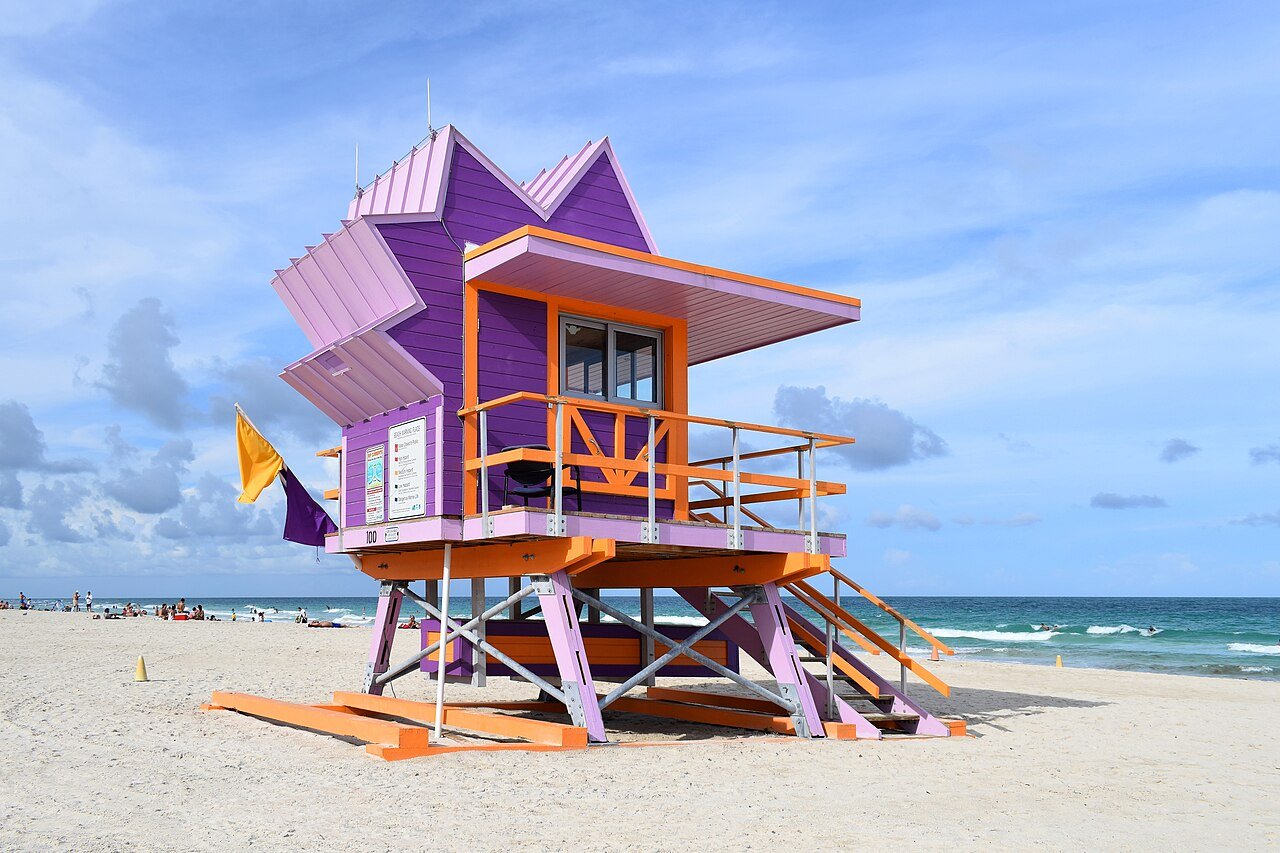
Miami is one of the great cities of the Americas — a bilingual (Spanish and English are truly co-equal in daily life), internationally sophisticated metropolis that functions as the financial and cultural capital of Latin America as much as it does as a Florida city. South Beach holds the world’s largest collection of Art Deco buildings, packed into just a few square miles. The food runs from Cuban pressed sandwiches at Versailles, open since 1971 and a Calle Ocho institution, to some of the most ambitious contemporary cooking in the Southeast. Wynwood’s open-air murals draw artists from around the world, and the Pérez Art Museum Miami pairs a strong contemporary collection with a commanding Biscayne Bay setting. Together they add up to a city of real cultural weight.
South Beach’s Ocean Drive is the epicenter of the Miami Beach Art Deco Historic District — a mile of pastel-colored hotels, restaurants, and bars that exemplifies the glamour and excess of a certain American idea of the good life. The Wolfsonian-FIU museum, housed in a historic Art Deco building two blocks from Ocean Drive, is one of the finest design museums in the country. Coconut Grove, Coral Gables (with the University of Miami and the storied Venetian Pool), and the Design District each offer distinct Miami experiences beyond the South Beach circuit.
Florida Keys and Key West
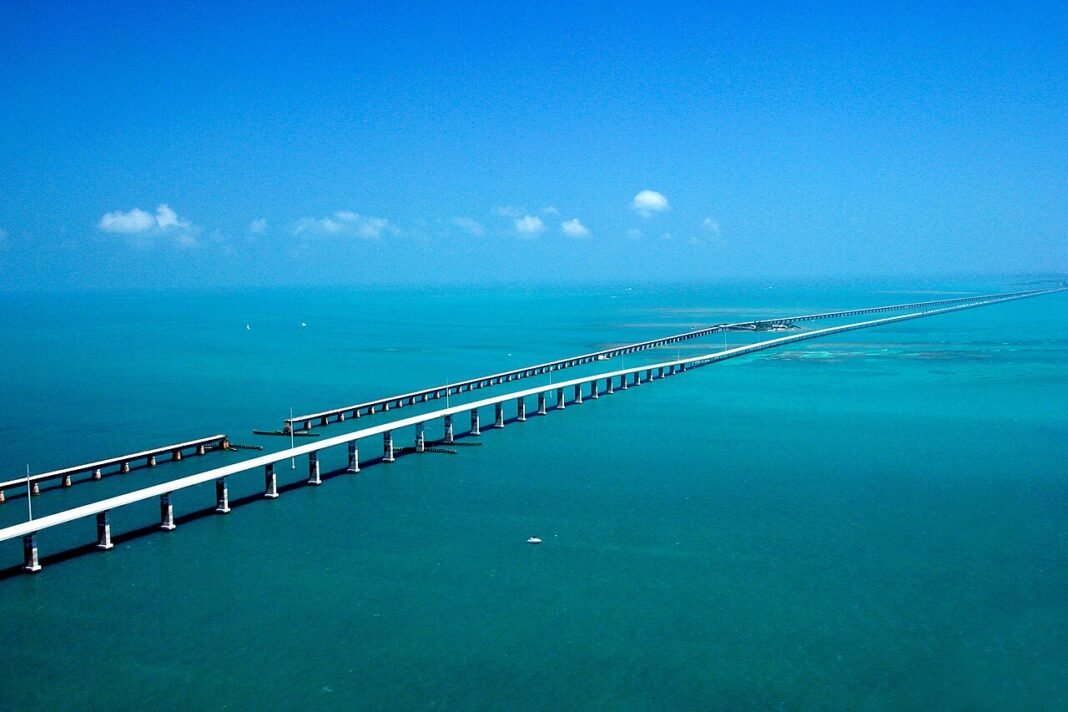
The Florida Keys extend roughly 113 miles southwest from the mainland into the Gulf of Mexico and the Atlantic Ocean, connected by the Overseas Highway (US 1) across 42 bridges, the longest of which — the Seven Mile Bridge — is one of the most remarkable engineering structures in the American road system. The Keys are a chain of coral islands with a laid-back, slightly eccentric culture that culminates in Key West — the southernmost point in the continental United States, a city that has attracted writers (Ernest Hemingway, Tennessee Williams), artists, and eccentrics for a century and maintains its bohemian character despite significant commercialization.

The coral reefs of the Florida Reef Tract — the third-largest coral barrier reef system in the world — provide snorkeling and diving of first-rate quality in the Upper and Middle Keys. John Pennekamp Coral Reef State Park (the first undersea park in the United States), Molasses Reef, and the Looe Key National Marine Sanctuary are the most celebrated reef destinations. The water clarity and coral diversity rival Caribbean destinations at a fraction of the travel cost for East Coast visitors.
Orlando: Beyond the Theme Parks
Orlando’s theme park complex — Walt Disney World Resort (the most visited vacation resort in the world), Universal Orlando Resort, SeaWorld, LEGOLAND, and over a dozen other major attractions — packs more tourist infrastructure into a single corridor than anywhere else in the country and helped draw a record 75.3 million visitors to Orlando in 2024. The Disney property alone covers roughly 25,000 acres, nearly twice the size of Manhattan.
Beyond the theme parks, Orlando has built up a serious cultural infrastructure: the Orlando Museum of Art, the Dr. Phillips Center for the Performing Arts (one of the finest new performance venues in the Southeast), a restaurant scene anchored by the Mills 50 neighborhood, and the Mennello Museum of American Art (featuring the most significant collection of folk art by Earl Cunningham). The International Drive corridor has more family entertainment per mile than almost anywhere in the country, and the proximity to Space Coast (Kennedy Space Center is 60 miles east) adds a dimension of national significance to the Orlando experience.
St. Augustine: America’s Oldest City
St. Augustine, founded by Spanish colonists in 1565 on Florida’s northeast coast, is the oldest continuously occupied European settlement in the continental United States. The city’s Castillo de San Marcos — a magnificent masonry fort completed in 1695 that defended Spanish Florida for over a century — is one of the best-preserved colonial fortifications in North America. The historic district’s 17th and 18th-century Spanish colonial buildings, the Flagler College (housed in the former Ponce de León Hotel, a masterpiece of Gilded Age architecture), and the Bridge of Lions over the Matanzas River create an atmosphere of historical depth that is unmatched anywhere else in Florida.
Frequently Asked Questions
What makes the Everglades one of Florida’s most important natural destinations?
Everglades National Park is the largest subtropical wilderness in the United States — a 1.5 million-acre system of sawgrass prairies, mangrove forests, coastal marshes, and cypress swamps that holds simultaneous UNESCO World Heritage Site, International Biosphere Reserve, and Wetland of International Importance designations. It is the only place in the world where alligators and American crocodiles coexist naturally, and it supports 350+ bird species, 50+ reptile species, and the Florida panther — an estimated 120 to 230 adults remaining in the wild. The Anhinga Trail at Royal Palm (0.8-mile boardwalk through freshwater marsh where birds spread wings within arm’s reach) and the Pa-hay-okee Overlook (quintessential “River of Grass” perspective) are the most immediately rewarding visitor experiences. Airboat tours from operators along Tamiami Trail provide access to marsh areas not reachable on foot.
What makes Miami one of the most distinctive American cities to visit?
Miami is a bilingual (Spanish and English run truly co-equal in daily life) and internationally sophisticated metropolis that functions as the financial and cultural capital of Latin America as much as it does as a Florida city. South Beach’s Ocean Drive anchors the Art Deco Historic District — the largest collection of Art Deco buildings in the world, concentrated in a few square miles of pastel-colored hotels and restaurants. Versailles Cuban restaurant on Calle Ocho (operating since 1971) is the most famous Cuban restaurant in the world. Wynwood’s outdoor street art murals constitute the largest outdoor mural installation in the United States. The Pérez Art Museum Miami provides world-class contemporary art with a spectacular Biscayne Bay setting. Coconut Grove, Coral Gables (with the University of Miami and the Venetian Pool), and the Design District each offer distinct Miami experiences beyond the South Beach circuit.
What are the Florida Keys and what draws visitors to them?
The Florida Keys extend roughly 113 miles southwest from the mainland into the Gulf of Mexico, connected by the Overseas Highway (US 1) across 42 bridges — the Seven Mile Bridge being one of the most remarkable engineering structures in the American road system. The Florida Reef Tract is the third-largest coral barrier reef system in the world, providing snorkeling and diving of first-rate quality. John Pennekamp Coral Reef State Park, designated in 1963 as the first undersea park in the United States, is the primary entry point for reef access. Molasses Reef and Looe Key National Marine Sanctuary are among the most celebrated dive sites. Key West — the southernmost point in the continental United States — has attracted writers (Ernest Hemingway, Tennessee Williams), artists, and eccentrics for a century and maintains its bohemian character despite significant commercialization. Hemingway’s house, Mallory Square sunset celebrations, and Duval Street are the main attractions.
What is the scale of Walt Disney World and how does Orlando’s tourism industry compare globally?
Walt Disney World Resort is the most visited vacation resort in the world, drawing roughly 49 million visitors a year to its property of about 25,000 acres — nearly twice the size of Manhattan. Orlando’s broader tourism complex (Disney World, Universal Orlando Resort, SeaWorld, LEGOLAND, and dozens of other attractions) drew a record 75.3 million visitors in 2024, making it the most visited destination in the United States. Beyond the theme parks, Orlando has built up a serious cultural infrastructure: the Dr. Phillips Center for the Performing Arts (one of the finest new performance venues in the Southeast), an emerging restaurant scene, and proximity to Kennedy Space Center (60 miles east on the Space Coast). Florida’s no-income-tax status and lower cost of living relative to the Northeast have made Orlando a significant destination for domestic migrants beyond the tourism economy.
What is St. Augustine and why is it historically significant?
St. Augustine, founded by Spanish colonists in 1565, is the oldest continuously occupied European settlement in the continental United States — 42 years older than Jamestown, Virginia. The Castillo de San Marcos, a masonry fort completed in 1695 that defended Spanish Florida for over a century, is one of the best-preserved colonial fortifications in North America and a National Monument. The historic district’s 17th and 18th-century Spanish colonial buildings, Flagler College (housed in the former Ponce de León Hotel, an 1888 masterpiece of Gilded Age architecture designed by architects Carrère and Hastings), and the Bridge of Lions over the Matanzas River create an atmospheric historical depth unique in Florida. St. Augustine sits on Florida’s northeast coast, approximately 40 miles south of Jacksonville — accessible from I-95 and a natural addition to northern Florida itineraries.