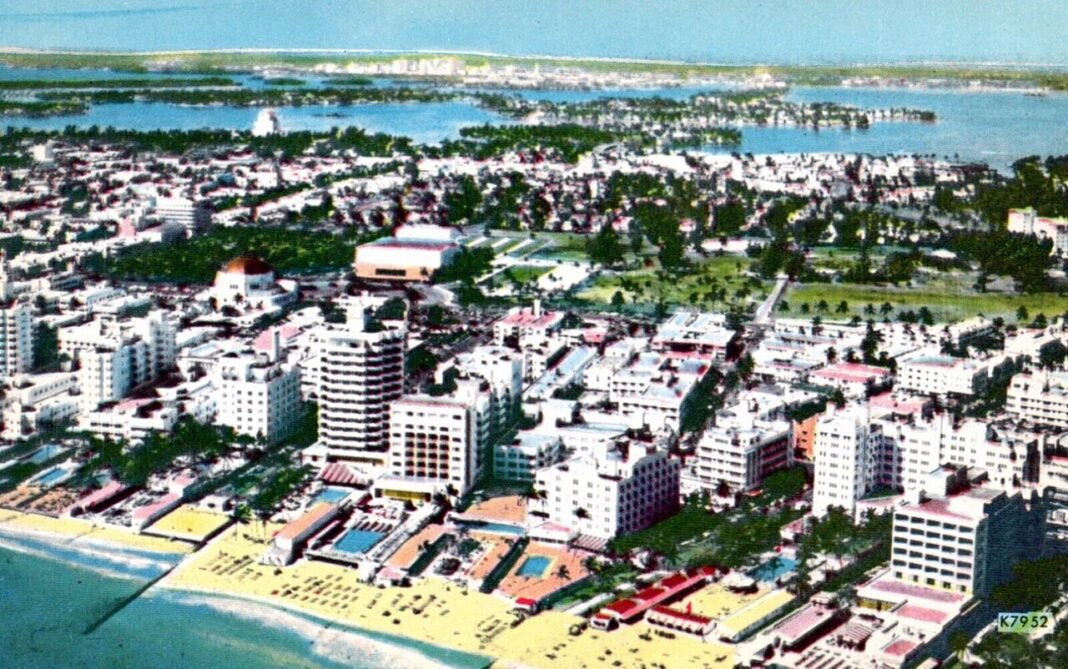
Miami Beach is a thin barrier island, separated from the mainland by Biscayne Bay, yet it operates on its own wavelength. European style, Caribbean rhythm, Latin American energy, and unapologetic American flash collide here in a way few other places in the United States can manage. The beaches deliver, the Art Deco architecture is genuinely iconic, the food ranks among the best in the country, and the nightlife needs no introduction. The reputation is earned.
The Art Deco Historic District
The South Beach Art Deco Historic District — centered on Ocean Drive and Collins Avenue between 5th and 17th Streets — is the largest collection of Art Deco architecture in the world, with over 800 buildings constructed between 1923 and 1943. These buildings were rescued from demolition in the 1970s and 80s through the determined work of architectural preservationists, and today they’ve been meticulously restored and painted in the pastels and tropical colors that make Ocean Drive one of the most visually distinctive streets in America.

The best way to experience the district is on foot — or better still, on a guided walking tour run by the Miami Design Preservation League, which offers 90-minute tours for around $35. The guides give you an architectural vocabulary that makes the rest of the neighborhood click into focus. Go early: the morning light is soft, the crowds haven’t arrived, and the pastel façades glow before the harsh midday sun flattens everything out.
The Beaches: South, Mid, and North
South Beach (the stretch from 1st to 23rd Street) is the most famous and most photographed, and it earns the hype. The water is warm and clear, the sand is white, the lifeguard stations are pastel-painted Art Deco structures in their own right, and the scene — muscle beach, professional volleyball, spontaneous photo shoots, elderly residents in lawn chairs — is reliably entertaining. It can be crowded, especially on weekends.
For a quieter experience without sacrificing beauty, head north to Mid-Beach (around 40th Street) or North Beach (71st Street and above). The sand and water are identical, the crowds are a fraction of South Beach, and the pace shifts from performative to unhurried. Haulover Beach, north of the city proper, includes a popular clothing-optional section and a windsurfing area. Crandon Park on Key Biscayne, technically outside Miami Beach, has some of the finest water clarity of any beach in the county.
Food and Nightlife
Miami’s dining scene is one of the most diverse and dynamic in the United States — shaped by Cuban, Haitian, Venezuelan, Peruvian, Brazilian, Colombian, and Central American communities, plus a generation of serious restaurant talent drawn by the city’s energy. At the high end, the city has a constellation of exceptional restaurants: Cote Miami (Korean BBQ meets American steakhouse), Le Jardinier (refined French vegetable-focused cooking), and KYU (wood-fired Asian-influenced cuisine) have all generated significant national attention.

For Cuban food outside of Little Havana, Islas Canarias in the Tamiami area serves some of the best ropa vieja and croquetas in the city. For Colombian cooking, El Cielo in Brickell — the only Colombian restaurant in Florida with a Michelin star — turns a multi-course tasting menu into theater. The nightclub scene — LIV at the Fontainebleau, M2 on Washington Avenue, E11EVEN downtown — is world-class and priced to match. Bars along Collins Avenue and the Española Way pedestrian street cover every mood and budget.
Day Trips Worth Taking
- Everglades National Park (1 hour west): An airboat tour through the “river of grass” is one of the most singular wildlife experiences in the country. Alligators, manatees, roseate spoonbills, and white-tailed deer are all regularly spotted. Shark Valley has a 15-mile loop with a tall observation tower at the midpoint.
- Key West (3.5 hours south): The southernmost point in the continental US has its own distinct culture — part Caribbean, part Hemingway mythology, part sunset-worship. The Duval Street bar scene, the Hemingway House (complete with six-toed cats), and the nightly Mallory Square sunset celebration are the main events.
- Fort Lauderdale (45 minutes north): Known as the “Venice of America” for its 300+ miles of inland waterways, Fort Lauderdale has an excellent beach, a robust food and nightlife scene, and the Museum of Discovery and Science for families.
- Boca Raton and Palm Beach (1–1.5 hours north): Worth a day trip for the Flagler Museum, Worth Avenue shopping, and the Breakers Hotel grounds, which are open to non-guests for dining.
Getting There and Getting Around
Miami International Airport (MIA) is served by virtually every major carrier with direct flights to Miami from across the US, Europe, and Latin America. Fort Lauderdale-Hollywood International (FLL), about 30 miles north, often offers cheaper fares and is worth checking. From MIA to Miami Beach, a taxi or rideshare takes 25–35 minutes and costs $35–$50. The Miami Beach Airport Express bus ($2.25) is slower but efficient.
Once on Miami Beach, a car is largely unnecessary — South Beach is walkable, and the free South Beach Local trolley circulates frequently along Washington Avenue and Collins Avenue. Citi Bike has stations throughout the beach, and the oceanfront path makes for an easy, scenic ride. For trips to Wynwood and Little Havana, rideshare is the most practical option. The free Brickell City Centre Trolley covers the mainland financial district if you’re mixing business travel with leisure.
Best Time to Visit Miami Beach
The sweet spot is November through April: temperatures are warm but not oppressive (75–85°F / 24–30°C), humidity is manageable, and the chance of hurricanes is essentially zero. December through March is peak season — expect higher hotel rates in Miami Beach and more crowds, but also the best weather. Art Basel Miami Beach in early December turns the entire city into the world’s largest contemporary art fair for one extraordinary week each year.
Summer (June through September) is hot and humid, with afternoon thunderstorms that are usually brief but can be intense. Hotel rates drop by 30–50% compared to winter, which makes the heat more bearable for budget-conscious travelers. Hurricane season runs June through November, with September and October being the riskiest months — this is when having travel insurance is particularly important. April and May are pleasant shoulder-season months with lighter crowds and reasonable rates.
Frequently Asked Questions
What is the South Beach Art Deco Historic District and why is it significant?
The South Beach Art Deco Historic District — centered on Ocean Drive and Collins Avenue between 5th and 17th Streets — is the largest collection of Art Deco architecture in the world, with over 800 buildings constructed between 1923 and 1943. The buildings were rescued from demolition in the 1970s and 80s by preservationists and have since been meticulously restored in the pastel and tropical colors that make Ocean Drive one of the most visually distinctive streets in the United States. The Miami Design Preservation League offers guided 90-minute walking tours for around $35.
What are Miami Beach’s best beaches beyond South Beach?
South Beach (1st to 23rd Street) is the most famous — warm water, white sand, pastel-painted Art Deco lifeguard stations, and a lively scene. For quieter options without sacrificing beauty, Mid-Beach (around 40th Street) and North Beach (71st Street and above) offer the same water and sand with far smaller crowds. Haulover Beach, north of the city, includes a popular clothing-optional section and a windsurfing area. Crandon Park on Key Biscayne has some of the finest water clarity in Miami-Dade County.
What are the best day trips from Miami Beach?
The four best day trips from Miami Beach are: Everglades National Park (1 hour west) — airboat tours through the “river of grass” with alligators, manatees, and roseate spoonbills; Key West (3.5 hours south) — the Hemingway House, Duval Street bar scene, and nightly Mallory Square sunset celebration; Fort Lauderdale (45 minutes north) — 300+ miles of inland waterways, excellent beach, and the Museum of Discovery and Science; and Palm Beach/Boca Raton (1–1.5 hours north) — the Flagler Museum, Worth Avenue, and the Breakers Hotel grounds.
When is the best time to visit Miami Beach?
The best time to visit Miami Beach is November through April: temperatures of 75–85°F (24–30°C), manageable humidity, and no hurricane risk. December through March is peak season with the best weather but higher hotel rates and more crowds. Art Basel Miami Beach in early December transforms the city into the world’s largest contemporary art fair for one week. Summer (June–September) offers 30–50% lower hotel rates but brings oppressive heat, daily humidity, and afternoon thunderstorms. Hurricane season runs June through November, with September and October being the highest-risk months.
How do you get around Miami Beach without a car?
South Beach is highly walkable, and the free South Beach Local trolley circulates frequently along Washington Avenue and Collins Avenue. Citi Bike has stations throughout the beach, and the oceanfront cycling path is excellent. From Miami International Airport (MIA), a taxi or rideshare to South Beach takes 25–35 minutes ($35–$50); the Miami Beach Airport Express bus costs $2.25. For trips to Wynwood and Little Havana, rideshare is the most practical option. Fort Lauderdale-Hollywood International (FLL), about 30 miles north, often offers cheaper airfares.