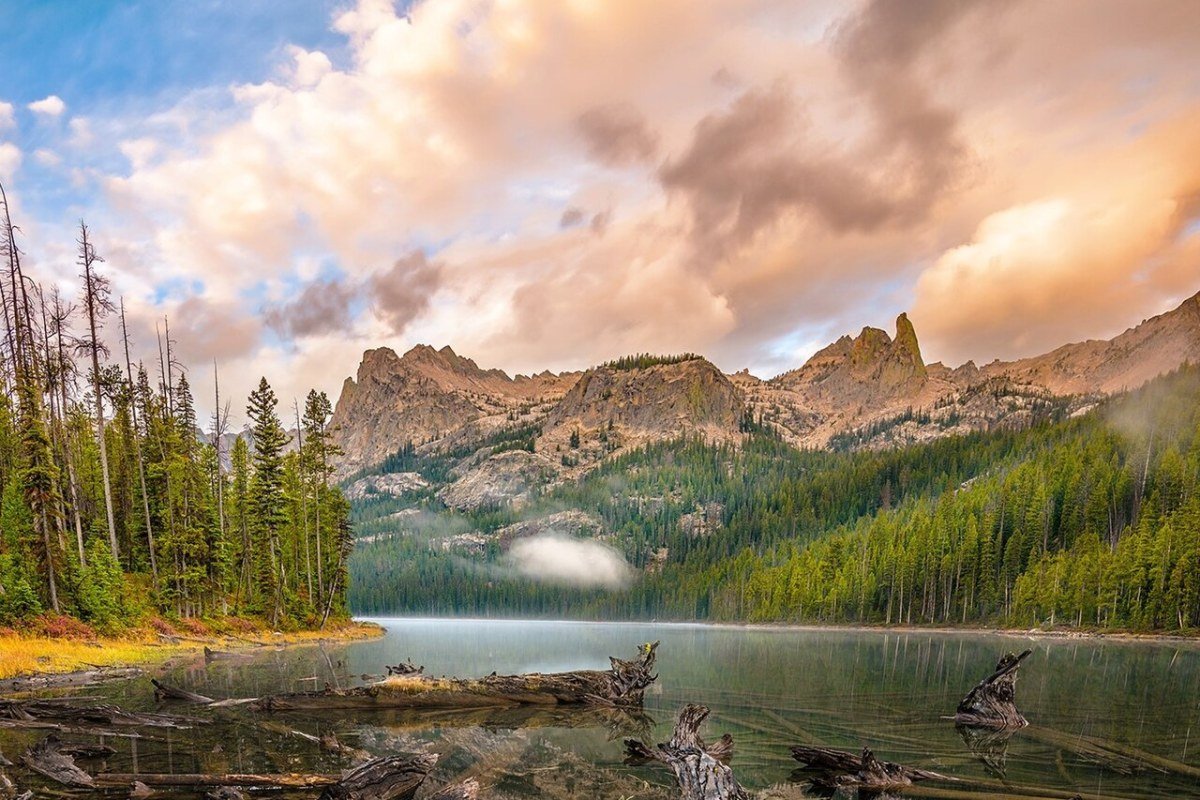
Few Canadian provinces are as routinely overlooked as Manitoba, and few reward the curious traveller so generously. Behind the Prairie’s flat horizon sit some of the country’s most extraordinary natural spectacles; Winnipeg’s cultural institutions far outscale a metro area of roughly 935,000; and far to the north, the subarctic town of Churchill delivers polar bears, beluga whales, and northern lights on the shore of Hudson Bay. The land itself shifts dramatically from south to north – deciduous forest and farm valleys along the southern border, mixed boreal and Prairie through the centre, the Canadian Shield’s Precambrian lakes in the east, and the Hudson Bay lowlands up top. That range translates into a remarkable spread of outdoor experiences, from the black bear and wolf country of Riding Mountain National Park to the kayak-accessible belugas of the Churchill River estuary, to the granite lake district of Whiteshell Provincial Park – cottage-country wilderness that Ontarians would recognise as Muskoka’s equal, at a fraction of the price.
Winnipeg: The Prairie Capital
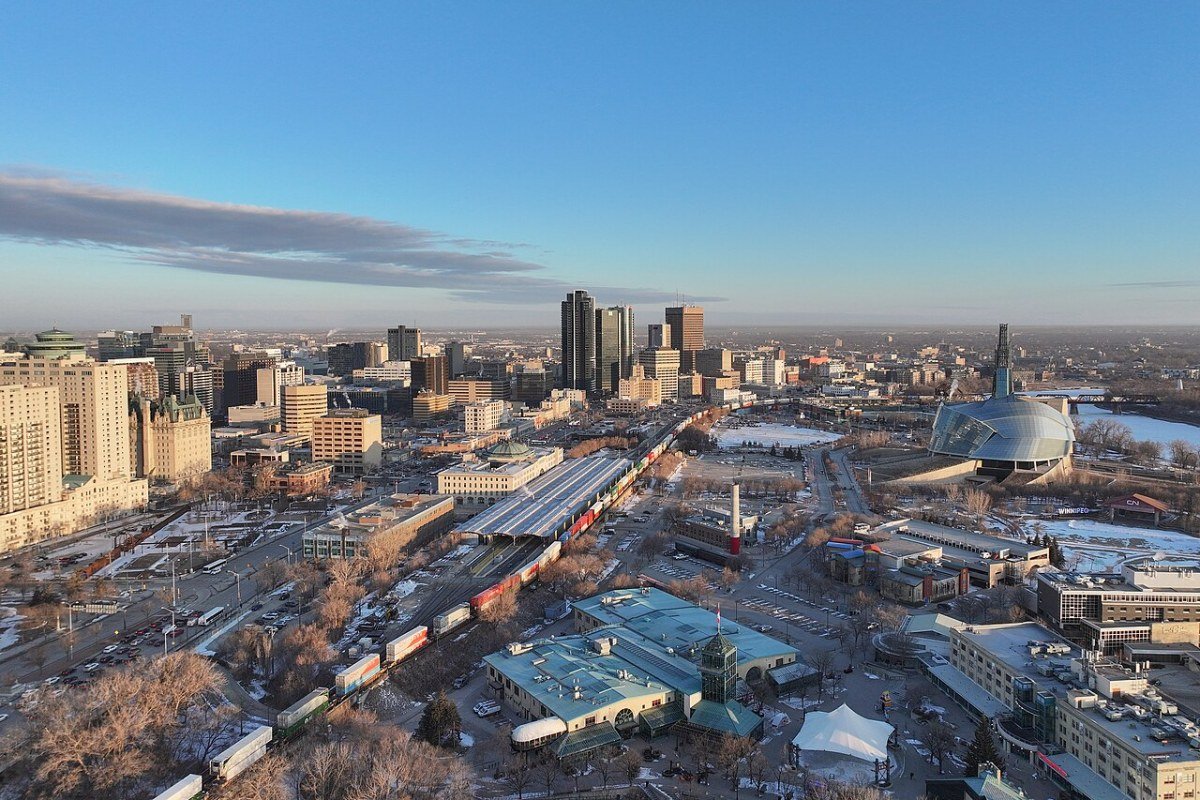
Manitoba’s capital and largest city – around 850,000 in the city proper and roughly 935,000 across the metro area – sits where the Red and Assiniboine rivers meet. That confluence made Winnipeg the gateway to the Canadian West in the 19th century, and the crossroads character has never left it. The Forks, the riverfront park and market at the rivers’ junction, anchors the modern city. Nearby, the Exchange District holds the most complete collection of late-Victorian and Edwardian commercial architecture in Canada, now a National Historic Site. Antoine Predock’s Canadian Museum for Human Rights rises in glass and Tyndall stone as the country’s boldest piece of contemporary architecture, and the Winnipeg Art Gallery anchors the country’s foremost holdings of contemporary Inuit art. Add the Jewish and Ukrainian heritage of the North End, the independent restaurant strip in Osborne Village, and the Leo Mol Sculpture Garden out in Assiniboine Park, and the Prairie service city most visitors expect dissolves entirely.
Winnipeg Must-Experiences
- Canadian Museum for Human Rights: The first museum anywhere devoted solely to human rights. The glass Tower of Hope and the interplay of Tyndall stone, glass, and prairie light make the building itself an exhibit; inside, the galleries trace the Holocaust, Indigenous rights, and the global story of human rights.
- The Forks National Historic Site: The riverfront gathering place at the confluence, with the Forks Market’s food vendors, the winter skating trail (the world’s longest naturally frozen skating trail), and the restaurants and shops of the restored Johnston Terminal.
- The Exchange District: Twenty blocks of North America’s best-preserved turn-of-the-century commercial buildings, with the Cube outdoor stage at Old Market Square and the Manitoba Museum a short walk away.
- Qaumajuq at the Winnipeg Art Gallery: The Inuit art centre joined to the WAG holds the largest collection of contemporary Inuit art in the world; its glass-walled visible vault puts roughly 5,000 of the collection’s nearly 14,000 works on open display to anyone who walks in.

Churchill: Polar Bears, Beluga Whales, and Northern Lights
Churchill (population about 870) sits on the western shore of Hudson Bay, 1,000km north of Winnipeg and reachable only by air or rail. The Winnipeg-Churchill train, the Via Rail service long known as the Hudson Bay, takes roughly two days to cross the boreal forest and tundra, and the journey ranks among the great Canadian rail trips. This is the most accessible place on Earth to watch polar bears. Each October and November, hundreds of bears from the Western Hudson Bay population – estimated at about 618 animals in the most recent aerial survey – gather along the coast south of town on the Churchill Wildlife Management Area, waiting for the bay to freeze. Tundra buggies, purpose-built vehicles with elevated decks, let visitors watch the bears roam and spar safely below the platform. The seasons rotate after that: from mid-July into August, roughly 3,000 to 4,000 beluga whales crowd the Churchill River estuary, close enough to kayak among, while February and March bring the aurora borealis arcing over the snow.
Riding Mountain National Park
Riding Mountain National Park, about 260km northwest of Winnipeg, is Manitoba’s most-visited national park. Where the Prairie climbs into a boreal forest plateau, an unusual habitat takes hold, and black bear, grey wolf, elk, and moose share ground with the farmland ringing the park’s edge. The Wasagaming townsite on Clear Lake carries a 1930s Parks Canada resort character, its town beach and heritage cabins still in use; nearby you can sail or canoe the lake, or climb the Bald Hill fire tower trail (11km return) for a long view over the plateau rim. For those after more, the 400km backcountry trail network and the winter snowshoe and cross-country ski routes give the park real depth across the seasons.
Planning Your Manitoba Visit
Manitoba demands deliberate planning, because Winnipeg and Churchill lie 1,000km and two days of rail travel apart, and they suit very different travellers. Winnipeg works year-round: the Canadian Museum for Human Rights, the Forks Market, the Assiniboine Park Zoo’s Journey to Churchill exhibit – which offers polar bear viewing without the northern trek – and the Exchange District arts scene easily fill three or four days in any season. Churchill, by contrast, asks you to come for something specific: polar bears in October and November, belugas in July and August, or northern lights in February and March. Getting there is part of the appeal. The Via Rail Hudson Bay runs twice a week from Winnipeg, two days of boreal forest, tundra, and Hudson Bay lowland sliding past the window on a route with no road alternative.
Getting the Most Out of Your Visit
A few practical notes will sharpen any Manitoba trip. Book accommodation and the big-ticket attractions – national parks, popular trails, well-known restaurants – as early as you can, since the best options fill weeks or months ahead in peak season. A car buys you the most freedom, because many of the province’s finest experiences sit well off public transit routes. For local knowledge, lean on regional visitor centres, independent bookshops, and conversations with residents; the discoveries that stay with you are rarely the ones printed in guidebooks. And give yourself more time than you think you need. Manitoba consistently rewards travellers who slow down and dig in rather than racing to tick off ground.
Frequently Asked Questions
What cultural attractions make Winnipeg worth visiting?
For a city of about 850,000, Winnipeg carries a startling cultural weight. The Canadian Museum for Human Rights – the first museum anywhere devoted solely to human rights, designed by Antoine Predock with a glass Tower of Hope rising above galleries clad in Tyndall stone – is the boldest contemporary building in Canada. The Winnipeg Art Gallery’s Qaumajuq centre holds the world’s largest collection of contemporary Inuit art, nearly 14,000 works in all, with roughly 5,000 carvings on view in its glass-walled visible vault. The Exchange District, twenty blocks of North America’s best-preserved turn-of-the-century commercial architecture and a National Historic Site, is the city’s finest open-air museum. And the Forks National Historic Site, at the meeting of the Red and Assiniboine rivers, anchors the waterfront with its market, the world’s longest naturally frozen skating trail in winter, and a gathering place used for some 6,000 years.
What is Churchill and why is it famous for wildlife?
Churchill (population about 870), on the western shore of Hudson Bay 1,000km north of Winnipeg, is the most accessible polar bear viewing destination on Earth. Each October and November, hundreds of bears from the Western Hudson Bay population – estimated at roughly 618 animals in the latest aerial survey – gather along the coast on the Churchill Wildlife Management Area, waiting for the bay to freeze. Tundra buggies, purpose-built vehicles with elevated decks, allow safe close-range viewing as the bears move below the platform. From mid-July into August, some 3,000 to 4,000 beluga whales fill the Churchill River estuary, close enough to kayak among; February and March bring the northern lights. Access is by air only, or aboard the Via Rail Hudson Bay train from Winnipeg, a two-day run through boreal forest and tundra.
What is Riding Mountain National Park?
Riding Mountain National Park, about 260km northwest of Winnipeg, is Manitoba’s most-visited national park, set where the Prairie rises into a boreal forest plateau. That transition zone creates an unusual habitat in which black bear, grey wolf, elk, and moose all live within the park’s boundaries. The Wasagaming townsite on Clear Lake keeps a 1930s Parks Canada resort character, with a town beach, sailing, and heritage-era cabins. Visitors can canoe or sail Clear Lake, hike the Bald Hill fire tower trail (11km return), or set out on the park’s 400km backcountry trail system. In winter, the cross-country ski and snowshoe network makes it one of the finest cold-weather wilderness destinations in Manitoba’s interior.
What other wilderness experiences does Manitoba offer?
Beyond Churchill and Riding Mountain, Manitoba offers three standout wilderness escapes. Whiteshell Provincial Park, on the Ontario border in the Canadian Shield’s granite lake district, delivers cottage-country canoeing and lake fishing on par with Ontario’s Muskoka, for far less money. Atikaki Provincial Wilderness Park, 200km northeast of Winnipeg along the Bloodvein River, holds one of Canada’s great canoe routes – the Bloodvein is a Canadian Heritage River protected for its ecological and Indigenous cultural significance. And Lake Winnipeg, the world’s tenth-largest freshwater lake at 24,514 square kilometres, frames the province’s geographic centre, with the summer beach communities of Victoria Beach and Grand Beach – the latter often praised for some of the finest freshwater sand and shallow, warm water in North America.
When should you visit Manitoba and how do you get there?
Manitoba rewards season-specific planning. Winnipeg is a year-round destination: the cultural institutions – the Museum for Human Rights, the WAG, the Forks – and the restaurant scene run all year, and February’s Festival du Voyageur, the largest French-language winter festival in western Canada, ranks among the province’s most distinctive events. Churchill asks for a seasonal reason to go: polar bears in October and November, belugas in July and August, or northern lights in February and March. The Via Rail Hudson Bay from Winnipeg, running twice a week over two days, is a Canadian travel experience in itself. Winnipeg James Armstrong Richardson International Airport takes direct flights from every major Canadian city, and the Trans-Canada Highway connects the city east to Ontario and west to Saskatchewan.