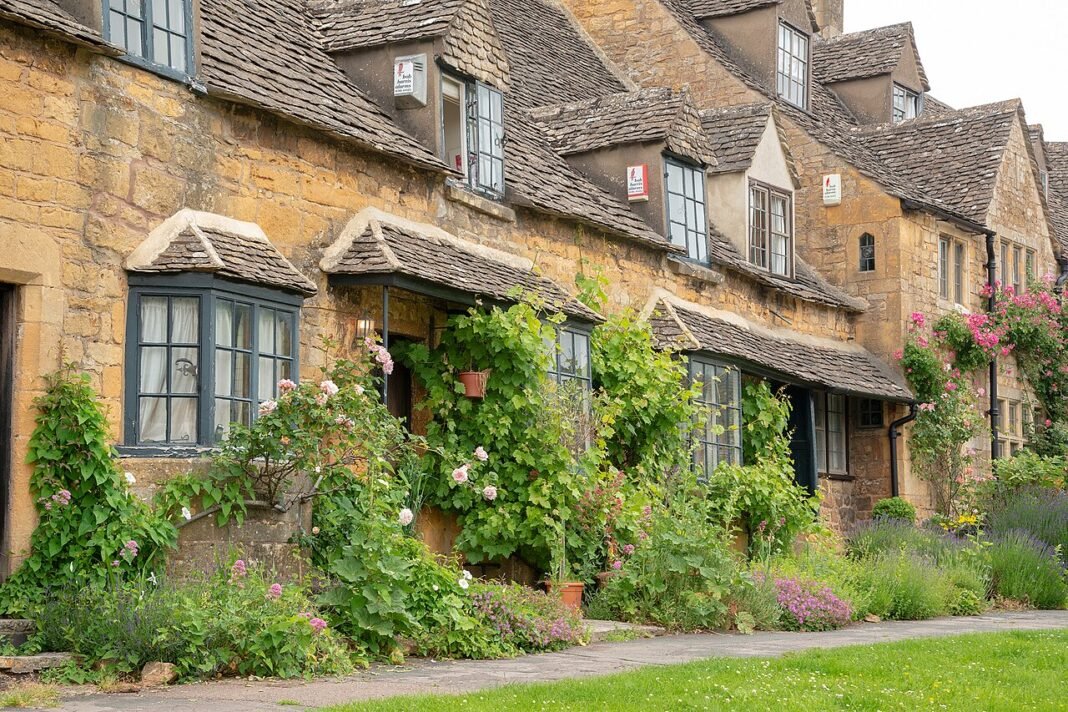
The Cotswolds is England‘s largest National Landscape — the protected area still widely known as an Area of Outstanding Natural Beauty, covering roughly 790 square miles of limestone hills, ancient market towns, and villages that look much as they did in the 16th century. Almost every building here is built from the same warm, honey-coloured Cotswold stone, and that single material gives the whole region a visual harmony you will not find anywhere else in England. Drive slowly from one village to the next, walk a stretch of the Cotswold Way, or just sit in a pub garden with a glass of local cider on a summer evening: this is a place that rewards taking your time.
The Most Beautiful Villages
Bibury
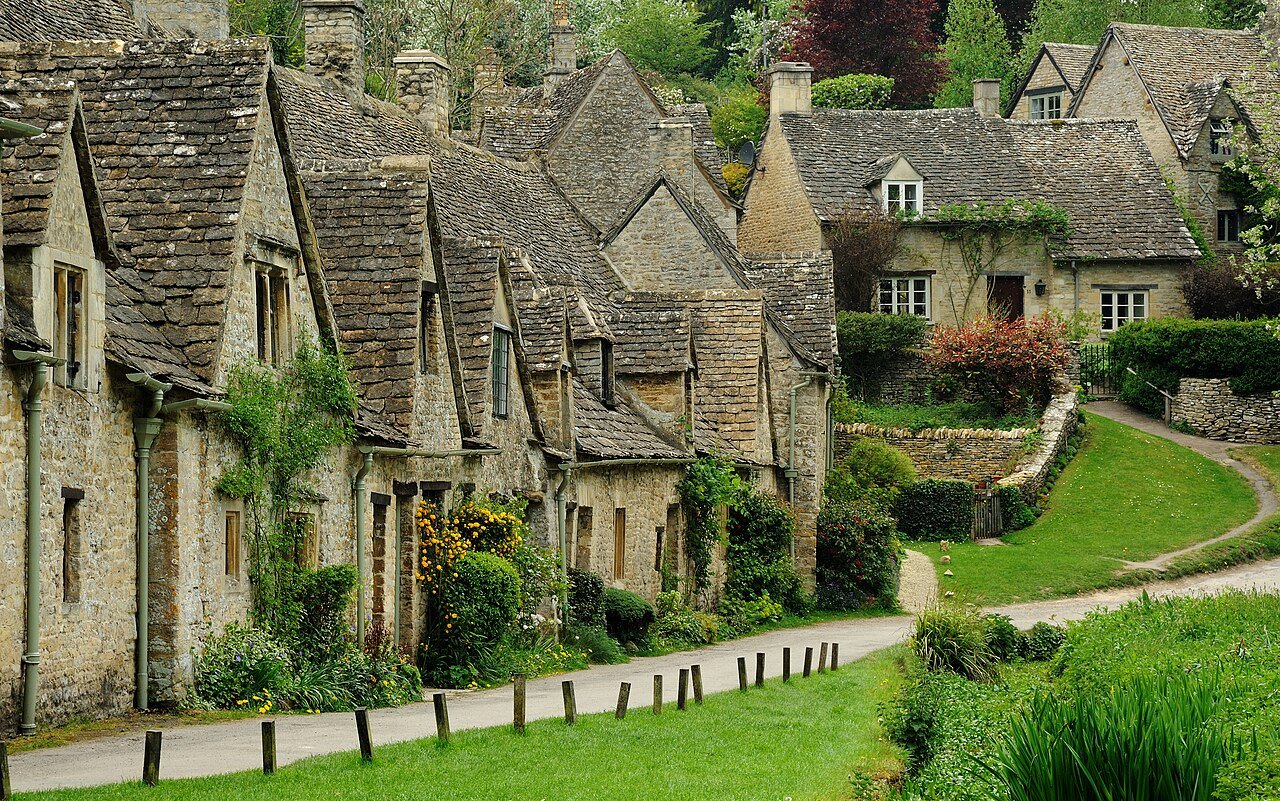
Bibury’s Arlington Row — a terrace of stone cottages built around 1380 as a wool store and converted into weavers’ homes in the 17th century, reflected in the River Coln — is perhaps the most photographed scene in the English countryside. William Morris called it “the most beautiful village in England,” and it’s hard to argue. The village is tiny and gets extremely crowded in summer — arrive before 9am or visit in autumn to experience it without the coach tour crowds. Bibury Trout Farm, immediately adjacent, is one of the oldest commercial trout farms in England and genuinely interesting to walk around, particularly for children.
Bourton-on-the-Water
Bourton-on-the-Water earns its “Venice of the Cotswolds” nickname from the low stone bridges that step across the River Windrush as it runs through the village centre. It is the most visited village in the Cotswolds, and deservedly so, with a good run of independent shops and tea rooms, plus Birdland (home to more than 500 birds, including King penguins and flamingoes) and the Cotswold Motoring Museum, which fills a restored mill with vintage cars, motorcycles, and caravans. Come on a weekday morning, before the tour coaches roll in.
Chipping Campden
Chipping Campden is the northern gateway to the Cotswold Way and one of the most complete medieval market towns in England. Its curving High Street, lined with golden-stone buildings that date from the 14th century onward, is so well-preserved it feels closer to its medieval roots than almost any comparable street in the country. The 15th-century church of St James is one of the great “wool churches” of the region, paid for by the medieval wool trade that made the Cotswolds rich for centuries. Add the Old Campden House ruins, the Market Hall, and the almshouses, and you have a townscape that hangs together beautifully.

Castle Combe
Castle Combe, at the southern end of the Cotswolds in Wiltshire, has been named “the prettiest village in England” more times than it can count — and the claim is entirely justified. The village has no shops or commercial facilities beyond a pub and the Manor House hotel (a supremely elegant country house hotel), which means it has been preserved in remarkable amber. It has appeared in numerous films and TV productions, most famously in Doctor Dolittle (1967), Stardust (2007), and War Horse (2011). The surrounding countryside, including the By Brook valley, provides excellent walking.
Stow-on-the-Wold and the Slaughters
Stow-on-the-Wold is the highest market town in the Cotswolds, sitting at around 800 feet (244m) on an exposed hilltop where, as the local saying goes, “the wind blows cold.” It is known for its broad market square, antiques shops, and a strong line-up of independent restaurants. The neighbouring villages of Upper Slaughter and Lower Slaughter — whose alarming names come from the Old English “slohtre” (muddy place), not anything sinister — are among the most peaceful and least commercialised in the region. Lower Slaughter’s mill, its water wheel turning beside the little River Eye, is one of the quieter photogenic corners in an area full of them.
The Market Towns
Beyond the villages, the Cotswolds has a string of market towns worth lingering in. Cirencester (the “Capital of the Cotswolds,” and the second largest town in Roman Britain after Londinium) has a lively market, plenty of independent shops, and the Corinium Museum, one of the best Roman collections in the country, with floor mosaics worth the trip on their own. Moreton-in-Marsh holds a Tuesday market dating back to the Middle Ages and has the most convenient rail link in the region, with direct trains from London Paddington (1 hour 40 minutes). Tetbury is known for its antiques shops and for nearby Highgrove House, King Charles III’s private residence, whose gardens open for booked tours between April and October. Burford, on the River Windrush at the eastern edge of the Cotswolds, is a medieval wool town whose steeply sloping High Street runs down to an old stone bridge — one of the most striking streetscapes in the Cotswolds.
Walking the Cotswolds
The Cotswold Way runs 102 miles from Chipping Campden to Bath and is one of England’s best long-distance National Trails: clearly signposted, well maintained, and strung with wide views and good overnight stops in village B&Bs and inns. Most walkers cover it in 7 to 10 days at an unhurried pace, and luggage-transfer firms will move your bags between stops so you can walk with just a daypack. You don’t have to take on the whole route, though. Almost every village makes a starting point for a day walk: the Windrush Valley route from Bourton-on-the-Water to Burford (8 miles) is a particular pleasure, passing through Lower Slaughter and the Rissington villages, while the stretch from Chipping Campden to Broadway (6 miles along the escarpment edge) serves up some of the widest views anywhere on the trail.
Where to Stay and Eat
Few parts of England pack in country house hotels, pubs with rooms, and B&Bs in old buildings quite like this. At the top end, the Lords of the Manor in Upper Slaughter (a 17th-century manor house) and the Lygon Arms in Broadway (a coaching inn whose history reaches back to the 14th century) rank among the best country hotels in the country. For something more affordable, hundreds of village B&Bs occupy period properties, and most villages of any size have at least one good room going for £90 to £150 a night for a double. For dinner, the Old Butchers in Stow-on-the-Wold, the Horse and Groom at Bourton-on-the-Hill (very good food in a Regency-era pub), and the Wild Rabbit in Kingham are among the standouts. And this is prime territory for afternoon tea: scones, clotted cream, and local jam in a stone-walled tearoom.
Getting There and Getting Around
A car is by far the most practical way to get around the Cotswolds, as buses between villages are limited and run infrequently. From London, the drive takes about 1.5 to 2 hours on the M40 (for Chipping Campden, Burford, and Bourton-on-the-Water) or the M4 and A419 (for Cirencester, Bibury, and Castle Combe). The handiest train is to Moreton-in-Marsh from London Paddington (1 hour 40 minutes), with local buses reaching some villages from there. From the north, the M5 and A46 bring you in from Birmingham (1 hour) and Bristol (45 minutes). For international visitors, the usual route is to fly into London (Heathrow or Gatwick) and pick up a hire car. Aim for April to June (spring flowers, fewer crowds) or September and October (autumn colours, quieter roads). August is the busiest month, while January through March is quiet and often cold, but lovely when there’s frost on the stone.
Frequently Asked Questions
What are the most beautiful villages in the Cotswolds?
Bibury’s Arlington Row — a terrace of stone cottages built around 1380 as a wool store and converted into weavers’ homes in the 17th century, reflected in the River Coln — is perhaps the most photographed scene in the English countryside. William Morris called it “the most beautiful village in England.” Arrive before 9am or visit in autumn to avoid coach crowds. Bourton-on-the-Water, the “Venice of the Cotswolds,” has a series of low stone bridges crossing the River Windrush through the village centre, with Birdland and the Cotswold Motoring Museum nearby. Chipping Campden’s curving High Street, lined with golden-stone buildings from the 14th century onward, is arguably the most genuinely medieval streetscape in England and the northern gateway to the Cotswold Way. Castle Combe, in Wiltshire, has been named “the prettiest village in England” more times than it can count. The villages of Upper and Lower Slaughter, near Stow-on-the-Wold, are among the most serene and least commercialised in the entire region.
What market towns in the Cotswolds are worth visiting?
Cirencester — the “Capital of the Cotswolds” and the second largest town in Roman Britain after Londinium — has a lively weekly market and the Corinium Museum, one of England’s richest Roman collections, with outstanding floor mosaics. Moreton-in-Marsh has a Tuesday market dating back to the Middle Ages and the most convenient rail link in the region, with direct trains from London Paddington (1 hour 40 minutes), making it the best base for visitors relying on public transport. Tetbury is known for antiques dealers and for Highgrove House — King Charles III’s private residence, with garden tours available April–October (book well ahead). Burford, on the River Windrush, has a steeply sloping medieval High Street leading down to a medieval bridge — one of the most atmospheric townscapes in the region.
How do you walk the Cotswolds and what are the best routes?
The Cotswold Way (102 miles from Chipping Campden to Bath) is one of England’s premier National Trails — well-signed, beautifully maintained, and passing through outstanding views and charming overnight stops in village B&Bs. It can be walked in 7–10 days at a comfortable pace; luggage transfer services carry bags between stops so you walk with only a daypack. For day walks, the Windrush Valley walk from Bourton-on-the-Water to Burford (8 miles) passes through Lower Slaughter and the Rissington villages and is particularly beautiful. The walk from Chipping Campden to Broadway (6 miles along the escarpment edge) offers some of the broadest open views in the region. The entire Cotswolds has an exceptionally dense network of public footpaths — almost any village makes a good starting point.
What is the best way to get to and around the Cotswolds?
A car is the most practical way to explore the Cotswolds — public transport between villages is limited and infrequent. From London, the journey takes 1.5–2 hours by car: M40 to reach Chipping Campden, Burford, and Bourton-on-the-Water; M4 and A419 for Cirencester, Bibury, and Castle Combe. The best rail access is Moreton-in-Marsh from London Paddington (1 hour 40 minutes, with local buses covering some surrounding villages). From the north, M5 and A46 provide access from Birmingham (1 hour) and Bristol (45 minutes). The best seasons are April–June (spring flowers, before peak crowds) and September–October (autumn colours, quieter roads). August is the busiest month for all villages, particularly Bibury and Bourton-on-the-Water.
Where should you stay and eat in the Cotswolds?
The Cotswolds has an exceptional concentration of country house hotels, village pubs with rooms, and B&Bs in historic properties. The Lords of the Manor in Upper Slaughter (a 17th-century manor house hotel) and the Lygon Arms in Broadway (a coaching inn dating from the 14th century, now an Iconic Luxury Hotels property) are among the most celebrated country hotels in England. For more accessible accommodation, hundreds of village B&Bs offer period properties typically at £90–£150 per night for a double room. For dining, the Old Butchers in Stow-on-the-Wold, the Horse and Groom at Bourton-on-the-Hill (exceptional food in a Regency-era pub), and the Wild Rabbit in Kingham are among the best options in the region. The Cotswolds’ afternoon tea culture — scones, clotted cream, and local jam in a stone-walled tearoom — is at its finest here.