What moving to Idaho looks like depends heavily on where you’re coming from and where in the state you land. Arriving from California or the Pacific Northwest, you’re likely chasing lower costs, lighter traffic, and easy access to outdoor recreation. Arriving from the Midwest or the South, you may be after the version of the West you always pictured: wide-open country, frontier character, and mountains within reach in a way the Great Plains never offered. Either way, a smooth relocation comes down to handling a handful of specific things well, and this guide walks through each of them.

Understanding Idaho’s Geographic Diversity
Idaho behaves like three different states stacked north to south, and the differences are practical, not just scenic. The Panhandle – Coeur d’Alene, Sandpoint, the Silver Valley – has more in common with eastern Washington and western Montana than with Boise, four hours south. The Magic Valley around Twin Falls, Jerome, and Burley runs on agriculture and food processing, its calendar set by planting and harvest. Eastern Idaho – Idaho Falls, Pocatello, Rexburg – carries a strong Latter-day Saint community presence that shapes everything from store hours to social rhythms in ways newcomers notice within their first week.
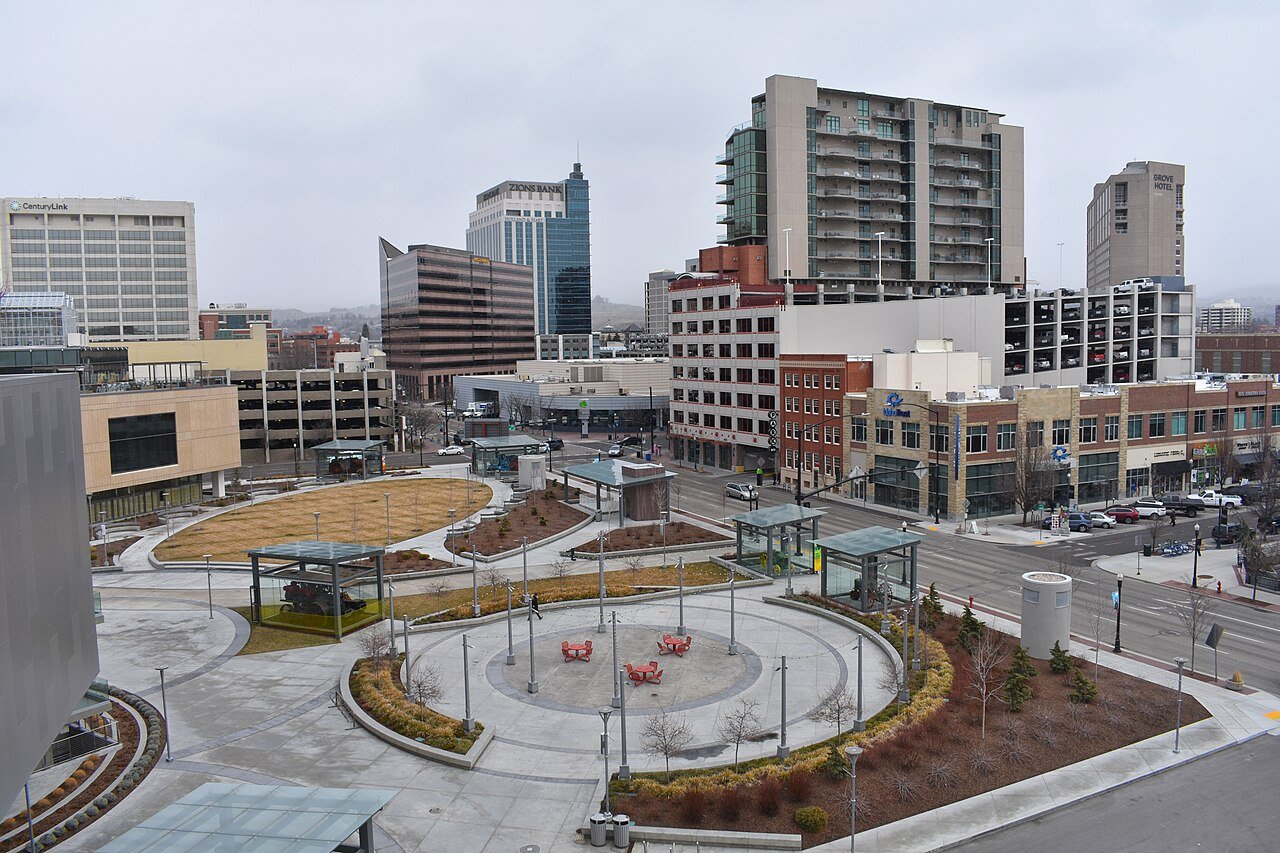
The Treasure Valley around Boise reads almost like a transplanted slice of the Pacific Northwest. Its tech employers, restaurant scene, coffee culture, and steady stream of Californian, Oregonian, and Washingtonian arrivals give it a character the rest of the state doesn’t share. Sun Valley sits in its own bracket entirely – a mountain resort enclave with second-home wealth and a cosmopolitan streak you won’t find anywhere else in Idaho. The takeaway: research the specific community you’re aiming for, not the state as an abstraction, before you commit.
.jpg?width=1200)
Driver’s License and Vehicle Registration
Driver’s license: New Idaho residents have 30 days from establishing residency to get an Idaho driver’s license – a window the legislature tightened from the old 90-day rule in 2024. Bring proof of identity (a passport, or a birth certificate plus your Social Security card) and two documents showing an Idaho address – a utility bill, bank statement, lease, or mortgage paper all qualify. There’s a written knowledge test, and Idaho’s DMV posts the manual and practice tests online, so a little prep goes a long way. A vision screening is done on-site, and the fee for a standard eight-year license is modest.
Vehicle registration: Vehicles also have to be titled and registered within that same 30 days. Idaho requires a VIN inspection at registration, which you can knock out at any law enforcement agency or licensed inspection station. Fees scale with a vehicle’s age and value. One welcome detail: the state runs no annual emissions testing, so there’s no yearly trip to a testing station and no chance of an older car flunking on tailpipe numbers.
Employment and Income
Idaho’s job market leans on a few strong pillars. Technology anchors the Boise area – Micron Technology keeps its global headquarters here, and a crowd of smaller firms feeds off the talent flowing out of Boise State University’s engineering and computer science programs. HP, a fixture on its Chinden Boulevard campus since 1973, is the cautionary footnote: in early 2026 the company announced it will wind down its remaining Boise operations – roughly 1,100 jobs, mostly in the LaserJet division – by late 2027, a reminder that even long-standing anchors can pull up stakes. Healthcare is a deep, statewide employer, with the St. Luke’s and Saint Alphonsus systems together staffing thousands across the Treasure Valley. Agriculture and food processing – dairy, potatoes, trout, sugar beets, hops – keep rural Idaho working in both manual and technical roles. Federal employment runs through the Idaho National Laboratory near Idaho Falls, one of the largest employers in the state with more than 6,000 staff. Retail and service round things out, though those wages often lag the state’s climbing housing costs.
On the income side, Idaho’s tax picture got simpler. A 2025 law collapsed the old graduated brackets into a single flat rate, so for 2026 everyone pays 5.3 percent on taxable income, whatever the size of the paycheck. Combined with no local income taxes, that makes withholding easy to predict – worth flagging to your employer the moment you land.
Remote work reshaped the picture in a way few states felt as sharply. During the pandemic years the Boise metro pulled in an outsized share of remote workers from California, Oregon, and Washington, all of them trading expensive home markets for Idaho prices. The wave has cooled as local costs rose and some employers called people back to the office, but a meaningful remote workforce still clusters in the Treasure Valley and, to a smaller degree, in Coeur d’Alene and Sun Valley.

Climate Preparation
Idaho’s weather shifts a lot by region, but the constant is four real seasons with winters that mean it. Boise picks up roughly 18 to 20 inches of snow a year, with overnight temperatures dipping below freezing from November into February. The Panhandle gets far more – Coeur d’Alene averages around 40 to 50 inches – and the mountain towns hold snowpack from November well into April or May. Eastern Idaho can turn brutal, with cold snaps pushing toward minus 20 degrees Fahrenheit.
So a few preparations earn their keep. All-wheel drive and proper four-season tires are close to essential if you’re driving in the Panhandle or the mountains, and real winter gear – solid coats, boots, an emergency kit in the trunk – isn’t a nice-to-have. Summer brings its own wrinkle: wildfire smoke has become a regular feature, with forests and rangeland burning across much of the state from July through September and regional fires fouling the air for days at a stretch. Central air, once uncommon in Boise homes, now comes standard in new construction, since summer heat waves routinely nudge 100 degrees.
Practical Registration Checklist
For anyone settling in, here’s the order that keeps your residency squared away without scrambling:
First, once you arrive: lock in a primary Idaho address through a lease or purchase, open an Idaho bank account or update the address on your existing one, and enroll children in school (Idaho’s public schools are well regarded, and the state has a large homeschool community if that’s your route).
Within 30 days: get your Idaho driver’s license and title and register every vehicle – this is the legal deadline since the 2024 change, so don’t let it slip. Update your voter registration too (Idaho allows same-day registration at the polls), and renew any professional licenses tied to state credentials. Idaho holds reciprocity agreements with many states, though the turnaround varies by field.
Ongoing: file a change of address with the USPS, tell your employer to switch your state tax withholding, and – if you still own property in another state – sit down with a tax advisor about domicile so your state income tax filing lands cleanly.
Frequently Asked Questions
How different are Idaho’s regions from each other?
Different enough that it should drive your relocation decision. The Boise metro (Treasure Valley) reads like a Pacific Northwest extension – tech sector, restaurant and coffee culture, and a large Californian, Oregonian, and Washingtonian transplant community. The Panhandle (Coeur d’Alene, Sandpoint) aligns more with eastern Washington and western Montana. The Magic Valley around Twin Falls runs on agriculture. Eastern Idaho (Idaho Falls, Pocatello, Rexburg) carries a strong Latter-day Saint community presence that shapes store hours and social rhythms. Research your specific target community – not just “Idaho” – before you commit.
What are the practical requirements for new Idaho residents?
Driver’s license: required within 30 days of establishing residency (Idaho tightened this from 90 days in 2024); bring proof of identity and two documents showing an Idaho address; a written knowledge test and a vision screening are part of the process, and the DMV posts the manual and practice tests online. Vehicle registration: also within 30 days, with a VIN inspection done at any law enforcement agency or licensed inspection station; Idaho runs no annual emissions testing. Voter registration: same-day registration is available at the polls. In short, 30 days is the standard window for most new-resident compliance.
What is Idaho’s employment base for new residents?
Boise tech is anchored by Micron Technology’s global headquarters, fed by Boise State University’s engineering and computer science pipeline; HP, a longtime Boise employer, announced in early 2026 that it will wind down its remaining local operations (about 1,100 jobs) by late 2027. Healthcare is strong statewide, led by the St. Luke’s and Saint Alphonsus systems. Federal employment centers on the Idaho National Laboratory near Idaho Falls, one of the largest employers in the state with more than 6,000 staff. Agriculture and food processing – dairy, potatoes, trout, sugar beets, hops – sustain rural Idaho. Remote work has widened the base considerably, with a sizable transplant workforce in the Boise metro using portable incomes to tap Idaho’s lower housing costs. On taxes, Idaho moved to a flat 5.3 percent income tax for 2026, with no local income tax on top.
How much snow and cold should I prepare for?
It depends where you settle. Boise averages roughly 18 to 20 inches of snow a year with freezing nights from November into February. Coeur d’Alene and the Panhandle see far more, around 40 to 50 inches, and mountain towns hold snowpack from November into April or May. Eastern Idaho can drop toward minus 20 degrees Fahrenheit in cold snaps. All-wheel drive and four-season tires are strongly advised for the Panhandle and mountains. Summers bring wildfire smoke from July through September, and heat waves near 100 degrees mean central air is now standard in new Boise construction.
What’s the best way to choose where in Idaho to live?
Start with what you need day to day, then match it to a region rather than the state as a whole. If you want a denser job market, restaurants, and an airport, the Boise metro fits. If you prize lakes, forests, and a slower pace, the Panhandle around Coeur d’Alene delivers. Agricultural communities in the Magic Valley offer the lowest costs and the most rural character, while Sun Valley suits those after a mountain-resort lifestyle and can afford it. Visit in more than one season if you can – winter and summer reveal very different versions of the same town.