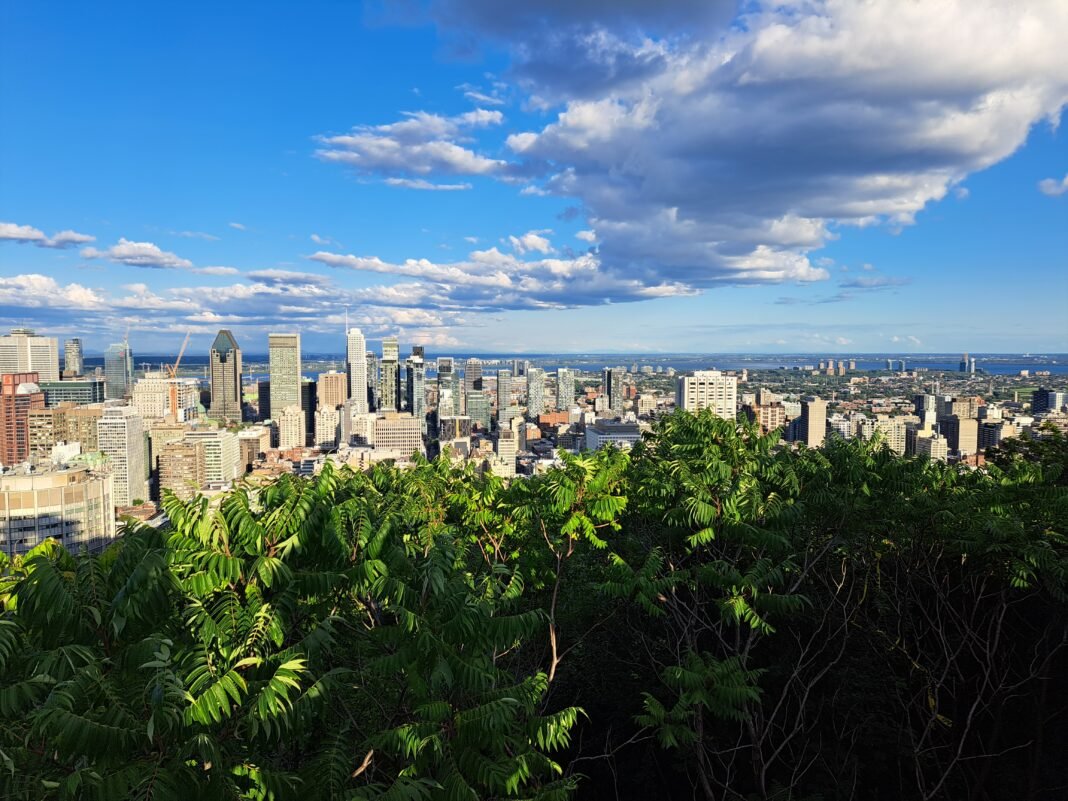

No other Canadian province ties the question of where to live so tightly to language. In Quebec, choosing between a mostly Francophone neighbourhood and a mostly Anglophone or bilingual one carries real consequences for school options, professional networks, and daily social life — a weight that families feel keenly. Montreal makes the point within a single metropolitan area: the Anglophone communities of the west (Westmount, NDG, Côte-Saint-Luc) and the Francophone east (Rosemont–La Petite-Patrie, the Plateau) offer genuinely different ways of living a few kilometres apart. What unites them is value. The terrasse culture, the summer festivals, the public markets, and the lived-in character of the neighbourhoods deliver a European density of experience at prices that newcomers from Toronto and Vancouver still struggle to believe.
1. Plateau-Mont-Royal: The Heart of Montreal
The Plateau is Montreal’s most celebrated neighbourhood — the row houses with their exterior spiral staircases (the balcon culture of summer evenings), Parc Lafontaine’s cycling and winter skating, Duluth Avenue’s BYOB restaurants (apportez votre vin — bring your own wine — is the Plateau dining institution), the Rachel Street and de Maisonneuve cycling routes, and the Mont-Royal Avenue commercial strip (second-hand bookshops, independent record stores such as Aux 33 Tours, and a dense run of cafés and bistros) create a neighbourhood that is uniquely Montreal in character. The independent boucheries and bakeries along Saint-Denis, and the Marché des Saveurs at the nearby Jean-Talon Market (showcasing local Quebec producers) complete the picture. It is primarily Francophone, with an Anglophone minority woven through the side streets. Plex and house prices run roughly CAD $900,000–$1.5M; condos CAD $450,000–$700,000.
2. Mile End: The Creative Neighbourhood
Mile End — the neighbourhood north of the Plateau, centred on the Saint-Laurent Boulevard and Bernard Avenue intersection — is Montreal’s creative hub. The rival bagel factories — St-Viateur Bagel and Fairmount Bagel, the two poles of the Montreal bagel tradition — turn out wood-fired rings through the night; the Dieu du Ciel! craft brewery and Café Olimpico (the Italian coffee institution founded in 1970 on Rue Saint-Viateur) set the tone of the street; and a dense concentration of architects, musicians, graphic designers, film directors, and writers has earned the neighbourhood a creative reputation that travels well beyond the city. Traditionally bilingual; English creative class and Francophone artistic community coexist. Median house price CAD $750,000–$1.0M; condos and duplexes CAD $400,000–$650,000.

3. Westmount and NDG: The Anglophone West
Westmount, an independent municipality entirely surrounded by Montreal, is the Anglophone community’s most prestigious address — Victorian mansions on Summit Road above Westmount Park, the Avenue Victoria boutique retail strip, the Westmount Public Library (one of Canada’s finest branch libraries), and a community character that maintains a distinct English Quebec identity within the broader Montreal metropolitan area. Notre-Dame-de-Grâce (NDG), immediately west of Westmount and technically within the City of Montreal, provides the more affordable alternative — Monkland Avenue’s café and restaurant strip, the NDG Sports Centre, and the Loyola Campus of Concordia University anchor a neighbourhood that is primarily Anglophone and highly family-oriented. Westmount median house price CAD $1.5M–$3.0M+; NDG median CAD $700,000–$1.0M.
4. Quebec City: Limoilou and Saint-Roch
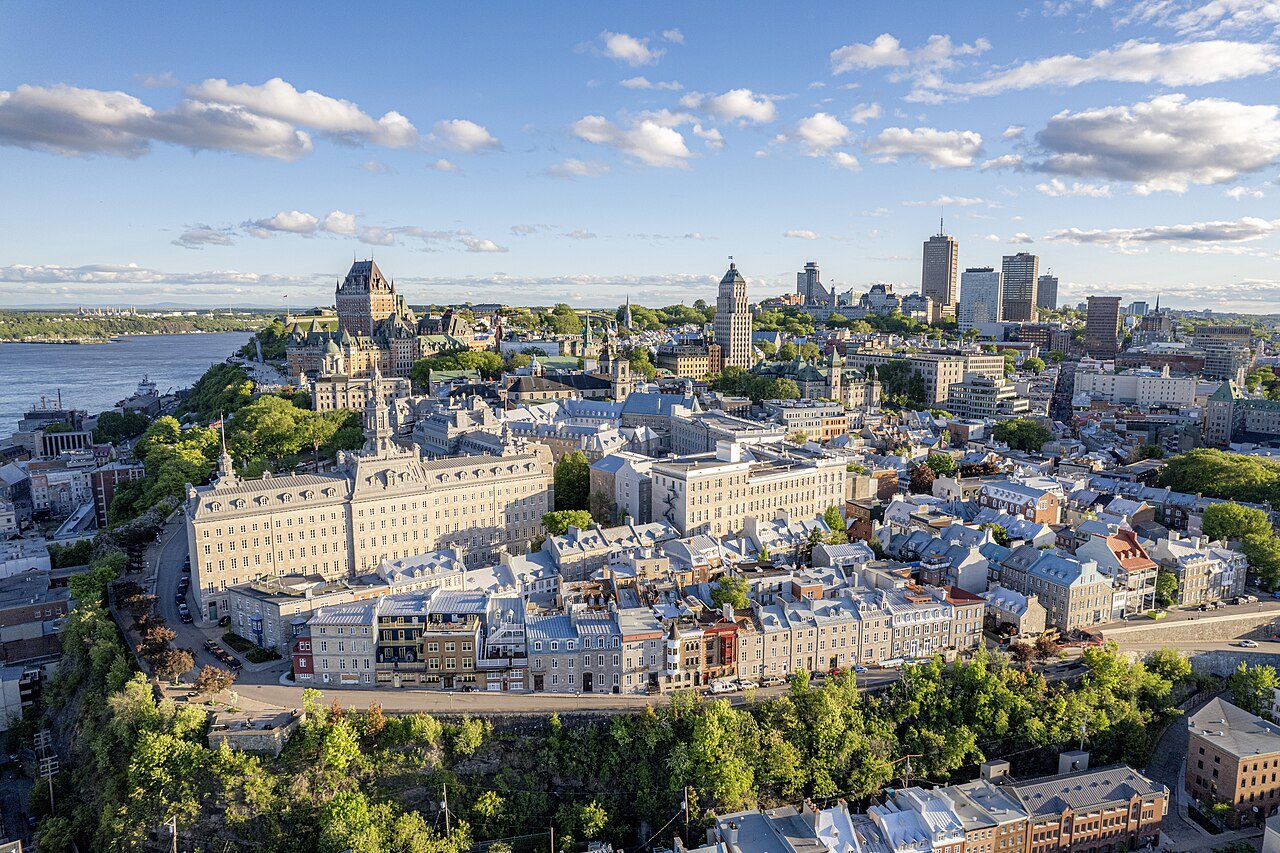
Away from the tourist-heavy Old Town, residential Quebec City clusters around two neighbourhoods. Limoilou, the gentrifying east end, runs on the Cartier Avenue restaurant strip and the Saint-Charles River linear park. Saint-Roch is the downtown comeback story of the 2000s, a former working-class commercial district remade by arts investment into the city’s most dynamic cultural quarter, with the Méduse arts cooperative, the Rue Saint-Joseph commercial strip, the Bibliothèque Gabrielle-Roy, and the Ubisoft-anchored video-game and design studios that have made it the city’s digital hub. For those settling in for the long term, Saint-Jean-Baptiste (café culture on Rue Saint-Jean, just inside the walls) and Montcalm (tree-lined streets south of Grande-Allée) pair walkability with real neighbourhood character a short walk from the historic core. House prices run roughly CAD $380,000–$550,000 across these areas.
5. Sherbrooke and the Eastern Townships
Sherbrooke (about 185,000 residents), the principal city of the Eastern Townships region 150km east of Montreal, provides Quebec’s most complete regional city experience at housing costs (a single-family median around CAD $455,000, with the wider region nearer CAD $400,000) that still undercut Montreal and keep it a strong value residential proposition for remote workers and university-affiliated households. The Université de Sherbrooke (a major French-language research university of roughly 33,000 students) and Bishop’s University (English-language institution in Lennoxville) anchor a bilingual city; the Massawippi and Memphrémagog lake districts handle the recreation; and the Vermont border, 45km south, adds a cross-border dimension. Nearby, the lakeside villages of North Hatley and Magog offer even more characterful alternatives within easy reach of the city.
Quebec’s Regional Identity and Residential Diversity
French is the thread that runs through all of it — not just an administrative fact but the organizing principle of neighbourhood life, professional networks, and everyday social interaction. For households comfortable in the language, the range is remarkable: Montreal’s metropolitan energy, Quebec City’s walled-town history, the wine and lake country of the Eastern Townships, and the four-season outdoors of the Laurentians add up to Canada’s most distinctive provincial lifestyle. Anglophone families have a practical foothold too. Montreal’s west end carries deep English-language institutions — McGill and Concordia, the MUHC hospitals, the long-established communities of Westmount and NDG — that sustain a fully functioning life in English. Beyond the island, though, working French is what opens the door to a community, and it is worth building before the move rather than after.
Making Your Decision
In Quebec the first question is rarely the neighbourhood — it is the language you will live your daily life in. West-end Montreal and a handful of Townships pockets let you function in English; almost everywhere else, comfortable French is the price of entry to schools, work, and the social life that makes a place liveable. After that the trade-offs are the familiar ones: the Plateau’s density and price against Sherbrooke’s space and value, Montreal’s festival summers against Quebec City’s walled-town quiet. Rent for a season before you buy, in the actual neighbourhood and not the postcard version of it — a Plateau winter and a Townships winter are very different propositions, and the gap only shows up once you have lived through one.
Frequently Asked Questions
What makes the Plateau-Mont-Royal the heart of Montreal’s neighbourhood character?
The Plateau is Montreal’s most celebrated neighbourhood — the row houses with their exterior spiral staircases (the balcon culture of summer evenings), Parc Lafontaine’s cycling and winter skating, Duluth Avenue’s BYOB restaurants (apportez votre vin — the Plateau dining institution), the Rachel Street and de Maisonneuve cycling routes, and the Mont-Royal Avenue commercial strip (second-hand bookshops, independent record stores, and a dense run of cafés and bistros) create a neighbourhood that is uniquely Montreal in character. Primarily Francophone; Anglophone community present. Plex and house prices run roughly CAD $900,000–$1.5M; condos CAD $450,000–$700,000. The combination of European urban density, Montreal’s extraordinary cost-of-living advantage over Toronto, and the neighbourhood’s cultural richness makes the Plateau one of the most compelling urban residential choices in North America.
What makes Mile End Montreal’s most celebrated creative neighbourhood?
Mile End — north of the Plateau, centred on the Saint-Laurent Boulevard and Bernard Avenue intersection — is Montreal’s creative hub, where the bagel factories (St-Viateur Bagel and Fairmount Bagel, the two rival institutions of the Montreal bagel tradition) operate through the night, the Dieu du Ciel! craft brewery anchors the bar culture, and Café Olimpico (the Italian coffee institution founded in 1970) defines the street character. The concentration of architects, musicians, graphic designers, film directors, and writers (Arcade Fire was formed in Mile End) has made the neighbourhood a creative community of international reputation. Traditionally bilingual, with English creative class and Francophone artistic community coexisting. Median house price CAD $750,000–$1.0M; condos and duplexes CAD $400,000–$650,000.
What distinguishes Westmount and NDG as Montreal’s best Anglophone neighbourhoods?
Westmount, an independent municipality entirely surrounded by Montreal, is the Anglophone community’s most prestigious address — Victorian mansions on Summit Road above Westmount Park, the Avenue Victoria boutique retail strip, and the Westmount Public Library (one of Canada’s finest branch libraries) maintain a distinct English Quebec identity. Notre-Dame-de-Grâce (NDG), immediately west and technically within the City of Montreal, provides the more affordable alternative: Monkland Avenue’s café and restaurant strip, the NDG Sports Centre, and the Loyola Campus of Concordia University anchor a primarily Anglophone, highly family-oriented community. Westmount median house price CAD $1.5M–$3.0M+; NDG median CAD $700,000–$1.0M.
What makes Saint-Roch and Limoilou the best residential neighbourhoods in Quebec City?
Quebec City’s most dynamic residential neighbourhoods outside the tourist-focused Old Town are Saint-Roch and Limoilou. Saint-Roch — the downtown revitalization success story of the 2000s — was transformed by arts investment into Quebec City’s most creative cultural neighbourhood: the Méduse arts cooperative, the Rue Saint-Joseph commercial strip, the Bibliothèque Gabrielle-Roy, and a cluster of Ubisoft-led video-game and design studios anchor a neighbourhood of genuine urban vitality. Limoilou, the gentrifying east-end neighbourhood, provides the Cartier Avenue restaurant strip and the Saint-Charles River linear park. The Montcalm neighbourhood (tree-lined residential streets south of Grande-Allée) and Saint-Jean-Baptiste (café culture on Rue Saint-Jean, immediately inside the walls) complete Quebec City’s residential picture. Median house prices CAD $380,000–$550,000 across these neighbourhoods.
What makes Sherbrooke and the Eastern Townships Quebec’s best regional alternative for remote workers?
Sherbrooke (about 185,000 residents), 150km east of Montreal, provides Quebec’s most complete regional city experience for remote workers and university-affiliated households — a single-family median around CAD $455,000 (well under Montreal), the Université de Sherbrooke (a major French-language research university of roughly 33,000 students) and Bishop’s University (English-language, in Lennoxville), and the Massawippi and Memphrémagog lake districts for recreation. The proximity to Vermont (45km from the border) adds a cross-border dimension. The North Hatley and Magog villages of the Eastern Townships provide even more characterful lifestyle alternatives within the Sherbrooke regional orbit — villages on lake shores with independent restaurants, artists’ studios, and Quebec’s most European rural character outside the Laurentians.