Rhode Island packs a startling density of travel experiences into 1,214 square miles — the smallest state in the country contains Newport’s Gilded Age mansions (the richest concentration of 19th-century American wealth on display anywhere), Providence’s revival as a food, arts, and university city, 400 miles of coastline and the broad beaches of South County, and a colonial core that survives in unusually intact form. Its size is the practical advantage: you can drive across the state in 45 minutes, which puts the Newport Cliff Walk, the Providence restaurant scene, the South County shore, and Block Island’s protected interior all within reach of a single base. Treat Rhode Island as a destination in its own right rather than a day trip from Boston, and a state shaped by four centuries of history, maritime trade, industrial invention, and recent cultural renewal comes into focus.
Newport: America’s Gilded Age Capital
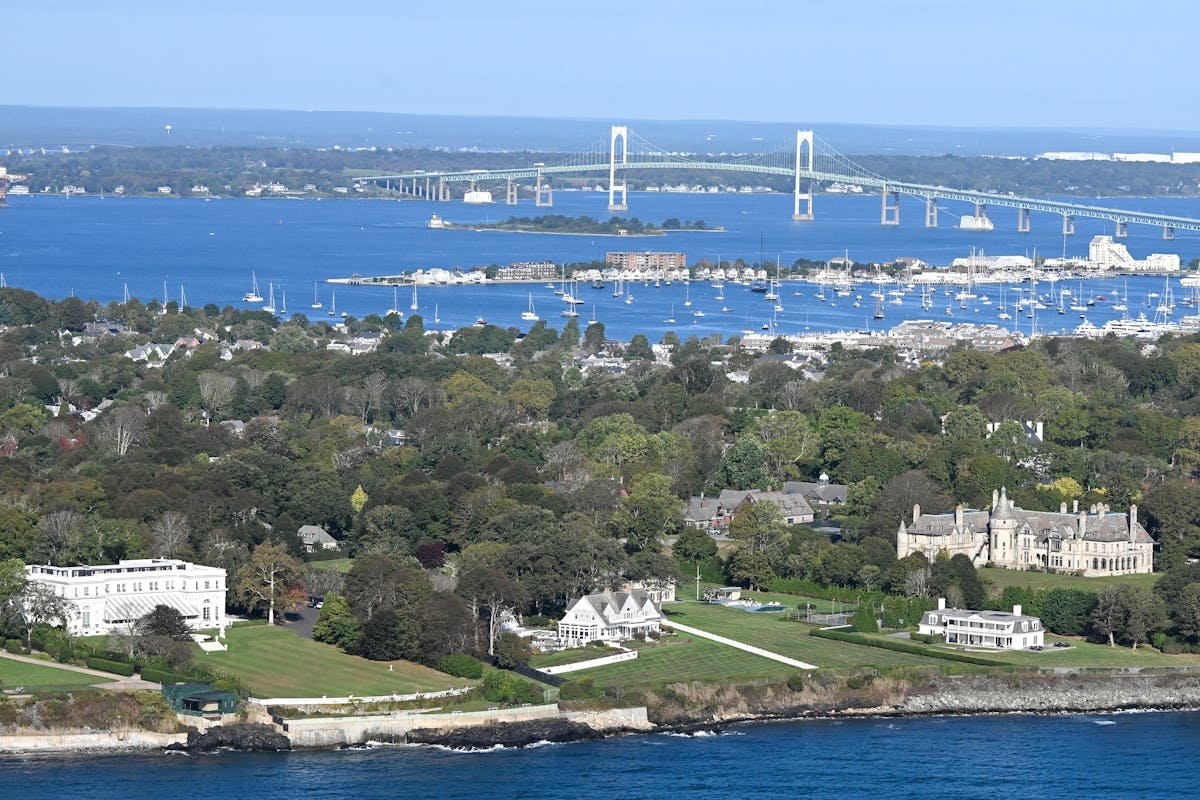
Newport is the primary reason most visitors come to Rhode Island, and it delivers more than the reputation suggests. The Cliff Walk, a 3.5-mile National Recreation Trail along the rocky Atlantic shoreline between the Gilded Age mansions and the ocean, puts open water on one side and the back lawns and terraces of the Vanderbilt and Belmont summer cottages on the other — a route with few equals on the New England coast. The mansions themselves run to extremes: the Breakers (70 rooms, completed in 1895 for Cornelius Vanderbilt II), Marble House (inspired by the Petit Trianon at Versailles), and Rosecliff (modeled on the Grand Trianon) are open for tours through the Preservation Society of Newport County, and a single day of planning is enough to walk through some of the most extravagant private homes the country has built.
Beyond the mansions, Newport’s Bellevue Avenue historic district preserves colonial-era architecture worth a slow afternoon — Trinity Church (1726), the Touro Synagogue (1763, the oldest surviving synagogue building in the United States), and the Colony House (1739). The Newport Folk Festival and Newport Jazz Festival, held at Fort Adams State Park each summer, have shaped American music for decades and still draw artists and crowds from across the country.
Providence: The Renaissance City
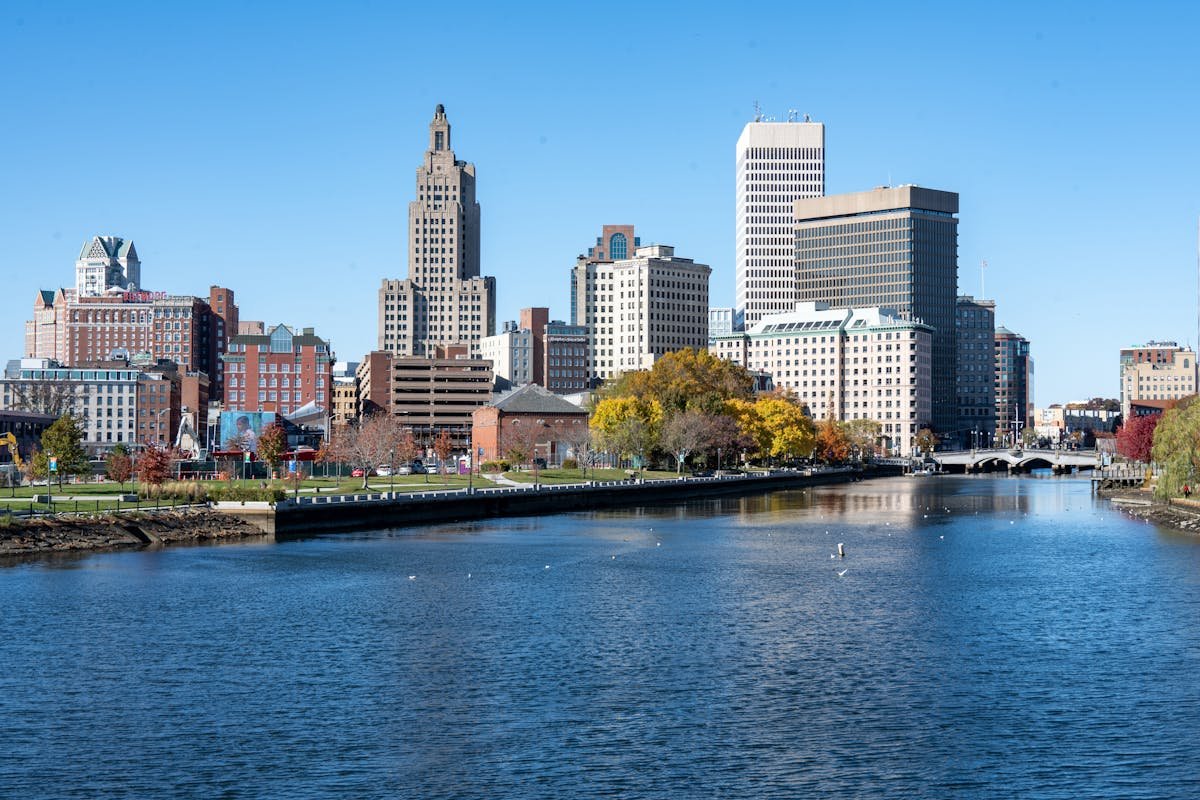
Few American cities have reinvented themselves as thoroughly as Providence. A former mill town, it uncovered and revitalized its buried canal system through the WaterFire installation — an outdoor sculpture in which nearly 100 bonfires burn on the surface of the Providence River on summer and fall nights. Its restaurant scene has earned steady national recognition through James Beard Award wins and nominations clustered in the Federal Hill and College Hill neighborhoods, and its two anchor schools, Brown University and RISD, generate cultural output far out of proportion to the city’s population.
The RISD Museum, on College Hill, ranks among the country’s great university art collections — more than 100,000 works spanning ancient to contemporary, with particular strengths in American decorative arts, Japanese woodblock prints, and European painting. A short walk away, the Providence Athenaeum (1838), a Greek Revival subscription library tied to Edgar Allan Poe’s brief Providence courtship, is one of New England’s most atmospheric reading rooms. Federal Hill, the Italian-American neighborhood west of downtown, anchors a stretch of red-sauce restaurants, salumerias, and pastry shops that hold their own against anything between New York and Boston.
South County Beaches and Block Island
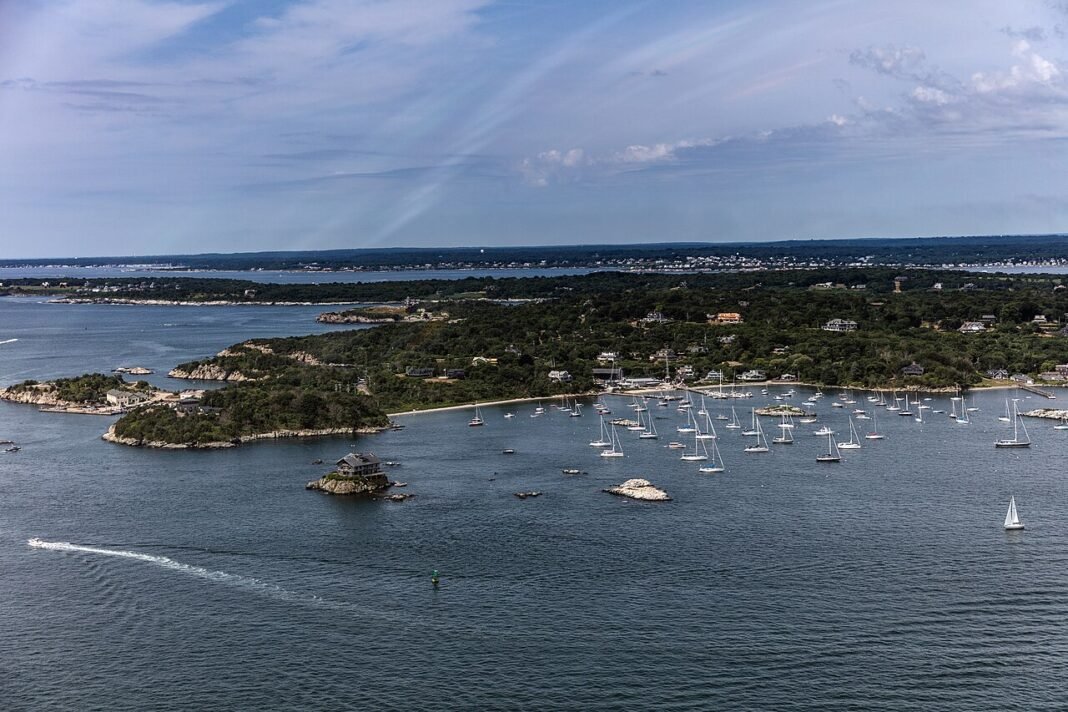
South County is where Rhode Islanders go to swim. Narragansett Town Beach, Scarborough State Beach, and the long barrier strand of East Matunuck State Beach offer Atlantic ocean swimming with noticeably thinner summer crowds than the Cape Cod beaches to the north. Block Island, 13 miles offshore and reachable by ferry from Point Judith in about an hour, has gone further toward protecting itself than almost anywhere on the coast — roughly 47 percent of the island is permanently conserved open space, including the Mohegan Bluffs (150-foot clay cliffs above the Atlantic) and the Greenway trail network. The Nature Conservancy named Block Island one of its “last great places” in the Western Hemisphere.
The Blackstone River Valley
The Blackstone River Valley, running from Worcester, Massachusetts to Providence, is the birthplace of the American Industrial Revolution. Slater Mill in Pawtucket (1793) was the first successful water-powered cotton spinning mill in North America, and the Blackstone’s fall line powered a textile industry that industrialized New England before any other region of the country. Established in 2014, the Blackstone River Valley National Historical Park gathers the mill villages, canal remnants, and river corridor that tell this origin story. The Blackstone River Bikeway, planned to run 48 miles when complete with roughly half now open in connected sections, follows the historic canal corridor from Providence north through the mill villages — a flat, shaded ride that pairs well with a stop at the mill.
Practical Information
T.F. Green Airport (PVD) in Warwick serves Rhode Island with connections to major hubs; Boston Logan (BOS), 60 miles north, provides broader international and domestic connectivity. Amtrak’s Northeast Corridor stops in Providence (Boston’s South Station to Providence runs about 40 minutes on the Acela, under an hour on regional trains). Within Rhode Island, a car is practical for exploring beyond Providence’s walkable neighborhoods. The state’s peak travel season is June through September; Newport’s summer crowds are genuine, and advance planning for mansion tours and accommodations is essential for July and August weekends. The shoulder seasons — late May, September, and October — provide the best combination of accessibility and reduced crowds.
Rhode Island’s compact geography suits multi-day itineraries that move between the state’s distinct environments — a first day in Providence for the RISD Museum, WaterFire if the schedule aligns, and a Federal Hill dinner; a second day on the Newport Cliff Walk and mansion tours; a third day at the South County beaches or on the Block Island ferry. None of it requires interstate driving, and the combination of colonial history, Gilded Age opulence, maritime culture, and contemporary arts gives the state an unusually high return on the time a traveler puts in.
Getting the Most Out of Your Visit
A few practical points that will improve any trip to Rhode Island. Book accommodation and major attractions — particularly national parks, popular hiking trails, and well-known restaurants — as far in advance as possible; the best-known options can fill weeks or months ahead, especially in peak season. A car gives you the most flexibility for exploring beyond the main centers, and many of Rhode Island’s most rewarding experiences sit in places not easily reached by public transport. The sharpest local knowledge tends to come from regional visitor centers, independent bookshops, and conversations with residents — the discoveries you remember are rarely the ones in the guidebooks. Allocate more time than you think you need: Rhode Island consistently rewards travelers who slow down and explore in depth rather than trying to cover maximum ground in minimum time.
Frequently Asked Questions
What should I see among Newport’s Gilded Age mansions and historic district?
Newport’s Cliff Walk — a 3.5-mile National Recreation Trail along the rocky Atlantic shoreline — runs with the ocean on one side and the back lawns and terraces of Vanderbilt and Belmont summer cottages on the other. The mansions are open for tours through the Preservation Society of Newport County: the Breakers (70 rooms, completed in 1895 for Cornelius Vanderbilt II in a design inspired by 16th-century Genoese palaces), Marble House (inspired by the Petit Trianon at Versailles), and Rosecliff (modeled on the Grand Trianon, with the largest ballroom in Newport). Newport’s Bellevue Avenue historic district also holds the Touro Synagogue (1763), the oldest surviving synagogue building in the United States, and Trinity Church (1726). The Newport Folk Festival and Newport Jazz Festival, both at Fort Adams State Park, count among the country’s most storied summer music events.
What turned Providence into one of New England’s leading small cultural cities?
Providence has staged one of the more remarkable urban turnarounds of any American city — a former industrial city revitalized by the WaterFire installation (in which nearly 100 bonfires burn on the surface of the Providence River on summer and fall nights), a restaurant scene that has earned steady national recognition through James Beard Award wins clustered in the Federal Hill and College Hill neighborhoods, and a university presence (Brown University and the Rhode Island School of Design) that generates cultural output far out of proportion to the city’s population. The RISD Museum ranks among the country’s great university art collections — more than 100,000 works spanning ancient to contemporary, with particular strengths in American decorative arts, Japanese woodblock prints, and European painting. Federal Hill, the Italian-American neighborhood west of downtown, anchors a dining scene that holds its own against anything between New York and Boston.
Why is Block Island known for wildlife and conservation?
Block Island, 13 miles offshore and reachable by ferry from Point Judith in about an hour, has gone further toward protecting itself than almost anywhere on the New England coast — roughly 47 percent of the island is permanently conserved open space, including the Mohegan Bluffs (150-foot clay cliffs above the Atlantic), the Greenway trail network, and multiple wildlife management areas. The Nature Conservancy named Block Island one of its last great places in the Western Hemisphere, recognizing it as a migratory bird landfall — the island’s isolated position in Block Island Sound makes it a critical stopover for songbirds during fall migration. Its small-town character (roughly 1,000 year-round residents), single main road, and limited commercial development reflect a conservation culture that has shaped the island’s identity for decades.
What is the Blackstone River Valley’s significance in American industrial history?
The Blackstone River Valley, running from Worcester, Massachusetts to Providence, is the birthplace of the American Industrial Revolution — Slater Mill in Pawtucket (1793) was the first successful water-powered cotton spinning mill in North America, establishing the model for factory production that would industrialize the eastern United States. The Blackstone River’s fall line drove a textile industry that mechanized New England before any other region of the country. The Blackstone River Valley National Historical Park, established in 2014, encompasses the mill villages, canal remnants, and river corridor that tell this industrial origin story across both Rhode Island and Massachusetts. The Blackstone River Bikeway, planned to span 48 miles when complete (roughly half now open in connected sections), follows the historic Blackstone Canal corridor from Providence north through the mill villages, a flat, shaded ride that pairs well with a stop at the mill.
What does Rhode Island offer travelers despite being the smallest US state?
Rhode Island packs a startling density of travel experiences into 1,214 square miles — the country’s smallest state holds Newport’s Gilded Age mansions, Providence’s nationally recognized food and arts scene, 400 miles of coastline with some of the best beaches in the northeastern United States, and a colonial architecture heritage dating to the 1630s. The state’s practical advantage is its size: you can drive across it in 45 minutes, so the Newport Cliff Walk, the Providence restaurant scene, the South County beaches, and Block Island’s protected interior are all within easy reach of any base. South County’s Narragansett Town Beach, Scarborough State Beach, and East Matunuck State Beach offer Atlantic ocean swimming in an environment less crowded than Cape Cod to the north. Rhode Island rewards visitors who treat it as a destination in its own right rather than a day trip from Boston.