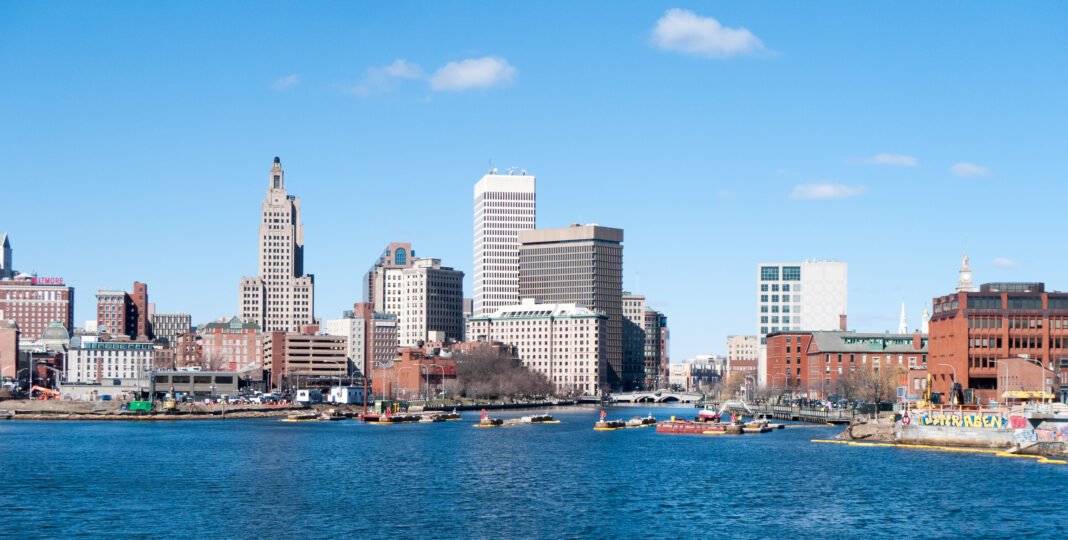
Moving to Rhode Island is administratively straightforward — the Ocean State’s systems are efficient, the requirements are clearly defined, and the state’s small size makes the practical logistics of establishing a new household simpler than in larger states. The substantive preparation involves understanding the financial implications of New England living (utilities are expensive, housing appreciates steadily, property taxes vary significantly by municipality), the specific character of the community you’ve chosen (Providence’s urban rhythms are very different from Newport’s seasonal tourism cycle or South County’s beach-oriented pace), and the genuine New England winters that require preparation from households arriving from milder climates. For households moving from Boston or New York, Rhode Island often exceeds expectations — the combination of Providence’s cultural depth, Newport’s historic drama, and coastline access at prices below the Massachusetts and Connecticut equivalents consistently delivers value that the state’s modest national profile doesn’t prepare visitors for.
Driver’s License and Vehicle Registration
- License window: 30 days from establishing Rhode Island residency
- Required documents: Out-of-state license, proof of identity (passport or birth certificate), proof of Social Security number, and two Rhode Island residency documents (utility bill, bank statement, or lease/mortgage)
- REAL ID: Rhode Island has implemented REAL ID — request the REAL ID compliant license specifically if you need it for federal identification purposes (air travel, federal building entry)
- Vehicle registration: Must complete at DMV within 30 days — bring title, proof of insurance, and registration fee payment
- Safety and emissions inspection: Rhode Island requires a combined safety and emissions inspection at least once every two years (vehicles under 8,500 lbs GVWR); new vehicles are exempt for the first two years or 24,000 miles. New residents must have the vehicle inspected within five days of registering it
- Vehicle excise tax: Rhode Island fully eliminated its annual motor vehicle excise tax statewide beginning with the 2022 tax year, so new residents no longer owe an annual car tax to their municipality
Finding Housing: Providence’s Triple-Deckers
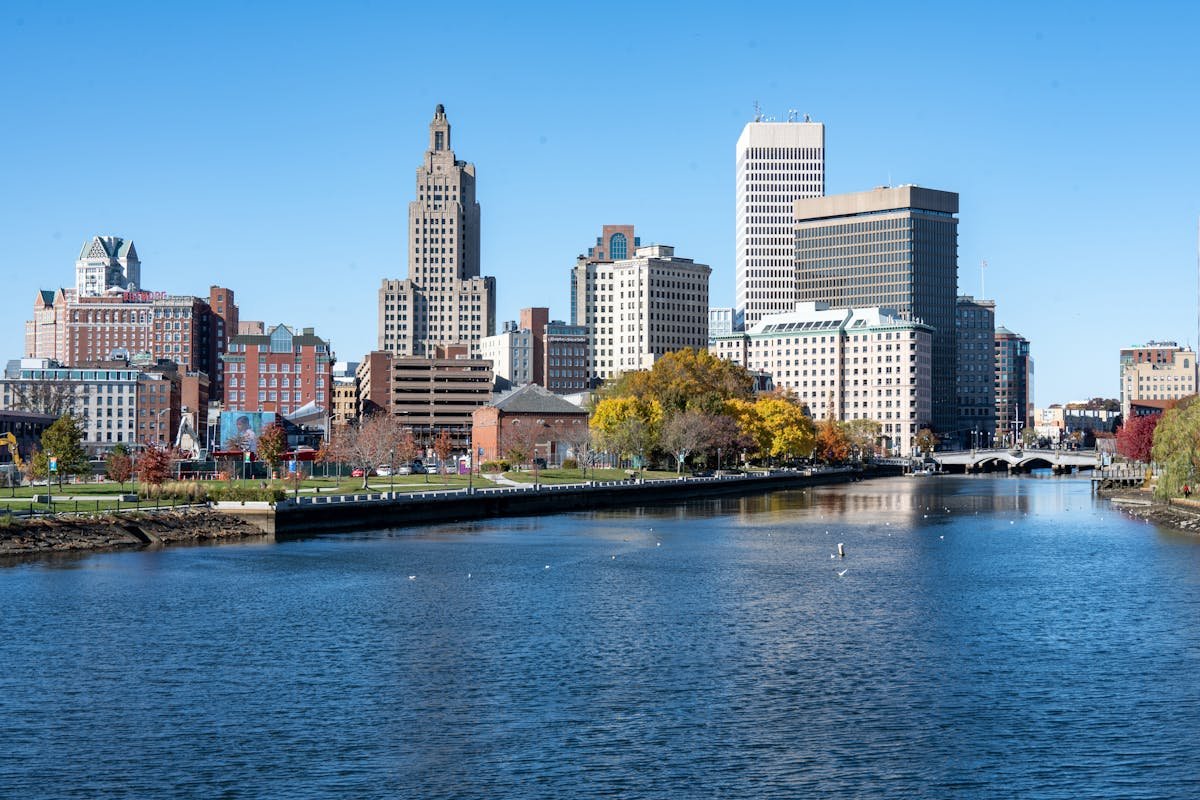
Providence’s housing stock is dominated by the triple-decker — the three-unit multi-family building that houses three stacked apartments, typically on a 30-foot lot, that defines the residential fabric of the city and its inner suburbs. For new residents, the triple-decker creates a distinctive ownership opportunity: buying a triple-decker and occupying one unit while renting the other two can reduce carrying costs to near zero in the current rental market, providing an entry into homeownership at a combined purchase price ($400,000–$550,000) that produces owner-occupied living at costs below comparable rental rates. This “house-hacking” approach is particularly well-established in Providence’s East Side and Federal Hill neighborhoods and represents one of the most financially favorable paths to Rhode Island homeownership.
Finding Employment
Employment in the Ocean State is anchored by healthcare (Brown University Health — the renamed Lifespan system — along with Care New England and Brown Medicine collectively employ tens of thousands and provide the research and clinical infrastructure of a major academic medical complex; the Brown University Medical School is one of the most selective in the country), education (Brown University, RISD, Providence College, and URI collectively employ thousands and generate significant spin-off activity), financial services (Fidelity Investments maintains significant operations in Smithfield; Amica Mutual and other insurers are headquartered in the state), and the defense/manufacturing sector concentrated in the Quonset Business Park on Narragansett Bay. The Ocean State has worked deliberately to attract biotechnology and life science companies, and the I-195 redevelopment corridor in Providence (on land freed by the relocation of an interstate highway) has attracted research spin-offs and technology companies in a purpose-built innovation district.
Climate Preparation
Rhode Island’s climate is genuine New England — four distinct seasons with winters that require preparation. Providence averages 36 inches of snow annually (less than Boston but real), January temperatures averaging in the low 30s°F with regular dips below 20°F, and the nor’easter storms that are the signature weather event of the Atlantic coast from November through March. The coastal communities experience the moderating influence of Narragansett Bay and the Atlantic, which reduces temperature extremes slightly, but the wind exposure can make coastal winters feel more severe than inland temperatures suggest. Summer (June through September) brings some of the finest weather in the northeastern United States, with temperatures in the high 70s–low 80s°F and an ocean breeze that keeps the coastal communities comfortable through the warmest months.
Schools and Education
Public school quality across the state varies by district in the pattern common to New England — the suburban communities of Barrington, East Greenwich, Cumberland, and South Kingstown consistently rank among the state’s top performers, while the Providence and Central Falls urban districts face the challenges of poverty concentration and demographic complexity that characterize urban schools across the country. The Rhode Island Department of Education’s school report card system provides performance data by school and district. For families, the suburban ring around Providence — Barrington, East Greenwich, North Kingstown, Lincoln — puts top school districts within reach at housing costs meaningfully under what equivalent Massachusetts towns command. Brown University, RISD (Rhode Island School of Design), Providence College, and the University of Rhode Island anchor higher education across the state.
Cultural and Community Life
The state’s cultural output far outstrips its population. The combined influence of Brown University and RISD packs Providence with artists, designers, musicians, and intellectuals, giving the city a creative energy you would expect from somewhere several times its size. The WaterFire installation draws hundreds of thousands of visitors annually and anchors a community gathering ritual unlike anything in most American cities. The Newport Folk Festival and Newport Jazz Festival are internationally prestigious events that have launched careers and defined musical movements since their founding. The state’s sailing culture, concentrated in Newport and the Narragansett Bay communities, knits residents together across the social spectrum. The restaurant scene — with multiple James Beard-recognized chefs and an expanding roster of independent kitchens on Federal Hill, the East Side, and Wickenden Street — gives Providence dining that punches well above the city’s weight.
Preparing for Your Move
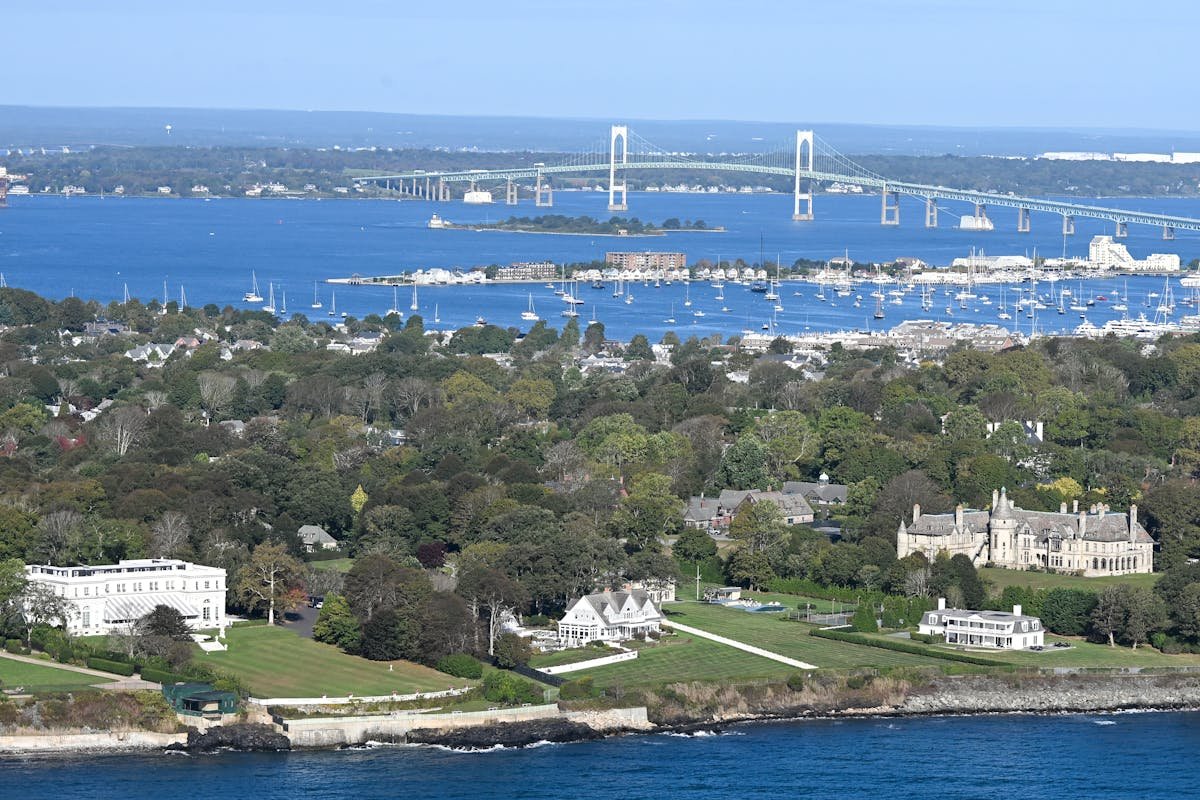
The logistical side of relocating to Rhode Island follows a familiar sequence regardless of where you are coming from: secure housing before or immediately after arrival, transfer any professional licenses if your occupation requires it, register your vehicle and update your driver’s license within the timeframe required by local law (typically 30 to 90 days for new residents), and register to vote at your new address. Connecting with community organizations, sports clubs, neighborhood associations, or professional networks early in the process can dramatically accelerate the sense of belonging. In many parts of Rhode Island that have grown rapidly over the past decade, a significant proportion of the population has relocated from elsewhere, which means that being new to the area is genuinely normal — and that the infrastructure for meeting people and building a life from scratch is well established.
Frequently Asked Questions
What are the driver’s license and vehicle registration requirements when moving to Rhode Island?
Driver’s license: must be obtained within 30 days of establishing Rhode Island residency. Requires proof of identity, Social Security number, and two Rhode Island residency documents. Vehicle registration: within 30 days at the DMV; bring title, proof of insurance, and registration fee payment. Rhode Island requires a combined safety and emissions inspection at least once every two years (new vehicles are exempt for the first two years or 24,000 miles), and new residents must have the vehicle inspected within five days of registering it. Rhode Island fully eliminated its annual motor vehicle excise tax statewide beginning with the 2022 tax year, so there is no longer an annual car tax to budget for.
What is the Providence triple-decker opportunity and how does it work?
Providence’s housing stock is dominated by the triple-decker — a three-unit multi-family building with three stacked apartments on a 30-foot lot. For new residents, this creates a distinctive ownership strategy: buying a triple-decker and occupying one unit while renting the other two can reduce carrying costs to near zero in the current rental market. Purchase prices of $400,000–$550,000 produce owner-occupied living at costs below comparable rents when the other two units are rented. This approach is particularly well-established in Providence’s East Side and Federal Hill neighborhoods and represents one of the most financially favorable paths to Rhode Island homeownership available to new residents willing to become landlords alongside their primary residence.
What is Rhode Island’s employment base?
Three major employment clusters: (1) Healthcare and education — Brown University Health (the renamed Lifespan system), Care New England, and Brown Medicine collectively anchor an academic medical complex tied to Brown University’s Medical School; Brown University and RISD together drive significant research and creative industry employment. (2) Financial services — Fidelity Investments maintains significant operations in Smithfield; Amica Mutual is headquartered in the state. (3) Defense and manufacturing — the Quonset Business Park on Narragansett Bay hosts a concentration of defense and industrial manufacturing firms. The I-195 Redevelopment District in Providence (on land freed by the relocation of an interstate highway) has attracted research spin-offs and technology companies as a purpose-built innovation district.
What cultural assets make Rhode Island distinctive for new residents?
Rhode Island’s cultural life runs far ahead of its population. The combined influence of Brown University and RISD (Rhode Island School of Design) packs Providence with artists, designers, musicians, and intellectuals, giving the city a creative energy you would expect from somewhere far larger. WaterFire — a site-specific artwork of more than 80 bonfires on the three rivers of downtown Providence — draws hundreds of thousands annually and provides a community gathering point with no equivalent in most US cities. The Newport Folk Festival and Newport Jazz Festival are internationally prestigious events. Providence’s restaurant scene — with multiple James Beard-recognized chefs concentrated on Federal Hill and the East Side — makes it a serious dining city by any standard, not just for its size.
What are Rhode Island’s best school districts and climate realities for new residents?
Top school districts: Barrington, East Greenwich, Cumberland, and South Kingstown consistently rank among the state’s highest performers; suburban communities around Providence provide school access at housing costs meaningfully below comparable Massachusetts communities. Climate: real New England seasons — Providence averages 36 inches of snow annually; January averages in the low 30s°F with regular dips below 20°F; nor’easter storms are the signature weather event November through March. Summer (June through September) offers some of the finest weather in the Northeast: high 70s–low 80s°F with ocean breeze. The combination of real winters requiring preparation and exceptional summers is the Rhode Island climate trade-off that most residents find net-positive once they’ve fully experienced both seasons.