


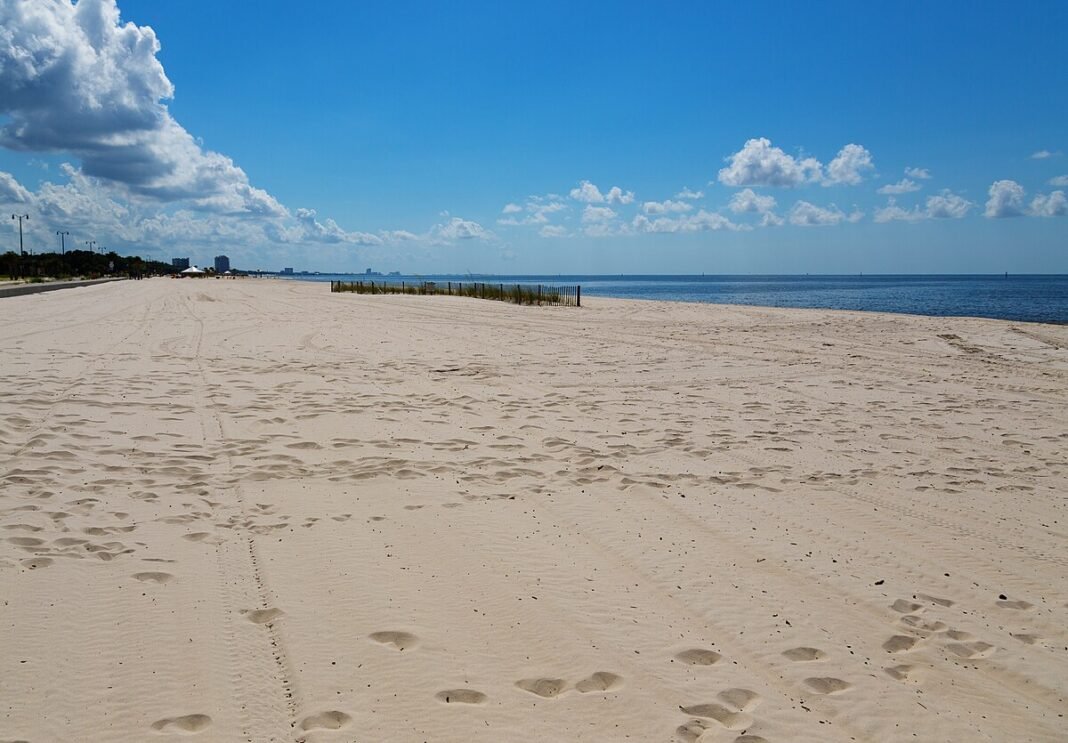
Moving to Mississippi offers some of the most dramatic financial benefits of any American state relocation — the combination of the nation’s lowest housing costs, a fast-falling income tax (a flat 4% on taxable income above $10,000 in 2026, scheduled to drop to 3% by 2030 and then phase out entirely), and very low property taxes creates a financial environment that can genuinely reshape household budgets. Capturing those benefits means understanding the state’s administrative requirements, its sharp regional variations (the Gulf Coast, the university towns, the Delta, and the Jackson metropolitan area each function as distinct economic and cultural worlds), and the practical realities of living somewhere that pairs exceptional affordability with persistent infrastructure and public-service gaps that deserve honest assessment.

Driver’s License and Vehicle Registration
Driver’s license: New Mississippi residents must obtain a Mississippi driver’s license within 60 days of establishing residency. Driver licensing is handled by the Mississippi Department of Public Safety (DPS) through its Driver Service Bureau offices — separate from vehicle registration, which the county tax collector handles. Required: proof of identity (US passport, or birth certificate), proof of Social Security number, and proof of Mississippi residency (utility bill, bank statement, or lease showing Mississippi address). Vision screening is required. The license transfer process is straightforward — surrender your out-of-state license, pass the vision test, and pay the fee. The state issues REAL ID-compliant driver’s licenses; applicants requesting the REAL ID designation need the standard documentation package.
Vehicle registration: Mississippi handles vehicle registration through the county tax collector’s office (an unusual arrangement in which the county tax collector, rather than a separate DMV, processes tags and titles). Out-of-state vehicles should be registered within 30 days of establishing residency. The state requires no safety inspection — Mississippi repealed its mandatory vehicle inspection program in 2015 — and runs no statewide emissions testing program, a plus for owners of older vehicles that might fail emissions checks elsewhere. Registration fees are relatively low; the county ad valorem tax on vehicles (a personal property tax on the vehicle’s value, paid at registration renewal) is a Mississippi-specific cost that varies by county and value but stays generally modest.
Understanding Mississippi’s Infrastructure Reality
Mississippi’s low cost structure is inseparable from its historically low public investment — a state that has consistently ranked among the lowest in the country for per-capita tax revenue has also ranked among the lowest for per-capita spending on roads, water systems, schools, and public health. Before relocating, assess the actual infrastructure quality of the town you’re targeting; statewide affordability does not guarantee adequate public services in every location.
Jackson, the state capital, has experienced a high-profile water system crisis — the city’s water infrastructure, aging and inadequately maintained, failed in ways that left roughly 150,000 residents without safe drinking water in 2022, and the remediation continues as of 2026. The Jackson water crisis is an extreme example of a more general pattern: Mississippi’s rural and some urban water systems, sewage treatment, and road infrastructure in many communities reflect the consequences of limited public investment. Before buying a home anywhere in the state, research the utility system serving that exact property — the well-versus-municipal water source, the municipal system’s maintenance record, and the property’s flood-zone status.
Healthcare Access
Mississippi’s healthcare landscape requires specific planning for new residents — the state has among the worst health outcomes in the country, a significant shortage of physicians (particularly specialists and primary care providers in rural areas), and the consequences of its decision not to expand Medicaid under the Affordable Care Act, which left hundreds of thousands of low-income Mississippians without insurance coverage and constrained the financial viability of rural hospitals. Several rural Mississippi hospitals have closed in recent years, creating “healthcare deserts” in some Delta and southeastern counties.
For new residents, the practical implication depends strongly on which Mississippi community they’re moving to. The university cities (Oxford, Hattiesburg, Starkville) and Tupelo have reasonable healthcare access through their hospital systems. The Gulf Coast communities are served by the Singing River Health System and Merit Health Biloxi. Jackson has the University of Mississippi Medical Center, the state’s primary academic medical center with full specialty services. Rural communities, particularly in the Delta, face genuine healthcare access challenges that mean either driving long distances for specialist care or accepting limited primary-care options. Anyone with a chronic condition or ongoing specialist needs should map out healthcare access in their target town before committing to the move.

Employment in Mississippi
Mississippi’s employment landscape is concentrated in specific sectors that define the state’s economic character. State and local government employment — driven by the state capital in Jackson, the universities, the school districts, and county governments — is the largest single employer category in the state. Healthcare is the second-largest sector, employing physicians, nurses, therapists, and administrators across the hospital systems in Jackson, Hattiesburg, Tupelo, and the Gulf Coast. Manufacturing is Mississippi’s most distinctive private-sector employment category: the Toyota plant in Blue Springs (near Tupelo), the Ingalls Shipbuilding facility in Pascagoula (building US Navy ships, the state’s largest private employer at roughly 11,000 workers), the Nissan plant in Canton, and numerous smaller manufacturers provide skilled-trade and engineering jobs at wages above the Mississippi median.
Aerospace has grown fast in the state — Airbus’s final assembly plant in Mobile, Alabama draws a steady stream of Gulf Coast commuters from Mississippi; Collins Aerospace and other suppliers run Mississippi operations; and the state has actively recruited aerospace work to diversify beyond its traditional automotive and shipbuilding base. Agriculture and food processing — catfish farming (Mississippi raises roughly 60% of the nation’s farm-raised catfish), poultry processing, and cotton ginning — employs large numbers in rural counties. Remote work has become an increasingly important category as the income and quality-of-life arbitrage of the state’s cost structure pulls in professionals who keep non-Mississippi salaries while living on a Mississippi budget.
Climate and Weather Preparation
Mississippi’s climate is subtropical — hot, humid summers with temperatures regularly reaching 95–100°F with heat indices of 105–115°F, and mild winters with occasional ice events that the state’s road infrastructure is poorly equipped to handle. Summer heat in Mississippi is the primary climate challenge — the humidity makes the heat index substantially higher than the air temperature, and households without central air conditioning face genuine health risks during peak summer months. Central air conditioning is standard in virtually all Mississippi housing, but the operating cost (electricity bills of $150–$350 monthly in summer) is a meaningful budget item.
Tornado risk runs high here. The state sits squarely within Dixie Alley, the southeastern extension of Tornado Alley that in some years produces more tornadoes per square mile than the Great Plains. Mississippi tornadoes are especially dangerous because trees and rolling terrain limit visibility (unlike the Great Plains, where approaching storms are visible from a distance) and because they strike year-round rather than mainly in spring. Once you arrive, locate the nearest public tornado shelter, set up a weather radio or phone alert system at home, and learn how the local siren network works. The state’s frequent severe weather also includes hurricanes and tropical storms for the Gulf Coast communities — residents south of I-10 should have a hurricane evacuation plan, a supply of emergency provisions, and a realistic assessment of their property’s storm surge exposure.
Frequently Asked Questions
What are the driver’s license and vehicle registration requirements when moving to Mississippi?
Mississippi splits the two functions: driver’s licenses are issued by the Department of Public Safety (DPS) through its Driver Service Bureau offices, while vehicle registration goes through the county tax collector’s office (an unusual arrangement in which the county tax collector, not a separate DMV, processes tags and titles). Driver’s license: must be obtained within 60 days of establishing Mississippi residency. Requires proof of identity, Social Security number, and proof of Mississippi residency. Vision screening required; the transfer process is straightforward — surrender your out-of-state license, pass the vision test, and pay the fee. Vehicle registration: through the county tax collector’s office, within 30 days of establishing residency. Mississippi requires no safety inspection (the mandatory inspection program was repealed in 2015) and has no statewide emissions testing program. The county ad valorem tax on vehicles (a personal property tax based on vehicle value, varying by county) is paid at registration renewal and is generally modest.
What infrastructure research should new Mississippi residents do before choosing a location?
Mississippi’s low cost structure reflects historically low public investment, and infrastructure quality varies significantly by community. Before committing to a specific location, new residents should research: the water system serving the target property (well vs. municipal; if municipal, the system’s maintenance record and recent history). Jackson’s municipal water system experienced a major failure in 2022 that left roughly 150,000 residents without safe drinking water; remediation is ongoing as of 2026 — Jackson is the most prominent example of a more general pattern of aging infrastructure in some Mississippi communities. Research the flood zone status of any target property. Assess the proximity and quality of healthcare facilities for your specific health needs. Infrastructure research is more critical in Mississippi than in most US states.
What is Mississippi’s manufacturing employment base?
Mississippi’s most distinctive private-sector employment is manufacturing. Ingalls Shipbuilding in Pascagoula — building US Navy destroyers, amphibious ships, and other vessels — employs approximately 11,000 workers and is the state’s largest single private employer. Toyota operates a plant in Blue Springs (near Tupelo); Nissan operates a major plant in Canton. Mississippi raises roughly 60% of the nation’s farm-raised catfish. Aerospace has grown fast — Airbus’s final assembly facility in Mobile, Alabama draws commuters from the Gulf Coast, and Collins Aerospace has Mississippi operations. For skilled trades, manufacturing engineering, and shipbuilding professionals, Mississippi offers specialized employment opportunities not available in most states at comparable cost of living.
What are Mississippi’s most significant weather hazards?
Two distinct hazards require preparation from all Mississippi residents. Summer heat: subtropical climate with temperatures reaching 95–100°F and heat indices of 105–115°F from June through September. Central air conditioning is essential — not a luxury. Summer electricity bills run $150–$350/month for a typical home. Tornado risk (“Dixie Alley”): Mississippi sits in the southeastern extension of Tornado Alley, where tornadoes occur year-round (not just spring as in the Great Plains). Mississippi tornadoes are particularly dangerous because the state’s trees and hills limit advance visibility. New residents should identify the nearest community shelter, ensure a weather alert system, and know community sirens. Gulf Coast residents south of I-10 face additional hurricane risk — have an evacuation plan, emergency provisions, and know your property’s storm surge exposure before hurricane season.
How does Mississippi’s cost advantage translate to household financial outcomes?
Mississippi offers some of the most dramatic financial benefits of any US state relocation: among the nation’s lowest housing costs, a fast-falling income tax (a flat 4% on taxable income above $10,000 in 2026, dropping to 3% by 2030 and slated to phase out entirely thereafter), and very low property taxes. Remote workers maintaining non-Mississippi salaries while living in Mississippi’s cost environment can achieve household financial goals — debt elimination, down payment accumulation, retirement saving — at rates that are genuinely transformative compared to higher-cost markets. The trade-off is honest: Mississippi has persistent challenges in public school quality across many districts, healthcare access in rural communities, and infrastructure reliability in some areas. Both sides of that equation are substantial. The households that benefit most research specific communities rather than making statewide assumptions, target the places where the cost advantage runs high and the infrastructure problems stay manageable, and move in with clear eyes about both the upside and the limits.