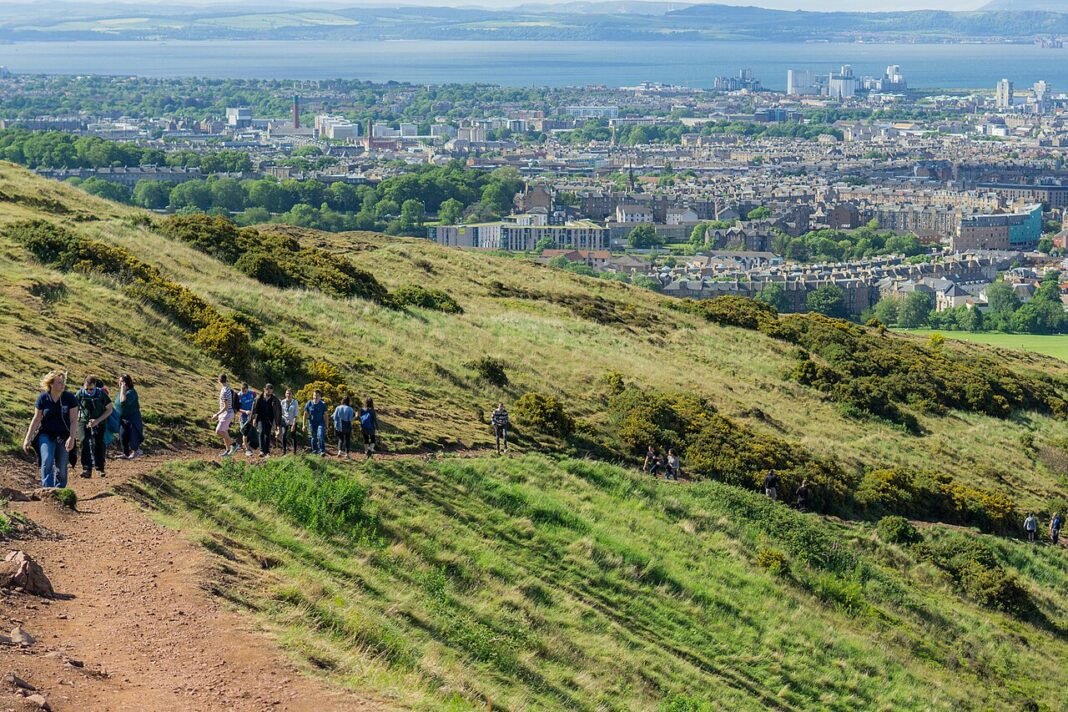
Scotland attracts international relocators for reasons that combine the practical with the profound: the English language, the UK’s globally recognised employment and education infrastructure, the NHS, and the relatively straightforward immigration process (via the UK Home Office’s points-based system, identical to England) sit alongside the extraordinary landscape, the strong sense of national character, the genuinely welcoming social culture, and Scotland-specific financial benefits (free prescriptions, free personal care, free university tuition for domiciled students) that make Scotland, for the right person, one of the most compelling places to build a life in Europe. Scotland’s population growth challenge — the country loses educated young people to England and internationally, and has ambitious immigration targets to replace the declining working-age population — means that the Scottish Government actively courts new residents through programmes like the recently proposed Scottish Visa pilot, which would give Scotland greater autonomy over immigration in designated shortage areas.
Immigration to Scotland
Scotland is part of the UK and uses the same immigration arrangements administered by the UK Home Office. There is no separate Scottish visa — all immigration routes available in England apply equally in Scotland, and Scottish-specific immigration policy remains limited to consultation and advocacy rather than independent powers. The key routes are identical to England (Skilled Worker Visa, Graduate Visa, Youth Mobility Scheme, Global Talent Visa — see the England Moving guide for details). Scotland’s shortage occupation list (professions where Scotland has particular workforce needs) may attract slightly enhanced points allocations in certain roles.
- EU citizens: As in England, EU citizens who were resident in Scotland before 31 December 2020 have pre-settled or settled status under the EU Settlement Scheme; new EU arrivals require standard UK visas
- Working in Scotland’s public sector: NHS Scotland, the Scottish Government, Highland Council, and the public bodies that anchor Scotland’s labour market are significant employers of skilled workers from the EU and Commonwealth; they are registered Skilled Worker Visa sponsors and recruit internationally for nursing, medicine, teaching, and engineering roles
Finding Employment in Scotland
- NHS Scotland: Scotland’s largest employer, recruiting continuously for nurses, doctors, physiotherapists, pharmacists, and other health professionals. NHS Scotland’s international recruitment programmes actively target India, the Philippines, and the EU for qualified health professionals. Nurse salaries in Scotland follow NHS Scotland pay bands (which are slightly more generous than NHS England at the lower bands) plus Scotland-specific supplements
- Scottish Government and agencies: The Scottish Government, Historic Environment Scotland, NatureScot, Transport Scotland, and the Scottish Environment Protection Agency (SEPA) collectively employ several thousand people in Edinburgh and across the country. The Civil Service Fast Stream operates across Scotland
- Energy sector: Aberdeen’s oil and gas industry and the growing offshore wind and tidal energy field (ScottishPower Renewables, SSE, the Beatrice and Moray Firth wind farms) provide significant technical work. The Scottish Government’s Just Transition for the energy sector — moving workers from oil and gas to renewables — is creating new categories of employment in the corridor from Aberdeen to Inverness
- Technology: Edinburgh’s technology cluster (Skyscanner, FanDuel, Administrate, and a growing group around the Edinburgh BioQuarter life sciences campus) and Glasgow’s expanding tech scene (CodeBase, the UK’s largest technology incubator) offer private sector roles concentrated in the Central Belt
- Whisky industry: The Scotch Whisky industry (which supports around 41,000 jobs in Scotland, almost 39,000 of them flowing directly from production, and roughly 66,000 across the UK as a whole) provides work in distillery operations, blending, logistics, marketing, and tourism across the country. Distillery roles are concentrated in Speyside, Islay, the Highlands, and Campbeltown

Practical Relocation Logistics
- Getting to Scotland: Edinburgh Airport and Glasgow Airport both have direct flights to 100+ destinations; Glasgow Prestwick serves budget airlines. Direct rail from London to Edinburgh takes around 4h20m (East Coast Main Line, trains roughly hourly); London to Glasgow takes about 4h30m via the West Coast Main Line. The Caledonian Sleeper train (London Euston to Edinburgh, Glasgow, Aberdeen, Inverness, and Fort William) provides an overnight service used by regular travellers between Scotland and London
- Driving: Scotland drives on the left; UK driving licences are valid, and EU and most international licences are exchangeable for UK licences without a test. Rural Scotland requires driving — the Highland road network (including single-track roads with passing places) takes some adaptation from urban driving habits. Winter tyres are strongly recommended for Highland driving between November and March
- Banking and finances: Scottish banks (Royal Bank of Scotland, Bank of Scotland, Clydesdale Bank) issue Scottish banknotes, which are legal currency in Scotland and technically legal tender in England, but can cause confusion with English retailers. English banks’ UK accounts work identically in Scotland; this is a UK-wide banking framework
- Council Tax Reduction: Scotland’s Council Tax Reduction scheme provides means-tested reductions for lower-income households; applications go through the relevant Local Authority
Scottish Identity and Cultural Integration
Scotland has a strong and specific national character — the Gaelic and Scots language traditions, the Highland and Lowland distinction, the Presbyterian religious heritage, the literary tradition (Scott, Burns, Stevenson, Conan Doyle, Muriel Spark, Irvine Welsh), and the political identity (a country that voted 62% Remain in Brexit, 45% for independence in 2014, and consistently elects the SNP as its largest party) — that newcomers encounter immediately and engage with for the duration of their time in the country. Scotland’s sense of self is not aggressive or exclusionary; Scots are notably welcoming of newcomers (the Doric hospitality of the northeast and the Glaswegian directness are both expressions of genuine warmth). But understanding that Scotland is a country with its own Parliament, its own legal system (Scots law is separate from English law), its own approach to education, and its own strong sense of nationhood — and that this matters to the people who live here — is the foundation of a successful Scottish relocation.
For those who find their resonance with Scotland’s combination of landscape, culture, and community, the country has an unusual capacity to become home in a way that few places in Europe can match. The Gaelic concept of dùthchas (the relationship between a people and their land) captures something that many newcomers eventually recognise in themselves after years in the Highlands or the islands — a connection to the Scottish landscape that turns a place visited into a place belonged to.
Frequently Asked Questions
What Scotland-specific financial benefits do new residents receive?
Scotland offers several financial benefits not available in England that make it a materially different relocation proposition. Free prescriptions: Scotland abolished NHS prescription charges in 2011 — all prescriptions are free at the point of dispensing for all Scottish residents, saving roughly £180/year for someone on two regular medications compared with the £9.90/item charge in England. Free university tuition: Scottish-domiciled students attending Scottish universities pay no tuition fees; students must be ordinarily resident in Scotland (and in the UK for three years) before starting their degree to qualify. Free personal care: Scotland provides free personal care for adults over 65 who require it, regardless of income — a benefit not available in England’s means-tested arrangements. Free school meals: every primary pupil from P1 to P5 in Scotland receives a free school meal automatically; for P6 and P7, free meals are now linked to families receiving the Scottish Child Payment rather than the universal rollout that was originally promised. The Council Tax Reduction scheme provides means-tested Council Tax relief for lower-income households. Together these benefits represent significant tangible advantages for families and lower-income households relocating from England.
What are Scotland’s main employment sectors?
NHS Scotland is Scotland’s largest employer, recruiting continuously for nurses, doctors, physiotherapists, pharmacists, and other health professionals through internationally active recruitment programmes targeting India, the Philippines, and the EU. The Scottish Government, Historic Environment Scotland, NatureScot, Transport Scotland, and the Scottish Environment Protection Agency collectively employ several thousand people in Edinburgh and across the country. The energy sector is undergoing significant transformation: Aberdeen’s oil and gas industry anchors technical work, while the growing offshore wind and tidal field (ScottishPower Renewables, SSE, the Beatrice and Moray Firth wind farms) is creating new roles in the Just Transition from fossil fuels to renewables. Edinburgh’s technology cluster — Skyscanner, FanDuel, and the Edinburgh BioQuarter life sciences campus — and Glasgow’s tech scene, anchored by CodeBase (the UK’s largest technology incubator), provide private sector technology jobs in the Central Belt. The Scotch Whisky industry supports around 41,000 jobs in Scotland (almost 39,000 of them directly from production) and roughly 66,000 across the UK, concentrated in Speyside, Islay, the Highlands, and Campbeltown.
How do you get around Scotland and what are the driving requirements?
Edinburgh Airport and Glasgow Airport have direct flights to 100+ destinations; Glasgow Prestwick serves budget airlines. Direct rail from London to Edinburgh takes around 4h20m (East Coast Main Line, trains roughly hourly); London to Glasgow takes about 4h30m via the West Coast Main Line. The Caledonian Sleeper train (London Euston to Edinburgh, Glasgow, Aberdeen, Inverness, and Fort William) provides an overnight service used by regular London-Scotland travellers. Scotland drives on the left — UK driving licences are valid, and EU and most international licences exchange for UK licences without a test. Rural Scotland requires driving: the Highland road network includes single-track roads with passing places that take some adaptation from urban driving habits. Winter tyres are strongly recommended for Highland driving between November and March, when black ice and snow are regular hazards on mountain roads.
What is Scotland’s cultural identity and how does it affect newcomers?
Scotland has a strong and specific national character that newcomers encounter immediately — the Gaelic and Scots language traditions, the Highland and Lowland distinction, the Presbyterian religious heritage, the literary tradition (Scott, Burns, Stevenson, Conan Doyle, Spark, Welsh), and a political identity that voted 62% Remain in Brexit and consistently elects the SNP as its largest party. Scotland is a country with its own Parliament, its own legal system (Scots law is separate from English law), its own approach to education, and its own strong sense of nationhood that matters to the people who live here. Scotland’s identity is not exclusionary — Scots are notably welcoming of newcomers, with the Doric hospitality of the northeast and Glaswegian directness both expressions of genuine warmth. The Gaelic concept of dùthchas (the relationship between a people and their land) captures what many newcomers eventually recognise in themselves after years in the Highlands: a connection to the Scottish landscape that turns a place visited into a place belonged to.
What makes Scotland a distinctive housing and lifestyle option compared with England?
Scotland’s housing market offers dramatically better value than equivalent English cities — a detached house in Edinburgh’s desirable suburbs (Morningside, Newington, Marchmont) runs £400,000–£700,000; equivalent properties in Bristol or Manchester inner suburbs run £400,000–£600,000, and the quality-of-life differential is strongly in Scotland’s favour. Glasgow’s West End (Hillhead, Dowanhill, Partick) offers 3-bedroom Victorian tenement flats at £200,000–£350,000 that would be well over £600,000 in comparable London neighbourhoods. Scotland’s Solicitors Property Centres (ESPC in Edinburgh, GSPC in Glasgow) handle residential sales, and the Scottish system of fixed offers above a Home Report value differs from the English sealed-bid approach. The landscape access: Scotland’s Land Reform Act provides the right to roam on virtually all Scottish land — meaning that the Cairngorms, the Trossachs, the Borders hills, and the northwest Highlands coastline are legally accessible on foot to every Scottish resident as a daily reality, not just a weekend aspiration.