Saskatchewan’s residential landscape is shaped by its two competing cities and the distinctive smaller urban and rural centres that fill in the space between them. The Saskatoon-versus-Regina choice — the province’s defining intra-provincial rivalry, a Prairie version of the Toronto-Ottawa tension — turns on real differences in how the two cities feel: Saskatoon’s river valley, university culture, and arts scene against Regina’s legislative-capital identity, Wascana Centre park system, and the more governmental tone of a provincial seat. Both offer extraordinary housing value relative to any Canadian city outside the Prairies, so the decision usually comes down to where the work is and which neighbourhood character suits you rather than any meaningful quality-of-life gap.
1. Broadway and Nutana: Saskatoon’s Inner Soul
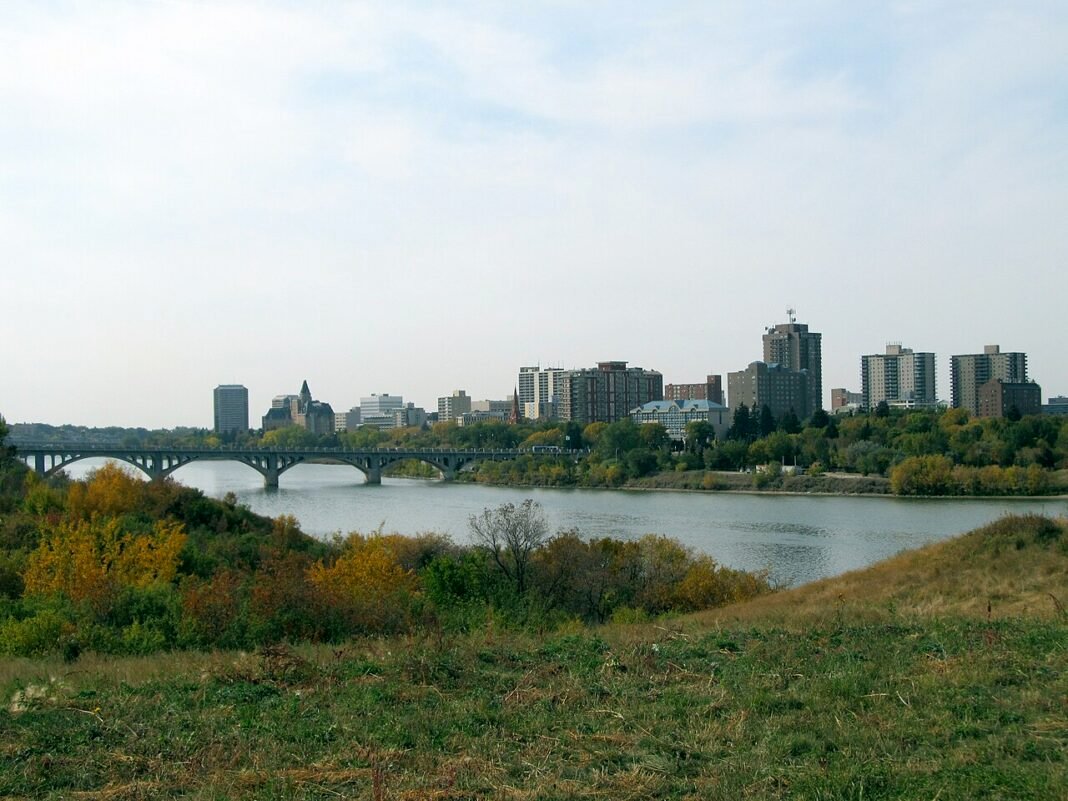
The Nutana neighbourhood — the hill above the Broadway Bridge on the east bank of the South Saskatchewan River, and Saskatoon’s original 1883 settlement before amalgamation in 1906 — is the city’s most beloved place to live. The Broadway Avenue commercial strip (the Bulk Cheese Warehouse at 732 Broadway, the Broadway Café 50s-style diner, the Streamline Moderne Broadway Theatre built in 1946, the Saturday Farmers’ Market at River Landing below), the Meewasin Valley Trail running straight off the side streets, and Nutana’s 1910s–1930s brick bungalows and storey-and-a-halfs add up to a pocket of authentic Prairie character. The University of Saskatchewan campus, a short walk north of Broadway across the University Bridge, anchors the area’s academic and creative life. Benchmark detached house price: CAD $420,000–$550,000.
_(25507855584).jpg?width=1200)
2. Riversdale: Saskatoon’s Creative District
Riversdale — the working-class neighbourhood west of downtown that has drawn sustained arts and economic development investment — is Saskatoon’s most rapidly changing community. The 20th Street West strip carries independent restaurants, design shops, and arts groups (La Troupe du Jour and Studio 914, the Art Bar Theatre, the restored 1930 Roxy Theatre with its Spanish Villa interior); the immigrant-owned businesses and the Victorian workers’ cottages on the side streets stay genuinely affordable (CAD $280,000–$380,000). The Remai Modern sits a 10-minute walk away across River Landing, and continued city investment in the 20th Street corridor’s public realm keeps the area on an upward path.
3. Cathedral Village: Regina’s Arts Neighbourhood
Cathedral Village — Regina’s inner-city neighbourhood west of downtown, built around the 13th Avenue commercial strip and named for the 1913 Holy Rosary Cathedral that gave the district its identity — is the city’s most concentrated arts and independent-business district. The 13th Avenue corridor (independent restaurants, cafés, the Cathedral Village Farmers’ Market on Saturday mornings), the Cathedral community school, and the Victorian and Craftsman housing give it a texture that Regina’s newer suburbs cannot replicate. The Cathedral Village Arts Festival (May), now in its mid-thirties, anchors the local arts identity with a week-long street fair, and the Wascana Centre’s lakeside paths sit close enough to supply the outdoor recreation context. Benchmark house price: CAD $330,000–$480,000.
4. Lakeview: Regina’s Prestige Address
Lakeview, the established neighbourhood south of Wascana Creek and the Saskatchewan Legislative Building, is one of Regina’s most prestigious addresses — the parklands of Wascana Centre at the doorstep, mature elm canopies overhead, and a mix of pre-war stone-and-brick homes alongside 1950s–1960s bungalows giving the streets a quiet, enduring appeal. That proximity to Wascana Centre (paddling on Wascana Lake, cycling the perimeter pathways), the Legislative Assembly, and the University of Regina campus puts the city’s most significant public assets within easy reach. Benchmark house price: CAD $400,000–$600,000.
5. Moose Jaw: The Prairie Alternative
Moose Jaw (population about 34,000), 75km west of Regina on the Trans-Canada Highway, is Saskatchewan’s most complete small-city alternative to the provincial capitals — a place with real personality (the Tunnels of Moose Jaw, a guided attraction built around the Prohibition-era bootlegging and Chinese-immigrant stories that gave the city its “Little Chicago” reputation; the Murals of Moose Jaw streetscape; the Temple Gardens Hotel and Spa’s rooftop pool, Canada’s largest naturally heated geothermal mineral pool) at prices (CAD $200,000–$320,000) that rank among the lowest of any full-service small city in the country. Easy Trans-Canada access to Regina and well-worn commuter ties to the capital let Moose Jaw residents hold down Regina jobs while living at a far lower cost.
6. Warman and Martensville: Saskatoon’s Satellite Cities
Warman (about 15,000) and Martensville (about 11,000), immediately north of Saskatoon, are Saskatchewan’s two fastest-growing cities — satellite communities that took off once Saskatoon families realized that new construction at CAD $400,000–$520,000 for a fully equipped 4-bedroom detached house sat within 20 minutes of downtown, Warman via Highway 11 and Martensville via Highway 12. Each runs full suburban services (schools, recreation centres, grocery retail) inside its own municipal boundaries while feeding daily commuters into Saskatoon. The Warman Communiplex and the Martensville Athletic Pavilion handle local programming; the open prairie and the South Saskatchewan River valley corridor to the south supply the outdoor backdrop. For families chasing the most housing value within commuting range of Saskatoon work, these two cities are the province’s strongest pick.
7. Prince Albert: Gateway to the North
Prince Albert (about 38,000), roughly 140km north of Saskatoon, is Saskatchewan’s northern gateway city — the last substantial urban centre before the boreal forest begins in earnest, and the commercial hub for the vast northern Saskatchewan hunting, fishing, and trapping communities. Its housing market (CAD $220,000–$340,000 for detached homes) ranks among the most affordable in the province; the economy leans on the large provincial correctional complex, healthcare services for the northern communities, and the forestry and agricultural processing operations of the surrounding region. Prince Albert National Park’s main entrance lies about 80km north of the city via Highways 2 and 263 — which makes Prince Albert the practical base for the park’s visitors and a home for those who work in its visitor economy.
Making Your Decision
Choosing where to live in Saskatchewan comes down to matching your priorities against what each city and town delivers. Budget, career options, access to outdoor recreation, climate, and community character all weigh differently by life stage and values, and no ranking can substitute for that personal reckoning. The places profiled here are the strongest overall picks, but the province holds smaller communities that make their own case for anyone willing to trade urban convenience for affordability, quieter living, or closer access to open country. Spend at least a long weekend in a shortlisted town before committing: the practical factors carry real weight, but so does the harder-to-measure question of whether a place fits where you are in life.
Frequently Asked Questions
What makes Saskatoon’s Broadway and Nutana the most desirable neighbourhoods?
Nutana and the adjoining Broadway strip — on the hill above the Broadway Bridge on the east bank of the South Saskatchewan River, and Saskatoon’s original 1883 settlement — form the city’s most beloved place to live. The Broadway Avenue strip (the 1946 Streamline Moderne Broadway Theatre, the Broadway Café, the Saturday Farmers’ Market at River Landing below), the Meewasin Valley Trail running off the side streets, and Nutana’s 1910s–1930s brick bungalows and storey-and-a-halfs add up to authentic Prairie character. The University of Saskatchewan campus, a short walk north across the University Bridge, anchors the area’s academic and creative life. Benchmark detached price: CAD $420,000–$550,000. Riversdale (the working-class neighbourhood west of downtown, undergoing arts-led regeneration on 20th Street West) is the most affordable inner-city option at CAD $280,000–$380,000, with a diverse immigrant business community and the Remai Modern gallery close by.
What does Regina offer for residents compared to Saskatoon?
Regina — Saskatchewan’s provincial capital, around 260km south of Saskatoon on Highway 11 — has the province’s most government-anchored job market: the provincial civil service, the Saskatchewan Health Authority, the RCMP Depot (the national training academy for all RCMP cadets, on Dewdney Avenue), and the University of Regina supply the stable public-sector base that shields the city from the commodity-price swings that hit Saskatoon harder. Wascana Centre (around 930 hectares of urban park surrounding Wascana Lake, one of the most expansive urban parks on the Prairies) is Regina’s defining residential amenity — cycling and running paths, paddling on the lake, and the Saskatchewan Legislative Building on the north shore. The Cathedral neighbourhood (early 20th-century housing west of downtown, centred on 13th Avenue’s independent café and retail strip) is the city’s most characterful inner-city district at CAD $330,000–$480,000. Newer suburbs (Harbour Landing, The Greens on Gardiner) cover family-oriented housing at CAD $400,000–$540,000.
What do Saskatchewan’s smaller Prairie communities offer for residents?
Saskatchewan’s smaller cities and towns — Prince Albert (around 38,000, the gateway to the northern boreal, about 80km south of Prince Albert National Park’s main entrance), Moose Jaw (around 34,000, 75km west of Regina, with the Temple Gardens Hotel and Spa geothermal pool and the Tunnels of Moose Jaw historical attraction), Swift Current (around 17,000, the southwestern agricultural hub on the Trans-Canada), and Estevan (around 11,000, Canada’s sunshine capital, next to the Bakken oilfields and 210km southeast of Regina) — each deliver Prairie small-city living at housing prices of CAD $200,000–$320,000 that represent genuine affordability without the compromises of remote resource towns. Humboldt (around 6,000, 110km east of Saskatoon) and Yorkton (around 16,000, eastern Saskatchewan) serve their farming regions as commercial centres with hospitals, schools, and the services that make mid-sized Prairie towns livable without the full cultural infrastructure of the larger cities. For remote workers, the province’s broad SaskTel fibre footprint and the flat landscape’s short driving distances make rural Saskatchewan more livable than its reputation suggests.
What are the key factors in the Saskatoon vs Regina choice?
The Saskatoon-versus-Regina choice is Saskatchewan’s defining residential decision — a real rivalry between a river-valley university city and a legislative capital that reflects substantive differences in lifestyle and work. Saskatoon’s edge: the South Saskatchewan River valley (the Meewasin trail system), the University of Saskatchewan’s research and cultural weight, a stronger private sector (potash and agricultural technology firms), a more developed arts scene (the Remai Modern, the Persephone Theatre), and faster population growth (Saskatoon’s metropolitan area is around 350,000 and still climbing). Regina’s edge: Wascana Centre (unmatched urban-park infrastructure for a Prairie city), the provincial government job base (the most stable large employer in the province), the RCMP Depot heritage, and marginally lower housing costs in comparable neighbourhoods. Both cities share similar affordability relative to eastern Canada, similar quality-of-life infrastructure, and a Prairie character that sets them apart from Canada’s larger metros.
What housing affordability does Saskatchewan offer for families relocating from other provinces?
Saskatchewan offers the most straightforward affordability argument of any Canadian province with significant urban services — 2026 benchmark detached prices of around CAD $510,000 in Saskatoon and around CAD $440,000 in Regina sit at roughly a quarter of Vancouver’s equivalent and about a third of Toronto’s, while still buying full urban amenities, universities, professional sport (the Saskatchewan Roughriders, one of Canada’s most passionately supported franchises), and a quality of life built on community and manageable commutes. Competitive personal income tax brackets, no provincial health premiums, the 6% Provincial Sales Tax, and affordable car insurance (SGI, the province’s public insurer, generally prices well below Ontario’s private market) all stack on top of the housing advantage. For dual-income professional households moving from Ontario or BC — especially in healthcare, engineering, government, and education — the mix of lower housing costs, lower fixed costs, and above-national-average wages in resource sectors builds a financial case that few eastern Canadians fully appreciate until they run the numbers.