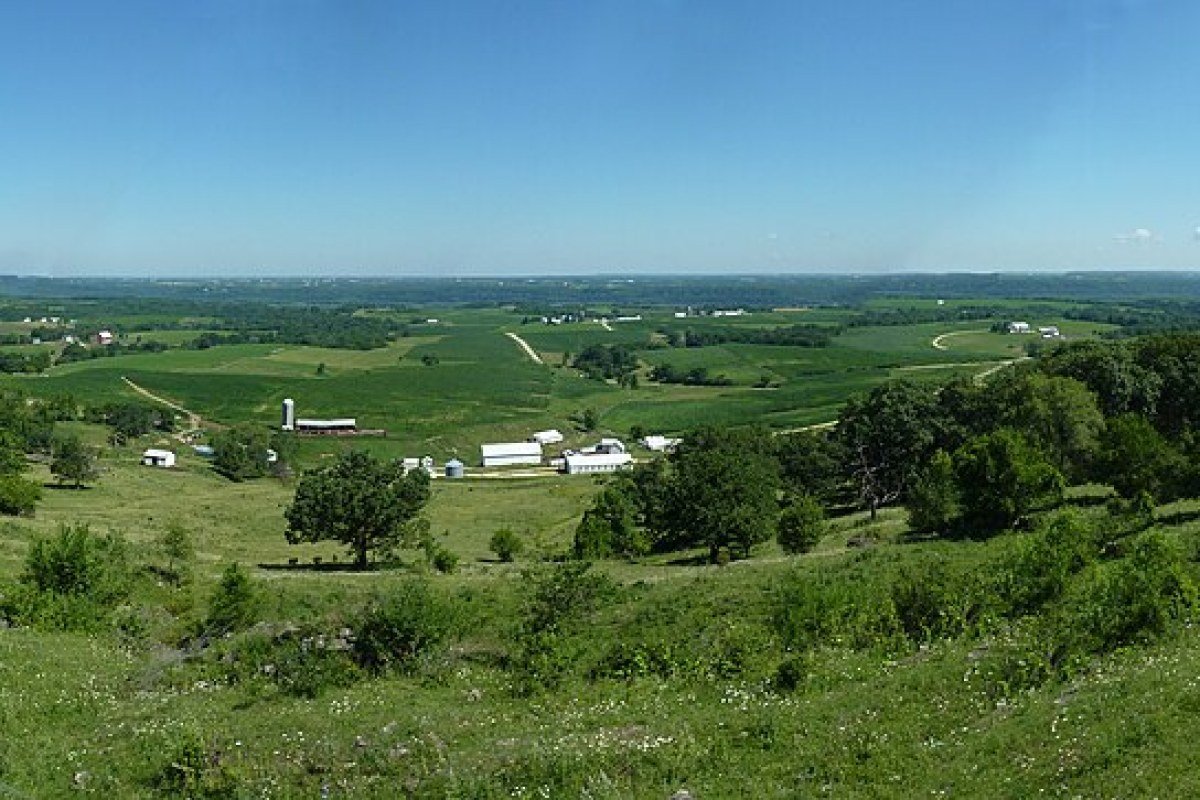
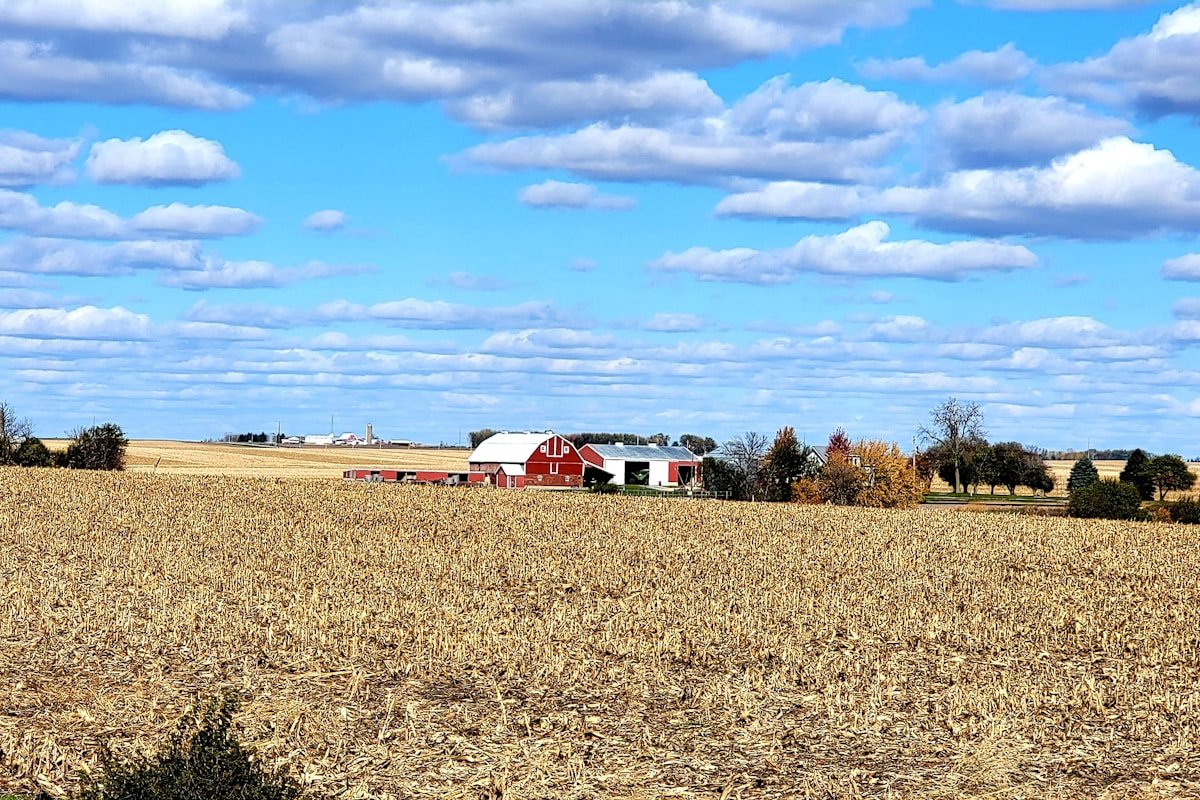
Iowa’s outdoor recreation operates at a different scale than the mountain states — it doesn’t deal in peaks, canyons, or ocean surf. It deals in the specific qualities of America‘s agricultural heartland: big skies, extensive trail networks through rolling prairie and river bottomlands, some of the best river paddling in the upper Midwest, exceptional birding at the convergence of the Central and Mississippi flyways, and a cycling culture that produced RAGBRAI, the world’s largest annual bicycle event. The Iowan who approaches the outdoors through this lens finds a state of considerable recreational depth.
RAGBRAI and Cycling Culture
Iowa is one of the best cycling states in America for long-distance touring — a conclusion supported by the Register’s Annual Great Bicycle Ride Across Iowa (RAGBRAI), which has run annually since 1973 — now every July — and draws approximately 10,000 registered riders across a week-long route of roughly 450 to 500 miles from the Missouri River to the Mississippi. RAGBRAI’s route changes annually, ensuring that different Iowa communities host the event in rotation. The overnight stops in small towns — where communities compete for the designation of host city with food, entertainment, and logistical preparation that involves the entire community — create a celebration of Iowa small-town culture that is genuinely unlike any other outdoor event in the country.
Beyond RAGBRAI, Iowa’s trail network runs to more than 2,000 miles of multi-use paths, with the Raccoon River Valley Trail (an 89-mile system whose 72-mile loop is the longest paved loop trail in the United States, threading Dallas, Greene, and Guthrie Counties west of Des Moines) and the Cedar Valley Nature Trail (52 miles between Cedar Rapids and Waterloo) among the most heavily used. The High Trestle Trail (25 miles from Woodward to Ankeny) includes the High Trestle Bridge — a 13-story-high railroad bridge over the Des Moines River with a dramatic open-steel geometric structure that has become one of the most photographed cycling infrastructure features in the United States, particularly striking at sunset and at night when blue LED lighting illuminates the geometric forms of the bridge’s interior.
.jpg?width=1200)
Hiking: Backbone State Park and Beyond
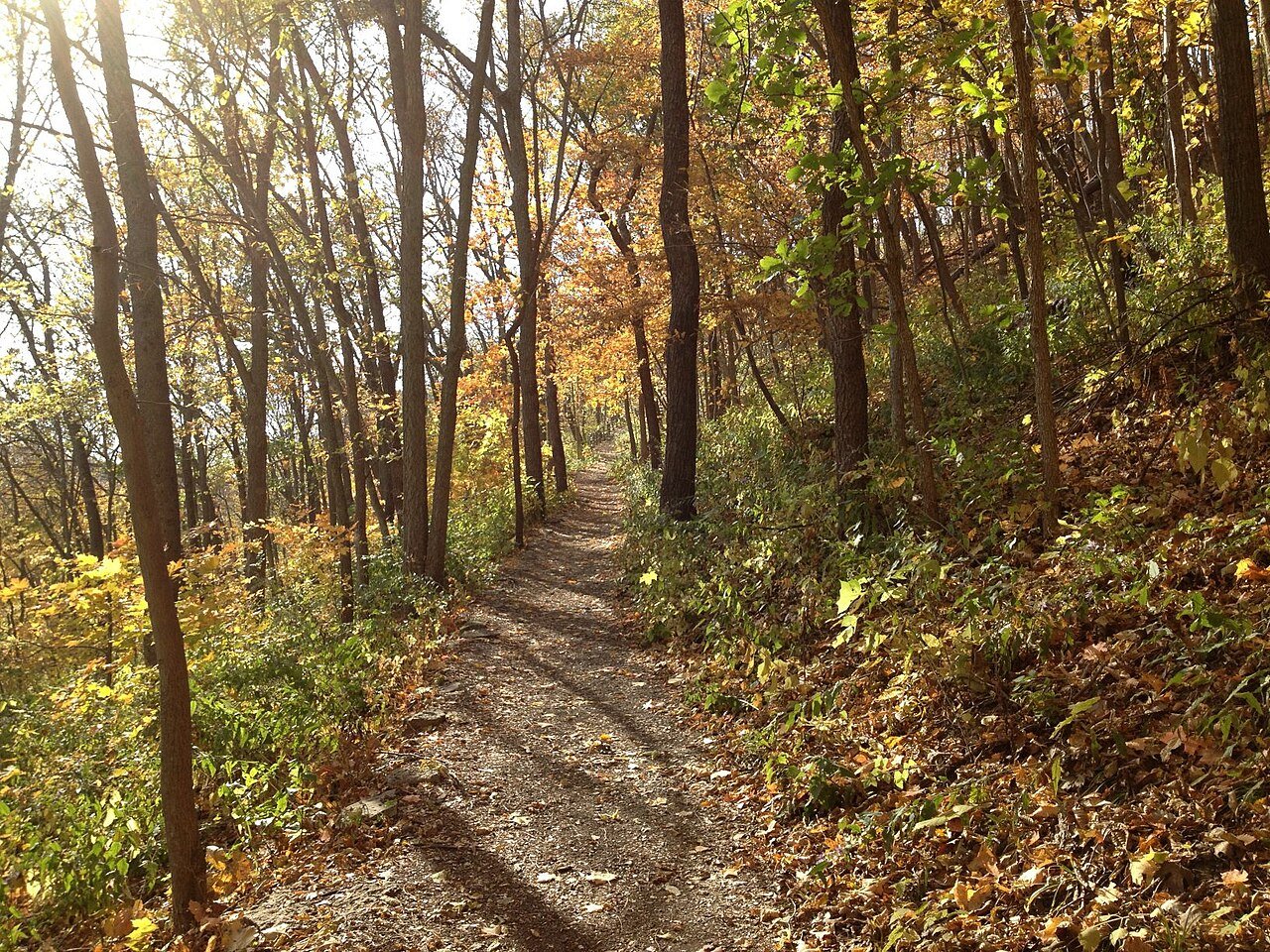
Backbone State Park, in northeastern Iowa near Strawberry Point, is the state’s oldest state park (established 1919) and arguably its most beautiful. The Backbone — a narrow limestone ridge rising about 80 feet above the Maquoketa River — is the standout geological feature in the state’s park system, with a trail along the ridge crest that combines narrow ledge walking with views across the forested river valley. The Maquoketa River below the Backbone opens up flatwater kayaking and canoe camping access. Spring wildflowers and fall foliage make March-May and October-November the best hiking seasons.
Maquoketa Caves State Park, in eastern Iowa near Maquoketa, holds the state’s most accessible cave hiking — a natural system of 13 caves open to visitors, including the Dancehall Cave (the largest, with a 1,100-foot passageway), the Balanced Rock (a 17-ton boulder perched on a narrow limestone pedestal), and the Twin Arch. Cave hiking requires flashlights and comfortable shoes that can get muddy; the caves maintain near-constant cool temperatures year-round.
Paddling: Iowa’s River System
Iowa’s river system carries extensive flatwater and mild whitewater paddling through the most scenic portions of the state’s agricultural landscape. The Upper Iowa River — designated an Iowa Scenic River — flows through the bluff country of northeastern Iowa with clear-water Class I–II paddling beneath limestone canyon walls that rank among the most dramatic anywhere in Iowa. Outfitters in Decorah (a Norwegian-heritage college town that is also home to Luther College and a growing craft beer scene) and Bluffton rent canoes and kayaks and run shuttles for the popular Upper Iowa sections.
The Maquoketa River runs similarly clear through forested bluffs, with access to Maquoketa Caves State Park mid-route. The Des Moines River, the state’s longest, runs flatwater through the heart of Iowa from its Minnesota headwaters to its Missouri River confluence at Keokuk — a multi-day route across distinctly different Iowa landscapes. The Iowa River through Iowa City makes for accessible urban paddling with calm water, good access points, and the bonus of passing through one of Iowa’s more appealing college-town settings.
Birding: Iowa’s Flyway Advantage
Iowa sits at the convergence of the Central and Mississippi flyways — the two major North American bird migration corridors — creating extraordinary birding opportunities during spring (April–May) and fall (September–October) migration. The DeSoto National Wildlife Refuge, on the Missouri River at the Iowa-Nebraska border near Missouri Valley, hosts one of the largest concentrations of Snow Geese in the Central Flyway during late October and early November — hundreds of thousands of birds staging on the refuge’s shallow lakes create a natural spectacle of considerable magnitude. The Odessa Wildlife Management Area near Wapello, on the Mississippi River where the Iowa River joins it, draws large concentrations of migrating waterfowl. Rathbun Lake, one of Iowa’s largest lakes, is a reliable stopover for migrating loons, grebes, and diving ducks.
State Parks and Natural Areas
Ledges State Park near Boone preserves sandstone ledges and canyon formations along the Des Moines River — a geological landscape distinct from the loess (wind-deposited glacial silt) that characterizes much of Iowa’s terrain. The ledges deliver some of the most photogenic short hiking in central Iowa, with waterfall access in spring and fall and cave-like recesses beneath overhanging sandstone layers. Wildcat Den State Park near Muscatine on the Mississippi offers river-bluff hiking around a preserved historic grist mill. Lacey-Keosauqua State Park, in the Keosauqua Bend of the Des Moines River, is the largest Iowa state park and the finest example of the state’s mixed bottomland forest and river bluff environment in the southern part of the state.
Iowa’s outdoors rewards those who engage with it at the state’s own scale — not measured against the grandeur of other regions but appreciated for the specific qualities of big-sky prairie, clear-water rivers, limestone bluff country, and the cycling culture that has made Iowa the American heartland’s most trail-connected state. RAGBRAI alone is worth the visit; the rest of Iowa’s outdoor environment rewards the return.
Frequently Asked Questions
What is RAGBRAI and why is it significant?
RAGBRAI — the Register’s Annual Great Bicycle Ride Across Iowa — is the world’s largest annual bicycle touring event, held annually since 1973 — now every July. Approximately 10,000 registered riders complete a week-long route of roughly 450 to 500 miles across the state from the Missouri River to the Mississippi, with the specific route changing annually to bring the event to different Iowa communities. The overnight stops in small towns — where communities compete for the designation of host city with food, entertainment, and logistical preparation involving the entire community — create a celebration of Iowa small-town culture that is genuinely unlike any other outdoor event in the United States. Iowa’s flat terrain and extensive rail-trail network (over 2,000 miles of designated bike paths) make it one of the finest cycling states in the country for long-distance touring.
What is the High Trestle Trail and what makes it distinctive?
The High Trestle Trail (25 miles from Woodward to Ankeny) is Iowa’s most visually striking cycling route, featuring the High Trestle Bridge — a 13-story-high railroad bridge over the Des Moines River with dramatic open-steel geometric interior framing, blue LED lighting that illuminates the geometric forms at night, and views across the Des Moines River valley. The bridge has become one of the most photographed cycling infrastructure features in the country, particularly remarkable at sunset and after dark when the LED lighting transforms the bridge’s industrial structure into an art installation. The Raccoon River Valley Trail (an 89-mile system with a 72-mile loop — the longest paved loop trail in the country — through Dallas, Greene, and Guthrie Counties) and the Cedar Valley Nature Trail (52 miles, Cedar Rapids to Waterloo) are the most heavily used long-distance Iowa rail-trails.
What does Backbone State Park offer and what is the best hiking in Iowa?
Backbone State Park, in northeastern Iowa near Strawberry Point and Iowa’s oldest state park (established 1919), is the state’s most dramatically beautiful — the Backbone, a narrow limestone ridge rising about 80 feet above the Maquoketa River, ranks among the most spectacular geological features in Iowa’s park system, with a trail along the ridge crest combining narrow ledge walking with views across the forested river valley. Maquoketa Caves State Park provides Iowa’s most accessible cave hiking — a system of 13 caves including the Dancehall Cave (1,100-foot passageway) and the Balanced Rock (17 tons balanced on a narrow limestone pedestal). Ledges State Park near Boone preserves sandstone ledges and canyon formations along the Des Moines River, with waterfall access in spring.
What paddling does Iowa offer?
Iowa’s river system carries excellent flatwater and mild whitewater paddling through the state’s most scenic terrain. The Upper Iowa River — a designated Iowa Scenic River — flows through limestone bluff country in northeastern Iowa with Class I–II water; outfitters in Decorah (a Norwegian-heritage college town) rent canoes and kayaks for the most popular sections. The Maquoketa River runs similarly clear through forested bluffs, with access to Maquoketa Caves State Park mid-route. The Des Moines River offers multi-day flatwater paddling from Minnesota headwaters to the Missouri River confluence at Keokuk. The Iowa River through Iowa City adds accessible urban paddling in a college-town setting.
What birding opportunities does Iowa offer?
Iowa sits at the convergence of the Central and Mississippi flyways — the two major North American bird migration corridors — creating exceptional birding during spring (April–May) and fall (September–October) migration. The DeSoto National Wildlife Refuge on the Missouri River near Missouri Valley hosts one of the largest Snow Goose concentrations in the Central Flyway in late October and early November — hundreds of thousands of birds staging on the refuge’s shallow lakes. Rathbun Lake (one of Iowa’s largest lakes) is a reliable migrating loon, grebe, and diving duck stopover. The Odessa Wildlife Management Area near Wapello, at the Iowa-Mississippi river confluence, draws large concentrations of migrating waterfowl. Iowa’s position at flyway convergence makes it consistently productive for both waterfowl and shorebird migration.